What Is a Good Alternative to Spectrum TV?
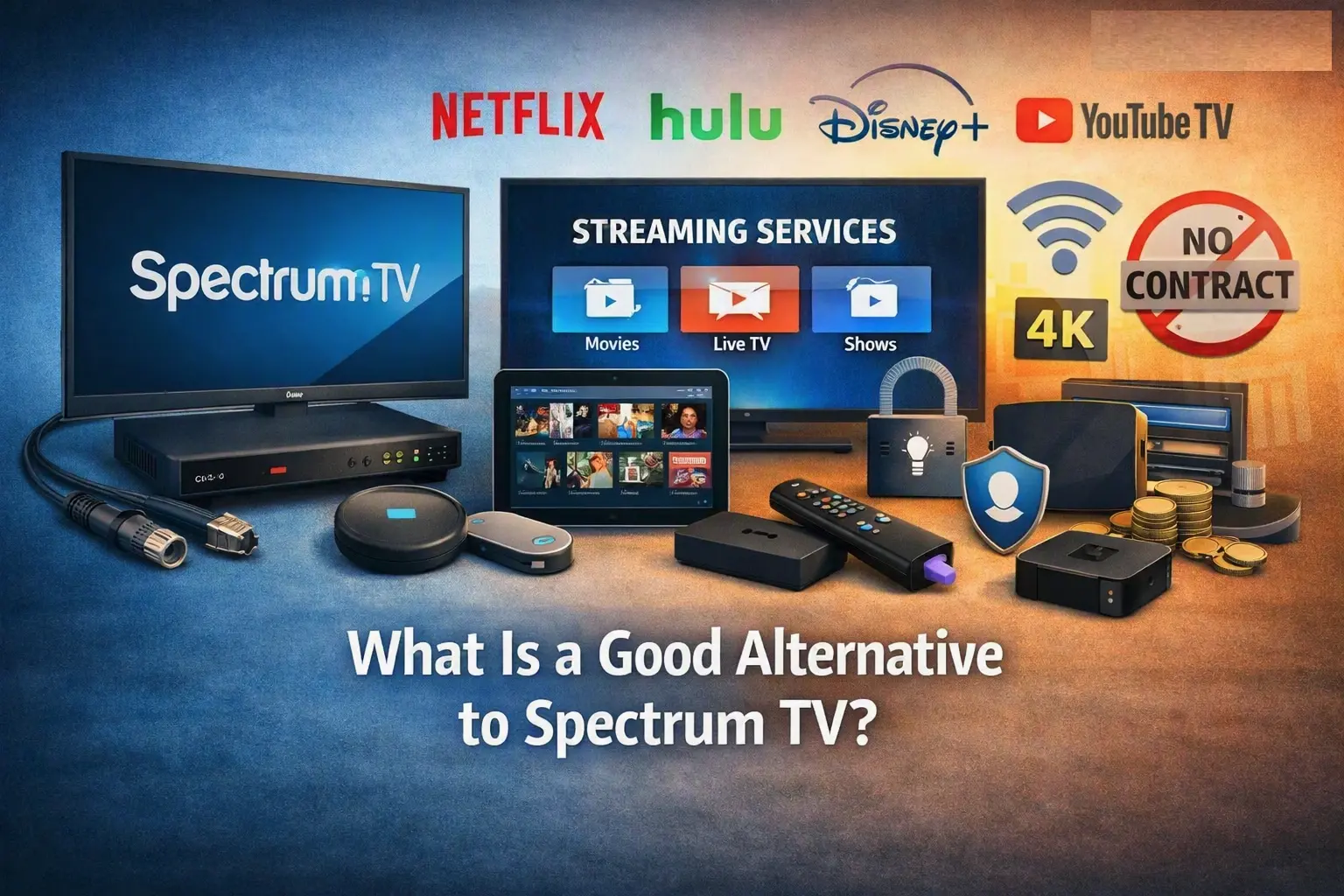
For most households leaving Spectrum TV, YouTube TV is the closest full replacement — it includes locals, a large channel lineup, and unlimited cloud DVR. However, pricing has climbed to $82.99/mo after a promotional period. Budget-focused households do better with Sling TV, which now starts at $19.99/mo for its Select tier and scales up to $45.99–$60.99/mo for sports and entertainment bundles. Sports-heavy households — especially those wanting regional sports networks — often land on DIRECTV (streaming or satellite) or Fubo. Families already invested in Disney content benefit from Hulu + Live TV, which bundles Disney+ and ESPN Unlimited into its live plans. There is no single "best" alternative; there's a best fit per household.
Introduction
Spectrum TV has long been a default choice for cable subscribers, largely because it bundles easily with Spectrum Internet. But cable pricing has kept climbing, and a growing number of households are asking a simple question: is there a better way to get live TV without the cable box, the installation fees, and the price creep after the first year?
The honest answer is that "better" depends on what a household actually watches. Live TV streaming services have matured enough by 2026 that most cord-cutters can replace Spectrum TV entirely — but the right replacement depends on whether the priority is price, channel count, sports coverage, or local network access. This guide compares the leading alternatives so you can match the service to your household instead of guessing.
Key Findings
Live TV streaming pricing has largely caught up to cable pricing in 2026 — YouTube TV now runs $82.99/mo standard rate, roughly in line with mid-tier cable packages.
Sling TV remains the clearest budget option, especially with its newer ultra-low Sling Select tier at $19.99/mo for viewers who mainly want news and lifestyle content.
DIRECTV's Entertainment, Choice, and Ultimate tiers ($89.99–$124.99/mo) target households that want the deepest channel lineup and regional sports networks, which streaming-only services often can't match.
Hulu + Live TV differentiates itself by bundling Disney+ and ESPN Unlimited directly into its live plans, which appeals to Disney-content households more than a standalone streaming service would.
No-contract flexibility is now standard across nearly every alternative, removing one of the biggest historical arguments for staying with cable.
Why households leave Spectrum TV
The most common reasons cited by cord-cutters switching away from Spectrum TV are predictable: promotional pricing that expires after 12 months, equipment rental fees, and a channel lineup that includes far more than most households actually watch. Streaming alternatives solve the contract and equipment problems outright — nearly all of them are month-to-month with no rental hardware required, since viewing happens through an app on a smart TV, streaming stick, or existing devices.
YouTube TV — the closest one-to-one replacement
YouTube TV has become the default recommendation for people who want a Spectrum-like experience without the cable box. It includes local network affiliates in most markets, a large on-demand library, and unlimited cloud DVR storage — a genuine upgrade over most cable DVR packages. The tradeoff is price: after a promotional rate for new subscribers, the standard rate is $82.99/mo, which is no longer meaningfully cheaper than a mid-tier Spectrum TV package. YouTube TV also offers a lower-cost Sports plan for households that mainly want live sports without the full entertainment lineup.
Sling TV — the budget-conscious pick
Sling TV continues to be the go-to option for anyone whose main goal is spending less than they did on cable. Its structure lets viewers choose Sling Orange (sports and Disney-adjacent channels), Sling Blue (entertainment and some local affiliates), or combine both. In 2026, Sling also introduced a Sling Select tier at $19.99/mo aimed at viewers who mostly want news and lifestyle programming rather than a full channel bundle. The tradeoff is that Sling's local channel coverage is inconsistent by market, and some plans only support a single simultaneous stream.
DIRECTV — best for sports and channel depth
For households that specifically miss the deep channel lineup and regional sports networks that cable-style packages provide, DIRECTV (available as satellite or DIRECTV Stream) is usually the strongest fit. Its tiers scale from Entertainment ($89.99/mo, 90+ channels including ESPN Unlimited) up to Ultimate ($124.99/mo, 160+ channels with expanded sports and movie channels). This is a higher monthly cost than most streaming-only alternatives, but it's the category most likely to satisfy someone unhappy about losing RSN coverage when they left cable.
Hulu + Live TV and Fubo — content and sports specialists
Hulu + Live TV stands out for bundling Disney+ and ESPN Unlimited directly into its live plans, which makes it a strong pick for households with kids or heavy Disney/ESPN viewership, since it replaces two subscriptions with one. Fubo, by contrast, has built its identity around sports-first packages, though its base plans carry separate regional sports network fees that can add meaningfully to the advertised price — worth checking before assuming the sticker price is the final bill.
Fees to watch across every alternative
Whichever service replaces Spectrum TV, the advertised price is rarely the full price. Regional sports network fees, local channel surcharges in certain Sling and Fubo markets, and price increases after an introductory period are common across the entire category — not unique to any one provider. Reading the current price sheet in detail before switching, rather than relying on a promotional rate, avoids the same "surprise increase" experience that often drives people away from cable in the first place.
Research Insights
The broader trend across the streaming-TV category in 2026 is convergence: live TV streaming services have gradually adopted the pricing and channel-bundling structures of the cable packages they were originally built to undercut. Industry coverage has noted that live TV streaming pricing has risen enough that, in some markets, it now sits close to comparable cable tiers once fees are included — meaning the strongest remaining argument for switching isn't always price, but flexibility: no equipment rental, no long-term contract, and the ability to change plans monthly as a household's viewing habits shift.
This shift also explains why the market has segmented rather than consolidated around one "best" alternative. Sling has leaned further into being the budget option with its new ultra-low entry tier, DIRECTV and Fubo have leaned into being the sports-and-channel-depth option, and YouTube TV and Hulu + Live TV have positioned themselves as full-featured, cable-equivalent replacements aimed at households that want the switch to feel invisible.
Consumer Impact
For a household paying for Spectrum TV primarily out of habit, the practical impact of comparing alternatives is real savings — potentially $20–$60/mo depending on which tier is chosen and whether a household actually needs the full channel bundle it's currently paying for. The bigger risk for consumers is switching to a service based only on its advertised starting price and being surprised later by regional sports fees or a post-promotional price increase, which is functionally the same complaint many people have about cable. Comparing the full, fee-inclusive price — not just the headline number — is the single most useful step before switching.
Future Outlook
Expect continued price convergence between streaming TV bundles and traditional cable in 2026 and beyond, alongside more segmentation into specialized tiers (sports-only, news-only, kids/family bundles) as providers compete for specific viewing habits rather than trying to be everything to everyone. Bundling with other services — Disney+ inside Hulu + Live TV, mobile discounts tied to internet providers — is likely to keep expanding as companies look for ways to differentiate beyond raw channel count.
Research Methodology
This article is based on current published pricing and plan details from YouTube TV, Sling TV, DIRECTV, Hulu + Live TV, and Fubo as of August 2026, alongside independent streaming-service comparison coverage from consumer technology publications. Pricing reflects standard advertised rates at the time of research and is subject to change; regional and promotional pricing may vary by market.
FAQ
What is the cheapest alternative to Spectrum TV?
Sling TV is generally the cheapest option, with its Select tier starting at $19.99/mo and its core Orange or Blue plans at $45.99/mo. It's best suited to households that don't need a full local-channel lineup.
Which Spectrum TV alternative is closest to a full cable replacement?
YouTube TV is typically considered the closest one-to-one replacement, with a large channel lineup, local networks in most markets, and unlimited cloud DVR — though its standard price of $82.99/mo is close to mid-tier cable pricing.
What's the best alternative for sports fans who used Spectrum for regional sports networks?
DIRECTV's Choice and Ultimate tiers include regional sports networks and specialty sports channels that many streaming-only services don't fully match. Fubo is also sports-focused but often carries separate RSN fees.
Is there an alternative that includes Disney+ automatically?
Yes — Hulu + Live TV bundles Disney+ and ESPN Unlimited directly into its live TV plans, which can replace two separate subscriptions with one.
Do these alternatives require a contract like Spectrum TV?
No. Nearly all major live TV streaming alternatives, including YouTube TV, Sling TV, Fubo, and Hulu + Live TV, are month-to-month with no long-term contract.
Will I still need internet service to use a Spectrum TV alternative?
Yes. Every streaming TV alternative requires a broadband internet connection, since content is delivered over the internet rather than through a cable line or satellite dish.
Are there hidden fees I should expect when switching?
Possibly. Regional sports network fees, local channel surcharges in some markets, and price increases after a promotional period are common across the category. Always check the full fee breakdown, not just the advertised starting price.
Conclusion
There isn't one universal "best" alternative to Spectrum TV — there's a best alternative for each household's actual viewing habits. Budget-first households tend to land on Sling TV, full-replacement seekers gravitate to YouTube TV, sports-heavy households do better with DIRECTV or Fubo, and Disney/ESPN households often prefer Hulu + Live TV. Readers weighing these options against their current Spectrum TV bill, or wanting help comparing plans available at their address, can find more provider comparisons at CtvforMe.com or speak with a representative at (855) 210-8883 to walk through which option fits best.