Why is Cox WiFi not Working?
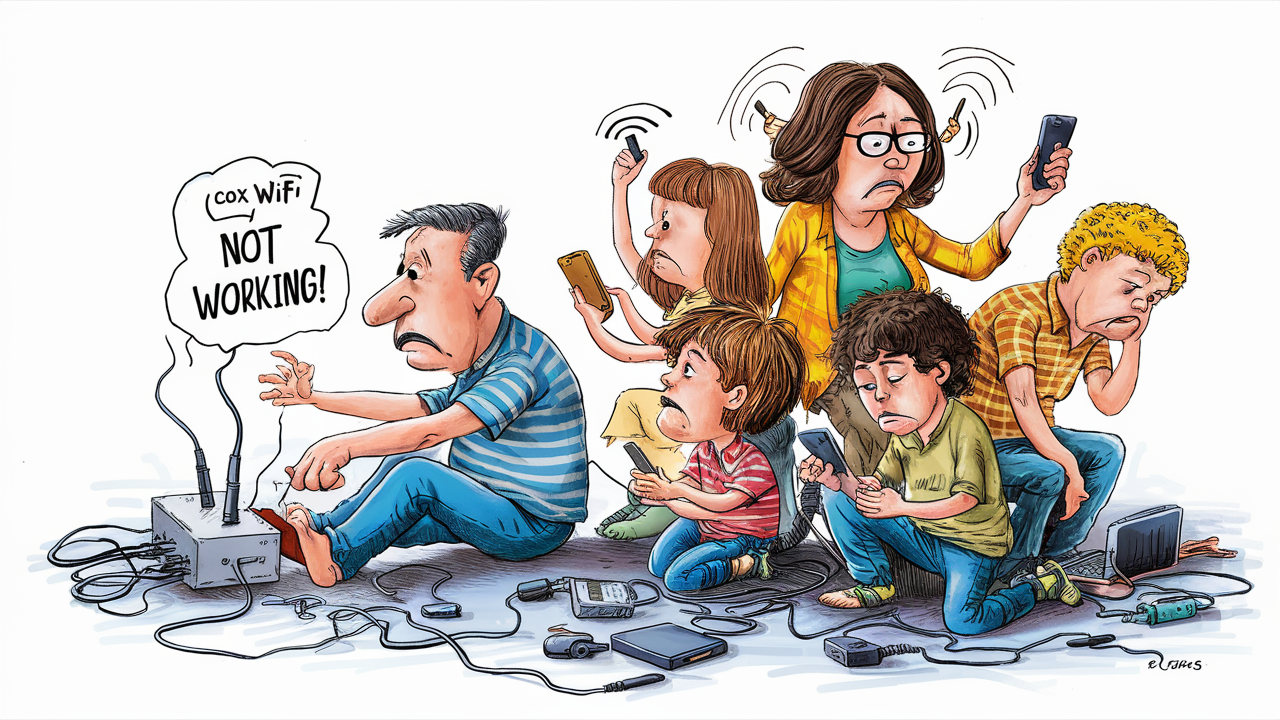
Experiencing Cox WiFi outages can be incredibly frustrating. This comprehensive guide dives deep into the common culprits behind your Cox internet connection issues, offering actionable solutions and expert advice to get you back online quickly. We'll cover everything from simple troubleshooting steps to understanding more complex network problems, ensuring you're equipped to resolve your connectivity woes.
Common Reasons Your Cox WiFi Isn't Working
When your Cox WiFi suddenly stops working, it’s easy to feel overwhelmed. However, most connectivity problems stem from a few recurring issues. Understanding these common culprits is the first step toward diagnosing and resolving the problem. In 2025 and 2026, the landscape of internet connectivity continues to evolve, with more devices than ever relying on a stable WiFi signal. This increased demand can sometimes strain even robust networks. Let's explore the most frequent reasons why your Cox internet might be down.
1. Router or Modem Malfunctions
The heart of your home network, your router and modem (often combined into a single gateway device provided by Cox), are prime suspects. Like any electronic device, they can experience temporary glitches, hardware failures, or simply need a refresh. A simple power cycle is often the quickest fix, but more persistent issues might indicate a deeper problem with the equipment itself.
2. Power Outages or Fluctuations
While obvious, it's worth mentioning that a lack of power to your modem and router will, of course, result in no internet. This can range from a complete power outage in your area to a tripped circuit breaker in your home affecting the outlet your equipment is plugged into. Ensure your modem and router are plugged into a reliable power source.
3. Loose or Damaged Cables
The physical connections are crucial. Coaxial cables, Ethernet cables, and power cords can become loose, kinked, or damaged over time. A loose coaxial cable connecting your modem to the wall outlet, or a frayed Ethernet cable between your modem and router (if separate units), can easily disrupt your internet signal. Always check that all cables are securely fastened at both ends and show no visible signs of wear or damage.
4. Incorrect Network Configuration
Sometimes, settings on your router or modem can be inadvertently changed, leading to connectivity issues. This might include incorrect DNS settings, IP address conflicts, or even a forgotten WiFi password. While less common for users who haven't recently made changes, it’s a possibility if the problem arose after some form of network adjustment.
5. Interference from Other Devices
WiFi signals operate on specific radio frequencies. Other electronic devices in your home, such as microwaves, cordless phones, Bluetooth devices, and even neighboring WiFi networks, can interfere with your Cox WiFi signal. This interference can cause slower speeds or complete connection drops. The 2.4 GHz band is particularly susceptible to interference, which is why many modern routers also offer a 5 GHz band with less congestion but shorter range.
6. Overloaded Network
With the proliferation of smart home devices, multiple streaming services, online gaming, and remote work, a single internet connection can become overloaded. If too many devices are actively using bandwidth simultaneously, it can slow down or even disconnect some devices. This is especially true if your Cox internet plan doesn't offer sufficient download and upload speeds for your household's needs.
7. Software or Firmware Issues
Your router and modem run on firmware, a type of software. Like any software, it can sometimes develop bugs or become outdated, leading to performance issues. Cox periodically releases firmware updates to address these problems and improve performance. If your modem/router isn't set to auto-update, manual updates might be necessary.
8. Cox Service Outages in Your Area
Sometimes, the problem isn't with your equipment at all. Cox, like any internet service provider (ISP), can experience regional outages due to maintenance, technical issues, or external factors like weather. These outages can affect a large number of customers in a specific geographic area.
Troubleshooting Your Cox Router and Modem
When your Cox WiFi is down, the first line of defense is to troubleshoot your modem and router. These devices are the gateway to the internet, and many common issues can be resolved by following a few systematic steps. This section will guide you through the essential troubleshooting processes for your Cox-provided or compatible equipment.
1. The Power Cycle (Reboot)
This is the universal first step for almost any electronic device issue, and it's incredibly effective for modems and routers. It clears temporary glitches and allows the devices to re-establish a fresh connection with Cox's network.
- Unplug the Power: Locate the power cord for both your modem and your router (if they are separate units). Unplug them from the electrical outlet. If you have a combined gateway device, unplug its power cord.
- Wait: Allow at least 30-60 seconds. This ensures that all residual power is drained and the devices fully reset.
- Plug In Modem First: Plug the power cord back into the modem only. Wait for its indicator lights to stabilize. This usually takes 1-3 minutes. You're looking for solid lights indicating power, upstream, downstream, and online connectivity.
- Plug In Router: Once the modem lights are stable, plug the power cord back into your router. Wait another 1-2 minutes for its lights to stabilize.
- Test Connection: Try connecting to the internet with a device.
Example: If your modem has lights for "Power," "Downstream," "Upstream," and "Online," you want to see solid, steady lights for all of these after the reboot. A blinking "Online" light often indicates the modem is trying but failing to connect to Cox's network.
2. Check Indicator Lights
Your modem and router have indicator lights that provide valuable diagnostic information. Understanding what these lights mean can help pinpoint the problem.
Common Indicator Lights and Their Meanings:
| Light Name | Status | Meaning | Action |
|---|---|---|---|
| Power | Solid | Device is powered on. | N/A |
| Power | Off | No power. | Check power outlet, cable, and breaker. |
| Downstream/Receive | Solid | Receiving data from Cox. | N/A |
| Downstream/Receive | Blinking | Attempting to lock onto signal. | Check coaxial cable connection. May indicate signal issue. |
| Upstream/Send | Solid | Transmitting data to Cox. | N/A |
| Upstream/Send | Blinking | Attempting to transmit. | Check coaxial cable connection. May indicate signal issue. |
| Online/Internet | Solid | Connected to Cox network. | N/A |
| Online/Internet | Blinking | Trying to connect to Cox network. | May indicate modem issue or network outage. |
| WiFi/Wireless | Solid | WiFi broadcast is active. | N/A |
| WiFi/Wireless | Blinking | Data transfer is occurring. | N/A |
Note: Specific light names and behaviors can vary slightly between modem/router models. Consult your Cox equipment manual or Cox's support resources for your exact model.
3. Inspect Cables and Connections
Loose or damaged cables are a frequent, yet often overlooked, cause of internet problems. For Cox services, this primarily involves the coaxial cable.
- Coaxial Cable: Ensure the coaxial cable is screwed tightly into the back of your modem and the wall outlet. Check for any kinks, cuts, or damage to the cable itself. Damaged cables can degrade signal quality significantly.
- Ethernet Cables (if applicable): If you have a separate modem and router, ensure the Ethernet cable connecting them is securely plugged in at both ends and shows no signs of damage.
- Power Cables: Verify that the power cables for both devices are firmly seated in the devices and the power outlet.
4. Accessing Router Settings (for advanced users)
If the basic troubleshooting doesn't work, you might need to access your router's administrative interface to check settings. This is usually done via a web browser.
- Find Router IP Address: This is often 192.168.0.1 or 192.168.1.1. You can find this on a sticker on the router or by checking your connected device's network settings (look for "Default Gateway").
- Enter IP Address in Browser: Type the IP address into your web browser's address bar.
- Log In: You'll be prompted for a username and password. These are often found on the router's sticker or in its manual. Common defaults include "admin/admin" or "admin/[blank password]".
- Check Status: Once logged in, look for a "Status" or "Internet" page. This will often show if the router is connected to the modem and if the modem is online.
- Look for Errors: Check for any error messages or warnings within the router's interface.
Caution: Be careful when changing settings in the router interface, as incorrect modifications can worsen connectivity issues. If you're unsure, it's best to stick to basic troubleshooting or consult Cox support.
5. Factory Reset (Last Resort for Equipment)
If all else fails and you suspect a configuration issue with your router or modem, a factory reset can restore it to its original settings. This will erase any custom configurations you've made.
- Locate Reset Button: Most routers and modems have a small, recessed reset button, often on the back or bottom.
- Press and Hold: You'll typically need a paperclip or a pen tip to press and hold this button for 10-30 seconds while the device is powered on.
- Wait for Reboot: The device will reboot, and its settings will revert to factory defaults.
- Reconfigure: You will need to set up your WiFi network name (SSID) and password again, along with any other custom settings.
Note: A factory reset should only be performed if you are comfortable reconfiguring your network or if instructed by Cox support.
Device-Specific Connectivity Issues
Sometimes, your Cox WiFi might appear to be working fine, but specific devices are unable to connect or maintain a stable connection. This indicates that the problem lies not with your overall internet service but with the individual device or its connection to your network. In 2025-26, with an ever-increasing number of connected devices, this scenario is becoming more common.
1. Forget and Reconnect to the WiFi Network
On the problematic device (laptop, smartphone, tablet, smart TV), try removing your Cox WiFi network from its saved list and then reconnecting.
- On iOS: Go to Settings > Wi-Fi, tap the "i" icon next to your network name, and select "Forget This Network."
- On Android: Go to Settings > Network & internet > Wi-Fi, tap your network name, and select "Forget."
- On Windows: Go to Settings > Network & Internet > Wi-Fi, click "Manage known networks," select your network, and click "Forget."
- On macOS: Go to System Preferences > Network > Wi-Fi, click "Advanced," select your network, and click the minus (-) button.
After forgetting the network, scan for available networks, select your Cox WiFi, and re-enter the password. This can resolve corrupted network profiles on the device.
2. Check Device's WiFi Adapter/Settings
Ensure that the WiFi adapter on your device is enabled and functioning correctly.
- Laptops: There might be a physical switch or a function key combination (e.g., Fn + F2) to toggle WiFi on/off.
- Smartphones/Tablets: Check that Airplane Mode is turned OFF.
- All Devices: Look for a WiFi icon; if it's crossed out or has an exclamation mark, there's an issue.
3. Update Device Drivers/Operating System
Outdated drivers for network adapters (especially on computers) or an outdated operating system can cause compatibility issues with newer network protocols or router firmware. Regularly updating your devices is crucial for maintaining seamless connectivity.
- Computers: Visit the manufacturer's website for your laptop or the motherboard manufacturer's website for desktops to download the latest network adapter drivers. Ensure your operating system is also up-to-date.
- Smartphones/Tablets: Check for system updates in your device's settings.
4. Device is Too Far from the Router
WiFi signals weaken with distance and obstructions. If a device only has trouble connecting when it's far from the router, it's likely a range issue. Try moving the device closer to the router to see if the connection improves. For persistent range issues, consider optimizing your WiFi signal or using a WiFi extender.
5. IP Address Conflicts
Occasionally, two devices on your network might be assigned the same IP address, leading to connectivity problems for one or both. This is usually resolved by restarting the affected device or rebooting the router. If it persists, you might need to investigate DHCP settings on your router.
6. MAC Address Filtering
Some advanced users enable MAC address filtering on their routers to only allow specific devices to connect. If this feature is enabled and your new device's MAC address isn't on the approved list, it won't be able to connect. Check your router's security settings if you suspect this is the case.
7. Malware or Viruses
While less common, malware on a device can interfere with its network connectivity. Run a full system scan with reputable antivirus software to rule this out.
Understanding Cox Network Outages
When your Cox WiFi isn't working, and you've exhausted the troubleshooting steps for your own equipment, the next logical step is to consider if there's a broader issue with Cox's network. Understanding how to identify and verify Cox outages is essential for saving time and frustration.
1. How to Check for Cox Service Outages
Cox provides several ways for customers to check for reported outages in their area.
- Cox Website: Visit the official Cox Communications website. They often have a "Service Status" or "Outage Map" section where you can enter your address to check for known issues.
- Cox App: The Cox mobile app (available for iOS and Android) usually includes a feature to check for outages and manage your account.
- Social Media: Cox's official social media channels (e.g., Twitter) may post updates about widespread outages.
- Third-Party Outage Trackers: Websites like Downdetector aggregate user reports and can provide a good indication of whether other Cox customers in your area are experiencing similar problems.
2. What to Expect During an Outage
When a Cox network outage occurs, the impact can vary:
- Complete Loss of Service: Most commonly, all internet services will be down for affected customers.
- Intermittent Service: In some cases, you might experience very slow speeds, frequent disconnections, or intermittent connectivity.
- Affected Services: Outages can affect not only internet but also TV and phone services if they are bundled and delivered over the same network infrastructure.
3. Estimated Time of Restoration (ETR)
When an outage is reported, Cox technicians work to restore service as quickly as possible. They will often provide an Estimated Time of Restoration (ETR). However, it's important to understand that:
- ETRs are estimates and can change. Complex issues may take longer to resolve than initially anticipated.
- Factors like weather, accessibility to damaged equipment, and the scale of the problem can influence restoration times.
4. What to Do During a Cox Outage
If you confirm a Cox outage in your area:
- Be Patient: The best course of action is often to wait for Cox to resolve the issue.
- Avoid Constant Rebooting: Repeatedly rebooting your modem and router won't fix a network-wide outage and may even add unnecessary load to Cox's systems.
- Check for Updates: Periodically check the Cox website or app for updates on the outage status and ETR.
- Consider Alternatives: If you rely heavily on internet access for work or other critical tasks, consider using a mobile hotspot from your smartphone as a temporary workaround.
5. Reporting an Outage
If you believe you are experiencing an outage but cannot find any reports, you can report it to Cox. This helps them identify and address localized issues that might not be immediately visible on their outage maps.
- Use the Cox App or Website: These are typically the most efficient ways to report an issue.
- Call Customer Support: If you cannot access online resources, call Cox customer support.
6. Cox Network Infrastructure (2025-26 Overview)
Cox Communications primarily relies on a hybrid fiber-coaxial network (often referred to as HFC or DOCSIS). This means fiber optic cables run to neighborhood nodes, and then coaxial cables connect those nodes to individual homes. This infrastructure is generally robust, but it is susceptible to physical damage (e.g., from construction, storms), equipment failures at central offices or local nodes, and power issues affecting their equipment.
Investments in network upgrades, such as deploying DOCSIS 4.0 technology, are ongoing to increase speeds and reliability. However, even with these advancements, occasional service disruptions are an inherent part of operating a large-scale network. Understanding the technology helps in appreciating the potential causes of outages.
Optimizing Your Cox WiFi Network
Once you've resolved immediate connectivity issues, or if you're looking to improve your existing Cox WiFi performance, optimization is key. This involves making smart choices about your router placement, settings, and potentially upgrading your equipment or plan. In the data-intensive environment of 2025-26, a well-optimized network is crucial for a smooth online experience.
1. Router Placement is Crucial
The physical location of your WiFi router significantly impacts signal strength and reach throughout your home.
- Central Location: Place your router in a central location in your home, ideally on the main floor. This allows the signal to radiate outwards evenly.
- Elevated Position: Routers broadcast signals downwards and outwards. Placing it on a shelf or high table is better than on the floor.
- Avoid Obstructions: Keep the router away from thick walls (especially brick or concrete), large metal objects (like refrigerators or filing cabinets), and aquariums, as these can absorb or reflect WiFi signals.
- Minimize Interference: Keep the router away from other electronic devices that emit radio waves, such as microwaves, cordless phones, and Bluetooth speakers.
2. Utilize Both 2.4 GHz and 5 GHz Bands
Most modern Cox-provided routers are dual-band, offering both 2.4 GHz and 5 GHz frequencies. Understanding their differences can help you optimize device connections.
- 2.4 GHz: Offers a longer range and better penetration through walls but has slower speeds and is more prone to interference. Best for devices that are further away or don't require high speeds (e.g., smart plugs, older laptops).
- 5 GHz: Offers much faster speeds and less interference but has a shorter range and struggles with obstructions. Ideal for devices that are closer to the router and require high bandwidth (e.g., streaming 4K video, online gaming, new laptops).
Consider renaming your SSIDs (network names) for each band (e.g., "MyCoxWiFi_2.4GHz" and "MyCoxWiFi_5GHz") to manually select the best band for each device.
3. Update Router Firmware
As mentioned earlier, router firmware updates are essential for security, performance, and bug fixes. Ensure your router's firmware is up-to-date. Many Cox gateways have automatic updates enabled, but it's good practice to check manually periodically through the router's admin interface or the Cox app.
4. Change Your WiFi Password and Network Name (SSID)
For security and personalization:
- Strong Password: Use a strong, unique password for your WiFi network. This prevents unauthorized users from accessing your network, which can slow down your speeds and compromise your security.
- Unique SSID: While not directly impacting performance, a unique SSID helps you identify your network easily and avoid connecting to a neighbor's unsecured network by mistake.
5. Consider a WiFi Extender or Mesh System
If you have a large home or areas with weak WiFi signals, a single router might not be sufficient.
- WiFi Extenders (Repeaters): These devices pick up your existing WiFi signal and rebroadcast it, extending the network's reach. They are generally less expensive but can sometimes halve the available bandwidth.
- Mesh WiFi Systems: These consist of a main router and one or more satellite nodes that work together to create a single, seamless WiFi network throughout your home. They offer better performance and coverage than extenders but are typically more expensive.
For a robust and widespread WiFi coverage in 2025-26, mesh systems are often the preferred solution for larger homes.
6. Check Your Cox Internet Plan Speeds
If you consistently experience slow speeds, even after optimizing your network, it might be time to evaluate your Cox internet plan. The number of connected devices and the types of online activities (streaming, gaming, large downloads) in 2025-26 demand higher bandwidth than in previous years.
- Speed Test: Use reliable speed test websites (like Ookla Speedtest or Cox's own speed test tool) to measure your actual download and upload speeds.
- Compare to Plan: Compare these results to the advertised speeds of your current Cox plan.
- Upgrade if Necessary: If your speeds are consistently lower than what you need for your household's usage, consider upgrading to a higher-tier plan.
7. QoS (Quality of Service) Settings
Some routers allow you to configure Quality of Service (QoS) settings. QoS prioritizes certain types of traffic or specific devices over others. For example, you could prioritize video streaming or online gaming traffic to ensure a smoother experience, even when other devices are using bandwidth.
When to Contact Cox Support
You've tried rebooting, checking cables, and perhaps even reset your router. If your Cox WiFi is still not working, it's likely time to involve the experts. Knowing when and how to contact Cox support can save you significant time and ensure your issue is addressed efficiently.
1. After Exhausting Self-Troubleshooting
The most important rule is to attempt the basic troubleshooting steps outlined in this guide first. This includes:
- Power cycling your modem and router.
- Checking all physical cable connections.
- Verifying indicator lights on your equipment.
- Confirming there isn't a widespread Cox outage in your area.
When you call Cox, they will likely ask you to perform these steps anyway. Having already done them will expedite the process.
2. Persistent Signal Issues
If your modem's indicator lights (especially downstream, upstream, or online) consistently show issues (blinking, off, or red), it points to a problem with the signal coming into your home or with the modem itself. This is a clear sign to contact Cox.
3. Intermittent Connectivity That You Cannot Resolve
While intermittent issues can be tricky, if you've tried reconnecting devices, rebooting, and checking for interference without success, it's time to escalate. Cox can often perform remote diagnostics on your line and equipment.
4. New Equipment Installation or Activation Problems
If you've recently installed a new modem or router (either provided by Cox or a compatible third-party device) and cannot get it to activate or connect, Cox support is essential. They need to provision the device on their network.
5. Billing or Plan Inquiries Related to Service
If your internet issues seem to stem from billing discrepancies, incorrect plan provisioning, or if you're considering a plan upgrade due to performance issues, customer service can assist.
3. How to Contact Cox Support
Cox offers multiple channels for customer support:
- Phone: The most direct way to speak with a representative. You can find the customer service number on your bill or the Cox website.
- Online Chat: Many customers find the online chat feature on the Cox website to be efficient for quick questions or initial troubleshooting.
- Cox App: The mobile app often provides access to support features, including chat or the ability to schedule a callback.
- Cox Stores: For equipment-related issues or in-person assistance, visiting a local Cox retail store might be an option.
4. What Information to Have Ready
To make your call as efficient as possible, have the following information available:
- Your Account Number: This is crucial for them to pull up your service details.
- Your Service Address: To verify your location and check for area-specific issues.
- Modem/Router Model Number: If you know it, this helps them identify your equipment.
- Description of the Problem: Be clear about what you are experiencing (e.g., no internet, slow speeds, specific devices not connecting).
- Troubleshooting Steps You've Already Taken: This prevents them from asking you to repeat steps you've already completed.
- Indicator Light Status: Describe the lights on your modem and router.
5. Understanding Cox's Service Level Agreements (SLAs)
While not always explicitly detailed to consumers for residential service, ISPs like Cox generally have internal SLAs for response times and resolution times for technical issues. Knowing that they aim to resolve issues within a certain timeframe can be reassuring, though actual times can vary greatly depending on the complexity of the problem and technician availability.
6. When to Escalate
If you feel your issue is not being adequately addressed, or if you've been given the runaround, don't hesitate to politely ask to speak with a supervisor or a higher level of technical support. Documenting your interactions (dates, times, representative names, case numbers) can be helpful if escalation becomes necessary.
In conclusion, while Cox WiFi issues can be frustrating, a systematic approach to troubleshooting, understanding common problems, and knowing when to seek professional help will get you back online faster. By following the steps in this guide, you'll be well-equipped to tackle most connectivity challenges.
Experiencing a Cox WiFi outage can be incredibly disruptive, but this guide has equipped you with the knowledge to tackle the most common issues. From understanding the role of your modem and router, to performing essential troubleshooting steps like power cycling and checking cables, you're now better prepared. We've explored device-specific problems, the realities of Cox network outages, and strategies for optimizing your home network for peak performance in 2025-26. Remember, patience and a systematic approach are your best allies. If you've exhausted these steps, don't hesitate to contact Cox support with the necessary information. Restoring your connection is our priority, and with these insights, you're well on your way to a stable and reliable Cox WiFi experience.