What Network does Cox Use?
Unlocking the mystery of Cox's network infrastructure is key to understanding your internet service. This comprehensive guide dives deep into what network Cox uses, its underlying technologies, and how it impacts your online experience. Get ready for clarity on your connectivity.
Cox Network Overview: The Foundation of Your Connection
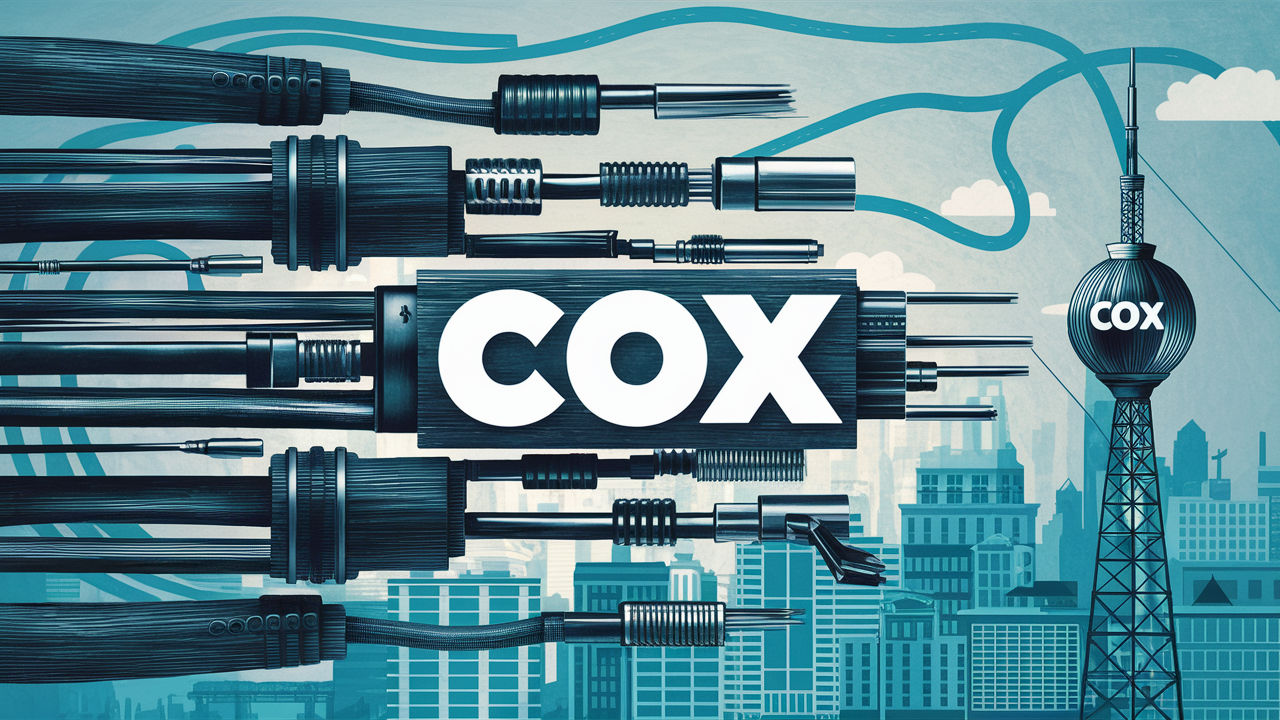
Cox Communications, a major player in the United States broadband market, operates an extensive and sophisticated network designed to deliver high-speed internet, cable television, and phone services to millions of households. Understanding what network Cox uses is crucial for consumers seeking reliable and fast connectivity. At its core, Cox's network is a hybrid infrastructure, primarily relying on a combination of fiber optic cables and coaxial cables to transmit data. This hybrid approach, often referred to as Hybrid Fiber-Coaxial (HFC), allows Cox to leverage the strengths of both technologies, offering a robust and scalable solution for delivering bandwidth-intensive services. The company continuously invests in upgrading its network to accommodate increasing data demands, driven by streaming, online gaming, remote work, and the proliferation of smart home devices. By understanding the underlying technology, users can better appreciate the capabilities and potential limitations of their Cox internet service. This section will lay the groundwork for a deeper dive into the specific technologies that power Cox's widespread network, setting the stage for a comprehensive analysis of its performance and future trajectory.
Cox's Commitment to Broadband Excellence
Cox Communications has consistently positioned itself as a provider focused on delivering high-quality broadband experiences. This commitment is reflected in their ongoing network investments and strategic upgrades. Unlike some providers who might solely rely on older infrastructure, Cox has made significant strides in integrating modern fiber optic technology into its network architecture. This forward-thinking approach is essential in an era where data consumption is skyrocketing. The company's strategy involves deploying fiber deeper into its network, closer to the end-user, which is a critical factor in achieving higher speeds and lower latency. This proactive stance ensures that Cox can meet the evolving needs of its customer base, from casual internet users to power users who require exceptional performance for demanding applications. The following sections will detail the specific technologies that underpin this commitment, providing a clear picture of how Cox delivers its services.
Key Components of the Cox Network
The Cox network is a complex ecosystem of interconnected technologies. The primary components include:
- Fiber Optic Cables: These form the backbone of the network, transmitting data at the speed of light over long distances with minimal signal degradation.
- Coaxial Cables: These are the familiar cables that often run from the street to individual homes, carrying the signal from the nearest fiber node to the customer's premises.
- Nodes: These are crucial points in the HFC network where fiber optic signals are converted and distributed to coaxial cable segments.
- Headends: These are central facilities where Cox aggregates content, manages network traffic, and originates signals for distribution.
- Customer Premises Equipment (CPE): This includes modems, routers, and other devices provided to customers that interface with the Cox network.
The interplay between these components determines the overall performance and reliability of the internet service. Understanding these elements is the first step to comprehending the question, "What network does Cox use?"
Cox's Fiber Optic Backbone: Speed and Reliability
Fiber optic technology is the cornerstone of modern high-speed internet, and Cox Communications heavily utilizes it to build its network's backbone. Unlike traditional copper or coaxial cables, fiber optic cables transmit data using pulses of light through thin strands of glass or plastic. This fundamental difference grants fiber optics a significant advantage in terms of speed, bandwidth, and signal integrity. The speed of light is, by definition, incredibly fast, and light signals experience far less attenuation (signal loss) over distance compared to electrical signals. This means that data can travel further and faster without needing as many signal boosters, leading to a more consistent and reliable connection.
For Cox, deploying fiber optic cables forms the primary arteries of its network. These cables run from Cox's central offices (headends) to local distribution points, often referred to as nodes. These nodes are strategically placed throughout neighborhoods, serving a specific group of homes. The transition from fiber to the neighborhood is where the network architecture becomes more nuanced, but the underlying principle is that the bulk of the data transmission happens over light-speed fiber, ensuring that the core network is robust and capable of handling massive amounts of data.
Advantages of Fiber Optics for Cox
The adoption of fiber optics by Cox brings several key advantages:
- Higher Bandwidth Capacity: Fiber can carry significantly more data than coaxial cable, enabling Cox to offer multi-gigabit internet speeds. This is crucial for supporting the growing demand for streaming 4K/8K content, online gaming, and simultaneous device usage in households.
- Faster Speeds: The inherent nature of light transmission allows for much higher data transfer rates, translating into faster download and upload speeds for consumers.
- Lower Latency: Latency, or ping, is the time it takes for data to travel from your device to a server and back. Fiber optics inherently offer lower latency, which is vital for real-time applications like video conferencing, online gaming, and VoIP calls.
- Greater Reliability and Durability: Fiber optic cables are less susceptible to electromagnetic interference (EMI) and radio frequency interference (RFI) than copper or coaxial cables. They are also more resistant to environmental factors like moisture and temperature fluctuations, leading to fewer service disruptions.
- Future-Proofing: The capacity of fiber optics is vast. As technology advances and data demands increase, fiber networks can often be upgraded by simply changing the equipment at either end, without needing to replace the physical cable itself. This makes it a highly scalable and future-proof investment for Cox.
Fiber to the Node (FTTN) and Beyond
While the ideal scenario for internet service is Fiber to the Home (FTTH), where fiber optic cable runs directly to each individual residence, Cox primarily employs a strategy known as Fiber to the Node (FTTN) or Fiber to the Curb (FTTC). In this model, fiber optic cables extend to a neighborhood node, which is a distribution point located relatively close to a cluster of homes. From this node, coaxial cable is used to connect each individual home to the fiber network. This hybrid approach allows Cox to deliver the benefits of fiber optics to a large customer base more cost-effectively than a full FTTH deployment across its entire service area.
The distance from the node to the home via coaxial cable is a critical factor influencing the ultimate speeds achievable. Shorter coaxial runs generally result in better performance. Cox continually works to densify its fiber network, bringing nodes closer to homes and upgrading the coaxial segments to support higher speeds. In some newer developments or specific upgrade initiatives, Cox may deploy FTTH, offering the ultimate in broadband performance. Understanding this distinction is key to grasping the nuances of Cox's network delivery.
Hybrid Fiber-Coaxial (HFC): The Dominant Cox Technology
The vast majority of Cox Communications' residential internet service is delivered via a Hybrid Fiber-Coaxial (HFC) network. This architecture represents a smart and efficient way to leverage existing infrastructure while incorporating the advancements of fiber optics. HFC networks are designed to combine the strengths of fiber optic cables for long-haul and high-capacity transmission with the established reach and cost-effectiveness of coaxial cables for the "last mile" delivery to individual homes. Essentially, Cox uses fiber optics to transport data across its service areas, and then transitions to coaxial cable for the final segment connecting to your residence.
This hybrid model is a widespread standard in the cable broadband industry because it allows providers like Cox to deliver high-speed internet, digital cable TV, and digital phone services over a single, unified network. The coaxial cable, which is the same type of cable used for traditional cable television, is capable of carrying a wide range of frequencies, making it suitable for delivering multiple services simultaneously. The key innovation in HFC is the strategic placement of fiber optic cables to minimize the distance that signals travel over coaxial cable, thereby mitigating the inherent limitations of coaxial cable over longer runs.
How HFC Works in the Cox Network
The HFC network operates in a hierarchical manner:
- Headend: This is the central hub where Cox originates its services. Content from various sources (internet backbones, TV programmers, etc.) is aggregated here.
- Fiber Optic Backbone: High-capacity fiber optic cables carry the aggregated data signals from the headend to distribution points throughout the service area. These cables are capable of transmitting vast amounts of data at very high speeds over long distances.
- Fiber Nodes: These are active or passive devices located in neighborhoods. At the node, the optical signal from the fiber optic cable is converted into an electrical signal suitable for transmission over coaxial cable. This is the critical point where the network transitions from fiber to coax.
- Coaxial Cable Distribution: From the node, coaxial cables branch out to serve groups of homes. These cables carry the electrical signals to individual residences.
- Customer Premises: The coaxial cable connects to a modem (or a cable modem/router combo unit) inside the home. The modem then translates the signal back into a format that your devices (computers, smartphones, smart TVs) can use.
The efficiency and speed of an HFC network are largely determined by the distance between the fiber node and the customer's home. The shorter this distance, the less signal degradation occurs, and the higher the potential internet speeds. Cox continuously invests in "node splitting" and upgrading its coaxial infrastructure to improve performance and increase the speeds it can offer over its HFC network.
The Role of Coaxial Cable in Modern Broadband
While fiber optics are often lauded as the ultimate solution, coaxial cable still plays a vital role in delivering broadband to millions of homes. Its primary advantages in the context of HFC include:
- Ubiquity: Coaxial cable infrastructure is already in place in most homes that receive cable television service, making it a cost-effective way to deliver broadband without requiring entirely new wiring to every house.
- Bandwidth Capability: Modern coaxial cable standards, particularly DOCSIS (Data Over Cable Service Interface Specification), have evolved significantly. DOCSIS 3.0 and DOCSIS 3.1, which Cox utilizes, are capable of delivering multi-gigabit speeds, especially when combined with fiber optic backbones and strategically placed nodes.
- Power and Signal Distribution: Coaxial cables can carry both data signals and electrical power for amplifiers and other network components along the line, simplifying network design and maintenance.
Cox's commitment to HFC means they are constantly working to maximize the performance of their coaxial plant through technologies like DOCSIS 3.1 and beyond. This ensures that their customers can enjoy increasingly faster internet speeds without the need for a complete overhaul of the physical cabling to their homes.
Cox Network Architecture and Topology
Understanding the architecture and topology of the Cox network provides a clearer picture of how data flows from the internet backbone to your home. The network is not a single, monolithic entity but rather a complex, layered system designed for efficiency, scalability, and reliability. The topology refers to the physical and logical arrangement of the network's components, while the architecture describes the overall design principles and how different technologies are integrated.
Cox's network architecture is predominantly characterized by its HFC design, as previously discussed. However, the specific layout and the way these HFC segments are interconnected form a sophisticated topology. The goal is to create a network that can deliver high bandwidth and low latency to a large number of users while being resilient to failures.
Physical Topology: Star and Tree Elements
While a pure star or tree topology is often discussed in simpler network contexts, Cox's HFC network incorporates elements of both, adapted for a large-scale cable broadband system:
- Fiber Backbone: This forms a high-capacity, often ring-like or meshed, topology connecting major hubs and headends. This ensures redundancy and allows data to be rerouted if a segment fails.
- Distribution Network: From the headends, fiber extends outwards in a tree-like structure to serve larger geographical areas.
- Node Serving Area: Within a neighborhood, the fiber optic cable terminates at a node. From this node, coaxial cables radiate outwards to serve individual homes. This section of the network resembles a star topology, with the node at the center and homes as the endpoints. However, multiple homes are served by a single node, and these nodes are themselves connected in a hierarchical, tree-like fashion back to the headend.
The key is that the fiber optic portion of the network is designed with redundancy and high capacity, while the coaxial portion is optimized for delivering service to a manageable number of homes from each node.
Logical Topology and Data Flow
Logically, the Cox network operates as a series of interconnected networks. When you send a request (e.g., to load a webpage), the data travels through several stages:
- Your Device to Modem: Data travels from your computer or device to your modem via Ethernet or Wi-Fi.
- Modem to Node: The modem sends the data signal over the coaxial cable to the nearest fiber node.
- Node to Headend: At the node, the electrical signal is converted back to an optical signal and transmitted over the fiber optic network towards the headend or a regional hub.
- Headend/Hub to Internet Backbone: From the headend, the data is routed through Cox's network infrastructure and then connected to the broader internet backbone, allowing it to reach the destination server.
- Return Path: The process is reversed for incoming data, with the server's response traveling back through the internet, Cox's network, and finally to your home.
The logical topology is designed to efficiently manage traffic, prioritize different types of data (e.g., voice over IP), and ensure that the network can handle peak loads. Technologies like the Cable Modem Termination System (CMTS), located at the headend or hub, play a critical role in managing the communication between the modems in homes and the rest of the network.
Technologies Powering the Architecture
Several key technologies enable this complex architecture:
- DOCSIS (Data Over Cable Service Interface Specification): This is the standard that governs how data is transmitted over coaxial cable in HFC networks. DOCSIS 3.1 is currently the leading standard, offering significant improvements in speed and efficiency over previous versions. It allows for channel bonding (combining multiple channels to increase bandwidth) and utilizes OFDM (Orthogonal Frequency-Division Multiplexing) for more efficient spectrum usage.
- Fiber Optic Transceivers: These devices convert electrical signals to light signals and vice versa, enabling high-speed data transmission over fiber optic cables.
- Optical Network Terminals (ONTs) / Nodes: These are the devices at the edge of the fiber network that convert optical signals to electrical signals for transmission over coaxial cable.
- Routers and Switches: High-capacity routers and switches are used throughout Cox's network to direct traffic efficiently between different segments and to the internet backbone.
The continuous evolution and implementation of these technologies are what allow Cox to offer increasingly higher internet speeds and more reliable service.
Comparing Cox Network to Competitors (2025-26)
In the competitive broadband landscape of 2025-26, Cox Communications faces formidable rivals, including other major cable providers, telecommunications companies offering fiber-to-the-home (FTTH), and satellite internet providers. Understanding how Cox's HFC network stacks up against these alternatives is crucial for consumers making informed decisions about their internet service. While Cox's HFC infrastructure is robust and capable of delivering high speeds, it's important to consider the strengths and weaknesses of each provider's underlying network technology.
The primary differentiator often comes down to the last mile connection. Providers exclusively offering FTTH, for instance, have a theoretical advantage in terms of ultimate speed potential and latency due to the inherent superiority of fiber optics all the way to the home. However, the widespread availability and continuous upgrades to Cox's HFC network make it a strong contender in many markets, especially when direct FTTH is not an option.
Cox vs. Other Cable Providers
Cox competes directly with other large cable companies like Comcast (Xfinity), Charter Communications (Spectrum), and Altice USA. These providers largely operate similar HFC networks. The key differences often lie in:
- Network Investment and Upgrades: The extent to which each provider has invested in upgrading their HFC network to DOCSIS 3.1 and densifying their fiber nodes. Providers that have more aggressively upgraded their infrastructure will generally offer higher speeds and better performance.
- Availability of Higher Tiers: Some providers might offer higher-tier speed plans that leverage the full capabilities of their upgraded HFC network, while others might have a more limited range of top-tier offerings.
- Customer Service and Reliability: While not directly related to network technology, customer service experiences and overall network reliability (measured by uptime and issue resolution) can vary significantly between providers.
In 2025-26, most major cable providers are pushing multi-gigabit speeds over their HFC networks, making the competition fierce. Cox is generally competitive in this space, offering plans that rival or exceed those of its direct cable competitors in many areas.
Cox vs. Fiber Optic Providers (FTTH)
Providers like AT&T Fiber, Verizon Fios, Google Fiber, and various regional fiber providers offer Fiber-to-the-Home (FTTH) service. In a direct comparison of pure technology, FTTH generally outperforms HFC, especially in terms of:
- Symmetrical Speeds: FTTH providers often offer symmetrical download and upload speeds (e.g., 1 Gbps download and 1 Gbps upload), which is crucial for power users, content creators, and those who frequently upload large files. Cox's HFC network, while improving, typically offers significantly lower upload speeds compared to download speeds.
- Lower Latency: The direct fiber connection to the home minimizes signal travel time, resulting in consistently lower latency, which is a significant advantage for competitive online gaming and real-time applications.
- Future Speed Potential: Fiber optic cables have an almost limitless capacity for future speed upgrades, often requiring only equipment changes.
However, the availability of FTTH is still limited compared to HFC. Cox's HFC network has a much broader geographic reach. For many consumers, Cox may be the only viable option for high-speed broadband, or it might be the only provider offering speeds above 100 Mbps in their area.
Cox vs. DSL and Satellite Providers
DSL (Digital Subscriber Line): DSL technology uses existing copper telephone lines. While it has seen improvements, it is generally much slower and has higher latency than HFC or FTTH. Cox's HFC network significantly outperforms DSL in speed and capacity.
Satellite Internet: Providers like Starlink, HughesNet, and Viasat offer internet via satellite. Satellite internet is often the only option in very rural or remote areas where terrestrial broadband is unavailable. However, it is typically characterized by:
- Higher Latency: Due to the vast distances data must travel to and from satellites in orbit.
- Data Caps and Throttling: Many satellite plans have strict data limits.
- Weather Dependency: Performance can be affected by heavy rain or snow.
Cox's HFC network offers a far superior experience in terms of speed, latency, and data allowances for users in areas where it is available.
Cox Network Performance Benchmarks (2025-26 Estimates)
Based on industry trends and ongoing network upgrades, here's an estimated comparison for 2025-26:
| Provider Type | Typical Download Speeds (Mbps) | Typical Upload Speeds (Mbps) | Typical Latency (ms) | Availability |
|---|---|---|---|---|
| Cox (HFC with DOCSIS 3.1) | 100 - 2,000+ | 10 - 100+ | 15 - 40 | Widespread (Urban/Suburban) |
| Other Major Cable (HFC) | 100 - 2,000+ | 10 - 100+ | 15 - 40 | Widespread (Urban/Suburban) |
| Fiber-to-the-Home (FTTH) | 500 - 10,000+ | 500 - 10,000+ | 5 - 20 | Limited (Specific Areas) |
| DSL | 10 - 100 | 1 - 10 | 30 - 80+ | Widespread (Older Infrastructure) |
| Satellite (e.g., Starlink) | 50 - 250+ | 10 - 20+ | 25 - 60+ | Rural/Remote |
Note: Speeds and latency can vary significantly based on location, plan, network congestion, and equipment. These are general estimates for 2025-26.
Cox's strength lies in its widespread availability and its ability to deliver very high download speeds over its upgraded HFC network, making it a compelling choice for many consumers. However, for those prioritizing symmetrical speeds and the absolute lowest latency, FTTH remains the gold standard where available.
Understanding Your Cox Internet Performance
Even with a robust network infrastructure like Cox's HFC, your actual internet performance can be influenced by a variety of factors. Understanding these elements can help you troubleshoot issues, optimize your home network, and get the most out of your Cox internet service. It's not just about what network Cox uses, but also how that network interacts with your specific setup and usage habits.
The advertised speeds for Cox internet plans are typically "up to" speeds, meaning they represent the maximum potential under ideal conditions. Several variables can cause your real-world speeds to differ. By understanding these factors, you can better assess whether your service is performing as expected and identify potential areas for improvement.
Factors Affecting Speed and Latency
Several key factors can impact your internet experience:
- Your Internet Plan: The most fundamental factor is the speed tier you subscribe to. A 500 Mbps plan will inherently perform differently than a 100 Mbps plan.
- Your Modem and Router:
- Modem Compatibility: Ensure your modem is DOCSIS 3.1 compatible and approved by Cox for the speeds you are receiving. Older DOCSIS 3.0 modems may not be able to handle the highest speeds.
- Router Performance: An older or underpowered router can become a bottleneck, especially with high-speed plans. Ensure your router supports the latest Wi-Fi standards (e.g., Wi-Fi 6/6E) and has sufficient processing power.
- Wi-Fi vs. Ethernet: Connecting devices directly to your router via an Ethernet cable will almost always provide faster and more stable speeds than Wi-Fi, which can be affected by distance, interference, and physical obstructions.
- Network Congestion:
- Local Congestion: During peak hours (typically evenings), when many users in your neighborhood are online, the shared bandwidth on the coaxial segment can lead to slower speeds. This is a common characteristic of HFC networks.
- Cox Network Congestion: While less common due to network management, overall congestion on Cox's backbone or peering points can also affect performance.
- Distance from the Node: As mentioned earlier, the further your home is from the fiber node, the more signal degradation can occur over the coaxial cable, potentially impacting speeds and reliability.
- Home Wiring: Old, damaged, or poorly installed coaxial cables within your home can significantly degrade the signal quality.
- Number of Connected Devices: Each device connected to your network consumes bandwidth. A large number of devices actively using the internet simultaneously can slow down performance for all devices.
- Website/Server Performance: The speed and capacity of the server you are connecting to also play a role. If the website's server is slow or overloaded, your internet speed will be limited by that server, not your connection.
- Malware or Viruses: Malicious software on your devices can consume bandwidth and slow down your connection.
How to Test Your Cox Internet Speed
Regularly testing your internet speed is essential for monitoring performance and troubleshooting issues. Here's how to do it effectively:
- Use a Reliable Speed Test Tool: Popular options include Ookla's Speedtest.net, Fast.com (from Netflix), or Cox's own speed test tool if available on their website.
- Connect via Ethernet: For the most accurate results, connect your computer directly to your router using an Ethernet cable.
- Close Unnecessary Applications: Ensure no other devices are actively downloading or uploading large files, and close any bandwidth-intensive applications on the testing device.
- Test at Different Times: Run tests during peak hours (evening) and off-peak hours (morning or late night) to see how congestion affects your speeds.
- Test from Multiple Devices: If possible, test from different devices to rule out device-specific issues.
- Understand the Results: Pay attention to download speed, upload speed, and ping (latency). Compare these results to the speeds advertised for your plan.
Optimizing Your Home Network for Cox
To ensure you're getting the best possible performance from your Cox connection:
- Ensure Your Equipment is Up-to-Date: Use a Cox-approved DOCSIS 3.1 modem and a modern Wi-Fi router. Consider upgrading your router if it's several years old.
- Position Your Router Wisely: Place your router in a central, open location, away from obstructions and potential sources of interference (microwaves, cordless phones).
- Use Ethernet When Possible: For stationary devices that require consistent high speeds (e.g., smart TVs, gaming consoles, desktop computers), use an Ethernet connection.
- Manage Your Wi-Fi:
- Use the 5GHz Band: If your router and devices support it, the 5GHz Wi-Fi band offers faster speeds and less interference than the 2.4GHz band, though it has a shorter range.
- Consider a Mesh Wi-Fi System: For larger homes or areas with Wi-Fi dead spots, a mesh Wi-Fi system can provide more consistent coverage.
- Reboot Your Equipment: Regularly rebooting your modem and router can resolve many minor connectivity issues.
- Check Your Home Wiring: Ensure all coaxial connections are tight and that cables are in good condition. If you suspect issues with your internal wiring, consider having it inspected or upgraded.
- Limit Bandwidth Hogs: Be mindful of which devices and applications are consuming the most bandwidth, especially during peak hours.
By actively managing these factors, you can significantly improve your overall internet experience with Cox Communications.
The Future of Cox Networks and Broadband Expansion
The broadband industry is in a constant state of evolution, driven by increasing consumer demand for faster speeds, lower latency, and greater reliability. Cox Communications, like all major providers, is actively investing in its network to meet these future demands and expand its reach. The company's strategic direction is focused on leveraging its existing HFC infrastructure while also exploring and deploying next-generation technologies.
The ongoing advancements in broadband technology, particularly in fiber optics and cable modem standards, suggest a future where multi-gigabit internet speeds become the norm, not the exception. Cox's role in this future will be shaped by its ability to adapt, innovate, and continue its network upgrade initiatives. Understanding these future trends provides insight into the long-term trajectory of Cox's service offerings and the broader broadband landscape.
Continued Investment in HFC Upgrades
While Fiber-to-the-Home (FTTH) is the ultimate goal for many, the significant existing investment in HFC infrastructure means that cable companies like Cox will continue to optimize and upgrade their HFC networks for years to come. Key areas of focus include:
- DOCSIS 4.0 Deployment: The next generation of the DOCSIS standard, DOCSIS 4.0, promises to deliver symmetrical multi-gigabit speeds (up to 10 Gbps) over existing coaxial cable. Cox is expected to deploy this technology in phases, further enhancing the capabilities of its HFC network and allowing it to compete more directly with FTTH providers in terms of upload speeds.
- Node Splitting and Densification: Cox will likely continue to bring fiber optic nodes closer to homes, reducing the coaxial cable segment length and improving signal quality and capacity.
- Network Virtualization and Automation: Adopting software-defined networking (SDN) and network functions virtualization (NFV) will allow Cox to manage its network more efficiently, dynamically allocate resources, and respond faster to changing demands.
Expansion of Fiber Optic Deployments
While HFC will remain a significant part of Cox's network, the company is also expanding its pure fiber optic deployments, particularly in new developments and in areas where it makes strategic sense. FTTH offers the highest performance potential, and as the cost of fiber deployment decreases and demand for ultra-high speeds increases, Cox will likely prioritize FTTH in more areas. This expansion is crucial for remaining competitive in markets where FTTH providers are gaining traction.
Beyond Internet Services: 5G and IoT
The future of broadband extends beyond just faster internet speeds for homes. Cox is also exploring opportunities in areas like:
- 5G Fixed Wireless Access (FWA): While Cox is primarily a wired broadband provider, the rise of 5G technology presents opportunities for fixed wireless access, potentially offering an alternative or complementary service in certain areas.
- Internet of Things (IoT): As the number of connected devices in homes and businesses grows, Cox's network will need to support the increasing demands of the IoT ecosystem, ensuring reliable connectivity for a wide range of smart devices.
- Business Services: Cox continues to invest in its business services portfolio, offering dedicated fiber connections, cloud services, and advanced networking solutions to enterprises.
Regulatory and Competitive Landscape
The future of Cox's network will also be influenced by regulatory policies and the competitive landscape. Government initiatives aimed at expanding broadband access to underserved areas, net neutrality regulations, and the ongoing competition from other ISPs (including new entrants leveraging emerging technologies) will all play a role in shaping Cox's investment strategies and service offerings.
Cox's commitment to continuous network upgrades, including the adoption of DOCSIS 4.0 and the expansion of fiber, positions it to remain a leading broadband provider. The company's ability to balance the optimization of its existing HFC network with strategic investments in new fiber deployments will be key to its success in the evolving broadband market of the coming years.
In conclusion, Cox Communications primarily utilizes a Hybrid Fiber-Coaxial (HFC) network, a sophisticated infrastructure that blends the high-capacity, low-latency benefits of fiber optics with the widespread reach of coaxial cable. This architecture allows Cox to deliver competitive internet speeds to millions of homes. While pure Fiber-to-the-Home (FTTH) networks offer superior symmetrical speeds and lower latency, Cox's ongoing upgrades to DOCSIS 3.1 and future plans for DOCSIS 4.0 ensure its HFC network remains a powerful and relevant solution. Understanding this network composition empowers consumers to better assess their service performance and appreciate the technology powering their online experience.