What do the Colors Mean on Cox Routers?
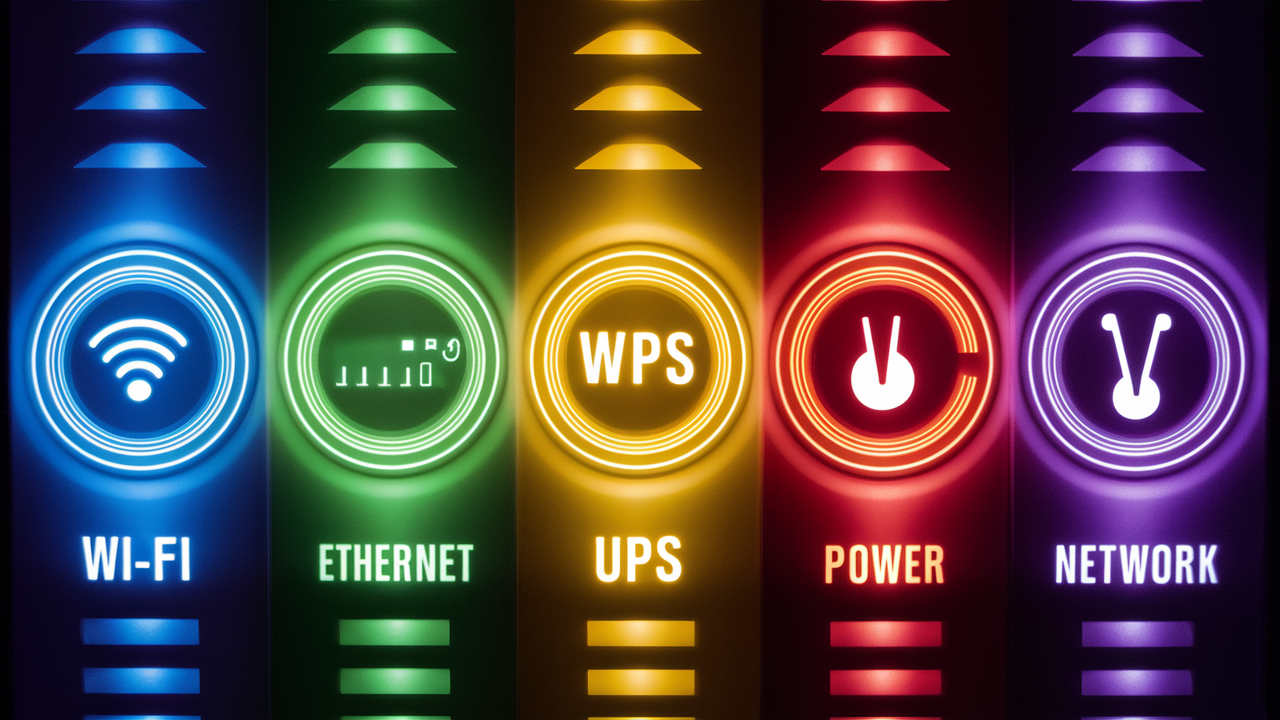
Understanding the status lights on your Cox router is crucial for troubleshooting and ensuring optimal internet performance. This guide deciphers what each color and pattern signifies, empowering you to quickly identify and resolve common connectivity issues, thereby enhancing your online experience.
Understanding Cox Router Lights: A Comprehensive Overview
In the digital age, a stable internet connection is not just a convenience; it's a necessity. For Cox customers, the small, often overlooked lights on their router are the primary indicators of their internet service's health. These lights, typically a combination of colors like green, blue, amber, and red, along with blinking or solid patterns, communicate a wealth of information. Misinterpreting these signals can lead to frustration and prolonged downtime. This section aims to demystify these indicators, providing a clear and actionable guide to understanding what each light means on your Cox router. By the end of this guide, you'll be equipped to perform basic diagnostics and understand when to contact Cox support.
Cox utilizes a range of router models, and while the exact placement and appearance of lights might vary slightly, the underlying meaning of their colors and behaviors remains largely consistent. The primary function of these lights is to provide real-time feedback on the router's operational status, its connection to the Cox network, and the performance of your Wi-Fi and wired network. Understanding these lights is the first step towards efficient troubleshooting and ensuring you're getting the most out of your internet service. We'll break down each key indicator, explaining its significance and what to do if it's not behaving as expected.
Why Router Lights Matter
Think of your router's lights as the dashboard of your internet connection. Just as a car's dashboard warns you about engine trouble or low fuel, your router's lights signal potential issues with power, network connectivity, or Wi-Fi performance. Ignoring these signals can lead to unexpected service interruptions, slower speeds, and difficulty connecting devices. In 2025-26, with the increasing reliance on high-speed internet for remote work, online education, and entertainment streaming, understanding these indicators is more critical than ever. A quick glance at your router can often tell you if the problem lies with your equipment, Cox's network, or your internal home network setup.
Furthermore, knowing what each light signifies can save you valuable time and potentially avoid unnecessary service calls. Many common issues, such as a router not powering on or a temporary network outage, can be diagnosed and sometimes resolved simply by understanding the status lights. This proactive approach to network management ensures a smoother, more reliable internet experience for your household. We will delve into the specifics of each light, starting with the most fundamental: the power indicator.
The Power Light: Is Your Router On?
The power light is the most basic indicator, confirming that your router is receiving power and has successfully booted up. Its behavior is usually straightforward, offering a clear yes or no on whether the device is active.
Solid Green/Blue Power Light
A solid green or blue light on the power indicator typically signifies that the router is powered on and functioning correctly. This is the desired state, indicating that the device has successfully initialized and is ready to establish network connections. If you see this light, it means the hardware is receiving power and the internal operating system of the router has loaded without critical errors. This is a good starting point for any troubleshooting, as it confirms the basic functionality of the device itself.
No Power Light
If the power light is off, it means the router is not receiving power. This is the most fundamental issue and requires immediate attention. Several factors could cause this:
- Power Adapter Connection: Ensure the power adapter is securely plugged into both the router and a working electrical outlet. Try plugging another device into the same outlet to verify it's providing power.
- Faulty Power Adapter: The power adapter itself might be damaged or malfunctioning. If you have a compatible spare, try using that.
- Router Hardware Failure: In rare cases, the router's internal power supply unit might have failed.
For 2025-26, it's important to remember that power surges or brownouts can damage power adapters. If you suspect a faulty adapter, contacting Cox support for a replacement is the best course of action.
Blinking Power Light
A blinking power light can indicate that the router is in the process of booting up or is experiencing a firmware update. This is usually a temporary state. If the light continues to blink for an extended period (more than 5-10 minutes), it might suggest an issue with the boot process or a failed firmware update. In such cases, a power cycle (unplugging the router for 30 seconds and plugging it back in) is often the first troubleshooting step. If the problem persists, a firmware corruption might have occurred, requiring professional intervention from Cox.
The Online Status Light: Your Gateway to the Internet
The online status light is arguably the most critical indicator for your internet service. It reflects the router's ability to establish and maintain a connection with Cox's network. Its behavior is a direct indicator of whether you have internet access.
Solid Green/Blue Online Light
A solid green or blue online light is the ideal state. It means your router has successfully connected to Cox's network and is receiving an internet signal. This is what you want to see for uninterrupted internet service. This solid light signifies that the modem component of your router has completed its synchronization with the cable network and is ready to pass data.
Blinking Online Light
A blinking online light indicates that the router is attempting to connect to the Cox network. This can happen during the initial startup of the router or after a temporary network interruption. The blinking pattern might vary, but generally, it means the modem is in the process of acquiring a signal and establishing a connection. If the light blinks for an extended period (more than 15-20 minutes) without becoming solid, it suggests a problem with the connection to Cox's network. This could be due to an outage in your area, a signal issue on the line, or a problem with Cox's equipment serving your neighborhood.
No Online Light or Red/Amber Online Light
If the online light is off, red, or amber, it signifies a loss of connection to the Cox network. This is a clear indication that you do not have internet service. The specific color (red or amber) might provide further clues, with red often indicating a more severe communication failure. Troubleshooting steps for this scenario include:
- Check Connections: Ensure the coaxial cable is securely connected to the router and the wall outlet.
- Power Cycle: Unplug the router, wait 30 seconds, and plug it back in. This can re-establish the connection.
- Check for Outages: Visit the Cox Outage Map or use the Cox app to see if there's a reported service interruption in your area.
- Signal Issues: If there are no reported outages, the problem might be with the signal strength or quality to your home. This often requires a technician visit.
In 2025-26, with increasing demand on network infrastructure, signal degradation can be a common cause of these issues, especially in densely populated areas.
Downstream and Upstream Lights: The Data Flow Indicators
These lights specifically relate to the modem's ability to receive (downstream) and send (upstream) data to and from Cox's network. They are crucial for understanding the quality of your internet connection.
Downstream Light Behavior
The downstream light indicates the modem's connection to the download channels provided by Cox. For most modern DOCSIS 3.0 and 3.1 modems, you'll see multiple downstream channels being bonded together for increased download speeds.
- Solid Green/Blue: This indicates a stable lock on the downstream channel(s). If you have multiple downstream lights, they should all ideally be solid.
- Blinking Green/Blue: This signifies that the modem is trying to lock onto the downstream channel(s) or is actively receiving data. A steady blink might be normal during initial connection, but continuous blinking can indicate a weak or unstable signal.
- No Light or Red/Amber: This means the modem cannot establish a connection to the downstream channels, preventing data reception. This is a critical issue that directly impacts your download speeds and overall internet functionality.
Upstream Light Behavior
The upstream light indicates the modem's connection to the upload channels. Similar to downstream, multiple upstream channels can be bonded for higher upload speeds.
- Solid Green/Blue: A solid light signifies a stable lock on the upstream channel(s), allowing data to be sent.
- Blinking Green/Blue: This means the modem is attempting to lock onto the upstream channel(s) or is actively transmitting data. Like the downstream light, continuous blinking can point to an unstable connection.
- No Light or Red/Amber: This indicates a failure to connect to the upstream channels, preventing you from sending data. This will severely impact your ability to upload files, participate in video calls, and use online services that require sending information.
Table: Downstream and Upstream Light Interpretation
| Light | Status | Meaning | Action |
|---|---|---|---|
| Downstream | Solid Green/Blue | Stable download connection established. | Normal operation. |
| Downstream | Blinking Green/Blue | Attempting to connect or actively receiving data. | May be normal during boot-up. If persistent, check coaxial cable. |
| Downstream | No Light / Red/Amber | Cannot connect to download channels. | Check coaxial cable, power cycle router. Contact Cox if persistent. |
| Upstream | Solid Green/Blue | Stable upload connection established. | Normal operation. |
| Upstream | Blinking Green/Blue | Attempting to connect or actively sending data. | May be normal during boot-up. If persistent, check coaxial cable. |
| Upstream | No Light / Red/Amber | Cannot connect to upload channels. | Check coaxial cable, power cycle router. Contact Cox if persistent. |
A common issue in 2025-26, especially with increased data usage, is signal noise on the coaxial line. This noise can interfere with both downstream and upstream communication, leading to blinking or no lights. Ensuring your coaxial cable is in good condition and tightly connected is paramount.
Wi-Fi Band Lights (2.4GHz & 5GHz): Wireless Connectivity Explained
Modern Cox routers are typically dual-band, meaning they broadcast Wi-Fi signals on two different frequencies: 2.4GHz and 5GHz. These lights indicate whether each of these Wi-Fi bands is active and broadcasting a signal.
2.4GHz Wi-Fi Light
The 2.4GHz band offers a wider range and better penetration through walls and obstacles, making it suitable for general browsing, email, and smart home devices.
- Solid Green/Blue: Indicates that the 2.4GHz Wi-Fi network is active and broadcasting.
- Blinking Green/Blue: Often signifies data activity on the 2.4GHz network (e.g., a device is actively connected and transmitting or receiving data).
- No Light: The 2.4GHz Wi-Fi band is disabled or not functioning correctly.
5GHz Wi-Fi Light
The 5GHz band provides faster speeds and less interference but has a shorter range and is less effective at penetrating solid objects. It's ideal for streaming, gaming, and devices that require high bandwidth.
- Solid Green/Blue: Indicates that the 5GHz Wi-Fi network is active and broadcasting.
- Blinking Green/Blue: Often signifies data activity on the 5GHz network.
- No Light: The 5GHz Wi-Fi band is disabled or not functioning correctly.
Dual-Band Routers and Their Lights
Most contemporary Cox routers, such as the Netgear CM1000 or Arris Surfboard series often provided by Cox, are dual-band. This means you will typically see separate lights for both 2.4GHz and 5GHz Wi-Fi bands. For example, you might see a "2.4G" light and a "5G" light, or similar designations.
Scenario: If you have a solid light for both 2.4GHz and 5GHz, your router is broadcasting both Wi-Fi networks. If only one light is on, it might mean the other band is disabled or there's an issue. Some users may choose to disable one band for specific reasons, but generally, having both active provides the most flexibility for your connected devices. By 2025-26, with the proliferation of smart home devices, having a robust 2.4GHz network is as important as a high-speed 5GHz network for demanding applications.
If you are experiencing slow Wi-Fi, checking these lights can help determine if one of the bands is not functioning. For instance, if your 5GHz light is off, you might be unintentionally using the slower 2.4GHz band for all your devices, leading to perceived slowness.
Ethernet Port Lights: Wired Connections at a Glance
For devices connected via an Ethernet cable, the lights on the router's Ethernet ports provide visual confirmation of a successful wired connection and data activity.
Ethernet Port Indicators
Most Cox routers will have multiple Ethernet ports, usually labeled 1, 2, 3, 4, etc. Each port typically has two small lights:
- Link/Activity Light (often Green/Blue):
- Solid: Indicates a physical link is established between the router and the connected device (e.g., computer, gaming console, smart TV).
- Blinking: Indicates data is being transmitted or received over that Ethernet connection. This is normal during active use.
- Off: No physical link is detected. The cable might be unplugged, the device might be off, or there might be an issue with the cable or port.
- Speed Light (often Amber/Orange, or a different color/pattern): Some routers have a separate light to indicate the connection speed (e.g., 10/100 Mbps vs. 1 Gbps).
- Solid Amber/Orange: Often indicates a 10/100 Mbps connection.
- Solid Green/Blue (or no light if it's a combined indicator): Often indicates a 1 Gbps (Gigabit Ethernet) connection.
Example: If you plug a laptop into Ethernet port 1, and the corresponding lights on that port turn solid green and then start blinking green, it means your laptop is successfully connected at Gigabit speed and is actively transferring data. If the lights remain off, you would check the Ethernet cable, ensure the laptop's network adapter is enabled, and verify the laptop is powered on.
In 2025-26, with the increasing adoption of Gigabit internet plans, ensuring your router's Ethernet ports are capable of and actively connecting at Gigabit speeds is important for realizing the full potential of your wired connections. Always use Cat 5e or Cat 6 Ethernet cables for optimal performance, especially for Gigabit connections.
Troubleshooting Common Cox Router Light Issues
Understanding the lights is only half the battle; knowing how to interpret them for troubleshooting is the real power. Here, we'll address common scenarios and provide step-by-step solutions.
Scenario 1: No Internet Connection (Online Light Off/Red)
This is the most frequent problem. The online light is your primary guide.
- Check Power: Ensure the power light is solid green/blue. If not, troubleshoot power first.
- Check Coaxial Cable: Verify the coaxial cable is securely screwed into the back of the router and the wall outlet. Look for any visible damage to the cable.
- Power Cycle the Router:
- Unplug the router's power adapter.
- Wait for 30 seconds.
- Plug the power adapter back in.
- Wait 5-10 minutes for the router to boot up and attempt to connect. Observe the lights.
- Check for Local Outages: Visit Cox Outage Map or use the Cox app. If there's an outage, you'll need to wait for Cox to resolve it.
- Signal Issues: If there are no outages and the lights still indicate no connection, the issue might be with the signal strength or quality reaching your home. This often requires a technician.
Scenario 2: Slow Internet Speeds (Downstream/Upstream Lights Blinking Constantly)
If your internet is working but is significantly slower than expected, the downstream and upstream lights can provide clues.
- Check for Congestion: Too many devices using the internet simultaneously can slow down your connection. Try disconnecting some devices temporarily.
- Wi-Fi Interference: If you're using Wi-Fi, interference from other networks or devices can cause slowness. Try moving closer to the router or switching to the 5GHz band if possible.
- Check Wired Connection: Connect a device directly to the router via Ethernet cable. If speeds improve, the issue is likely with your Wi-Fi.
- Signal Quality: Persistent blinking on downstream/upstream lights can indicate poor signal quality. Ensure coaxial cable is tight and undamaged.
- Test Speeds: Run a speed test (e.g., Ookla Speedtest) and compare results to your subscribed plan. If speeds are consistently low even on a wired connection, contact Cox.
Scenario 3: Wi-Fi Not Working (Wi-Fi Lights Off)
If your wired connections work but your wireless devices cannot connect to the internet.
- Check Wi-Fi Lights: Ensure the 2.4GHz and/or 5GHz lights are solid or blinking. If they are off, the Wi-Fi radios might be disabled.
- Reboot Router: Perform a power cycle as described above.
- Check Router Settings: Access your router's admin interface (usually by typing 192.168.0.1 or 192.168.1.1 into a web browser) to confirm that Wi-Fi is enabled. You may need your router's login credentials.
- Factory Reset (Last Resort): If other steps fail, you can perform a factory reset. This will erase all custom settings, including your Wi-Fi name and password. Look for a small reset button on the back of the router, which you'll need to press and hold with a paperclip for about 10-15 seconds.
Table: Quick Troubleshooting Guide
| Symptom | Likely Cause | Recommended Action |
|---|---|---|
| No Internet (Online light off/red) | No power, loose cable, Cox outage, signal issue | Check power, cables, Cox outage map, power cycle. |
| Slow Internet | Network congestion, Wi-Fi interference, signal degradation | Reduce device usage, check Wi-Fi band, test wired connection, check cables. |
| No Wi-Fi | Wi-Fi disabled, router issue | Check Wi-Fi lights, reboot router, check settings, factory reset if necessary. |
| Device not connecting via Ethernet | Bad cable, device off, port issue | Check cable, ensure device is on, try different port. |
For 2025-26, many of these issues can be exacerbated by the sheer volume of connected devices in a typical household. Understanding which lights indicate which aspect of connectivity allows for targeted troubleshooting rather than a general reboot.
Advanced Tips for Maintaining Your Cox Router
Beyond basic troubleshooting, a few advanced tips can help ensure your Cox router operates at peak performance and longevity.
Firmware Updates
Cox routers receive automatic firmware updates from Cox to improve performance, security, and compatibility. While these are usually automatic, it's good to be aware of them. If you notice persistent issues after a period of stability, a recent firmware update might be the cause, though this is rare. If you manage your own router (not a Cox-provided gateway), you'll need to check for and install updates manually through its administrative interface. For Cox-provided equipment, updates are pushed remotely.
Router Placement
The physical location of your router significantly impacts Wi-Fi performance. For optimal signal strength:
- Central Location: Place the router in a central area of your home, away from exterior walls.
- Elevated Position: Position it on a shelf or table, not on the floor.
- Avoid Obstructions: Keep it away from thick walls, metal objects, large appliances (like microwaves or refrigerators), and aquariums, which can interfere with Wi-Fi signals.
- Minimize Interference: Place it away from other electronic devices that emit radio waves, such as cordless phones or Bluetooth speakers.
Network Security
Securing your Wi-Fi network is paramount, especially in 2025-26 with increasing cyber threats.
- Strong Wi-Fi Password: Use a strong, unique password for your Wi-Fi network (WPA2 or WPA3 encryption). Avoid easily guessable passwords.
- Change Default Login Credentials: If you have a separate modem and router, or if you manage your own router, change the default administrator username and password for accessing the router's settings.
- Guest Network: Utilize the guest network feature if available. This allows visitors to connect to the internet without giving them access to your main network and devices.
Understanding Signal Strength and Channels
For advanced users, understanding Wi-Fi channel utilization can improve performance. Routers broadcast on specific channels within the 2.4GHz and 5GHz bands. In crowded areas, multiple networks on the same channel can cause interference. Many routers can automatically select the best channel, but you can also manually select a less congested channel via the router's admin interface. Tools like Wi-Fi analyzers (available as smartphone apps) can help you identify the least congested channels in your area.
Regular Reboots
While not always necessary, a periodic reboot (e.g., once a month) can sometimes clear minor glitches and refresh the router's memory, potentially improving performance. This is a gentle way to maintain the device.
When to Contact Cox Support
If you've gone through the basic troubleshooting steps, checked for outages, and the problem persists, it's time to contact Cox support. Be prepared to tell them:
- The specific lights that are on, off, or blinking.
- The troubleshooting steps you've already taken.
- The model of your router (if known).
This information will help their support staff diagnose the issue more efficiently.
Conclusion: Mastering Your Cox Router's Status Lights
Navigating the world of internet connectivity can feel complex, but understanding the status lights on your Cox router transforms it into an accessible diagnostic tool. From the fundamental power light confirming the device is on, to the critical online light indicating your connection to Cox's network, and the detailed downstream and upstream indicators showing data flow, each light provides vital information. The Wi-Fi band lights and Ethernet port indicators further illuminate the health of your wireless and wired networks, respectively. By familiarizing yourself with these signals and the troubleshooting steps outlined in this guide, you are empowered to quickly identify and often resolve common connectivity issues. This proactive approach ensures a smoother, more reliable internet experience, crucial for everything from remote work in 2025-26 to streaming entertainment. When in doubt, remember to check for local outages and don't hesitate to leverage Cox's support resources, armed with the knowledge you've gained here. Mastering your router's lights is the key to mastering your home network.