What Color Should my Cox Modem Light be?
Understanding your Cox modem's light colors is crucial for diagnosing internet connectivity issues. This guide provides a comprehensive breakdown of what each light signifies, helping you troubleshoot common problems and ensure a stable connection. Learn what the ideal light patterns are and how to interpret deviations.
Understanding Cox Modem Lights: A Comprehensive Guide
In the ever-connected world of 2025-26, a stable internet connection is not a luxury but a necessity. Whether you're working from home, streaming your favorite shows, or engaging in online gaming, your modem is the silent guardian of your digital life. Cox Communications, a leading internet service provider, equips its users with modems that feature a series of indicator lights. These lights are not just decorative; they are diagnostic tools that can tell you a great deal about your modem's operational status and, by extension, your internet connection's health. Understanding what each light color and pattern signifies is the first and most crucial step in troubleshooting any connectivity issues you might encounter. This comprehensive guide will delve deep into the meaning behind each light on your Cox modem, empowering you to quickly identify problems and get back online.
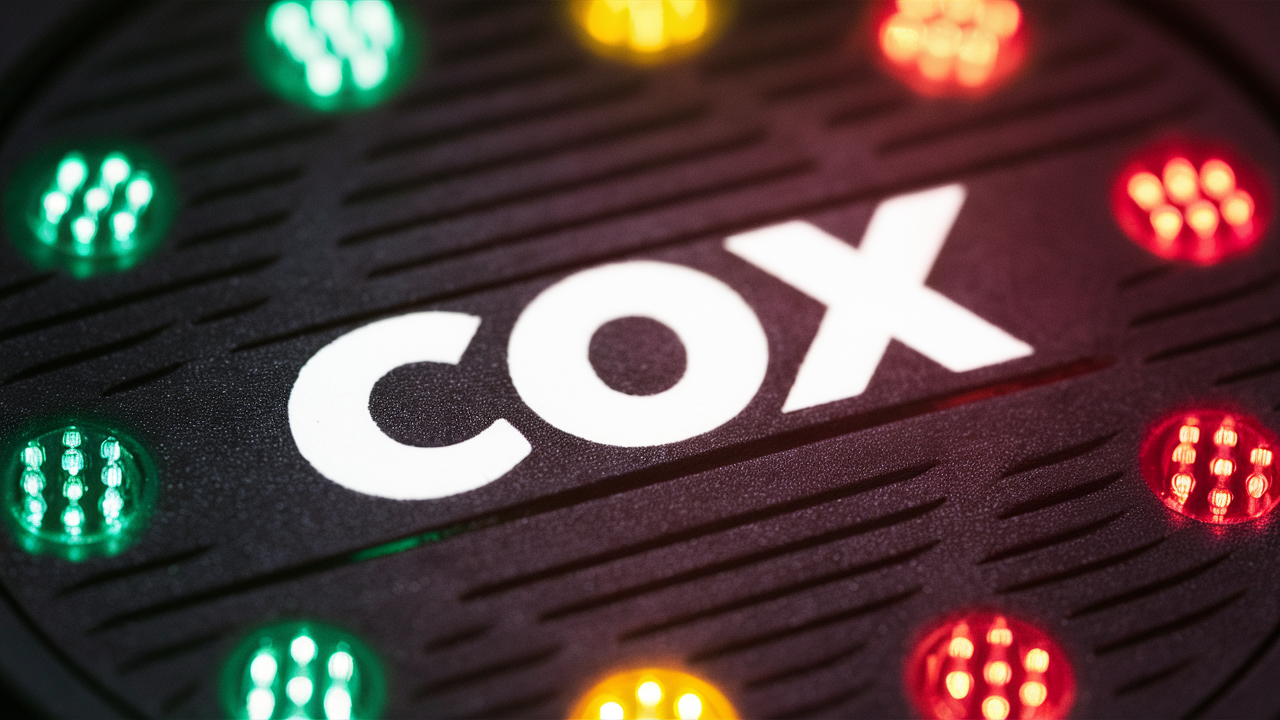
Cox modems, like those from other providers, typically display lights for Power, Send, Receive, Online, and sometimes Internet Activity. The color and blinking behavior of these lights can indicate whether your modem is receiving power, establishing a connection with the Cox network, and actively transmitting or receiving data. A solid green or blue light often signifies a healthy connection, while blinking or off lights can point to a range of issues, from simple cable problems to more complex network outages. By deciphering these visual cues, you can save time and frustration when facing internet slowdowns or complete outages. We will explore each of these lights in detail, providing clear explanations and actionable advice for common scenarios.
The Power Light: Your Modem's Vital Sign
The Power light is arguably the most fundamental indicator on your Cox modem. Its primary function is to confirm that the modem is receiving adequate electrical power. Without power, no other function of the modem can operate, making this light the initial checkpoint for any troubleshooting. In 2025-26, with the increasing demand for bandwidth and the complexity of home networks, ensuring your modem has a stable power source is paramount.
Solid Green/Blue: When the Power light is solid green or blue (depending on the specific modem model), it indicates that the modem is successfully receiving power from the wall outlet and its internal power supply is functioning correctly. This is the desired state, signifying that the modem is powered on and ready to begin its boot-up sequence and establish a connection with the Cox network.
Blinking Green/Blue: A blinking Power light can sometimes occur during the initial boot-up process of the modem. This is normal as the modem powers on, runs self-diagnostics, and loads its operating firmware. However, if the Power light continues to blink for an extended period (more than a few minutes) or blinks erratically, it might suggest an issue with the modem's internal power management or a potential hardware problem. In such cases, it's advisable to try a different power outlet or, if the problem persists, contact Cox support.
Off: If the Power light is completely off, it means the modem is not receiving any power. This is the most critical scenario and requires immediate attention. The first step should always be to check that the modem is securely plugged into a working electrical outlet. Try plugging in another device to the same outlet to verify its functionality. Also, ensure the power adapter is firmly connected to both the modem and the outlet. If the outlet is confirmed to be working and the power adapter is intact, the issue might lie with the power adapter itself or the modem's internal power circuitry, necessitating a call to Cox.
Important Note for 2025-26: With the proliferation of smart home devices and increased reliance on uninterrupted internet, a stable power supply is more critical than ever. Consider using a surge protector or an Uninterruptible Power Supply (UPS) for your modem and router to safeguard against power fluctuations and brief outages, which can disrupt your connection and potentially damage your equipment.
Send and Receive Lights: Data in Motion
The Send and Receive lights, often labeled as "DS" (Downstream) and "US" (Upstream) or similar, are crucial indicators of your modem's ability to communicate with the Cox network. These lights reflect the modem's process of locking onto the downstream (data coming to your home) and upstream (data going from your home) channels provided by Cox. The behavior of these lights during the modem's boot-up sequence and under normal operation provides valuable insights into the quality of your connection to the ISP's infrastructure.
Understanding Downstream (DS) and Upstream (US):
The internet connection relies on two-way communication. Downstream refers to the data flowing from Cox's network to your modem (e.g., streaming videos, loading web pages). Upstream refers to the data flowing from your modem to Cox's network (e.g., sending emails, uploading files, video calls). Your modem needs to establish a stable link for both to ensure a functional internet service.
Typical Behavior During Boot-Up:
- Blinking: When the modem first powers on, you will typically see the DS and US lights blinking. This indicates that the modem is searching for and attempting to lock onto the available downstream and upstream channels from Cox's network. This process can take several minutes.
- Solid: Once the modem has successfully locked onto the required channels, these lights will usually turn solid. A solid DS light indicates a stable downstream connection, and a solid US light indicates a stable upstream connection.
Interpreting Light Colors and Status:
- Solid Green/Blue: This is the ideal state. A solid DS light and a solid US light generally mean your modem has successfully established a reliable connection to Cox's network for both downloading and uploading data.
- Blinking DS/US (after initial boot-up): If these lights continue to blink or blink intermittently after the modem has been on for a while, it suggests that the modem is struggling to maintain a stable connection to the network. This could be due to signal issues, interference, or problems with the coaxial cable connections.
- Off DS/US: If either the DS or US light is off, it means the modem is not receiving a signal on that particular path. If the DS light is off, you likely won't have any internet access. If the US light is off, you might be able to browse some websites, but uploading data or performing actions requiring an upstream connection will fail.
- Alternating Blinking: In some cases, you might see DS and US lights blinking alternately. This can also indicate a communication problem between the modem and the Cox network.
Troubleshooting Steps for DS/US Lights:
- Check Coaxial Cable Connections: Ensure the coaxial cable is securely screwed into the back of the modem and the wall outlet. Loose connections are a very common cause of signal issues.
- Inspect Cables: Look for any visible damage, kinks, or sharp bends in the coaxial cable. Damaged cables can degrade signal quality.
- Test Different Cables/Outlets: If possible, try using a different coaxial cable or connecting to a different wall outlet to rule out faulty equipment.
- Power Cycle the Modem: Unplug the modem, wait for about 30 seconds, and then plug it back in. This can often resolve temporary glitches.
- Check for Outages: Visit the Cox website or use their app to check if there are any reported service outages in your area.
For 2025-26, with the increasing use of DOCSIS 3.1 and beyond for higher speeds, maintaining optimal signal levels for both downstream and upstream is more critical than ever. Issues with these lights can significantly impact your ability to utilize the full potential of your internet plan.
The Online Light: Your Gateway to the Internet
The Online light is the ultimate indicator of whether your Cox modem has successfully established a connection with the Cox internet network. It signifies that your modem has completed its boot-up sequence, locked onto the necessary channels, and is ready to pass internet traffic to your connected devices. This light is often the most scrutinized by users when troubleshooting internet connectivity.
Solid Green/Blue: This is the most desirable state for the Online light. A solid green or blue light indicates that your modem has successfully registered with the Cox network and is actively connected to the internet. This means your modem is configured correctly and is receiving an active internet signal. If other lights are also indicating a healthy connection (solid DS/US), and the Online light is solid, then your internet service should be working.
Blinking Green/Blue: A blinking Online light suggests that the modem is attempting to establish a connection with the Cox network but has not yet succeeded. This can happen during the initial boot-up process as the modem tries to authenticate and obtain an IP address. However, if the light continues to blink for an extended period (more than 5-10 minutes) after the modem has powered on, it indicates a problem. Common causes include issues with the signal strength, network congestion, or an account provisioning problem with Cox.
Off: If the Online light is completely off, it means the modem has not been able to connect to the Cox network at all. This is a clear sign of an internet connectivity problem. It could be due to a complete loss of signal, a network outage in your area, or a significant issue with your modem's configuration or registration with Cox. In this scenario, you will not have internet access.
Red Light: Some modem models might display a red light to indicate a critical error or failure to connect. This is a serious indicator that requires immediate attention.
Troubleshooting Steps for the Online Light:
- Verify DS/US Lights: Ensure that your Downstream (DS) and Upstream (US) lights are solid. If these are not stable, the Online light will not illuminate. Address any issues with the DS/US lights first.
- Power Cycle Modem and Router: Unplug both your modem and router (if you have a separate one) from the power source. Wait for at least 30 seconds. Plug the modem back in first and allow it to fully boot up (all lights to stabilize). Then, plug in your router.
- Check Coaxial Cable: As with the DS/US lights, ensure the coaxial cable is securely connected at both ends.
- Check for Service Outages: Visit the Cox website or use the Cox app to check for reported outages in your area.
- Contact Cox Support: If the Online light remains off or blinking after these steps, it's time to contact Cox customer support. There might be an issue with your service line, equipment provisioning, or a wider network problem that only they can resolve.
In the advanced networking landscape of 2025-26, where gigabit speeds and low latency are increasingly common, a stable Online light is the gateway to experiencing these benefits. Any disruption here means your high-speed internet is inaccessible.
Internet Activity Lights: What They Mean
Beyond the core connectivity lights, many Cox modems feature an "Internet Activity" or "Data" light. This light is designed to provide a visual indication of data being transmitted and received by your modem. It's a more dynamic indicator than the static Online light, showing you that your internet connection is not just active but also being used.
Typical Behavior:
- Blinking: The most common behavior for an Internet Activity light is blinking. This blinking indicates that data is actively flowing through your modem – either being downloaded from the internet to your devices or uploaded from your devices to the internet. The speed and pattern of the blinking can sometimes correlate with the intensity of internet usage. For instance, during a large file download or a high-definition video stream, the light might blink more rapidly.
- Solid: A solid Internet Activity light is less common and can sometimes indicate a problem, such as a continuous data stream that might be undesirable (e.g., a runaway process) or a potential issue with the modem's reporting. However, on some older models, a solid light might just indicate sustained activity. Always refer to your specific modem's manual for precise behavior.
- Off: If the Internet Activity light is off, it generally means that no data is currently being transmitted or received by the modem. This doesn't necessarily mean there's a problem with your internet connection itself. It could simply mean that no devices on your network are actively using the internet at that moment. If your Online light is solid and your Internet Activity light is off, and you're not experiencing any issues, this is usually normal.
When to be Concerned:
- Blinking Constantly and Rapidly, Even When No Devices Are Active: This could indicate unauthorized access to your network or a device on your network that is stuck in a loop, consuming bandwidth unnecessarily. It's worth investigating your network security and connected devices.
- Not Blinking at All When You Expect Activity: If you are actively browsing the web, streaming, or downloading, and the Internet Activity light remains off, it might suggest that data isn't actually reaching your devices, even if the Online light is solid. This could point to an issue with your router or the connection between the modem and router.
Troubleshooting Tips:
- Verify Other Lights: Always ensure your Power, DS/US, and Online lights are indicating a healthy connection first. The Activity light is secondary.
- Check Router: If you have a separate router, ensure its own activity lights are behaving as expected.
- Test with Different Devices: Try using different devices on your network to see if the activity light responds.
- Consult Modem Manual: The exact behavior of the activity light can vary by modem model. Refer to the user manual for your specific Cox modem for the most accurate interpretation.
In the context of 2025-26, with smart homes generating constant data traffic, this light can be a useful, albeit basic, indicator of network activity. For more detailed insights into your network traffic, consider using your router's built-in tools or third-party network monitoring software.
Troubleshooting Common Light Patterns
Understanding the individual lights is essential, but recognizing common patterns of these lights can significantly speed up troubleshooting. When your internet isn't working, observing the combination of lights on your Cox modem can often tell you exactly where the problem lies. Here are some common scenarios and their likely causes:
Scenario 1: No Lights On
Light Pattern: All lights are off.
Likely Cause: No power is reaching the modem. This is the most basic issue and needs to be addressed first.
Troubleshooting Steps:
- Check if the modem is plugged into a working electrical outlet.
- Ensure the power adapter is securely connected to the modem and the outlet.
- Try a different outlet or a different power adapter if available.
- Verify the power adapter itself is not damaged.
Scenario 2: Power Light On, But No Other Lights
Light Pattern: Power light is solid (green or blue), but DS, US, and Online lights are off.
Likely Cause: The modem is receiving power but is unable to establish a connection with the Cox network. This points to a signal issue or a problem with the coaxial cable connection.
Troubleshooting Steps:
- Ensure the coaxial cable is tightly screwed into the modem and the wall outlet.
- Inspect the coaxial cable for any damage, kinks, or loose connectors.
- Try a different coaxial cable or wall outlet if possible.
- Power cycle the modem (unplug, wait 30 seconds, plug back in).
- Check for Cox service outages in your area.
Scenario 3: Power and DS Lights Solid, US and Online Lights Off or Blinking
Light Pattern: Power and DS lights are solid, but US and Online lights are off or blinking.
Likely Cause: The modem is receiving a downstream signal from Cox, but it's unable to send data back (upstream) or fully connect to the internet. This often indicates an issue with the upstream signal or the modem's ability to communicate upstream.
Troubleshooting Steps:
- Recheck coaxial cable connections, ensuring they are tight and undamaged.
- Power cycle the modem.
- If the problem persists, it might be an issue with the upstream signal strength or Cox's equipment, requiring a call to support.
Scenario 4: Power, DS, and US Lights Solid, Online Light Blinking
Light Pattern: Power, DS, and US lights are solid, but the Online light is blinking.
Likely Cause: The modem has successfully locked onto the network channels but is failing to register or obtain an IP address from Cox. This can be a provisioning issue on Cox's end, a temporary network glitch, or a problem with the modem's configuration.
Troubleshooting Steps:
- Perform a modem power cycle.
- Wait a full 5-10 minutes for the modem to attempt re-registration.
- If the Online light continues to blink, contact Cox support to verify your account is provisioned correctly and that there are no network issues preventing registration.
Scenario 5: All Lights Solid (Power, DS, US, Online)
Light Pattern: Power, DS, US, and Online lights are all solid.
Likely Cause: This is the ideal state, indicating a healthy connection to the Cox network. If you are still experiencing internet issues (slow speeds, intermittent drops), the problem might lie with your router, connected devices, or the specific website/service you are trying to access.
Troubleshooting Steps:
- Restart your router.
- Restart your computer or device.
- Test your internet speed using a reliable speed test tool (e.g., Ookla Speedtest).
- Try accessing different websites to see if the issue is specific to one site.
- Check for Wi-Fi interference if you are using a wireless connection.
Scenario 6: Internet Activity Light Blinking Rapidly
Light Pattern: All connection lights are solid, but the Internet Activity light is blinking very fast and continuously, even when you're not actively using the internet.
Likely Cause: Excessive or unusual network traffic. This could be due to a device on your network consuming a lot of bandwidth, a background process running amok, or potentially a security concern like unauthorized access to your network.
Troubleshooting Steps:
- Check your router's connected devices list to identify any unusual activity.
- Scan your devices for malware or viruses.
- Consider changing your Wi-Fi password for added security.
- If the problem persists, investigate background applications on your computers and smart devices.
Table of Common Cox Modem Light Patterns (2025-26):
| Power | DS | US | Online | Activity | Meaning & Action |
|---|---|---|---|---|---|
| Off | Off | Off | Off | Off | No Power. Check outlet & adapter. |
| Solid | Off | Off | Off | Off | No Signal. Check coaxial cable. |
| Solid | Solid | Off/Blinking | Off/Blinking | Off | Upstream/Connection Issue. Check cable, power cycle, contact Cox. |
| Solid | Solid | Solid | Blinking | Off | Registration Issue. Power cycle, wait, contact Cox if persists. |
| Solid | Solid | Solid | Solid | Off | Connected, no active data. Normal if idle. |
| Solid | Solid | Solid | Solid | Blinking | Connected & Active. Normal. |
Advanced Troubleshooting and Tips for 2025-26
As internet speeds continue to climb and our reliance on a stable connection deepens in 2025-26, basic troubleshooting might not always be enough. Advanced users and those experiencing persistent issues can benefit from a more in-depth approach. Understanding the nuances of modem lights, combined with a few proactive measures, can keep your internet running smoothly.
Signal Strength and Quality:
While modem lights offer a visual cue, they don't provide precise measurements. Many Cox modems, especially those supporting DOCSIS 3.1, have a web interface that allows you to check detailed signal statistics. You can typically access this by typing your modem's IP address (often 192.168.100.1) into a web browser while connected to your network. Look for sections like "Downstream Bonded Channels" and "Upstream Bonded Channels."
Key metrics to monitor include:
- Power Levels (dBmV): For downstream, ideal levels are typically between -7 dBmV and +7 dBmV. For upstream, they should be between +35 dBmV and +50 dBmV. Values outside these ranges can indicate signal issues.
- SNR (Signal-to-Noise Ratio): A higher SNR is better. For downstream, aim for 35 dB or higher. For upstream, 30 dB or higher is generally good. Low SNR indicates noise interference.
- Uncorrectable Codewords: This number should ideally be zero. A high or increasing number of uncorrectable codewords indicates data errors and packet loss, leading to slow speeds and connection instability.
If you observe consistently poor signal levels, it's a strong indicator that you need to contact Cox to have a technician investigate the line quality to your home or the equipment outside.
Modem Firmware Updates:
Cox regularly pushes firmware updates to modems to improve performance, security, and compatibility. While most updates happen automatically, it's worth knowing how to check. Outdated firmware can sometimes lead to connectivity issues or prevent your modem from taking advantage of the latest network technologies. If your modem's web interface shows a firmware version, you can compare it to the latest known versions for your model or inquire with Cox support.
Understanding DOCSIS Standards:
By 2025-26, DOCSIS 3.1 is commonplace, enabling gigabit speeds. Older modems (DOCSIS 3.0) might struggle to keep up with demand or experience more frequent signal fluctuations. If you're on a high-speed plan and using an older modem, upgrading to a DOCSIS 3.1 compatible modem (either owned or rented from Cox) can make a significant difference in performance and stability. Check Cox's approved modem list for compatibility.
Network Segmentation and Router Performance:
If your modem lights all indicate a healthy connection, but your internet is still slow or unreliable, the issue might be with your router or the devices connected to it. A powerful router is essential for managing traffic in a busy household. Consider:
- Router Placement: Ensure your router is in a central, open location, away from obstructions and sources of interference (like microwaves or thick walls).
- Wi-Fi Channel Congestion: In densely populated areas, Wi-Fi channels can become congested. Many routers allow you to scan for and select less crowded channels.
- Quality of Service (QoS) Settings: If your router supports QoS, you can prioritize certain types of traffic (e.g., video streaming, gaming) to ensure a smoother experience.
- Router Firmware: Keep your router's firmware updated, similar to your modem.
For advanced users, tools like Wi-Fi analyzers (available as smartphone apps) can help diagnose Wi-Fi channel congestion and signal strength issues. Furthermore, using a wired Ethernet connection directly from the modem to a computer can help isolate whether the problem is with the internet service itself or the Wi-Fi network.
When to Call Cox Support:
Despite all troubleshooting efforts, some issues are beyond your control. You should contact Cox support if:
- Your modem consistently fails to acquire a downstream or upstream signal (DS/US lights off or blinking).
- The Online light remains blinking or off after power cycling and checking for outages.
- Your modem's signal statistics (if accessible) show consistently poor power levels or SNR.
- You suspect a service outage that Cox hasn't yet acknowledged.
- You've tried all basic troubleshooting steps without success.
When you call, be prepared to describe the exact light patterns you're seeing and the troubleshooting steps you've already taken. This will help the support agent diagnose the problem more efficiently.
Frequently Asked Questions About Modem Lights
Here are some common questions users have about their Cox modem lights, with answers tailored for the current technological landscape of 2025-26.
Q1: My modem lights look different from the ones described. What should I do?
A: Cox uses various modem models, and the exact color and behavior of lights can differ slightly between them. The descriptions provided in this guide cover the most common patterns. Always refer to the user manual that came with your specific Cox modem or visit the Cox modem and router guides online for the most accurate information for your device.
Q2: How long should my Cox modem take to boot up?
A: A typical Cox modem boot-up sequence, from powering on to establishing a stable online connection, can take anywhere from 2 to 10 minutes. This time is needed for the modem to power on, run self-diagnostics, lock onto downstream and upstream channels, and register with the Cox network. If it takes significantly longer or never completes, there's likely an issue.
Q3: Can I reset my modem using the lights?
A: No, the lights on your modem are indicators, not controls. To reset your modem, you typically need to unplug the power cord, wait about 30 seconds, and then plug it back in. Some modems may have a small, recessed reset button on the back or bottom that requires a paperclip to press for a hard reset, but this is usually a last resort and should only be done if instructed by Cox support.
Q4: My internet is working, but it's very slow. What do the lights tell me?
A: If all your connection lights (Power, DS, US, Online) are solid, it generally indicates a stable connection to the Cox network. In this case, slow speeds are less likely to be a modem connectivity issue and more likely related to network congestion (either on Cox's network or the broader internet), your Wi-Fi performance, or issues with your connected devices. Check your Wi-Fi signal strength, try a wired connection, restart your router, and run a speed test. If speeds are consistently below your plan's advertised rate even on a wired connection, contact Cox.
Q5: What does it mean if my modem's lights are blinking in a specific sequence?
A: While general blinking often indicates a process (like booting up or searching for a signal), specific sequences can sometimes indicate error codes. However, most consumer-grade modems don't display complex error codes via their lights. If you see unusual blinking patterns that aren't part of the normal boot-up or operation, it's best to consult your modem's manual or contact Cox support for interpretation.
Q6: Should I own my modem or rent from Cox?
A: This is a common consideration in 2025-26. Renting from Cox means they handle maintenance and replacement, and the modem is guaranteed to be compatible with their network. However, owning your own modem (purchased from a retailer) can save money in the long run, especially if you choose a DOCSIS 3.1 compatible model that meets or exceeds your internet speed needs. Ensure any modem you purchase is on Cox's approved modem list to guarantee compatibility and service activation. The choice depends on your budget, technical comfort level, and how long you plan to keep your service.
Q7: My Online light is solid, but I can't access any websites. What's wrong?
A: This scenario often points to an issue beyond the modem's direct connection to the ISP. It could be a problem with your router, DNS server issues, or even malware on your computer. Try power cycling your router, clearing your browser's cache and cookies, and testing with a different browser or device. If you have a separate router, try connecting a computer directly to the modem via Ethernet to bypass the router and see if that resolves the issue. If direct connection works, the problem is with your router.
By understanding these common questions and the underlying principles of modem operation, you can become a more effective troubleshooter and ensure a more reliable internet experience.
Conclusion
Navigating the blinking and solid lights on your Cox modem might seem daunting at first, but it's a powerful skill for maintaining a stable internet connection in 2025-26. We've explored the significance of each light – from the fundamental Power indicator to the crucial Online status and the dynamic Activity light. Understanding that a solid green or blue light across Power, Downstream, Upstream, and Online typically signifies a healthy connection is your primary goal. Conversely, recognizing blinking or off lights as signals for potential issues, whether it's a loose cable, a signal problem, or a network registration issue, allows for targeted troubleshooting.
Remember to always start with the simplest solutions: check your power source and cable connections. Then, proceed to power cycling your modem and router. If problems persist, consult the common light patterns and troubleshooting steps provided, and don't hesitate to check for Cox service outages in your area. For more complex diagnostics, exploring your modem's signal statistics via its web interface can offer invaluable insights. Ultimately, your Cox modem's lights are your first line of defense against internet woes. By mastering their language, you empower yourself to resolve many common issues quickly, ensuring your digital life continues uninterrupted.