How Many Devices can I Connect to my Cox WIFI?
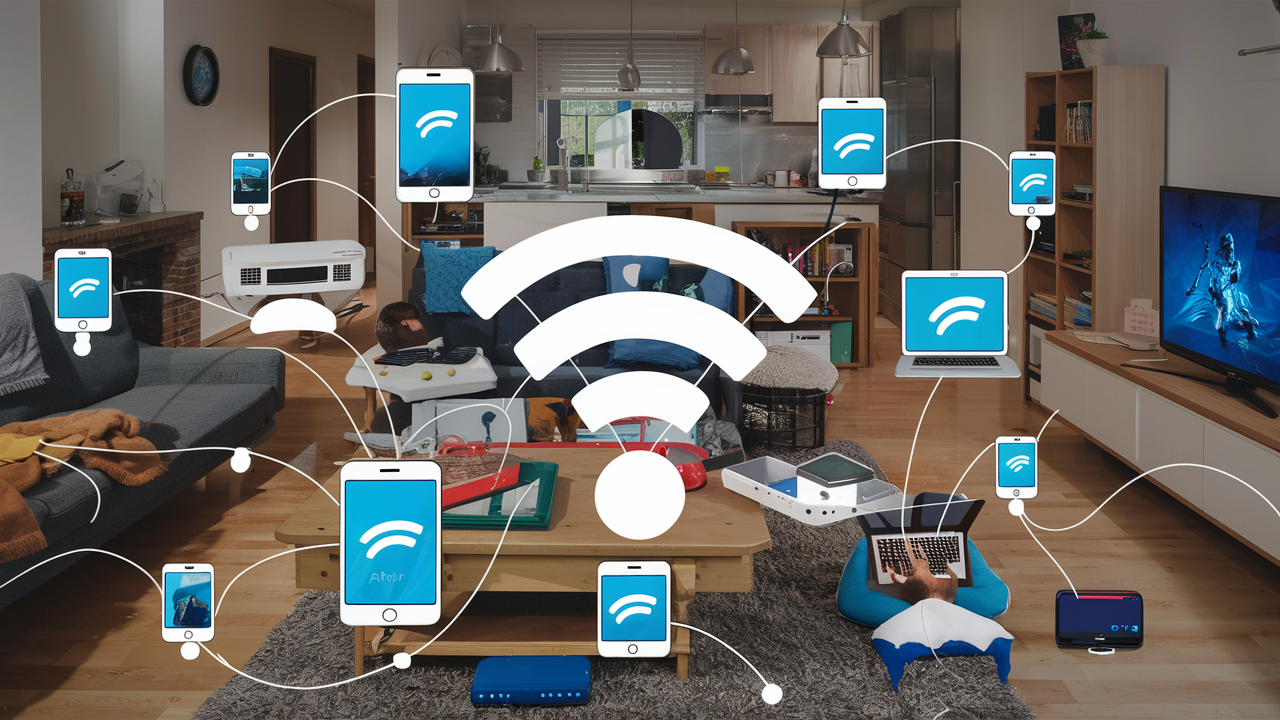
Understanding the number of devices you can connect to your Cox Wi-Fi is crucial for a smooth online experience. This guide will break down Cox's device limits, factors influencing performance, and how to optimize your network for multiple connections, ensuring all your gadgets stay connected without lag.
Understanding Cox Wi-Fi Device Limits
The question of "how many devices can I connect to my Cox Wi-Fi?" doesn't have a single, definitive number. Instead, it's a dynamic interplay of your internet plan's speed, the capabilities of your router, and the demands each connected device places on your network. Cox, like most Internet Service Providers (ISPs), doesn't typically impose a hard, fixed limit on the number of devices you can connect to your Wi-Fi network. However, there are practical limitations that come into play, primarily dictated by the bandwidth allocated by your internet plan and the processing power of your router.
Think of your internet connection as a highway. Your internet speed, measured in Mbps (megabits per second), is the number of lanes and the speed limit on that highway. Each device that connects to your Wi-Fi and uses the internet is like a vehicle on that highway. A simple device like a smart thermostat might only require a small lane and slow speed, while streaming 4K video on multiple devices simultaneously is akin to a fleet of large trucks. If too many vehicles try to use the highway at once, or if they're all trying to go very fast, traffic congestion occurs, leading to slow speeds and dropped connections for everyone.
Cox's infrastructure is designed to provide a certain level of service based on the plan you subscribe to. While they don't typically block connections after a certain number, the performance will degrade significantly as you add more devices, especially if those devices are actively consuming bandwidth. For instance, a basic Cox internet plan might offer speeds suitable for a few devices performing light tasks like email and web browsing. However, if you try to connect ten devices, each streaming high-definition content, you'll likely experience buffering and slow loading times, not because Cox has a hard cap, but because the available bandwidth is being stretched too thin.
The router provided by Cox, or one you purchase yourself, also plays a critical role. Modern routers have evolved significantly, with advancements in Wi-Fi standards (like Wi-Fi 6 and Wi-Fi 6E) that allow them to handle more simultaneous connections more efficiently. However, even the most advanced router has its limits in terms of processing power and its ability to manage traffic for a large number of connected devices. Older or more basic routers might struggle to maintain stable connections for more than a dozen devices, even if your internet plan has ample speed.
Therefore, while there isn't a strict "Cox Wi-Fi device limit," the practical limit is determined by the combined factors of your internet speed, router capabilities, and the usage patterns of your connected devices. The goal is to ensure that the available bandwidth can adequately serve all the devices that need to access the internet concurrently without compromising the user experience for any of them.
Factors Affecting How Many Devices Can Connect
Several key factors influence the actual number of devices that can reliably connect to your Cox Wi-Fi network and perform as expected. Understanding these elements is crucial for diagnosing performance issues and making informed decisions about your home network setup. These factors are not exclusive to Cox but are universal to any home internet connection.
Internet Speed (Bandwidth)
This is arguably the most significant factor. Your Cox internet plan's download and upload speeds directly dictate how much data can be transferred to and from your home at any given moment. Each device and application consumes a certain amount of bandwidth. For example:
- Basic Web Browsing & Email: Typically requires 1-3 Mbps per device.
- Standard Definition (SD) Streaming: Requires around 3-5 Mbps per device.
- High Definition (HD) Streaming: Requires approximately 5-8 Mbps per device.
- 4K Ultra HD Streaming: Can demand 25 Mbps or more per device.
- Online Gaming: Varies greatly, but can range from 3-10 Mbps for gameplay, plus additional for downloads and updates.
- Video Conferencing (e.g., Zoom, Teams): Can use 2-4 Mbps for standard quality and up to 8 Mbps for HD.
- Smart Home Devices (Thermostats, Lights, Locks): Usually very low bandwidth, often less than 1 Mbps, but can still contribute to network overhead.
If your Cox plan offers 100 Mbps, and you have 10 devices streaming HD content simultaneously (each needing 5 Mbps), you're already consuming 50 Mbps. This leaves 50 Mbps for other activities, but if you add more devices or higher-bandwidth activities, you'll quickly hit a bottleneck. In 2025-26, with the proliferation of smart home devices and higher-resolution streaming, even "mid-tier" plans can feel insufficient if not managed properly.
Router Capabilities
Your Wi-Fi router acts as the central hub for your home network. Its specifications determine how many devices it can effectively manage and the speed at which it can transmit data. Key router aspects include:
- Processing Power (CPU) & Memory (RAM): A more powerful router can handle more simultaneous connections and manage traffic more efficiently. Cheaper or older routers might have limited processing power, leading to slowdowns as more devices connect.
- Wi-Fi Standard:
- Wi-Fi 4 (802.11n): Older standard, best for fewer devices and basic tasks.
- Wi-Fi 5 (802.11ac): Common in many homes, offers better performance for multiple devices than Wi-Fi 4.
- Wi-Fi 6 (802.11ax): Significantly improves efficiency and capacity in crowded environments, handling more devices simultaneously with better speeds. Ideal for 2025-26 homes with many connected gadgets.
- Wi-Fi 6E: Adds the 6 GHz band, reducing congestion and offering even higher speeds, but requires compatible devices.
- Number of Antennas & MIMO Technology: Multiple antennas and technologies like MU-MIMO (Multi-User, Multiple-Input, Multiple-Output) allow the router to communicate with multiple devices simultaneously, rather than sequentially.
- Frequency Bands (2.4 GHz vs. 5 GHz vs. 6 GHz):
- 2.4 GHz: Longer range, penetrates walls better, but slower speeds and more prone to interference. Good for devices far from the router or those with low bandwidth needs.
- 5 GHz: Shorter range, less wall penetration, but significantly faster speeds and less interference. Ideal for streaming and gaming devices closer to the router.
- 6 GHz (Wi-Fi 6E): Even faster speeds, less congestion, but shortest range and requires compatible devices.
Device Usage Patterns
It's not just the number of devices, but what they are doing. A household with 20 smart plugs that are mostly idle will experience fewer issues than a household with 10 devices, where 5 are streaming 4K video, 2 are in video conferences, and 3 are downloading large files. The cumulative demand for bandwidth and the router's ability to manage these simultaneous, high-demand tasks are critical.
Network Congestion (Internal & External)
- Internal Congestion: Occurs when too many devices on your local network are demanding bandwidth simultaneously, exceeding your router's capacity or your internet plan's speed.
- External Congestion: While less common for residential users to directly experience, the ISP's network can experience congestion during peak hours in densely populated areas. However, your home network's internal limitations are usually the primary bottleneck.
Router Placement and Signal Strength
A router placed in a central location, away from obstructions and sources of interference (like microwaves or thick walls), will provide a stronger, more stable signal to more devices. Weak Wi-Fi signals can lead to dropped connections and slower speeds, even if your internet plan is robust.
By considering these factors, you can better understand why you might be experiencing performance issues and how to address them, whether it's by upgrading your Cox plan, investing in a better router, or optimizing how your devices are connected.
Cox Internet Plans and Device Support
Cox offers a range of internet plans designed to cater to different household needs, from basic connectivity to high-demand usage. The plan you choose significantly impacts how many devices can comfortably operate on your network without performance degradation. While Cox doesn't explicitly state a "device limit" per plan, the advertised speeds are the primary indicator of the network's capacity. As of 2025-26, Cox's plans generally fall into categories based on download speeds, with upload speeds typically being a fraction of the download speed.
Here's a general breakdown of how different Cox internet plan tiers might support varying numbers of devices, along with illustrative statistics for 2025-26 usage patterns:
Basic/Entry-Level Plans
- Advertised Speeds: Typically ranging from 50 Mbps to 150 Mbps download.
- Target User: Small households with minimal internet usage, primarily for email, social media, light web browsing, and perhaps one device streaming standard-definition content.
- Device Capacity: Can comfortably support 5-10 devices performing light tasks. Adding more devices, or engaging in bandwidth-intensive activities like HD streaming or online gaming, will likely lead to noticeable slowdowns.
- 2025-26 Scenario: A household with two adults and one child, where each person uses a smartphone for browsing and social media, and one person streams news in SD. This plan might suffice. However, if the child starts online schooling or the adults want to stream HD content, this plan will struggle.
Mid-Tier Plans
- Advertised Speeds: Typically ranging from 150 Mbps to 500 Mbps download.
- Target User: Average-sized households (2-4 people) with moderate internet usage, including HD streaming on multiple devices, online gaming, video conferencing, and a growing number of smart home devices.
- Device Capacity: Can generally support 10-20 devices with a mix of activities. This tier is often the sweet spot for many families in 2025-26, balancing cost and performance.
- 2025-26 Scenario: A family of four where parents work from home using video conferencing, two children stream HD content or play online games, and there are around 8-10 smart home devices (lights, speakers, security cameras). This plan should provide a good experience, assuming a capable router.
High-Tier/Gigabit Plans
- Advertised Speeds: Often 500 Mbps to 1 Gbps (1000 Mbps) download and sometimes higher.
- Target User: Large households, power users, or homes with a very high density of connected devices and demanding applications. This includes 4K/8K streaming, extensive online gaming, professional remote work requiring large file transfers, and advanced smart home setups.
- Device Capacity: Can comfortably support 20+ devices, even with multiple simultaneous high-bandwidth activities. These plans are designed for the most demanding scenarios of 2025-26.
- 2025-26 Scenario: A large family or a home with multiple remote workers and avid gamers. All devices are connected, including multiple 4K smart TVs, gaming consoles, VR headsets, and a comprehensive smart home ecosystem. This plan ensures that bandwidth is not a bottleneck, even during peak usage times.
The Role of the Router
It's crucial to reiterate that the speed of your Cox plan is only one part of the equation. The router you use is equally important. Cox often provides a modem/router combo device. The capabilities of this device, particularly its Wi-Fi standard (Wi-Fi 5, Wi-Fi 6, Wi-Fi 6E) and its internal hardware, will determine how well it can distribute the internet speed to multiple devices. A high-speed Cox plan paired with an outdated or low-capacity router will still result in poor performance for many devices.
For example, a Cox Gigablast plan (1 Gbps) paired with a basic Wi-Fi 5 router might struggle to provide a seamless experience for 20 devices performing heavy tasks. However, the same plan with a high-end Wi-Fi 6 or Wi-Fi 6E router can manage this load much more effectively. Many users in 2025-26 opt to purchase their own high-performance routers to ensure they can fully leverage their internet plan's speed and handle a large number of connected devices.
Upload Speeds Matter Too
While download speeds are often emphasized, upload speeds are increasingly important in 2025-26 for activities like video conferencing, uploading large files, cloud backups, and live streaming. Cox's plans typically offer significantly lower upload speeds than download speeds (e.g., 10 Mbps upload for a 100 Mbps download plan). If your household relies heavily on these upload-intensive activities, consider plans with higher upload bandwidth or inquire about specific business-class options if available.
To determine the best Cox plan for your needs, assess your household's typical internet usage. Count the number of devices you anticipate connecting and consider their primary functions. This assessment will guide you toward a plan that offers sufficient bandwidth without overspending.
Optimizing Your Cox Network for More Devices
Even with a robust Cox internet plan, optimizing your home network is essential to ensure all your devices connect smoothly and perform well. As the number of connected gadgets continues to grow in 2025-26, effective network management becomes paramount. Here are actionable strategies to enhance your Wi-Fi's capacity and stability:
1. Upgrade Your Router
If your current router is several years old or was provided by Cox with basic capabilities, upgrading to a modern router is often the single most impactful step. Look for routers that support:
- Wi-Fi 6 (802.11ax) or Wi-Fi 6E: These standards are designed to handle more devices simultaneously with better efficiency and speed. Wi-Fi 6E, in particular, offers access to the less congested 6 GHz band.
- MU-MIMO (Multi-User, Multiple-Input, Multiple-Output): This technology allows the router to communicate with multiple devices at once, rather than one by one.
- Dual-Band or Tri-Band Operation: Allows you to segment your network, dedicating the less congested 5 GHz or 6 GHz bands to high-bandwidth devices.
- Sufficient Processing Power: Higher-end routers have more powerful processors to manage traffic for numerous devices.
Consider investing in a router from reputable brands known for performance and firmware updates. This is a key investment for a future-proofed network in 2025-26.
2. Strategic Router Placement
The physical location of your router significantly impacts signal strength and reach. For optimal performance:
- Central Location: Place the router in a central area of your home, ideally on an elevated surface.
- Avoid Obstructions: Keep the router away from thick walls, metal objects, large appliances (like refrigerators or microwaves), and aquariums, which can interfere with Wi-Fi signals.
- Minimize Interference: Position the router away from other electronic devices that emit radio frequencies.
3. Utilize Wi-Fi Bands Effectively
Most modern routers are dual-band (2.4 GHz and 5 GHz) or tri-band (adding 6 GHz with Wi-Fi 6E). Leverage these bands strategically:
- 2.4 GHz Band: Best for devices farther from the router or those that don't require high speeds, such as smart thermostats, smart plugs, and older smart devices. It offers better range and wall penetration.
- 5 GHz Band: Ideal for devices that require higher speeds and are closer to the router, such as smart TVs for streaming, gaming consoles, laptops, and smartphones used for video calls or streaming.
- 6 GHz Band (Wi-Fi 6E): If you have Wi-Fi 6E compatible devices, use this band for the most demanding applications, as it offers the highest speeds and least interference.
Some routers allow you to create separate SSIDs (network names) for each band, making it easier to manually assign devices. Others use "band steering" to automatically connect devices to the optimal band.
4. Consider a Mesh Wi-Fi System
For larger homes or those with dead zones, a mesh Wi-Fi system can be a game-changer. A mesh system consists of a main router and satellite nodes that work together to create a single, seamless Wi-Fi network throughout your home. This eliminates dead spots and ensures consistent connectivity for all devices, regardless of their location.
Mesh systems are particularly beneficial in 2025-26 as homes become "smarter" and more devices are spread across larger areas.
5. Segment Your Network (Guest Network & QoS)
- Guest Network: Many routers allow you to set up a separate guest network. This is useful for visitors and can also be used to isolate less trusted smart home devices, preventing them from accessing your main network and potentially compromising security.
- Quality of Service (QoS): QoS settings allow you to prioritize certain types of traffic or specific devices over others. For example, you can set your router to prioritize video streaming or online gaming traffic, ensuring these activities receive sufficient bandwidth even when other devices are active. This is a powerful tool for managing bandwidth hogs.
6. Wired Connections for Critical Devices
Whenever possible, use Ethernet cables to connect devices that require the most stable and fastest connection. This includes desktop computers, gaming consoles, smart TVs, and network-attached storage (NAS) devices. Wired connections bypass Wi-Fi congestion and interference, offering superior performance and reliability.
7. Regularly Update Router Firmware
Router manufacturers frequently release firmware updates to improve performance, patch security vulnerabilities, and add new features. Ensure your router's firmware is up-to-date. Many modern routers can be configured to update automatically.
8. Manage Bandwidth-Hungry Devices
Be mindful of which devices are consuming the most bandwidth. If you notice consistent slowdowns, identify the culprits. This might involve:
- Limiting simultaneous 4K streams.
- Scheduling large downloads or updates for off-peak hours.
- Ensuring smart home devices are not malfunctioning and constantly transmitting data.
9. Reboot Your Router and Modem
A simple reboot can often resolve temporary network glitches and improve performance. It's a good practice to reboot your modem and router periodically (e.g., once a month) or when you experience connectivity issues.
By implementing these optimization strategies, you can significantly improve the capacity and performance of your Cox Wi-Fi network, ensuring a smooth and reliable internet experience for all your connected devices in 2025-26 and beyond.
Troubleshooting Common Connection Issues
Even with the best plans and optimization, you might encounter issues with your Cox Wi-Fi network. Slow speeds, dropped connections, or devices unable to connect are common. Here’s a structured approach to troubleshooting these problems:
1. Check Your Internet Speed
Before blaming your Wi-Fi, confirm your internet speed is actually the issue. Use a reliable speed test tool (like Ookla Speedtest, Fast.com, or Cox's own speed test tool if available) on a device connected via Ethernet cable to your router. Compare the results to the speeds advertised in your Cox plan. If the wired speeds are significantly lower than expected, the issue likely lies with your Cox service or modem, not your Wi-Fi.
2. Restart Your Equipment
This is the universal first step for a reason. Power cycle your modem and router:
- Unplug the power cords from both your modem and router.
- Wait for at least 30 seconds.
- Plug the modem back in first and wait for it to fully boot up (all indicator lights stable).
- Plug the router back in and wait for it to fully boot up.
Test your connection again.
3. Isolate the Problematic Device
If only one device is having trouble, the issue is likely with that specific device. Try these steps:
- Restart the Device: Simple but effective.
- Forget and Reconnect to Wi-Fi: On the device's Wi-Fi settings, "forget" your network and then reconnect, entering the password again.
- Check for Device Updates: Ensure the device's operating system and network drivers are up-to-date.
- Test on Another Network: If possible, try connecting the device to a different Wi-Fi network (e.g., a friend's house, a public hotspot) to see if the problem persists.
4. Check Router Status Lights
Most routers have indicator lights that can signal operational status. Consult your router's manual to understand what each light means. For example, a blinking internet light might indicate a problem with the connection to Cox, while a solid Wi-Fi light indicates the wireless network is broadcasting.
5. Reduce Network Congestion
If multiple devices are experiencing slowness, your network might be overloaded. Try temporarily disconnecting some devices to see if performance improves. This helps identify if you have too many devices for your current plan or router.
6. Check Wi-Fi Signal Strength
If a device is far from the router or experiencing intermittent drops, poor signal strength is likely the culprit. Try moving the device closer to the router or consider implementing the optimization strategies mentioned earlier (e.g., mesh system, better router placement).
7. Scan for Malware
Malware on a device can consume bandwidth and cause network slowdowns. Run a thorough scan with reputable antivirus and anti-malware software on all your devices.
8. Check for Interference
Other electronic devices can interfere with your Wi-Fi signal. Common sources include microwaves, cordless phones, Bluetooth devices, and even neighboring Wi-Fi networks. Try changing your Wi-Fi channel in your router settings. Many routers have an "auto" channel selection, but manually selecting a less congested channel (especially on the 2.4 GHz band) can sometimes improve performance.
9. Update Router Firmware
As mentioned in the optimization section, outdated firmware can cause performance issues and security risks. Ensure your router is running the latest firmware.
10. Contact Cox Support
If you've tried the steps above and your wired internet speed is still significantly lower than your plan's advertised speeds, or if you suspect an issue with your Cox modem, it's time to contact Cox customer support. They can check for outages in your area, diagnose issues with their equipment, and potentially send a technician.
11. Consider a Router Reset (Last Resort)
If your router is behaving erratically and other troubleshooting steps haven't worked, you can perform a factory reset. **Warning:** This will erase all your custom settings (network name, password, etc.), and you'll need to reconfigure your router from scratch. Consult your router's manual for instructions on how to perform a factory reset.
By systematically working through these troubleshooting steps, you can effectively diagnose and resolve most common Cox Wi-Fi connection issues, ensuring a more stable and reliable internet experience.
Future-Proofing Your Home Network
The digital landscape is constantly evolving, with new devices, higher resolution content, and more demanding applications emerging regularly. To ensure your Cox Wi-Fi network remains robust and capable for years to come, especially as we move further into the 2025-26 period and beyond, a proactive approach to future-proofing is essential. This involves anticipating future needs and investing in infrastructure that can adapt.
1. Embrace Wi-Fi 6E and Beyond
While Wi-Fi 6 and Wi-Fi 6E are current standards, the industry is already working on Wi-Fi 7 and subsequent iterations. Investing in a Wi-Fi 6E router now provides a significant upgrade, leveraging the 6 GHz band for reduced congestion and higher speeds. As more devices become Wi-Fi 6E compatible, you'll be well-positioned. When Wi-Fi 7 becomes mainstream, consider upgrading your router again to take advantage of even greater speeds and efficiency.
2. Plan for Increased Device Density
The number of connected devices in the average home is only expected to grow. Smart homes are becoming more integrated, with everything from appliances to security systems relying on network connectivity. Ensure your router or mesh system is rated to handle a high number of simultaneous connections. A system designed for 50+ devices will offer more headroom than one rated for 20-30.
3. Prioritize Bandwidth with Higher Speed Plans
As content resolution increases (think 8K streaming becoming more common) and applications become more data-intensive, higher internet speeds will become the norm. While your current Cox plan might be sufficient now, consider subscribing to a plan with more bandwidth than you currently need. A gigabit or multi-gigabit plan will provide ample capacity for future demands, preventing the need for frequent upgrades.
4. Invest in a Robust Mesh System
For larger homes or those with complex layouts, a high-quality mesh Wi-Fi system is a wise investment. These systems are designed for seamless coverage across large areas and can be expanded by adding more nodes. As you potentially move or renovate, a mesh system can adapt to your home's changing needs more easily than a single router.
5. Consider Wired Infrastructure
While Wi-Fi is convenient, wired Ethernet connections remain the gold standard for speed, reliability, and low latency. If you're building a new home or undertaking major renovations, consider running Ethernet cables to key locations (e.g., living room for entertainment systems, home office, bedrooms). This provides a future-proof backbone for your network that Wi-Fi alone cannot match.
6. Security is Paramount
With more devices connecting, the attack surface for potential security threats increases. Future-proofing your network also means ensuring it's secure. This includes:
- Strong, Unique Passwords: For both your Wi-Fi network and individual device logins.
- Regular Firmware Updates: To patch security vulnerabilities.
- Network Segmentation: Using guest networks or VLANs to isolate less secure IoT devices.
- Consider a Firewall: Some advanced routers or dedicated firewall devices offer more robust security features.
7. Evaluate Your ISP's Future Offerings
Keep an eye on what Cox and other ISPs are doing regarding network upgrades. Technologies like fiber-to-the-home (FTTH) offer significantly higher speeds and lower latency than traditional cable internet. While Cox primarily uses cable, understanding the evolving ISP landscape can inform your long-term connectivity decisions.
8. Scalability and Modularity
Choose network equipment that offers scalability. For instance, a mesh system that allows you to add more nodes, or a router that can be upgraded or paired with additional access points, provides flexibility. This modularity ensures you can adapt your network as your needs grow without replacing your entire setup.
By adopting these future-proofing strategies, you can build a Cox Wi-Fi network that not only meets your current demands but is also well-equipped to handle the technological advancements and increasing connectivity needs of the coming years, ensuring a seamless and reliable online experience.
In conclusion, the number of devices you can connect to your Cox Wi-Fi isn't a fixed number but rather a dynamic capacity influenced by your internet plan's speed, your router's capabilities, and how those devices are used. By understanding these factors, optimizing your network through router upgrades, strategic placement, and leveraging Wi-Fi bands, and by troubleshooting effectively, you can ensure a robust online experience. Investing in future-proof technologies like Wi-Fi 6E and higher-speed plans will prepare your home for the ever-increasing demands of connected living in 2025-26 and beyond.