What is Broadband
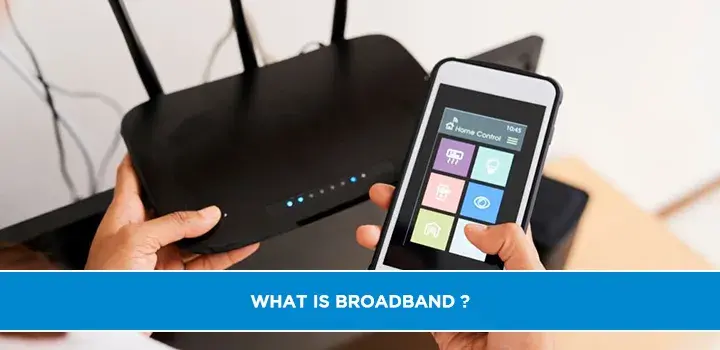
Broadband internet is the high-speed, always-on connection essential for modern life, enabling everything from streaming and gaming to remote work and advanced communication. Understanding what broadband is, its various types, and how it works empowers you to choose the best service for your needs in today's connected world.
What is Broadband Internet?
At its core, broadband internet refers to a high-speed internet connection that is always on. The term "broadband" itself signifies a wide bandwidth, meaning it can carry a large amount of data simultaneously, much faster than older dial-up connections. This capability is what allows for seamless streaming of high-definition video, rapid downloads, online gaming, video conferencing, and the complex operations of modern digital life. Unlike dial-up, which ties up a phone line and offers speeds measured in kilobits per second (Kbps), broadband operates at megabits per second (Mbps) or even gigabits per second (Gbps), making a significant difference in user experience and the possibilities it unlocks.
In 2025, broadband is not just a luxury; it's a fundamental utility. Reliable, high-speed internet access is crucial for economic participation, educational advancement, social connection, and accessing essential services. From a technical standpoint, broadband encompasses a range of technologies that deliver data over various mediums, each with its own characteristics regarding speed, reliability, and availability. Understanding these different types is key to appreciating the diverse landscape of internet connectivity available today.
How Broadband Works: The Technology Behind the Speed
Broadband internet relies on sophisticated technologies to transmit data at high speeds. The fundamental principle involves sending digital signals over a dedicated medium, which can be physical cables or wireless signals. Unlike dial-up, which uses the same phone line for voice and data and requires a modem to dial into an internet service provider (ISP), broadband connections are "always on" and utilize different frequencies or dedicated lines, allowing for simultaneous voice and data usage.
The process generally involves a modem or router that connects your devices to the ISP's network. This modem translates the digital signals from your computer into a format that can be transmitted over the network and vice-versa. The ISP then routes this data through its infrastructure, which can include fiber optic cables, coaxial cables, telephone lines, or wireless transmitters, to reach the wider internet.
Here's a simplified breakdown of the general flow:
- Your Device to Modem/Router: Your computer or smartphone sends a data request (e.g., to load a webpage).
- Modem/Router to ISP: Your modem/router converts this request into a signal suitable for the broadband technology being used and sends it to your ISP's local hub.
- ISP to Internet: The ISP's network routes your request to the server hosting the requested information.
- Internet to ISP: The server sends the information back to your ISP.
- ISP to Modem/Router: Your ISP transmits the data back to your modem/router.
- Modem/Router to Your Device: The modem/router converts the signal back into a format your device can understand, displaying the webpage or content.
The "always on" nature of broadband means that this process happens almost instantaneously, providing a fluid and responsive internet experience. The specific technology used dictates the physical path the data takes and the maximum speeds achievable. For instance, fiber optic cables use light pulses to transmit data, offering incredibly high speeds and low latency, while DSL uses existing copper telephone lines, with speeds dependent on distance from the local exchange.
Exploring the Diverse Types of Broadband Connections
The landscape of broadband internet is varied, with several technologies competing to deliver high-speed access to consumers and businesses. Each type has its own advantages, disadvantages, and typical use cases, often influenced by geographical location, infrastructure availability, and cost. Understanding these differences is crucial for making an informed decision about which broadband service best suits your needs.
DSL (Digital Subscriber Line)
DSL technology leverages existing copper telephone lines to provide internet access. It works by transmitting data over higher frequencies than those used for voice calls, allowing both internet and phone service to be used simultaneously without interference. The speed of DSL is highly dependent on the distance between the user's home or business and the local telephone company's central office (CO) or remote terminal (RT). The closer you are, the faster your connection will be.
- Pros: Widely available due to existing phone infrastructure, generally more affordable than cable or fiber, often offers symmetrical upload/download speeds (though usually lower than asymmetrical).
- Cons: Speed degrades significantly with distance from the CO/RT, susceptible to line quality issues, generally slower than cable or fiber, upload speeds are often much lower than download speeds.
- Typical Speeds (2025): Download speeds can range from 1 Mbps to 100 Mbps, with upload speeds typically much lower.
Cable Internet
Cable internet uses the same coaxial cable network that delivers cable television. Data is transmitted over these cables, offering significantly higher speeds than traditional DSL. Cable internet is a shared bandwidth technology, meaning that the total available bandwidth in a neighborhood is shared among all users connected to that particular segment of the cable network. This can lead to slower speeds during peak usage hours when many people are online.
- Pros: Widely available in many urban and suburban areas, offers much faster download speeds than DSL, competitive pricing.
- Cons: Shared bandwidth can lead to slower speeds during peak times, upload speeds are typically much lower than download speeds, not as fast or reliable as fiber.
- Typical Speeds (2025): Download speeds can range from 50 Mbps to over 1 Gbps, with upload speeds typically ranging from 5 Mbps to 50 Mbps.
Fiber Optic Internet
Fiber optic internet is considered the gold standard for broadband connectivity. It uses thin strands of glass or plastic to transmit data as pulses of light. This technology offers unparalleled speeds, reliability, and low latency. Because light signals can travel long distances without significant degradation, fiber optic connections are less affected by distance from the provider's equipment compared to DSL. Fiber is also inherently more secure and less prone to electromagnetic interference.
- Pros: Extremely high speeds (both download and upload), very low latency, highly reliable, future-proof technology, less susceptible to environmental interference.
- Cons: Availability is limited, primarily in newer developments or areas where significant infrastructure upgrades have been made, can be more expensive than other options, installation can be more complex.
- Typical Speeds (2025): Download and upload speeds can range from 100 Mbps to 10 Gbps and beyond. Many plans offer symmetrical speeds.
Satellite Internet
Satellite internet is a viable option for rural and remote areas where terrestrial broadband services like DSL, cable, or fiber are not available. It works by transmitting data between a satellite dish at the user's location and a satellite orbiting Earth, which then relays the signal to a ground station connected to the internet. This multi-hop transmission introduces higher latency compared to other broadband types.
- Pros: Available in virtually any location with a clear view of the sky, a crucial option for underserved areas.
- Cons: High latency (delay), slower speeds compared to terrestrial options, susceptible to weather conditions (rain, snow can disrupt signals), often comes with strict data caps, can be more expensive per gigabyte.
- Typical Speeds (2025): Download speeds can range from 12 Mbps to 100 Mbps, with upload speeds typically much lower. Latency can be 500ms or more.
Fixed Wireless Internet
Fixed wireless internet provides broadband access without physical cables. It uses radio waves to connect a fixed location (like a home or business) to a nearby access point or tower operated by the ISP. This technology is often used in areas where running cables is difficult or cost-prohibitive, bridging the gap between DSL and satellite. It requires a clear line of sight between the user's antenna and the provider's tower.
- Pros: Faster than satellite and sometimes DSL, quicker to deploy than wired options, can be a good alternative in rural or semi-rural areas.
- Cons: Requires a clear line of sight, speeds can be affected by distance and obstructions, not as fast or reliable as fiber or high-end cable, can be susceptible to interference.
- Typical Speeds (2025): Download speeds can range from 25 Mbps to 100 Mbps, with upload speeds varying.
Mobile Broadband (4G/5G)
Mobile broadband, powered by cellular networks like 4G LTE and the newer 5G, provides internet access through mobile devices or dedicated hotspots. 5G technology, in particular, offers speeds that rival or even surpass some wired broadband connections, with significantly lower latency. While often used for on-the-go access, 5G is increasingly being deployed as a home internet solution in areas where wired infrastructure is lacking or outdated.
- Pros: Highly portable, 5G offers very high speeds and low latency, increasingly viable as a home internet alternative, widely available in populated areas.
- Cons: Speeds and reliability can vary based on signal strength and network congestion, often comes with data caps (though unlimited plans are becoming more common), can be more expensive for heavy data usage compared to wired plans, requires compatible devices or hotspots.
- Typical Speeds (2025): 4G LTE typically offers download speeds up to 100 Mbps. 5G speeds can range from 100 Mbps to several Gbps in optimal conditions, with latency as low as 10ms.
Understanding Broadband Speed and Performance
When discussing broadband, speed is often the most prominent metric, but it's essential to understand what these numbers mean and how they translate into real-world performance. Broadband speeds are typically measured in megabits per second (Mbps) for downloads and uploads, and sometimes gigabits per second (Gbps) for very high-end connections. Latency, often measured in milliseconds (ms), is another critical factor affecting the responsiveness of your internet connection.
Download Speed: This is the speed at which your device receives data from the internet. It's crucial for activities like streaming videos, downloading files, and browsing websites. Higher download speeds mean faster loading times and smoother playback for high-definition content.
Upload Speed: This is the speed at which your device sends data to the internet. It's important for activities like uploading photos and videos to social media, sending large email attachments, participating in video conferences, and backing up data to the cloud. Many residential broadband plans have asymmetrical speeds, meaning download speeds are significantly higher than upload speeds.
Latency: Also known as ping, latency is the time it takes for a data packet to travel from your device to a server and back. Low latency is essential for real-time applications like online gaming, video conferencing, and live streaming. High latency can cause noticeable delays, making these activities frustrating or impossible.
Bandwidth vs. Speed: While often used interchangeably, bandwidth refers to the maximum amount of data that can be transmitted over a connection at any given time, while speed is the actual rate of data transfer. Think of bandwidth as the width of a pipe and speed as the flow rate through that pipe. A wider pipe (more bandwidth) allows for a higher potential flow rate (speed).
Factors Affecting Speed and Performance:
- Technology Type: As discussed, fiber optic offers the highest potential speeds and lowest latency, followed by cable, then DSL and satellite.
- Distance from Provider's Equipment: Particularly relevant for DSL, where longer distances mean slower speeds.
- Network Congestion: In shared networks (like cable), heavy usage by neighbors can slow down your connection.
- Your Equipment: An old router or modem can bottleneck even the fastest internet connection.
- Wi-Fi vs. Wired: Wi-Fi signals can be affected by distance, obstructions, and interference, often resulting in slower speeds than a direct Ethernet connection.
- Number of Connected Devices: More devices using the internet simultaneously will share the available bandwidth, potentially slowing down individual applications.
Typical Broadband Speeds in 2025:
By 2025, the average broadband speeds continue to climb. While DSL might still offer speeds up to 100 Mbps in some areas, cable plans commonly exceed 500 Mbps, with gigabit plans (1000 Mbps) becoming more accessible. Fiber optic is leading the charge, with symmetrical speeds of 1 Gbps or even 2 Gbps becoming standard in many fiber-enabled communities. Mobile 5G home internet is also offering speeds comparable to cable, often in the hundreds of Mbps, with peak theoretical speeds reaching into the Gbps range.
How to Test Your Broadband Speed:
To understand your actual performance, use reputable online speed test tools (e.g., Ookla Speedtest, Fast.com). It's best to perform tests at different times of the day and ideally using a wired Ethernet connection to get the most accurate results.
Choosing the Right Broadband Plan for You
Selecting the ideal broadband plan involves more than just picking the fastest advertised speed. It requires a thoughtful assessment of your household's internet usage, your location's availability, and the terms of service offered by providers. Making the wrong choice can lead to frustration with slow speeds, unexpected charges, or paying for more than you need.
Assess Your Needs
The first and most crucial step is to understand how you and your household use the internet. Consider the following:
- Number of Users: How many people will be using the internet simultaneously?
- Number of Devices: How many devices (computers, smartphones, tablets, smart TVs, gaming consoles, smart home devices) will be connected at any given time?
- Primary Activities:
- Basic Browsing & Email: Requires lower speeds (e.g., 25-50 Mbps download).
- Streaming Video (HD/4K): Requires moderate to high speeds (e.g., 50-100 Mbps download per stream, depending on resolution).
- Online Gaming: Requires low latency and decent download/upload speeds (e.g., 50-100 Mbps download, good upload speed, and very low latency).
- Video Conferencing/VoIP: Requires stable connection and good upload speeds (e.g., 25-50 Mbps download, 10-25 Mbps upload).
- Large File Downloads/Uploads: Requires high download (for downloads) and upload (for uploads) speeds.
- Smart Home Devices: Many IoT devices use minimal bandwidth individually but can add up.
A good rule of thumb for a typical household with multiple users and devices engaging in various activities is to aim for at least 100-300 Mbps download speeds. For power users, gamers, or households with extensive streaming and remote work needs, 500 Mbps to 1 Gbps or higher might be more appropriate.
Consider Your Location
The type of broadband available to you is heavily dependent on your geographical location and the existing infrastructure. This is often the biggest limiting factor.
- Urban/Suburban Areas: Generally have access to a wider range of options, including high-speed cable and fiber optic.
- Rural/Remote Areas: Options may be limited to DSL (if phone lines are present), satellite, or fixed wireless. Mobile broadband (4G/5G) might also be a strong contender.
You can typically check provider websites by entering your address to see what services are available in your specific area. Independent broadband mapping sites can also provide insights.
Compare Providers and Plans
Once you know what's available, it's time to compare specific offerings. Look beyond just the advertised speed:
- Advertised Speed vs. Actual Speed: Providers often advertise "up to" speeds, which may not be consistently achievable. Check reviews and speed test results for your area if possible.
- Download vs. Upload Speeds: Ensure the upload speed meets your needs, especially if you frequently upload content or use video conferencing.
- Pricing: Note the introductory price versus the regular price after any promotional period. Look for hidden fees (installation, equipment rental).
- Equipment Costs: Will you need to rent a modem/router from the ISP, or can you use your own?
- Customer Service and Reliability: Research provider reputations for customer support and network uptime.
Understand Data Caps and Contracts
These two factors can significantly impact your overall cost and flexibility:
- Data Caps: Some plans, particularly satellite and mobile broadband, impose monthly data limits. Exceeding these caps can result in throttled speeds or hefty overage charges. For most typical internet users in 2025, unlimited data plans are preferable and increasingly common for wired services.
- Contracts: Many providers require you to sign a 12-month or 24-month contract. Breaking a contract early usually incurs an early termination fee (ETF). If you prefer flexibility, look for month-to-month plans, though they might be slightly more expensive.
Example Scenario:
A family of four working and schooling from home, with two adults on video calls, two children streaming educational videos, and regular evening streaming of 4K movies. They live in a suburban area with access to cable and fiber.
- DSL: Likely too slow and unreliable for this household's needs.
- Cable: A 500 Mbps download plan with decent upload speeds would likely suffice, but might experience slowdowns during peak hours.
- Fiber: A 500 Mbps or 1 Gbps symmetrical plan would provide ample bandwidth, low latency, and consistent performance, making it the ideal choice if available and within budget.
- Satellite/Fixed Wireless: Generally not suitable due to speed, latency, or data cap limitations for this usage profile.
The Ever-Growing Importance of Broadband in 2025
In 2025, broadband internet has transcended its status as a mere convenience to become an indispensable utility, woven into the fabric of daily life. Its pervasive influence touches nearly every aspect of modern society, from economic productivity and educational attainment to personal well-being and civic engagement. The rapid evolution of technology and the increasing reliance on digital platforms have cemented broadband's role as a fundamental enabler of progress and opportunity.
Remote Work and Education
The widespread adoption of remote work and online learning, accelerated by global events and technological advancements, relies entirely on robust broadband connectivity. High-speed, reliable internet allows individuals to participate in virtual meetings, access cloud-based productivity tools, collaborate with colleagues across distances, and engage with educational content without interruption. For many, broadband is the gateway to maintaining employment and pursuing educational goals, breaking down geographical barriers and offering unprecedented flexibility. The ability to conduct business and learn effectively from home is a testament to broadband's transformative power.
Entertainment and Streaming
The entertainment landscape has been revolutionized by broadband. High-definition and 4K streaming services for movies, TV shows, and music are now commonplace. Online gaming, with its demand for low latency and high bandwidth, has become a major industry. Live streaming of events, concerts, and sports offers immersive experiences that were previously unimaginable. Broadband ensures that users can access a vast library of content on demand, transforming how we consume media and engage with entertainment.
Smart Homes and IoT
The Internet of Things (IoT) continues to expand, with more devices in our homes becoming "smart" and connected. From smart thermostats and lighting systems to security cameras and voice assistants, these devices rely on constant internet connectivity to function, be controlled remotely, and communicate with each other. Broadband provides the necessary bandwidth and stability to support a growing ecosystem of interconnected devices, enhancing convenience, security, and energy efficiency within households.
Healthcare and Telemedicine
Broadband is playing an increasingly vital role in healthcare delivery. Telemedicine, the provision of healthcare services remotely using telecommunications technology, has seen significant growth. Patients can consult with doctors, receive diagnoses, and manage chronic conditions without needing to travel to a physical clinic. This is particularly beneficial for individuals in rural areas or those with mobility issues. Furthermore, broadband enables the transmission of large medical imaging files, remote patient monitoring, and access to extensive health information resources, improving healthcare accessibility and outcomes.
Beyond these specific areas, broadband is also crucial for:
- E-commerce: Facilitating online shopping and business transactions.
- Social Connection: Enabling communication with friends and family through social media and video calls.
- Civic Engagement: Providing access to government services, news, and information.
- Innovation: Supporting the development and deployment of new digital technologies and services.
As we move further into the 2020s, the demand for faster, more reliable, and more accessible broadband will only intensify, underscoring its position as a foundational element of modern society.
The Future of Broadband: What's Next?
The evolution of broadband internet is far from over. The relentless pursuit of faster speeds, lower latency, and greater accessibility continues to drive innovation. Several key trends are shaping the future of broadband connectivity:
- Ubiquitous 5G and Beyond: 5G technology is rapidly expanding, not only as a mobile broadband solution but also as a viable alternative for home internet. Future iterations, such as 6G, promise even more astonishing speeds and near-instantaneous communication, potentially blurring the lines between wired and wireless connectivity.
- Fiber to the Premises (FTTP) Expansion: The deployment of fiber optic cables directly to homes and businesses (FTTP) will continue to be a priority for many ISPs. This infrastructure offers the highest potential for speed and reliability, making it the long-term solution for future bandwidth demands. Government initiatives and private investment are driving this expansion, aiming to bridge the digital divide.
- Increased Speeds and Symmetrical Bandwidth: As demand for data-intensive applications grows, ISPs will continue to offer higher download and, crucially, upload speeds. Symmetrical bandwidth, where upload and download speeds are equal, will become more common, especially with fiber, benefiting content creators, remote workers, and those using real-time communication tools.
- Edge Computing and Reduced Latency: To support applications requiring near-instantaneous responses (like autonomous vehicles, advanced AI, and immersive AR/VR), the development of edge computing will become more critical. This involves processing data closer to the source, reducing the reliance on distant data centers and significantly lowering latency.
- Addressing the Digital Divide: Efforts to ensure equitable access to high-speed broadband will persist. This includes expanding infrastructure to rural and underserved communities, exploring innovative deployment methods, and implementing affordability programs.
- AI-Powered Network Management: Artificial intelligence will play an increasingly significant role in managing complex broadband networks, optimizing performance, predicting issues, and enhancing security.
The future of broadband is one of ever-increasing capacity and capability, ensuring that individuals, businesses, and societies can harness the full potential of the digital age. As these technologies mature and become more widespread, the internet will become an even more integral and powerful force in shaping our world.
In conclusion, broadband internet is the high-speed, always-on connection that underpins our digital lives. From its fundamental definition as wide-bandwidth data transmission to the diverse technologies like DSL, cable, fiber, satellite, fixed wireless, and mobile 5G that deliver it, understanding broadband is key to navigating today's connected landscape. In 2025, its importance is undeniable, fueling remote work, education, entertainment, and critical services like telemedicine. As we look ahead, advancements in 5G, fiber expansion, and AI promise even faster, more reliable, and more accessible internet for all. Choosing the right broadband plan involves assessing your household's specific needs, considering your location's availability, and carefully comparing providers, speeds, data caps, and contract terms. By making an informed decision, you can ensure you have the connectivity required to thrive in our increasingly digital world.