What country owns Verizon?
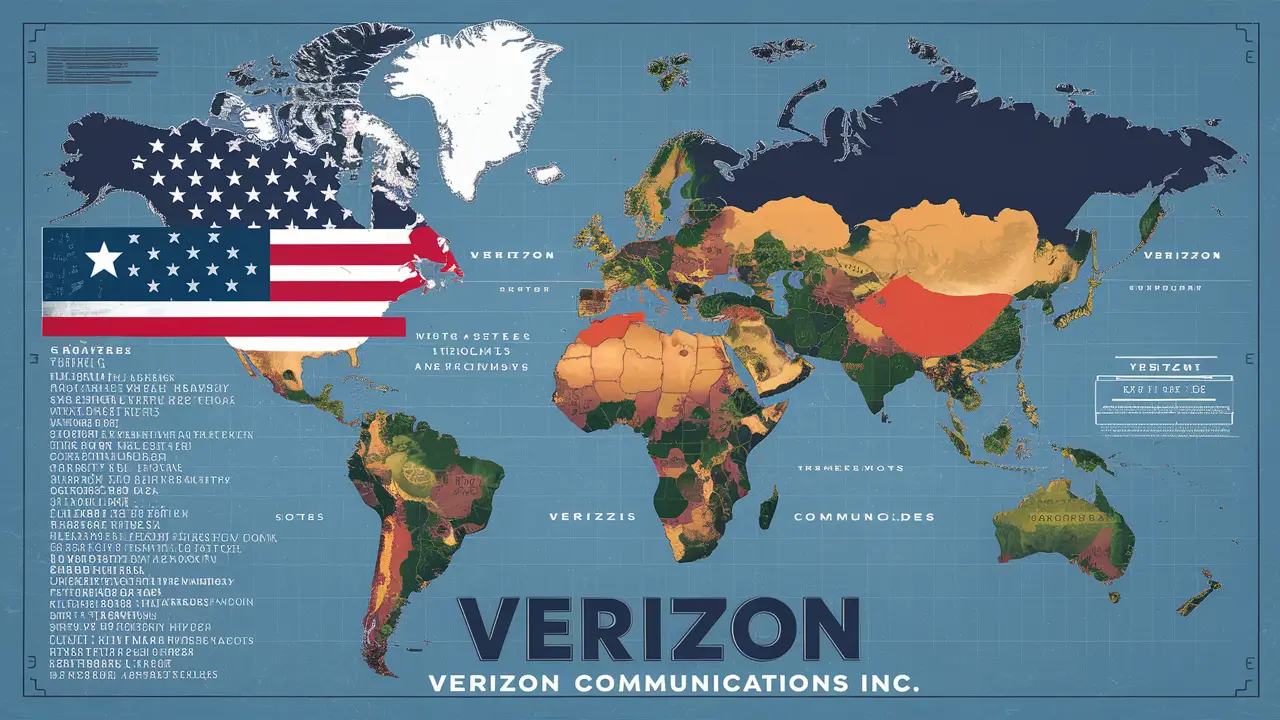
Understanding the ownership structure of major telecommunications companies like Verizon is crucial for consumers and investors alike. This comprehensive guide directly addresses the question of "What country owns Verizon?" and delves into its global presence, operational scope, and the implications of its ownership for its services and market position in 2025-26.
Unpacking Verizon's Ownership: The United States Connection
The question of "What country owns Verizon?" has a clear and straightforward answer: Verizon Communications Inc. is an American telecommunications company. It is headquartered in New York City, United States, and operates as a publicly traded entity on the New York Stock Exchange (NYSE) under the ticker symbol VZ. This means that while it is a massive corporation with global operations, its primary domicile, regulatory oversight, and the majority of its ownership are rooted in the United States.
As a public company, Verizon is owned by its shareholders. These shareholders can be individuals, institutional investors (like pension funds, mutual funds, and hedge funds), and other corporations. The largest shareholders are typically institutional investors, which is common for large-cap companies. However, the defining characteristic of Verizon's ownership is its American foundation. It was formed through a series of mergers and acquisitions involving legacy Bell System companies, all of which were historically American entities. The most significant precursor was Bell Atlantic, which merged with GTE in 2000 to form Verizon Communications. This lineage firmly establishes its identity as a US-based corporation.
The implications of being a US-owned company are significant. Verizon operates under the regulatory frameworks of the United States, including those set by the Federal Communications Commission (FCC). This influences its service offerings, pricing strategies, and how it expands its network infrastructure within the US. Furthermore, its research and development efforts, as well as its strategic partnerships, are often shaped by the technological landscape and business environment of the United States.
While Verizon is fundamentally American, its global presence means it interacts with and is subject to the regulations of other countries where it operates or provides services. However, the ultimate controlling entity and the locus of its corporate governance remain within the United States. This distinction is important when considering international business dealings, data privacy laws, and global expansion strategies. For instance, when discussing cybersecurity or data sovereignty, the US jurisdiction is the primary reference point for Verizon's core operations.
The Historical Roots: From Bell System to Verizon
To truly understand Verizon's ownership, a brief look at its history is illuminating. Verizon's origins can be traced back to the breakup of the American Telephone and Telegraph Company (AT&T) in 1984. AT&T was split into AT&T Long Lines and seven independent Regional Bell Operating Companies (RBOCs), often referred to as "Baby Bells." Bell Atlantic was one of these RBOCs, serving parts of the Mid-Atlantic region of the United States.
Bell Atlantic grew through acquisitions and organic expansion. A pivotal moment came in 1997 when it merged with NYNEX, another Baby Bell. The company continued to evolve, recognizing the convergence of telecommunications, the internet, and mobile technology. The most transformative event was the 2000 merger with GTE (General Telephone & Electronics Corporation), another major US-based telecommunications provider. This merger created Verizon Communications Inc., a behemoth in the US telecommunications industry. The name "Verizon" itself is a portmanteau of "veritas" (Latin for truth) and "horizon," signifying a forward-looking and reliable company.
This historical trajectory underscores that Verizon's formation and growth were intrinsically tied to the American telecommunications market and its regulatory environment. Even as it has expanded internationally, its core identity and operational headquarters have remained in the US.
Publicly Traded: The Role of Shareholders
As a publicly traded company, Verizon's ownership is dispersed among millions of shareholders. The Securities and Exchange Commission (SEC) in the US requires public companies to disclose their financial performance and ownership structure. Major institutional investors, such as Vanguard Group, BlackRock, and Berkshire Hathaway, often hold significant stakes in companies like Verizon due to their large market capitalization and perceived stability.
While no single entity or individual "owns" Verizon in the traditional sense, the collective shareholders, through their voting rights and the board of directors they elect, ultimately guide the company's strategic direction. The management team, led by the CEO, is responsible for day-to-day operations and implementing the strategies approved by the board. This governance structure is standard for US public corporations.
Verizon's Global Footprint and International Operations
While Verizon is unequivocally a US-owned company, its operations and influence extend far beyond American borders. In 2025-26, Verizon's global presence is characterized by strategic partnerships, international roaming services, and investments in global network infrastructure, particularly in areas crucial for its enterprise and IoT solutions. It's important to distinguish between direct ownership and operational reach. Verizon does not "own" infrastructure in many countries in the same way it does in the US; instead, it often partners with local carriers or leverages existing international networks.
Verizon's international strategy primarily focuses on serving its large enterprise and government clients who have global operations. This means ensuring seamless connectivity, secure data transmission, and reliable communication services for multinational corporations. For these clients, Verizon acts as a single point of contact for their worldwide communication needs, even if the underlying physical infrastructure is operated by local partners.
International Roaming and Connectivity
One of the most visible aspects of Verizon's global reach for individual consumers is its international roaming service. When US-based Verizon customers travel abroad, they can typically use their phones for calls, texts, and data through agreements with local mobile operators in hundreds of countries. This doesn't imply Verizon owns these foreign networks; rather, it has established agreements for service provision.
For business clients, Verizon offers a more robust suite of international services. This includes managed network services, private lines, and secure VPNs that connect offices across different continents. These services often involve complex arrangements with international telecommunications providers, leveraging subsea cables and terrestrial fiber networks that span the globe.
Strategic Partnerships and Investments
Verizon's international strategy in 2025-26 is increasingly focused on the Internet of Things (IoT) and 5G. This requires a global network of connectivity. While Verizon may not own cell towers in every country, it invests in and partners with companies that provide the necessary infrastructure and services. This includes collaborations with satellite providers for remote connectivity and partnerships with IoT platform providers.
For example, Verizon has been active in expanding its IoT solutions globally, enabling businesses to manage fleets, track assets, and deploy smart city technologies across borders. This necessitates working with local regulatory bodies and technology partners in each target market. The company has also been involved in international efforts related to 5G deployment, often through joint ventures or strategic alliances to accelerate the rollout of advanced wireless technologies.
It's crucial to differentiate between Verizon's direct ownership of infrastructure and its ability to provide services internationally. While its core network assets are in the US, its service delivery capabilities are global through a sophisticated web of partnerships and agreements. This allows Verizon to maintain its identity as a US company while serving a global clientele.
Key Business Segments Driving Verizon's Revenue (2025-26)
Verizon's revenue streams in 2025-26 are diverse, reflecting its evolution from a traditional phone company to a comprehensive communications and technology solutions provider. Its operations are broadly divided into two main segments: Consumer and Business. Each segment encompasses a range of services that cater to different customer needs and market demands. Understanding these segments is key to appreciating Verizon's overall business strategy and its market impact.
Consumer Segment
The Consumer segment remains a cornerstone of Verizon's business, primarily focused on providing wireless and broadband services to individual households. This segment is the most visible to the general public and includes:
- Wireless Services: This is Verizon's largest revenue driver. It includes postpaid and prepaid wireless plans for smartphones, tablets, and other mobile devices. In 2025-26, the focus is on 5G adoption, higher-tier unlimited plans, and bundling services like streaming entertainment and device protection. Average Revenue Per User (ARPU) is a key metric here, driven by data consumption and premium service uptake.
- Broadband Services: Verizon offers high-speed internet services through its Fios fiber-optic network in select metropolitan areas and through fixed wireless access (FWA) powered by its 5G network in a growing number of locations. Fios provides symmetrical upload and download speeds, making it a premium offering. 5G FWA is expanding Verizon's reach into areas where fiber deployment is not feasible, offering a competitive alternative.
- Home Solutions: This includes services like home phone lines (though declining), home security systems, and smart home devices, often bundled with internet services.
The competitive landscape for the consumer segment is intense, with rivals like AT&T and T-Mobile vying for market share. Verizon differentiates itself through network quality, reliability, and customer service, often commanding premium pricing for its services. The ongoing rollout of 5G Ultra Wideband is a key strategic initiative to attract and retain customers by offering superior speeds and capabilities.
Business Segment
The Business segment is crucial for Verizon's long-term growth and diversification, serving small businesses, large enterprises, and government entities. This segment is characterized by higher average revenue per customer and a focus on advanced solutions. Key offerings include:
- Wireless Business Services: Similar to the consumer side, this includes mobile plans, but with added features tailored for businesses, such as dedicated account management, advanced security solutions, and device management platforms.
- Enterprise Solutions: This is a broad category encompassing a wide array of services designed for large corporations and government agencies. It includes:
- Network Services: Private networks, dedicated internet access, MPLS, and global connectivity solutions.
- Cloud and Edge Computing: Leveraging its 5G network to provide low-latency edge computing solutions for applications like AI, IoT, and real-time data processing.
- IoT and Connected Devices: Providing connectivity and platform solutions for a vast array of connected devices, from fleet management to industrial automation. This is a major growth area for Verizon.
- Cybersecurity: Offering a comprehensive suite of security services to protect businesses from evolving cyber threats.
- Unified Communications and Collaboration: Solutions that integrate voice, video, messaging, and collaboration tools.
- Small and Medium Business (SMB) Solutions: Tailored packages of wireless, broadband, and cloud services designed for smaller enterprises.
Verizon's Business segment is increasingly focused on digital transformation, helping businesses leverage 5G, edge computing, and IoT to improve efficiency, create new revenue streams, and enhance customer experiences. The company's investments in network infrastructure, particularly its 5G network, are critical enablers for these advanced business solutions. The acquisition of Cbeyond and XO Communications in previous years has strengthened its enterprise networking capabilities.
Emerging Technologies and Future Growth Areas
Beyond these core segments, Verizon is heavily invested in emerging technologies that will shape its future:
- 5G Expansion: Continued deployment of its 5G Ultra Wideband and 5G Nationwide networks is paramount. This includes densifying the network, expanding coverage, and developing new 5G-enabled applications and services.
- Edge Computing: Building out its Multi-access Edge Compute (MEC) infrastructure to support ultra-low latency applications for industries like manufacturing, healthcare, and autonomous systems.
- Internet of Things (IoT): Expanding its IoT portfolio to address a wider range of use cases, from smart cities and connected vehicles to industrial IoT and asset tracking.
- Fixed Wireless Access (FWA): Growing its FWA subscriber base as a competitive broadband offering, particularly in areas underserved by fiber.
These strategic priorities reflect Verizon's ambition to be more than just a connectivity provider, aiming to be a full-fledged technology partner for both consumers and businesses in the digital age.
Verizon's Competitive Landscape and Market Standing
Verizon operates in a highly competitive telecommunications market, both domestically and internationally. Its primary competitors in the United States are AT&T and T-Mobile. Globally, the competitive landscape is more fragmented, with numerous national and regional players. Verizon's market standing is built on its reputation for network quality, reliability, and its aggressive push into 5G and enterprise solutions.
The "Big Three" in US Wireless
In the US wireless market, Verizon is consistently ranked among the top three carriers. The competition is fierce, characterized by price wars, promotional offers, and continuous innovation in service plans and technology.
- Verizon: Often perceived as the premium provider, known for its extensive 4G LTE and 5G network coverage and reliability. Its strategy has historically focused on higher-margin postpaid subscribers and enterprise clients, emphasizing network quality over aggressive pricing.
- T-Mobile: The "Un-carrier," T-Mobile has disrupted the market with its focus on customer-centric policies, unlimited data plans, and aggressive pricing. Its acquisition of Sprint significantly bolstered its network capacity and spectrum holdings, making it a formidable competitor, especially in 5G.
- AT&T: A diversified telecommunications giant, AT&T offers wireless, broadband, and media services. It competes across all segments, often leveraging its broader ecosystem of services to attract and retain customers.
In 2025-26, the primary battleground is 5G. Verizon continues to invest heavily in its 5G Ultra Wideband network, aiming to provide the fastest and most reliable 5G experience. T-Mobile is leveraging its extensive mid-band spectrum for broad 5G coverage, while AT&T is also expanding its 5G footprint across different spectrum bands. The success of these 5G strategies will significantly influence market share and customer loyalty in the coming years.
Broadband Competition
In the broadband market, Verizon faces competition from cable companies (like Comcast's Xfinity, Charter Communications' Spectrum) and other telcos.
- Verizon Fios: Its fiber-optic service is highly competitive in the limited areas it serves, offering superior speeds and reliability.
- Verizon 5G Home Internet: This service is expanding Verizon's reach into new markets, offering a wireless alternative to traditional wired broadband. It's particularly competitive in areas where cable or fiber is not available or is priced too high.
- Cable Providers: These companies have extensive HFC (Hybrid Fiber-Coaxial) networks and are upgrading them to offer gigabit speeds, posing a significant challenge to Verizon's Fios and 5G Home Internet offerings.
The broadband market is increasingly about speed, reliability, and price. Verizon's strategy involves leveraging both its fiber assets and its 5G network to offer a range of competitive broadband solutions.
Enterprise and Business Market Dynamics
The enterprise market is where Verizon aims to differentiate itself further, moving beyond basic connectivity to offer integrated solutions.
- Network Services: Competitors include AT&T Business, Lumen Technologies (formerly CenturyLink), Lumen Technologies, and various smaller regional providers. Verizon's strength lies in its robust network infrastructure and its ability to offer global connectivity.
- IoT and Edge Computing: This is a rapidly growing area. Verizon is competing with other carriers, cloud providers (AWS, Azure, Google Cloud), and specialized IoT platform companies. Its advantage is its control over the network infrastructure, which is critical for low-latency IoT applications.
- Cybersecurity: Verizon competes with a vast array of cybersecurity firms, from large players like Palo Alto Networks and CrowdStrike to specialized managed security service providers. Its integrated approach, combining network security with endpoint and cloud security, is a key differentiator.
The business market is characterized by longer sales cycles, customized solutions, and a focus on total cost of ownership and return on investment. Verizon's strategy here is to be a strategic partner, helping businesses navigate digital transformation through its advanced network capabilities and integrated solutions.
International Market Considerations
While Verizon's core operations are in the US, its enterprise services extend globally. In international markets, it competes with global carriers like Vodafone, Orange, Deutsche Telekom, and regional players. Its strategy is often to partner with these local operators to provide seamless services to its multinational clients, rather than building out its own infrastructure in every country. This approach allows it to maintain its US-centric ownership while serving a global customer base.
Verizon's market standing is thus a complex interplay of its strong US network presence, its strategic investments in new technologies like 5G and edge computing, and its ability to leverage partnerships for international reach.
The Impact of US Ownership on Verizon's Services and Innovation
Verizon's identity as a US-owned company has a profound and multifaceted impact on its services, innovation, and strategic direction. This influence is felt across its network development, technological advancements, regulatory compliance, and even its corporate culture. Understanding these impacts provides a clearer picture of why Verizon operates the way it does in the global telecommunications landscape.
Network Development and Infrastructure
As a US-based entity, Verizon's primary network build-out and investment decisions are focused on serving the American market. This includes the deployment of its 4G LTE and 5G networks. The FCC's regulations, spectrum auctions, and government initiatives in the US heavily influence where and how Verizon invests in its infrastructure. For example, the US government's push for nationwide 5G coverage and the prioritization of certain spectrum bands directly shape Verizon's network expansion plans.
The emphasis on network reliability and performance, often cited as a key Verizon differentiator, is partly a response to the competitive pressures and consumer expectations within the US market. The significant capital expenditure required for network upgrades, such as the transition to 5G, is funded and managed within the framework of US financial markets and corporate governance.
Technological Innovation and R&D
Verizon's research and development efforts are largely driven by the technological trends and demands of the US market. While it collaborates with global technology partners, its core innovation agenda is often aligned with US priorities. This includes leading the charge in areas like:
- 5G Deployment: Verizon has been at the forefront of deploying millimeter-wave (mmWave) 5G, known for its ultra-high speeds but limited range, alongside its nationwide 5G network. This focus reflects a strategy to cater to dense urban areas and enterprise applications in the US.
- Edge Computing: The development of its Multi-access Edge Compute (MEC) infrastructure is closely tied to the needs of US businesses looking for low-latency solutions for applications like augmented reality, autonomous vehicles, and industrial automation.
- IoT Solutions: Verizon's push into the IoT market is driven by the vast potential of connected devices within the US economy, from smart cities to industrial IoT applications.
The availability of venture capital and a robust ecosystem of tech startups in the US also plays a role in fostering innovation within Verizon. Partnerships with US-based technology companies are common, accelerating the development and deployment of new services.
Regulatory Environment and Compliance
Operating under US jurisdiction means Verizon must adhere to a complex web of regulations set by bodies like the FCC, the Federal Trade Commission (FTC), and various state public utility commissions. These regulations govern everything from network neutrality and data privacy to pricing and service quality.
For instance, FCC regulations on spectrum allocation and usage directly impact Verizon's ability to expand its wireless services. Similarly, data privacy laws in the US, while evolving, shape how Verizon handles customer data. Compliance with these regulations requires significant investment in legal, technical, and operational resources.
When Verizon operates internationally, it must navigate these US regulations alongside the differing legal and regulatory frameworks of other countries. This can create complexities, particularly concerning data handling, cross-border service provision, and international security standards. However, its primary compliance obligations remain rooted in its US domicile.
Corporate Culture and Strategy
The corporate culture at Verizon is shaped by its American origins. This often translates into a focus on customer service, innovation, and a competitive spirit. The company's strategic decisions, such as its early exit from the media business (selling off AOL and Yahoo) to focus on its core connectivity and enterprise solutions, reflect a strategic approach common in US corporate management.
The emphasis on shareholder value, driven by the demands of the US stock market, also influences Verizon's strategic planning and financial reporting. Decisions are often made with an eye toward maximizing profitability and shareholder returns, a hallmark of publicly traded US corporations.
In summary, Verizon's US ownership provides a stable foundation, a clear regulatory framework, and access to capital markets that drive its innovation and service development. While it operates globally, its core identity, operational priorities, and strategic direction are intrinsically linked to its American roots.
Verizon's Future Trajectory: 5G, IoT, and Beyond
Looking ahead to 2025-26 and beyond, Verizon's future trajectory is heavily influenced by its ongoing investments in 5G, its expansion in the Internet of Things (IoT) market, and its strategic positioning in the burgeoning fields of edge computing and private networks. As a US-owned entity, its strategic direction is shaped by domestic market demands, technological advancements originating from the US, and the evolving regulatory landscape.
The Centrality of 5G
5G remains the cornerstone of Verizon's future strategy. The company is focused on two primary aspects:
- Network Expansion and Densification: Verizon continues to expand its 5G Ultra Wideband (UWB) network, particularly in dense urban areas and enterprise-focused locations, leveraging its millimeter-wave (mmWave) spectrum for peak performance. Simultaneously, it is broadening the reach of its 5G Nationwide network, which uses lower-frequency spectrum for wider coverage. This dual-pronged approach aims to offer both high-performance and broad accessibility.
- 5G Use Cases and Monetization: Beyond faster mobile broadband, Verizon is aggressively pursuing new revenue streams enabled by 5G. This includes enhanced mobile broadband for consumers, but more significantly, enterprise solutions such as Fixed Wireless Access (FWA) for homes and businesses, private 5G networks for industrial campuses, and low-latency applications for gaming, AR/VR, and the metaverse.
The success of its 5G monetization strategy will be critical in justifying the massive investments made in network infrastructure. In 2025-26, we expect to see a greater emphasis on demonstrating tangible ROI from 5G for businesses.
Expanding the IoT Ecosystem
The Internet of Things (IoT) represents a significant growth opportunity for Verizon. The company aims to be a leading provider of IoT connectivity and platform solutions for a wide range of industries.
- Connected Devices: Verizon is expanding its portfolio of connected devices and solutions, from fleet management and asset tracking to smart city infrastructure and industrial automation.
- IoT Platforms: The company offers comprehensive IoT platforms that enable businesses to manage, analyze, and secure their connected devices and data. This includes cloud-based solutions and edge computing capabilities.
- Industry-Specific Solutions: Verizon is developing tailored IoT solutions for specific sectors like healthcare, logistics, manufacturing, and public safety, recognizing that each industry has unique needs.
The proliferation of 5G is a key enabler for advanced IoT applications, providing the necessary bandwidth, low latency, and capacity to support a massive number of connected devices. Verizon's US-centric approach means it's well-positioned to capitalize on the growth of IoT within the American economy and for its multinational enterprise clients.
The Rise of Edge Computing and Private Networks
Edge computing, which brings computation and data storage closer to the source of data generation, is another critical area for Verizon's future.
- Multi-access Edge Compute (MEC): Verizon is deploying MEC infrastructure in collaboration with cloud providers and network equipment manufacturers. This allows for ultra-low latency processing of data, essential for real-time applications like autonomous vehicles, industrial robotics, and augmented reality.
- Private 5G Networks: The demand for private 5G networks, offering dedicated, secure, and high-performance wireless connectivity for specific locations like factories, warehouses, and ports, is growing rapidly. Verizon is a key player in this space, providing end-to-end solutions that include network design, deployment, and management.
These technologies are particularly relevant for enterprise customers looking to optimize operations, enhance efficiency, and drive digital transformation. Verizon's US ownership ensures that its development of these capabilities aligns with US industrial policy and business needs.
Strategic Evolution and Market Positioning
Verizon's strategic evolution in the coming years will likely involve:
- Focus on Enterprise: While the consumer market remains important, Verizon is increasingly emphasizing its enterprise business, aiming to be a comprehensive technology partner for businesses of all sizes.
- Network as a Platform: The company is positioning its robust 5G network as a platform for innovation, enabling a new generation of applications and services.
- Strategic Partnerships: Continued collaboration with technology providers, cloud companies, and industry specialists will be crucial for expanding its service offerings and market reach.
- Financial Discipline: Managing its significant capital expenditures while delivering consistent returns to shareholders will remain a key focus.
In conclusion, Verizon's future is intrinsically linked to its ability to leverage its advanced network infrastructure, particularly 5G, to drive innovation in areas like IoT and edge computing. Its identity as a US-owned company provides a strong foundation for these efforts, aligning its strategic goals with the demands and opportunities within the American market and for its global enterprise clients. The company's continued investment and strategic focus position it to remain a dominant force in the telecommunications and technology sectors for years to come.
In conclusion, Verizon Communications Inc. is unequivocally a United States-owned company. Its headquarters, primary operations, and regulatory oversight are all based in the US. While it boasts a significant global footprint through its enterprise services and international roaming agreements, its core ownership and strategic direction are firmly rooted in America. This US ownership shapes its network development, technological innovation, and adherence to regulatory standards. As Verizon continues to evolve, its focus on 5G, IoT, and edge computing, driven by the demands of the American market and its enterprise clients, will define its trajectory in the competitive global telecommunications landscape. For consumers and businesses alike, understanding this ownership structure provides valuable context for the services and reliability they can expect.