What are the Future Prospects for Fiber Optic Internet?
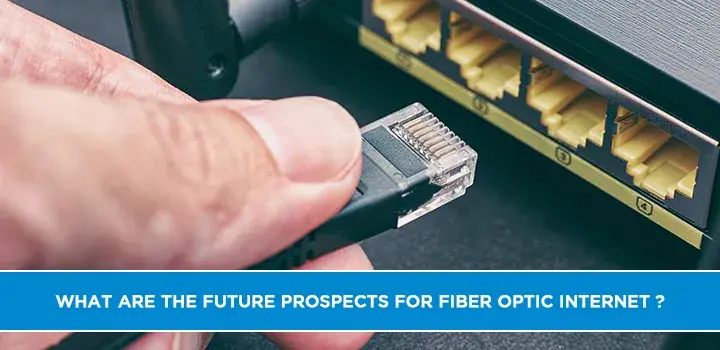
Fiber optic internet is rapidly transforming connectivity, promising unparalleled speeds and reliability. This post delves into the exciting future prospects of fiber, exploring its technological advancements, market growth, and the profound impact it will have on homes and businesses globally. Discover why fiber is the undisputed king of internet infrastructure.
The Unfolding Landscape of Fiber Optic Internet
The digital age is accelerating at an unprecedented pace, driven by an insatiable demand for faster, more reliable, and ubiquitous internet connectivity. At the forefront of this revolution stands fiber optic internet, a technology that has moved from a niche solution to the gold standard for high-performance networking. As we look towards 2025 and 2026, the future prospects for fiber optic internet are not just promising; they are transformative. This comprehensive analysis will explore the technological advancements, market dynamics, and societal impacts that are shaping the trajectory of fiber optics, positioning it as the cornerstone of our increasingly connected world. From ultra-high definition streaming and immersive virtual reality experiences to the seamless operation of smart cities and the critical demands of remote healthcare, fiber optic internet is the indispensable backbone.
Why Fiber Optics Reign Supreme: The Core Advantages
Before delving into the future, it's crucial to understand why fiber optic internet has cemented its position as the superior choice. Unlike traditional copper-based infrastructure, fiber optics utilize thin strands of glass or plastic to transmit data as pulses of light. This fundamental difference unlocks a suite of advantages that are increasingly vital in today's data-intensive environment.
Unmatched Speed and Bandwidth
The most celebrated benefit of fiber optic internet is its sheer speed. Current fiber deployments routinely offer symmetrical download and upload speeds of 1 Gbps, 2 Gbps, or even 10 Gbps. This is orders of magnitude faster than the best DSL or cable internet. The bandwidth capacity of fiber is virtually limitless, meaning it can handle an ever-increasing volume of data without degradation. For households with multiple users streaming 4K video, gaming online, participating in video conferences, and downloading large files simultaneously, fiber ensures a smooth, buffer-free experience for everyone. This vast bandwidth is also essential for the proliferation of data-heavy applications and services that are becoming commonplace.
Superior Reliability and Minimal Latency
Fiber optic cables are far more resistant to environmental factors like electromagnetic interference, moisture, and temperature fluctuations compared to copper wires. This translates to a more stable and reliable connection, with fewer outages and less signal degradation over long distances. Furthermore, fiber optics boast incredibly low latency – the time it takes for data to travel from its source to its destination and back. For applications like online gaming, real-time trading, and remote surgery, where milliseconds matter, low latency is paramount. The near-instantaneous response times offered by fiber provide a significant competitive edge and a vastly improved user experience.
Future-Proofing Your Connectivity
The demand for internet speed and bandwidth is not static; it's a constantly escalating curve. Technologies like 8K streaming, advanced virtual and augmented reality (VR/AR), the Internet of Things (IoT) with its billions of connected devices, and sophisticated cloud computing services all require immense data throughput. Fiber optic infrastructure is inherently capable of meeting these future demands. Unlike copper, which is nearing its physical limits, fiber can be upgraded to support significantly higher speeds simply by upgrading the equipment at either end of the cable, without needing to replace the physical fiber itself. This makes it a long-term, sustainable investment in connectivity.
Cutting-Edge Technological Advancements in Fiber
The evolution of fiber optic technology is relentless, with ongoing research and development pushing the boundaries of speed, efficiency, and deployment. These advancements are critical to meeting the ever-growing demand and expanding the reach of fiber.
Pushing the Boundaries: Faster Transmission Methods
Researchers are continuously developing new ways to transmit more data through existing fiber optic cables. Techniques like Ethernet bonding, advanced modulation schemes (e.g., coherent optics), and multiplexing technologies (like Wavelength Division Multiplexing - WDM) allow for greater data density. For instance, coherent optics, once primarily used in long-haul networks, are now being adapted for shorter distances, enabling terabit-per-second (Tbps) speeds over a single wavelength. Developments in optical signal processing and error correction are also crucial for maintaining signal integrity at these extreme speeds.
Enhancing Infrastructure: Smarter Deployments
The physical deployment of fiber remains a significant undertaking. Innovations in installation techniques are making this process faster and more cost-effective. This includes advancements in micro-trenching, aerial deployment methods, and the use of robotics for laying cables. Furthermore, intelligent fiber management systems and automated network monitoring are improving the efficiency and resilience of fiber networks. The development of new fiber materials and cable designs also contributes to greater durability and ease of installation, especially in challenging environments.
Synergy: Integration with 5G and IoT
Fiber optics are not just a standalone technology; they are the essential enabler for other cutting-edge networks. The rollout of 5G wireless technology, with its promise of ultra-fast speeds and low latency, relies heavily on a robust fiber backhaul network. 5G small cells and macro towers require high-capacity fiber connections to deliver their full potential. Similarly, the Internet of Things (IoT), which involves billions of devices communicating data, will generate massive amounts of traffic. Fiber provides the necessary infrastructure to handle this data flow efficiently, connecting sensors, smart devices, and data centers. The synergy between fiber, 5G, and IoT is creating a hyper-connected ecosystem.
Global Market Growth and Investment Trends (2025-2026)
The global market for fiber optic internet is experiencing a period of unprecedented growth, fueled by strong demand, government initiatives, and significant investment from both public and private sectors. Projections for 2025-2026 indicate a continued upward trajectory.
Accelerating Global Adoption Rates
According to recent market analysis for 2025, the global fiber-to-the-home (FTTH) market is projected to grow at a Compound Annual Growth Rate (CAGR) of over 15% through 2027. This surge is driven by increasing consumer demand for high-speed broadband for entertainment, remote work, and online education. In North America, the push for broadband expansion continues, with significant fiber deployments in both urban and underserved rural areas. Europe is also seeing robust growth, particularly in countries with strong government support for digital infrastructure. Asia-Pacific, led by China and India, remains a dominant force in fiber adoption, with massive ongoing network buildouts.
Key Investment Drivers and Government Initiatives
Several factors are driving this investment boom. The COVID-19 pandemic highlighted the critical importance of reliable internet access, accelerating the realization that fiber is the most sustainable solution. Governments worldwide are recognizing broadband as essential infrastructure, akin to electricity and water. Initiatives like the Universal Service Fund programs, federal grants for broadband expansion, and national digital transformation strategies are providing significant financial incentives for fiber deployment. Private investment is also pouring in, with telecommunication companies and infrastructure funds recognizing the long-term value and revenue potential of fiber networks. For example, in the US, the Infrastructure Investment and Jobs Act has allocated billions towards broadband deployment, with a strong emphasis on fiber.
Regional Spotlight: Growth Pockets
While growth is global, certain regions are particularly dynamic.
- North America: Continued build-out driven by major carriers and new entrants, focusing on both urban densification and rural coverage.
- Europe: Strong government-backed initiatives in countries like Germany, France, and the UK are accelerating fiber rollouts.
- Asia-Pacific: China continues to lead in sheer numbers, while India's ambitious BharatNet project and other private initiatives are expanding fiber access. Southeast Asian nations are also investing heavily.
- Latin America: Emerging markets are increasingly prioritizing fiber, with countries like Brazil and Mexico seeing significant investment.
Transformative Impact Across Industries
The widespread adoption of fiber optic internet is not just about faster downloads; it's a catalyst for innovation and transformation across virtually every sector of society.
Revolutionizing the Residential Experience
For households, fiber means an end to buffering. It enables seamless streaming of multiple 4K or even 8K video feeds, lag-free online gaming, and effortless video conferencing for work and school. The rise of smart home technology, with its increasing reliance on constant data exchange between devices, is also significantly enhanced by fiber's capacity and reliability. Families can simultaneously engage in bandwidth-intensive activities without experiencing performance issues. The ability to download large files, such as operating system updates or movie libraries, in minutes rather than hours is a tangible benefit.
Empowering Business Operations
Businesses of all sizes are benefiting immensely from fiber. Small and medium-sized enterprises (SMEs) can now access cloud-based services, sophisticated CRM systems, and real-time data analytics that were previously only available to large corporations. For larger enterprises, fiber is essential for supporting data-intensive operations like cloud migration, big data processing, advanced cybersecurity measures, and global collaboration through high-quality video conferencing and virtual private networks (VPNs). The low latency provided by fiber is also critical for financial trading platforms, manufacturing automation, and other time-sensitive business applications. The shift to remote and hybrid work models is also heavily dependent on robust fiber connectivity.
Advancing Healthcare and Education
The healthcare sector is leveraging fiber optics for telemedicine, remote patient monitoring, and the transmission of large medical imaging files (like MRIs and CT scans). High-definition video consultations allow doctors to provide expert care to patients in remote areas, improving access and reducing travel burdens. In education, fiber enables immersive learning experiences, virtual labs, and seamless access to online educational resources. It supports remote learning initiatives and allows for the deployment of advanced educational technologies, ensuring equitable access to quality learning materials regardless of geographical location. The ability to conduct real-time, high-fidelity remote surgical training is also becoming a reality.
Fueling Emerging Technologies
Fiber optics are the bedrock upon which many future technologies will be built.
- Artificial Intelligence (AI) and Machine Learning (ML): Training complex AI models requires vast datasets and significant computational power, often accessed via the cloud. Fiber provides the high-speed, low-latency links necessary for efficient data transfer to and from AI processing centers.
- Virtual Reality (VR) and Augmented Reality (AR): These immersive technologies are incredibly data-intensive. High-resolution, real-time rendering and interaction demand bandwidths that only fiber can reliably provide, paving the way for more sophisticated VR/AR applications in gaming, training, design, and social interaction.
- Smart Cities: The concept of a smart city, with interconnected sensors, intelligent traffic management, optimized energy grids, and responsive public services, relies on a robust communication network. Fiber optics are the backbone for transmitting the massive amounts of data generated by these urban systems.
- Autonomous Vehicles: While vehicles have onboard processing, they also rely on real-time data from external sources and communication with infrastructure. Fiber networks will be crucial for vehicle-to-everything (V2X) communication, enhancing safety and traffic flow.
Navigating Challenges and Paving the Way Forward
Despite the overwhelmingly positive outlook, the widespread adoption of fiber optic internet is not without its challenges. Addressing these hurdles is crucial for realizing its full potential.
Addressing Deployment Costs and Infrastructure Hurdles
The primary challenge in fiber deployment remains the high upfront cost of installation. Digging trenches, laying cables, and connecting homes and businesses can be expensive and time-consuming, especially in rural or geographically challenging areas. Overcoming this requires innovative deployment strategies such as micro-trenching, aerial deployments where feasible, and leveraging existing infrastructure (e.g., utility poles). Public-private partnerships are also vital, with government funding and incentives helping to offset the costs for providers, making deployment in less profitable areas more viable. Standardization of deployment practices and streamlined permitting processes can also reduce costs and accelerate rollouts.
Bridging the Digital Divide
While fiber offers immense benefits, there's a significant risk that its deployment will exacerbate the digital divide, leaving rural and low-income communities without access to high-speed internet. Addressing this requires a concerted effort. Government subsidies and grants specifically targeted at underserved areas are essential. Innovative business models, such as community-owned fiber networks or public-private partnerships focused on universal access, can also play a role. Ensuring affordability of fiber services is also critical, so that the benefits of high-speed internet are accessible to all segments of society, not just the affluent.
Competition and Evolving Alternatives
While fiber is the superior technology, it faces competition from other broadband solutions, particularly in areas where fiber deployment is slow or prohibitively expensive. Fixed wireless access (FWA) and satellite internet (like Starlink) are improving and can offer viable alternatives, especially for initial connectivity. However, these technologies generally cannot match the speeds, reliability, and future-proofing capabilities of fiber. The ongoing challenge for fiber providers is to deploy quickly and cost-effectively enough to outpace the improvements in competing technologies and to demonstrate the long-term value proposition of fiber. The competitive landscape encourages innovation in both deployment and service offerings.
The Horizon: What's Next for Fiber Optics?
The future of fiber optic internet is bright and expansive. By 2025-2026, we can expect to see several key trends solidify:
- Ubiquitous Gigabit Speeds: Gigabit speeds will become the norm in urban and suburban areas, with 10 Gbps becoming increasingly available to residential users.
- Expansion into Rural Areas: Continued government investment and innovative deployment strategies will bring fiber to more rural and underserved communities, significantly shrinking the digital divide.
- Advanced Network Architectures: The integration of AI and automation will lead to more intelligent, self-optimizing fiber networks, enhancing reliability and efficiency.
- Seamless 5G Integration: Fiber will serve as the indispensable backbone for 5G networks, enabling true mobile broadband speeds and low latency for a vast array of applications.
- New Applications and Services: The availability of ultra-high-speed, low-latency internet will unlock new consumer and enterprise applications, from fully immersive VR/AR experiences to advanced AI-driven services and the true realization of smart cities.
- Increased Competition and Innovation: The market will continue to see intense competition, driving down prices and spurring further innovation in both fiber technology and service delivery.
Conclusion: Embracing the Fiber Optic Future
The future prospects for fiber optic internet are exceptionally strong, driven by its inherent technological superiority, accelerating global demand, and significant investment. By 2025-2026, fiber is set to become the dominant internet infrastructure, underpinning everything from our home entertainment to the most advanced industrial applications. Its unparalleled speed, reliability, and capacity make it the ideal solution for current needs and the essential foundation for future innovations like 5G, IoT, AI, and immersive digital experiences. While challenges related to deployment costs and bridging the digital divide persist, concerted efforts from governments, providers, and communities are actively addressing these issues. Embracing fiber optic internet is not just an upgrade; it's an investment in a more connected, efficient, and innovative future for individuals, businesses, and society as a whole. For those seeking the ultimate in online performance and future readiness, the transition to fiber is no longer a question of 'if,' but 'when.'