Understanding Fiber Optic Cable: What It Is and How It Works?
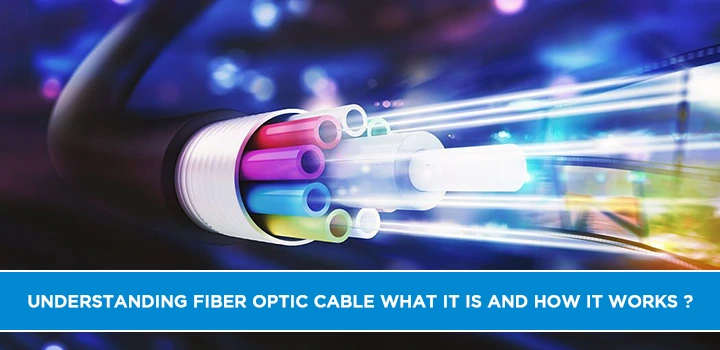
Dive into the future of connectivity with our comprehensive guide to fiber optic cable. Discover what it is, how it transmits data at light speed, and why it's revolutionizing internet access, telecommunications, and more. This article provides an in-depth look, equipping you with essential knowledge for understanding modern digital infrastructure.
What Exactly is Fiber Optic Cable?
Fiber optic cable is a revolutionary networking medium that transmits data using pulses of light. Unlike traditional copper cables that rely on electrical signals, fiber optics use thin strands of glass or plastic to carry information over long distances with incredible speed and minimal signal degradation. This technology forms the backbone of modern high-speed internet, telecommunications networks, and data centers, enabling the seamless flow of information that powers our digital world.
At its core, a fiber optic cable is a bundle of these incredibly fine glass or plastic fibers, each thinner than a human hair. These fibers are encased in protective layers to ensure durability and signal integrity. The principle behind its operation is simple yet profound: light is sent down the core of the fiber, reflecting off the inner walls through a process called total internal reflection, allowing it to travel vast distances without significant loss of strength or quality. This makes fiber optics the superior choice for applications demanding high bandwidth, low latency, and reliable connectivity.
The widespread adoption of fiber optic technology is driven by its ability to support the ever-increasing demand for data. From streaming high-definition video and participating in real-time online gaming to supporting complex cloud computing and artificial intelligence applications, fiber optics are indispensable. Its capacity far surpasses that of older copper-based infrastructure, paving the way for faster, more efficient, and more robust communication networks. Understanding fiber optics is key to appreciating the infrastructure that underpins our connected lives.
How Does Fiber Optic Cable Work? The Science of Light Transmission
The operation of fiber optic cable is a fascinating interplay of physics and engineering, primarily revolving around the principle of total internal reflection. Data, whether it's an email, a video stream, or a voice call, is converted into light pulses by a transmitter, typically a laser or an LED. These light pulses are then directed into the fiber optic cable.
Once inside the cable, the light travels down the core of the fiber. The core is surrounded by a layer called the cladding, which has a lower refractive index than the core. This difference in refractive indices is crucial. When the light pulse strikes the boundary between the core and the cladding at a shallow angle (greater than the critical angle), it doesn't escape into the cladding. Instead, it reflects back into the core. This process, known as total internal reflection, causes the light pulse to bounce along the length of the fiber, much like a ball bouncing down a corridor, without escaping.
This continuous reflection allows the light signal to travel over incredibly long distances with very little loss of intensity or distortion. The purity of the glass used in the core is paramount, as impurities can absorb or scatter the light, leading to signal degradation. Modern fiber optic cables are made from highly purified silica glass, minimizing these losses.
At the receiving end of the cable, a photodetector converts the incoming light pulses back into electrical signals. These electrical signals are then decoded to reconstruct the original data. The speed at which these light pulses can be transmitted and received is astonishing, measured in gigabits or even terabits per second, making fiber optics the fastest data transmission medium available today.
The conversion process from electrical signals to light and back again is handled by transceivers, which are devices that contain both a light source (transmitter) and a light sensor (receiver). The efficiency and accuracy of this conversion process are vital for maintaining the integrity of the data being transmitted. The ability to transmit data as light also means that fiber optic cables are immune to electromagnetic interference (EMI), a significant advantage over copper cables.
The physical properties of light, specifically its speed and its ability to be modulated (turned on and off rapidly to represent binary data), are what make fiber optics so powerful. The development of lasers and LEDs capable of producing precise light pulses, coupled with the advancements in glass manufacturing, has been instrumental in the evolution of this technology. The ongoing research and development in this field continue to push the boundaries of speed and capacity, ensuring that fiber optics will remain at the forefront of communication technology for years to come.
Total Internal Reflection Explained
Total internal reflection (TIR) is the fundamental optical phenomenon that enables fiber optic cables to transmit data effectively. It occurs when a light ray traveling in a denser medium (higher refractive index) strikes the boundary with a less dense medium (lower refractive index) at an angle greater than a specific critical angle.
Imagine light traveling from the core of the fiber optic cable (denser medium) towards the cladding (less dense medium). As the light ray hits the interface, it bends away from the normal. If the angle of incidence is small, some light will refract into the cladding, and some will reflect back into the core. However, as the angle of incidence increases, the angle of refraction also increases. At a specific angle, known as the critical angle, the refracted ray travels along the boundary between the two media.
When the angle of incidence exceeds this critical angle, the light ray cannot refract into the less dense medium. Instead, it is completely reflected back into the denser medium. In a fiber optic cable, the core acts as the denser medium, and the cladding acts as the less dense medium. By ensuring that the light pulses entering the fiber strike the core-cladding boundary at an angle greater than the critical angle, the light is continuously reflected internally, guiding it along the length of the fiber without significant loss.
The critical angle is determined by the refractive indices of the core and the cladding. A larger difference between the refractive indices leads to a smaller critical angle, making it easier for light to undergo total internal reflection. This precise control over light's behavior is what makes fiber optics so efficient for long-distance data transmission.
Modulation and Demodulation
The process of converting digital data (binary 0s and 1s) into light pulses and then back again is known as modulation and demodulation, respectively. This is a critical step in fiber optic communication.
Modulation: At the transmitting end, a device called a transmitter, typically a laser or a light-emitting diode (LED), converts the electrical signals representing digital data into light signals. A "1" might be represented by a pulse of light, while a "0" might be represented by the absence of light or a different intensity/frequency of light. This rapid switching between light and no-light (or different light states) is the modulation process. Lasers are often preferred for long-haul transmission due to their focused beam and ability to be modulated at very high speeds, while LEDs are more common for shorter distances.
Demodulation: At the receiving end, a device called a receiver, which includes a photodetector, senses the incoming light pulses. The photodetector converts these light pulses back into electrical signals. These electrical signals are then processed by a decoder to reconstruct the original digital data. The speed and accuracy of this conversion are crucial for maintaining data integrity. The combination of a transmitter and receiver in a single unit is called a transceiver.
Key Components of a Fiber Optic Cable
A fiber optic cable is a sophisticated assembly of several layers, each designed to protect the delicate optical fibers and ensure optimal signal transmission. Understanding these components helps in appreciating the robustness and functionality of fiber optic infrastructure.
Optical Fibers
These are the core components responsible for transmitting light. They are made of extremely pure glass (silica) or plastic. Each fiber consists of two main parts:
- Core: The central part of the fiber through which light travels. It has a higher refractive index.
- Cladding: A layer surrounding the core with a lower refractive index. This difference in refractive indices is what enables total internal reflection.
The diameter of the core is incredibly small, typically ranging from 8 to 62.5 micrometers (µm) for multimode fiber and around 9 µm for single-mode fiber. The cladding diameter is usually 125 µm.
Coating (or Buffer Coating)
This is a protective layer of plastic that surrounds the fiber's cladding. It provides mechanical protection against abrasion, moisture, and other environmental factors. It also helps to cushion the fiber during handling and installation. Typically, there are one or two layers of acrylate coating.
Strength Members
These are materials designed to bear the tensile load when the cable is pulled or stressed. They prevent the delicate optical fibers from stretching or breaking. Common strength members include:
- Aramid yarn (Kevlar is a brand name)
- Fiberglass reinforced plastic (FRP) rods
- Steel wires
These members are strategically placed within the cable structure to absorb tension, protecting the fibers from damage.
Outer Jacket
This is the outermost protective layer of the cable. It provides robust protection against environmental hazards such as crushing, abrasion, moisture, chemicals, and UV radiation. The material used for the outer jacket varies depending on the intended application and environment:
- PE (Polyethylene): Common for outdoor and underground installations due to its durability and moisture resistance.
- PVC (Polyvinyl Chloride): Often used for indoor applications.
- LSZH (Low Smoke Zero Halogen): Used in areas where fire safety is critical, as it emits less smoke and no toxic halogens when burned.
The jacket color can also indicate the type of fiber or its intended use (e.g., yellow for single-mode, orange for multimode, blue for outdoor, grey for indoor).
Additional Layers and Elements
Depending on the cable's design and intended use, other components might be included:
- Water-blocking materials: Gel or absorbent powders are used to prevent water from migrating along the cable if the jacket is breached.
- Armor: For underground or harsh environments, a layer of corrugated steel tape or interlocking armor might be added for enhanced crush resistance.
- Rip cords: These are strong threads embedded in the jacket that allow for easy removal of the outer layer during installation.
The careful integration of these components ensures that the optical fibers can transmit light signals reliably over long distances and under various conditions.
Types of Fiber Optic Cables: A Comparative Look
Fiber optic cables are broadly categorized into two main types based on how light travels through their core: single-mode fiber (SMF) and multimode fiber (MMF). The choice between them depends on the application's distance, bandwidth requirements, and cost considerations.
Single-Mode Fiber (SMF)
Single-mode fiber features a very small core diameter, typically around 9 micrometers (µm). This small core allows only one mode, or path, for light to travel through. Because light travels in a single path, there is no modal dispersion (distortion caused by different light paths arriving at different times).
Characteristics:
- Core Diameter: Approximately 9 µm.
- Cladding Diameter: 125 µm.
- Light Path: Single path.
- Bandwidth: Extremely high.
- Distance: Capable of transmitting signals over very long distances (tens to hundreds of kilometers) without repeaters.
- Light Source: Typically uses lasers.
- Cost: Generally more expensive equipment (lasers, connectors) but can be more cost-effective for long-haul applications due to fewer required repeaters.
- Applications: Long-haul telecommunications, high-speed internet backbones, cable TV networks, undersea cables, and high-bandwidth metropolitan area networks (MANs).
There are different categories of SMF, such as OS1, OS2, OS3, OS4, and OS5, each offering improved performance characteristics for specific applications, particularly concerning attenuation and dispersion.
Multimode Fiber (MMF)
Multimode fiber has a larger core diameter, typically 50 µm or 62.5 µm. This larger core allows multiple modes, or paths, of light to travel through the fiber simultaneously. While this makes it easier to connect and less sensitive to connector alignment, it also leads to modal dispersion.
Characteristics:
- Core Diameter: 50 µm or 62.5 µm.
- Cladding Diameter: 125 µm.
- Light Path: Multiple paths.
- Bandwidth: High, but less than SMF.
- Distance: Suitable for shorter distances (up to a few kilometers, depending on the data rate and fiber grade).
- Light Source: Typically uses LEDs or VCSELs (Vertical-Cavity Surface-Emitting Lasers).
- Cost: Generally less expensive equipment (LEDs, connectors) and easier installation, making it cost-effective for shorter runs.
- Applications: Local area networks (LANs), data centers, enterprise networks, and short-distance backbone connections within buildings.
Multimode fiber is further classified into different grades (OM1, OM2, OM3, OM4, OM5) which indicate their performance capabilities, particularly in terms of bandwidth and distance for specific data rates. OM3 and OM4 are optimized for 10 Gigabit Ethernet and higher, while OM5 is designed for advanced applications like multiplexing wavelengths.
Fiber Type Comparison
| Feature | Single-Mode Fiber (SMF) | Multimode Fiber (MMF) |
|---|---|---|
| Core Diameter | ~9 µm | 50 µm or 62.5 µm |
| Light Path | Single | Multiple |
| Modal Dispersion | Negligible | Present |
| Maximum Distance | Very Long (100+ km) | Short (up to ~2 km) |
| Bandwidth | Highest | High |
| Light Source | Lasers | LEDs, VCSELs |
| Typical Applications | Long-haul, Telecom, Internet Backbone | LANs, Data Centers, Enterprise Networks |
The Unmatched Advantages of Fiber Optic Technology
Fiber optic technology offers a compelling suite of advantages over traditional copper-based cabling, making it the preferred choice for modern high-speed communication networks. These benefits are critical for supporting the increasing demands of the digital age.
Higher Bandwidth and Speed
This is perhaps the most significant advantage. Fiber optic cables can carry vastly more data than copper cables. This translates to much higher internet speeds, enabling faster downloads and uploads, seamless streaming of high-definition content, and smoother online gaming experiences. For businesses, this means improved productivity, faster data transfers, and the ability to support more users and devices simultaneously without performance degradation.
Longer Transmission Distances
Light signals in fiber optic cables experience much less attenuation (signal loss) compared to electrical signals in copper cables. This allows data to be transmitted over significantly longer distances—tens or even hundreds of kilometers—without the need for signal boosters or repeaters. This is crucial for telecommunications networks, inter-city connections, and large campus environments.
Immunity to Electromagnetic Interference (EMI)
Unlike copper cables, which are susceptible to interference from electrical equipment, power lines, and radio waves, fiber optic cables transmit data using light. This makes them immune to EMI and radio frequency interference (RFI). This immunity ensures a cleaner, more reliable signal, especially in environments with a lot of electrical noise, such as industrial facilities or densely populated urban areas.
Enhanced Security
It is much more difficult to tap into a fiber optic cable without detection compared to a copper cable. Tapping into a copper cable can be done by simply attaching a device to the cable to intercept electrical signals. To intercept a fiber optic signal, one would need to physically break the fiber or introduce a device that significantly disrupts the light signal, which is typically detectable by network monitoring systems. This inherent security makes fiber optics ideal for sensitive data transmission.
Durability and Smaller Size
Fiber optic cables are generally thinner and lighter than copper cables with equivalent data-carrying capacity. A single fiber optic cable can contain hundreds or thousands of fibers, yet still be smaller and lighter than a bundle of copper wires carrying the same amount of data. This makes installation easier, especially in crowded conduits, and reduces the overall weight of cabling infrastructure.
Furthermore, glass fibers are more resistant to corrosion than copper, contributing to their longevity and reliability in various environmental conditions.
Lower Latency
Latency, the time it takes for data to travel from source to destination, is a critical factor for real-time applications like online gaming, video conferencing, and financial trading. Fiber optic cables offer significantly lower latency compared to copper cables because light travels faster than electrical signals through a conductor, and the signal degradation is minimal, meaning data packets don't need to be retransmitted as often.
Cost-Effectiveness in the Long Run
While the initial installation cost of fiber optic networks can be higher than copper, the long-term benefits often make it more cost-effective. The higher bandwidth capacity means fewer cables are needed, and the longer transmission distances reduce the need for expensive signal repeaters. Additionally, fiber optic cables are more durable and require less maintenance, leading to lower operational costs over their lifespan.
Where is Fiber Optic Cable Used? Diverse Applications
The exceptional performance characteristics of fiber optic cable have led to its widespread adoption across a multitude of industries and applications. Its ability to transmit data at high speeds over long distances with minimal loss makes it indispensable for modern connectivity.
Telecommunications Networks
Fiber optics form the backbone of global telecommunications infrastructure. They are used for:
- Long-haul and international calls: Transmitting voice and data across continents and oceans.
- Broadband internet access: Providing high-speed internet to homes and businesses (Fiber-to-the-Home or FTTH).
- Mobile phone networks: Connecting cell towers to the core network, ensuring reliable mobile service.
Internet Service Providers (ISPs)
ISPs rely heavily on fiber optic networks to deliver high-speed internet services. The deployment of FTTH and Fiber-to-the-Building (FTTB) initiatives is rapidly expanding fiber optic coverage, enabling consumers to access speeds previously unimaginable with copper-based DSL or cable internet.
Data Centers
In data centers, where massive amounts of data are processed and stored, fiber optic cables are essential for high-speed interconnections between servers, storage devices, and network switches. The high bandwidth and low latency of fiber are critical for the performance of cloud computing, big data analytics, and artificial intelligence workloads.
Cable Television and Broadcasting
Fiber optic technology is used to deliver high-definition television signals to subscribers. Its high bandwidth capacity allows for the transmission of multiple channels with superior picture and sound quality. It's also used in broadcasting studios for high-speed video transmission and distribution.
Military and Aerospace
The immunity to electromagnetic interference and enhanced security of fiber optics make them ideal for military applications. They are used in:
- Communication systems: For secure and reliable battlefield communications.
- Avionics: In aircraft for transmitting data between various systems.
- Naval vessels: For robust communication and sensor networks.
Medical Field
Fiber optics play a crucial role in modern medicine:
- Endoscopy: Flexible fiber optic bundles are used in endoscopes to visualize internal organs without invasive surgery.
- Medical imaging: High-speed data transmission for MRI, CT scans, and other imaging technologies.
- Surgical lasers: Delivering laser energy for precise surgical procedures.
Industrial Automation
In manufacturing and industrial settings, fiber optic cables are used for reliable data transmission in harsh environments. Their resistance to EMI and chemicals makes them suitable for controlling machinery, monitoring processes, and connecting sensors in factory floors.
Research and Development
Scientists and researchers utilize fiber optics in various experiments and advanced technologies, including:
- Particle accelerators: For high-speed data acquisition.
- Scientific instrumentation: For precise measurement and data transfer.
- Quantum communication: As a medium for transmitting quantum information.
Consumer Electronics
While less common than in infrastructure, fiber optics are found in some high-end consumer electronics, such as high-fidelity audio systems (using TOSLINK cables) for digital audio transmission, offering a pure, interference-free signal.
Fiber Optic vs. Copper Cable: A Head-to-Head Comparison
The debate between fiber optic and copper cabling has been ongoing for decades, with fiber optics consistently emerging as the superior technology for modern networking needs. However, copper still holds relevance in certain applications. Here's a detailed comparison:
| Feature | Fiber Optic Cable | Copper Cable (e.g., Ethernet, Coaxial) |
|---|---|---|
| Data Transmission Medium | Light pulses through glass or plastic fibers | Electrical signals through metallic conductors |
| Bandwidth & Speed | Extremely High (Gbps to Tbps) | Limited (Mbps to low Gbps) |
| Maximum Distance | Very Long (100+ km for SMF) | Short (e.g., ~100m for Ethernet) |
| Signal Loss (Attenuation) | Very Low | Significant, increases with distance and frequency |
| Interference Immunity | Immune to EMI/RFI | Susceptible to EMI/RFI |
| Security | High (difficult to tap undetected) | Lower (easier to tap) |
| Size & Weight | Smaller, lighter for equivalent capacity | Bulkier, heavier |
| Durability | Corrosion resistant, strong | Can corrode, susceptible to physical damage |
| Power Requirements | No power needed for transmission medium itself | Requires electrical power; can carry Power over Ethernet (PoE) |
| Installation Complexity | More complex, requires specialized tools and training | Simpler, widely understood |
| Cost (Initial) | Higher equipment and installation costs | Lower equipment and installation costs |
| Cost (Long-term) | Lower operational costs, fewer upgrades needed | Higher potential for upgrades, maintenance costs |
| Latency | Very Low | Higher |
While fiber optic cables offer superior performance in nearly every metric, copper cables remain relevant for legacy systems, short-distance connections where cost is paramount, and applications that require Power over Ethernet (PoE), where electrical power is transmitted along with data.
Understanding Fiber Optic Cable Installation and Maintenance
Installing and maintaining fiber optic cables requires specialized knowledge and tools due to the delicate nature of the glass fibers and the precision required for connections. While the process is more involved than with copper, adherence to best practices ensures optimal performance and longevity.
Installation Process
The installation of fiber optic cables typically involves several key steps:
- Planning and Design: This phase involves surveying the installation route, determining the type and quantity of fiber needed, and planning the placement of splice points and termination equipment. Environmental factors and potential future expansion are also considered.
- Cable Laying: Fiber optic cables can be installed in various ways:
- Ducting: Cables are pulled through pre-installed conduits or ducts, protecting them from the environment.
- Aerial installation: Cables are strung between poles, often supported by a messenger wire.
- Direct burial: Cables are laid directly into the ground, often with protective armor.
- Indoor installation: Cables are run through walls, ceilings, and cable trays within buildings.
- Cable Preparation: Once the cable is in place, the outer jacket and strength members are removed to expose the individual fibers. This is done carefully to avoid nicking or scratching the fibers.
- Splicing: This is the process of joining two or more fiber optic cables together. There are two primary methods:
- Fusion Splicing: This is the most common and preferred method. It uses an electric arc to melt and fuse the ends of two fibers together. This creates a very low-loss connection. Specialized fusion splicers are used for this process, which requires precise alignment of the fiber ends.
- Mechanical Splicing: This method uses a mechanical fixture to align and hold the fiber ends together. While less precise than fusion splicing and potentially resulting in higher signal loss, it is faster and requires less specialized equipment, making it suitable for certain applications or emergency repairs.
- Termination: This involves attaching connectors to the ends of the fiber optic cables, allowing them to be plugged into equipment. Common connector types include SC, LC, ST, and MPO. The process involves preparing the fiber end, attaching the connector ferrule, and often polishing the connector face to ensure a clean, flat surface for optimal light transmission.
- Testing: After installation and termination, the cable segments are tested to ensure signal integrity and performance. Common testing methods include:
- Optical Time Domain Reflectometry (OTDR): This is a crucial diagnostic tool that sends light pulses down the fiber and measures the reflected light to detect faults, measure fiber length, and assess signal loss at various points.
- Insertion Loss Testing: Measures the amount of signal lost when a connector or patch cord is inserted into the link.
- Visual Fault Location (VFL): A red laser is injected into the fiber, and any visible light escaping from breaks or sharp bends indicates a fault.
Maintenance Considerations
While fiber optic cables are robust, regular maintenance is essential to ensure optimal network performance:
- Regular Inspections: Periodically inspect cables for any signs of physical damage, such as cuts, abrasions, or kinks, especially in high-traffic areas or exposed locations.
- Connector Cleaning: Fiber optic connectors are highly susceptible to dust and dirt, which can cause significant signal loss. Connectors should be cleaned regularly using specialized cleaning tools and solutions before each connection.
- Patch Panel Management: Keep patch panels organized and labeled. Ensure that unused ports are protected with dust caps.
- Performance Monitoring: Utilize network monitoring tools to track signal levels and identify any degradation in performance. OTDRs can be used periodically to check the health of the fiber links.
- Documentation: Maintain accurate records of cable routes, splice points, termination locations, and test results. This documentation is invaluable for troubleshooting and future upgrades.
- Environmental Protection: Ensure that cables are protected from environmental hazards like moisture, extreme temperatures, and UV radiation, especially in outdoor installations.
Proper installation and diligent maintenance are key to maximizing the lifespan and performance of a fiber optic network, ensuring reliable, high-speed data transmission for years to come.
The Future of Fiber Optics: Trends and Innovations (2025-2026)
The evolution of fiber optic technology is relentless, driven by the ever-increasing demand for bandwidth and speed. As we look towards 2025-2026, several key trends and innovations are shaping the future of fiber optics, promising even faster, more efficient, and more pervasive connectivity.
Increased Deployment of FTTH and FTTB
The global push for ubiquitous high-speed internet access continues to fuel the expansion of Fiber-to-the-Home (FTTH) and Fiber-to-the-Building (FTTB) networks. Governments and telecommunications companies worldwide are investing heavily in fiber infrastructure to bridge the digital divide and support emerging digital services. This trend is expected to accelerate in 2025-2026, bringing fiber-optic speeds to more households and businesses than ever before.
Advancements in Higher-Order Modulation and Coherent Optics
To achieve higher data rates over existing fiber infrastructure, advancements in modulation techniques are crucial. Higher-order modulation schemes (e.g., 64-QAM, 128-QAM) allow more bits to be encoded per symbol, significantly increasing spectral efficiency. Coherent optics, which leverage both the amplitude and phase of light, are becoming more sophisticated and cost-effective, enabling terabit-per-second (Tbps) transmission speeds over single wavelengths. These technologies are vital for core network upgrades and high-capacity data center interconnects.
Programmable and Software-Defined Networking (SDN)
The integration of fiber optic networks with SDN and Network Functions Virtualization (NFV) is a significant trend. This allows for more flexible, agile, and automated network management. Network operators can dynamically allocate bandwidth, reconfigure network paths, and deploy new services more rapidly. Programmable optics and silicon photonics are enabling faster, more efficient processing of optical signals directly in the network, reducing the need for electrical conversions and improving overall performance.
Artificial Intelligence and Machine Learning in Network Management
AI and ML are increasingly being applied to optimize fiber optic network operations. Predictive maintenance, anomaly detection, traffic management, and fault prediction are areas where AI algorithms can significantly improve network reliability and efficiency. By analyzing vast amounts of network data, AI can identify potential issues before they impact service, leading to proactive problem-solving and reduced downtime.
New Fiber Materials and Structures
Research continues into developing new types of optical fibers that offer enhanced performance. This includes:
- Hollow-core fibers: These fibers guide light through a hollow core, offering significantly lower latency and potential for higher speeds by reducing interaction with the glass material.
- Photonic crystal fibers (PCFs): These fibers use microstructured arrangements of air holes to control light propagation, offering unique properties for specialized applications.
- Larger effective area (LEA) fibers: Designed to reduce non-linear effects in high-power optical signals, crucial for long-haul transmission.
These innovations aim to push the boundaries of what's possible with optical transmission.
Optical Switching and Interconnects
The drive to move processing closer to the data source and reduce latency is leading to advancements in optical switching and interconnect technologies. Optical circuit switches and optical cross-connects are being developed to route optical signals directly without conversion to electrical signals, which is more energy-efficient and faster for high-volume data flows, particularly within data centers and between network nodes.
Integration of 5G and Beyond with Fiber
The deployment of 5G and future mobile generations (6G and beyond) is intrinsically linked to robust fiber optic backhaul. The massive bandwidth and low latency required by these wireless technologies necessitate dense fiber networks to connect cell sites and support the increased data traffic. This synergy will continue to drive fiber deployment in urban and rural areas.
Sustainability and Energy Efficiency
As data consumption grows, so does the energy footprint of communication networks. There's a significant focus on developing more energy-efficient optical components and network architectures. Optical switching and the reduction of electrical conversions in the signal path contribute to lower power consumption, making fiber optic networks a more sustainable choice for the future.
These trends highlight a future where fiber optic technology is not only faster and more capable but also more intelligent, flexible, and sustainable, continuing to underpin the digital transformation of society.
In conclusion, fiber optic cable represents a monumental leap in data transmission technology, enabling the high-speed, high-capacity, and reliable connectivity that is fundamental to our modern digital lives. From its core principle of total internal reflection to its diverse applications spanning telecommunications, data centers, and beyond, fiber optics consistently outperforms traditional copper cabling. Understanding its components, types, advantages, and the intricate installation and maintenance processes is crucial for anyone involved in networking infrastructure. As we move into 2025-2026, innovations in modulation, AI integration, and new fiber structures promise to push the boundaries even further, ensuring fiber optics remains the dominant force in global communication for the foreseeable future. Embracing fiber optic technology is not just an upgrade; it's an investment in the future of connectivity.