Quantum Fiber WiFi 7: Speed, Features, Coverage & Is It Worth It?
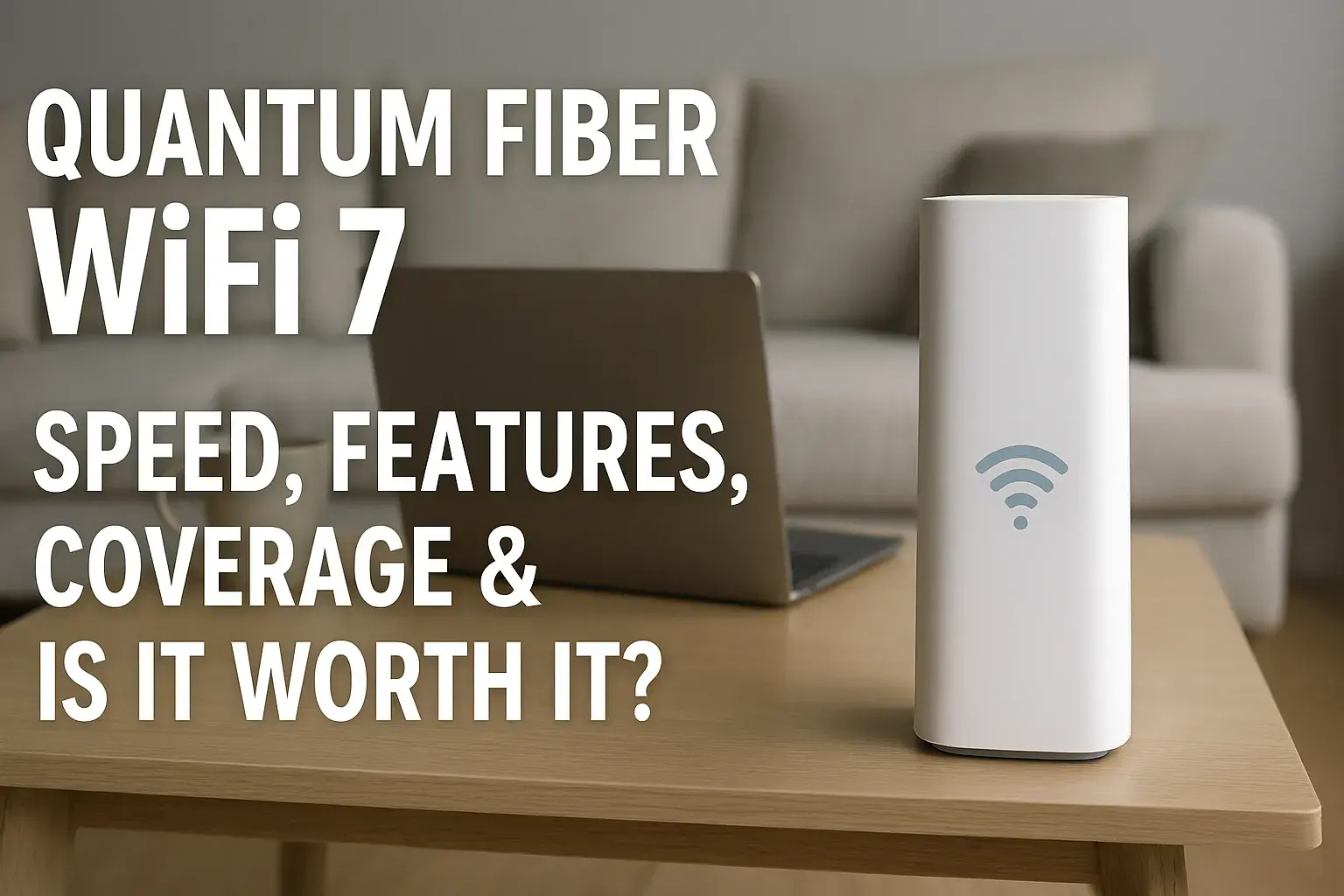
Unlocking the future of home internet, Quantum Fiber's WiFi 7 promises unparalleled speeds and advanced features. This comprehensive guide dives deep into what WiFi 7 offers, its capabilities with Quantum Fiber, expected coverage, and critically, whether this cutting-edge technology is a worthwhile investment for your household in 2025-26.
WiFi 7 Technology Explained: The Next Generation of Wireless
Is Quantum Fiber WiFi 7 Worth It? A Cost-Benefit Analysis (2025-26)
What is Quantum Fiber WiFi 7?
Quantum Fiber WiFi 7 represents the convergence of cutting-edge fiber optic internet infrastructure with the latest wireless networking standard, IEEE 802.11be. This powerful combination aims to deliver unprecedented speeds, ultra-low latency, and enhanced reliability for homes and businesses. It's designed to support the growing demands of bandwidth-intensive applications, from immersive virtual reality experiences and high-definition streaming to seamless multi-device connectivity and the burgeoning smart home ecosystem. As we navigate 2025-26, Quantum Fiber's commitment to deploying fiber coupled with WiFi 7 technology positions it as a frontrunner in next-generation home internet solutions.
WiFi 7 Technology Explained: The Next Generation of Wireless
WiFi 7, officially designated as IEEE 802.11be, is not just an incremental upgrade; it's a significant leap forward in wireless networking. Building upon the foundations of WiFi 6/6E, it introduces several revolutionary features designed to dramatically improve performance, efficiency, and user experience. Understanding these advancements is crucial to appreciating the potential of Quantum Fiber's offering.
Speed Breakdown: Blazing Fast Throughput
The most talked-about feature of WiFi 7 is its theoretical maximum speed, which can reach up to 46 Gbps. This is a staggering increase compared to WiFi 6's theoretical peak of 9.6 Gbps. While real-world speeds will always be lower due to various factors, this massive increase in potential throughput means that even with multiple devices simultaneously demanding high bandwidth, users will experience significantly faster downloads, uploads, and smoother streaming of 4K, 8K, and even higher resolution content. This jump is achieved through several key innovations:
Wider Channels: WiFi 7 supports 320 MHz channels in the 6 GHz band, effectively doubling the channel width available in WiFi 6E. Wider channels are like wider highways for data, allowing more information to travel at once.
Higher Modulation: It utilizes 4096-QAM (Quadrature Amplitude Modulation), up from 1024-QAM in WiFi 6. This allows more data to be encoded into each signal transmission, increasing efficiency and speed. Think of it as packing more data into each "truck" on the data highway.
Increased Spatial Streams: While WiFi 6 supports up to 8 spatial streams, WiFi 7 can support up to 16. These streams act like multiple lanes on the highway, allowing for more simultaneous data transmissions to and from a device.
For a typical home user in 2025-26, this means that downloading large files, such as high-definition movies or game updates, could take mere seconds instead of minutes. For businesses, it translates to faster data transfers and more responsive cloud-based applications.
Latency Reduction: The Key to Real-Time Responsiveness
Latency, the delay between sending a request and receiving a response, is a critical factor for real-time applications like online gaming, video conferencing, and remote control of devices. WiFi 7 makes significant strides in reducing latency:
Preamble Puncturing: This feature allows a WiFi 7 router to use a portion of a channel even if part of it is experiencing interference. Previously, if any part of a wide channel was noisy, the entire channel might become unusable or significantly slowed down. Preamble puncturing allows the router to "puncture" out the interfered section and still use the clean parts of the channel, ensuring more consistent and lower latency.
Optimized Resource Units (RUs): WiFi 7 introduces more flexible and efficient ways to divide channels into smaller Resource Units (RUs). This allows the router to better allocate bandwidth to individual devices, ensuring that less demanding devices don't hog bandwidth needed by latency-sensitive applications.
The impact of reduced latency is profound. For gamers, it means more responsive gameplay, fewer "lag spikes," and a more competitive edge. For remote workers, it translates to smoother video calls with less audio/video desync. For industrial IoT applications, it enables more precise and timely control of machinery.
Channel Width and Efficiency: More Data, Less Congestion
As mentioned, WiFi 7's support for 320 MHz channels in the 6 GHz band is a game-changer. This wider spectrum allows for a massive increase in data throughput. However, WiFi 7 doesn't just rely on wider channels; it also improves how these channels are used. By combining multiple channels (even across different bands) using Multi-Link Operation (MLO), devices can aggregate bandwidth, effectively creating a single, faster, and more reliable connection. This is particularly beneficial in crowded wireless environments where interference can be a significant issue.
In 2025-26, with the proliferation of connected devices, channel congestion is becoming a major bottleneck for older WiFi standards. WiFi 7's advanced channel management techniques, including preamble puncturing and more efficient RU allocation, ensure that even in densely populated areas, users can expect a more stable and faster connection.
MLO (Multi-Link Operation): Seamless Connectivity
Multi-Link Operation (MLO) is arguably one of the most innovative features of WiFi 7. It allows a device to connect to a router using multiple frequency bands and channels simultaneously. This means a device can be connected to both the 5 GHz and 6 GHz bands at the same time, or even multiple channels within the same band. The benefits are:
Increased Throughput: By aggregating bandwidth from multiple links, devices can achieve higher overall speeds.
Improved Reliability: If one link experiences interference or becomes unstable, the device can seamlessly switch to or continue using the other links without interrupting the connection.
Lower Latency: MLO can be configured to send critical data over the lowest latency link, ensuring real-time applications remain responsive.
Imagine a scenario where you're streaming an 8K movie. MLO could use a high-bandwidth 6 GHz link for the bulk of the video stream while simultaneously using a more stable 5 GHz link to ensure the stream doesn't buffer. This technology is crucial for future-proofing home networks against increasing demands.
Other Key Enhancements in WiFi 7
Beyond the headline features, WiFi 7 incorporates several other improvements:
Improved OFDMA: Orthogonal Frequency-Division Multiple Access (OFDMA) is further optimized in WiFi 7 to allow for more efficient data transmission, especially for small packets. This enhances performance in scenarios with many small data transmissions, common in IoT devices.
Multi-RU Allocation: A single device can now utilize multiple Resource Units (RUs) simultaneously, even if they are not contiguous. This allows for more flexible and efficient use of available spectrum.
2x2 Multi-Link Single-Radio (MLSR): This feature allows a single radio to transmit and receive on multiple links simultaneously, improving efficiency and reducing power consumption for certain devices.
These enhancements collectively contribute to a more robust, efficient, and high-performing wireless network, ready for the demands of the next decade.
Quantum Fiber and WiFi 7 Integration: What to Expect
Quantum Fiber's strategy involves leveraging its advanced fiber optic network to deliver the full potential of WiFi 7 to its subscribers. The synergy between a high-speed fiber backbone and the latest wireless standard is key to unlocking a truly next-generation internet experience.
Quantum Fiber's Fiber Optic Infrastructure
Quantum Fiber is known for its commitment to deploying pure fiber optic networks directly to the home (FTTH). This means that the internet signal travels through glass fibers, which are inherently capable of transmitting data at extremely high speeds with minimal signal degradation over long distances. Unlike older copper-based technologies (like DSL or even some forms of cable), fiber optics are not susceptible to electromagnetic interference and offer significantly higher bandwidth. This robust infrastructure is the perfect foundation for WiFi 7, as it can deliver the raw internet speeds that WiFi 7 technology can then wirelessly distribute within the home.
In 2025-26, Quantum Fiber's focus on FTTH means that subscribers are less likely to be bottlenecked by the "last mile" connection to their home. The fiber connection itself can easily support speeds of 1 Gbps, 2 Gbps, 5 Gbps, and even 10 Gbps, which are necessary to fully utilize the capabilities of WiFi 7. This is a crucial differentiator compared to providers relying on hybrid fiber-coaxial (HFC) or other less advanced last-mile technologies.
WiFi 7 Router Availability and Compatibility
For consumers to experience WiFi 7, they need both a compatible router and devices that support the standard. Quantum Fiber is expected to offer or recommend WiFi 7-compatible routers to its subscribers. These routers will be equipped with the latest chipsets and antennas necessary to broadcast WiFi 7 signals.
As of late 2025 and into 2026, the market for WiFi 7 routers is maturing. While early adopters might have faced limited options and high prices, more mainstream models are becoming available. When choosing a Quantum Fiber plan that includes WiFi 7, it's important to verify the specifications of the provided router:
Chipset: Ensure it uses a reputable WiFi 7 chipset (e.g., from Qualcomm, MediaTek).
Bands Supported: It should support 2.4 GHz, 5 GHz, and the 6 GHz bands.
Channel Width: Support for 320 MHz channels in the 6 GHz band is essential.
MLO Support: This is a key differentiator for WiFi 7.
Number of Spatial Streams: Higher is generally better for performance.
For devices to benefit from WiFi 7, they too must be WiFi 7 certified. This includes smartphones, laptops, smart TVs, gaming consoles, and other connected devices. While the adoption of WiFi 7 on client devices is still growing in 2025-26, it is becoming increasingly common in flagship models. Users with older devices will still be able to connect to a WiFi 7 network, but they will only experience the speeds and features of their device's respective WiFi standard (e.g., WiFi 6 or WiFi 6E).
Potential Speed Tiers with Quantum Fiber WiFi 7
Quantum Fiber is likely to offer tiered internet plans that align with the capabilities of WiFi 7. These tiers will be designed to provide sufficient bandwidth to make the most of the wireless technology within the home. Based on current industry trends and the capabilities of fiber, potential speed tiers in 2025-26 could include:
1 Gbps: A solid entry point, suitable for most households, offering a significant upgrade over previous standards.
2 Gbps: Ideal for power users, large households with many connected devices, and those who frequently download large files or stream high-resolution content.
5 Gbps: For the most demanding users, supporting simultaneous 8K streaming, extensive online gaming, and professional-grade remote work.
10 Gbps (or higher): While less common for residential use, Quantum Fiber might offer multi-gigabit plans to cater to prosumers and small businesses, fully leveraging the potential of their fiber network and WiFi 7.
The key is that the Quantum Fiber internet plan must provide speeds that are significantly higher than what WiFi 7 can wirelessly deliver. For instance, a 1 Gbps internet plan is necessary to truly benefit from the potential of WiFi 7's multi-gigabit wireless speeds, especially when multiple devices are connected. A 500 Mbps plan, while fast, might not fully saturate a WiFi 7 connection under heavy load.
Real-World Performance Benchmarks (2025-26 Projections)
While theoretical maximums are impressive, real-world performance is what matters. Based on current testing and projections for 2025-26, here's what users can expect:
Scenario | WiFi 6/6E (Typical) | Quantum Fiber WiFi 7 (Projected 2025-26) |
|---|---|---|
Single Device Download Speed (close range) | ~600-900 Mbps | ~1.5-3 Gbps+ |
Multi-Device Throughput (e.g., 5 devices streaming 4K) | ~300-500 Mbps total | ~1-2 Gbps+ total |
Latency for Online Gaming (ping) | ~10-20 ms | ~5-10 ms |
8K Video Streaming (uninterrupted) | Challenging, may buffer | Seamless, stable |
VR/AR Performance | Potential for lag/resolution limits | Smooth, high-fidelity |
These figures are estimates and will vary based on the specific Quantum Fiber plan, the WiFi 7 router used, the client device's capabilities, the home's layout, and environmental factors. However, the trend clearly indicates a substantial improvement in speed, latency, and overall wireless experience with Quantum Fiber and WiFi 7.
Coverage Considerations: Maximizing Your WiFi 7 Range
While WiFi 7 offers incredible speed and features, its effective range and signal strength within a home are still subject to the laws of physics and environmental factors. Quantum Fiber's service ensures the speed *to* your home, but the WiFi 7 router manages the *within*-home coverage.
Indoor Coverage Optimization
A single WiFi 7 router, even a powerful one, may not cover every corner of a large or multi-story home adequately. Factors affecting indoor coverage include:
Router Placement: The router should be placed in a central location, away from obstructions like thick walls, metal objects, and large appliances.
Home Size and Layout: Larger homes or those with complex layouts (e.g., L-shaped, multiple floors) will require strategic placement or additional access points.
Materials: Concrete, brick, and metal are notorious signal blockers.
Quantum Fiber, in conjunction with its WiFi 7 offerings, may provide solutions like mesh WiFi systems. A mesh system uses multiple nodes (units) that work together to create a single, seamless WiFi network throughout the home. This is often the most effective way to ensure consistent WiFi 7 coverage in larger residences. For 2025-26, mesh systems supporting WiFi 7 are becoming more prevalent and are highly recommended for users who want to maximize their wireless network's reach.
Outdoor and Smart Home Devices
The reach of WiFi 7 extends to outdoor smart home devices like security cameras, smart doorbells, and outdoor lighting. With the increased bandwidth and improved signal penetration of WiFi 7, these devices can potentially operate more reliably and with higher resolution feeds. For example, a WiFi 7-enabled security camera might be able to stream higher-quality video back to the cloud without lag. However, it's important to note that the 6 GHz band, while offering higher speeds, has a shorter range than the 5 GHz or 2.4 GHz bands. Therefore, a well-designed mesh system or strategic placement of the router is crucial for ensuring these devices receive a strong enough signal.
Impact of Environment on Signal Strength
Several environmental factors can impact WiFi 7 signal strength and performance:
Interference: Other wireless devices (microwaves, Bluetooth devices, cordless phones, neighboring WiFi networks) can interfere with the signal. WiFi 7's preamble puncturing and MLO help mitigate this, but significant interference can still degrade performance.
Distance: Signal strength naturally weakens with distance from the router.
Obstructions: Walls (especially concrete, brick, and plaster), metal appliances, and even large aquariums can absorb or reflect WiFi signals, reducing their reach and strength.
Quantum Fiber's role is to provide the robust internet connection. The user's responsibility, with guidance from Quantum Fiber, is to ensure their internal WiFi 7 network is optimally configured. This might involve using the recommended router placement guides, considering a mesh system, or even opting for wired Ethernet connections for stationary devices like smart TVs or gaming consoles to ensure they always have the most stable and fastest connection possible.
Use Cases for Quantum Fiber WiFi 7: Who Benefits Most?
The advanced capabilities of Quantum Fiber's WiFi 7 offering are not just about raw speed; they enable a new class of applications and enhance existing ones. Here are some key user groups who stand to gain the most:
Gamers and Streamers
Online gaming and high-definition video streaming are two of the most bandwidth-intensive activities for consumers. WiFi 7's ultra-low latency and massive throughput are game-changers:
Gamers: Reduced ping times mean more responsive gameplay, crucial for competitive online titles. Higher bandwidth ensures smoother downloads of large game files and seamless streaming of gameplay for content creators. MLO can ensure that critical game data always takes the fastest path.
Streamers: Whether consuming or creating content, WiFi 7 ensures uninterrupted 4K, 8K, and HDR streaming. Content creators can upload large video files much faster, and viewers will experience buffer-free playback even at the highest resolutions.
VR, AR, and Metaverse Enthusiasts
Virtual Reality (VR) and Augmented Reality (AR) experiences, and the burgeoning metaverse, are incredibly demanding on network performance. They require high resolutions, low latency, and consistent bandwidth to deliver immersive and realistic experiences.
VR/AR: WiFi 7's ability to handle massive data streams with minimal delay is essential for rendering complex virtual environments and tracking user movements in real-time. This can prevent motion sickness and enhance the overall sense of presence.
Metaverse: As metaverse platforms evolve, they will rely on robust wireless connectivity for seamless interaction between users and virtual environments. WiFi 7 is poised to be the backbone for these experiences.
Smart Home Power Users
The modern smart home is a complex ecosystem of interconnected devices, from smart speakers and thermostats to security cameras and automated lighting. As more devices become "smarter" and capable of streaming higher-quality data (e.g., 4K security camera feeds), the demands on the home network increase exponentially.
Device Density: WiFi 7 can handle a significantly higher number of connected devices simultaneously without performance degradation.
High-Bandwidth Devices: Devices like smart doorbells with 2K or 4K video, or multi-camera security systems, will perform much better with WiFi 7.
Reliability: MLO ensures that even if one band experiences interference, the connection to critical smart home devices remains stable.
Remote Work and Collaboration
The shift towards remote and hybrid work models continues, making reliable and fast internet essential for productivity. WiFi 7 enhances the remote work experience significantly.
Video Conferencing: Ultra-low latency and high bandwidth ensure crystal-clear video and audio, reducing lag and dropped calls. This makes virtual meetings feel more natural and productive.
Cloud Access: Faster access to cloud-based applications, shared documents, and large datasets.
Multiple Monitors and Devices: Seamless operation of multiple monitors, video conferencing software, and other productivity apps simultaneously without performance hits.
Multiple Device Households
In households with multiple users, each with their own smartphones, tablets, laptops, and smart TVs, network congestion is a common problem. WiFi 7 is designed to alleviate this.
Simultaneous Use: Multiple family members can simultaneously stream HD/4K content, game online, video call, and browse the web without experiencing slowdowns.
Fair Bandwidth Allocation: Advanced features ensure that bandwidth is distributed more efficiently, preventing one user's activity from impacting others.
Is Quantum Fiber WiFi 7 Worth It? A Cost-Benefit Analysis (2025-26)
The decision of whether Quantum Fiber's WiFi 7 offering is "worth it" hinges on individual needs, budget, and future-proofing considerations. By 2025-26, the value proposition becomes clearer as the technology matures and adoption increases.
Cost of Entry: Hardware and Service
Adopting WiFi 7 typically involves two main costs:
Internet Service Plan: Quantum Fiber will likely offer tiered plans. Higher speed tiers (e.g., 2 Gbps, 5 Gbps) will naturally cost more than lower tiers. These plans are essential to leverage the full potential of WiFi 7.
WiFi 7 Router: If Quantum Fiber provides a WiFi 7 router as part of a package, there might be a monthly equipment rental fee or an upfront purchase cost. If you opt for your own router, WiFi 7-compatible routers in 2025-26 are becoming more accessible but still represent a premium investment compared to WiFi 6 routers. Prices can range from $300 to $800+ for high-end models.
The overall cost will be higher than a standard fiber internet plan with an older WiFi standard. The question is whether the enhanced performance justifies the premium.
Long-Term Value Proposition
The value of Quantum Fiber WiFi 7 lies in its ability to:
Enhance Current Experiences: If you are a heavy streamer, gamer, or remote worker, the improvements in speed and latency will be immediately noticeable and valuable.
Future-Proof Your Home: As applications and devices become more demanding, having a WiFi 7 network ensures your home is ready. This avoids the need for costly upgrades in the near future.
Support a Growing Smart Home: For those investing in smart home technology, WiFi 7 provides the robust connectivity needed for a seamless experience.
Increased Device Capacity: In households with many users and devices, WiFi 7 can alleviate congestion and ensure everyone has a good experience.
The longevity of WiFi 7 technology, expected to be the standard for several years, means that investing now can provide value for a significant period.
Alternatives and Competitors
When considering Quantum Fiber WiFi 7, it's important to look at the competitive landscape:
Other Fiber Providers: Competitors offering fiber internet may also be rolling out WiFi 7 support. The key differentiators will be the speed tiers offered, the quality of the WiFi 7 router provided, and the overall customer service and reliability of the provider.
Cable Providers: While cable internet has improved, it generally cannot match the symmetrical speeds and low latency of fiber. Their WiFi offerings might lag behind.
Existing WiFi Standards: For users with minimal demanding applications and fewer connected devices, a robust WiFi 6 or 6E network might suffice for now. However, the gap in performance will widen as new technologies emerge.
Quantum Fiber's advantage lies in its pure fiber infrastructure, which is the ideal complement to WiFi 7. This combination offers a more future-proof solution than many competitors relying on older last-mile technologies.
Future-Proofing Your Network
The primary argument for investing in Quantum Fiber WiFi 7 is future-proofing. By 2025-26, the demand for bandwidth and low latency will only increase. Applications like cloud gaming, high-fidelity VR/AR, and advanced AI-powered services will become more commonplace. Having a network capable of supporting these demands means you won't be left behind.
Consider the lifespan of your current internet setup. If your router is more than 3-4 years old, it likely doesn't support the latest WiFi standards. Upgrading to WiFi 7 now ensures your home network is ready for the next 5-7 years, potentially longer, as the technology matures and becomes more widely adopted by devices.
Getting Started with Quantum Fiber WiFi 7
If you're convinced that Quantum Fiber's WiFi 7 offering is the right choice for your home or business, here's how to get started.
Checking Availability in Your Area
The first step is to determine if Quantum Fiber service is available in your location. Quantum Fiber is expanding its network, so availability can vary. Visit the official Quantum Fiber website and use their address checker tool to see if fiber service, including their latest WiFi 7 offerings, is available in your neighborhood. This is a crucial initial step, as the best WiFi technology is useless without a high-speed internet connection to power it.
Selecting the Right Plan and Router
Once availability is confirmed, you'll need to choose an internet plan. For WiFi 7, it's recommended to opt for plans that offer at least 1 Gbps, and preferably 2 Gbps or higher, to fully utilize the wireless capabilities. Consider your household's typical internet usage:
Basic Users (1-2 devices, light streaming): 1 Gbps might suffice.
Moderate Users (multiple devices, HD streaming, some gaming): 2 Gbps is a good sweet spot.
Power Users (heavy gaming, 8K streaming, VR/AR, multiple users): 5 Gbps or higher is recommended.
Inquire about Quantum Fiber's WiFi 7 router options. Understand the associated costs (rental fees vs. purchase) and the router's specifications to ensure it meets your needs. If you prefer to use your own router, ensure it is WiFi 7 certified and compatible with Quantum Fiber's service.
Installation and Setup
Quantum Fiber typically handles the installation of the fiber optic line to your home. A technician will set up the Optical Network Terminal (ONT) which converts the fiber signal to an Ethernet connection. You will then connect your WiFi 7 router to the ONT. If Quantum Fiber provides the router, they will usually handle its setup as well. If you're using your own router, follow the manufacturer's instructions for connecting it to the ONT and configuring your WiFi network. Ensure you set a strong, unique password for your WiFi network to maintain security.
Post-installation, it's advisable to run speed tests from various locations in your home to verify coverage and performance. If you encounter any issues, Quantum Fiber's customer support can assist with troubleshooting.
Conclusion: The Future of Connectivity is Here
Quantum Fiber's integration of WiFi 7 technology represents a significant advancement in home internet connectivity for 2025-26. By combining a robust fiber optic backbone with the unparalleled speed, reduced latency, and enhanced efficiency of WiFi 7, Quantum Fiber is setting a new benchmark. The technology offers tangible benefits for gamers, streamers, remote workers, and anyone with a modern, device-heavy household, enabling smoother, faster, and more reliable online experiences.
While the initial investment in higher-tier plans and potentially newer hardware may be higher, the long-term value of future-proofing your network and enjoying cutting-edge performance is undeniable. For those seeking the ultimate in home internet speed and responsiveness, and who want to be prepared for the next wave of digital innovation, Quantum Fiber WiFi 7 is a compelling and worthwhile upgrade. It's not just about faster downloads; it's about unlocking a more immersive, productive, and seamless digital life.