Is Quantum Fiber Internet Good in 2026? Speed, Pricing, Pros & Cons Explained
In 2026, is Quantum Fiber internet truly the game-changer it promises to be? This comprehensive guide dives deep into Quantum Fiber's speed capabilities, competitive pricing, and a balanced look at its advantages and disadvantages, helping you determine if it's the right choice for your home or business.
Quantum Fiber: A Deep Dive into the Future of Connectivity
Quantum Fiber, a relatively new entrant in the broadband landscape, is rapidly making waves with its promise of next-generation internet services. Leveraging advanced fiber-optic technology, the company aims to deliver unparalleled speeds, reliability, and a superior user experience. As we look towards 2026, the question on many consumers' minds is whether Quantum Fiber lives up to its ambitious claims. This in-depth analysis will dissect its offerings, from raw speed metrics and pricing structures to the tangible benefits and potential drawbacks, providing a clear picture for prospective subscribers. We'll explore how Quantum Fiber is positioning itself against established giants and what makes it a compelling option for those seeking the pinnacle of internet performance. Understanding the nuances of its network infrastructure, customer service approach, and future development plans is crucial for making an informed decision in an increasingly competitive digital world. Is this the internet service provider that will define the next era of home and business connectivity?
The Genesis of Quantum Fiber
Quantum Fiber emerged from a vision to provide a more robust and future-proof internet infrastructure. Unlike traditional cable or DSL, which often rely on older copper wiring, Quantum Fiber exclusively utilizes 100% fiber-optic cables. This fundamental difference is the bedrock of its performance claims. The company is actively expanding its network, focusing on areas where high-speed, reliable internet is in high demand and often underserved by existing providers. Their strategy involves a direct-to-consumer approach, aiming to bypass some of the legacy complexities that can plague larger telecommunications companies. This allows for a more agile deployment and a potentially more streamlined customer experience.
The Fiber-Optic Advantage
Fiber optics transmit data using light signals through thin strands of glass or plastic. This method offers several inherent advantages over copper-based technologies:
Higher Bandwidth: Light signals can carry significantly more data than electrical signals over copper.
Lower Latency: Data travels faster and with less delay, crucial for real-time applications like online gaming and video conferencing.
Immunity to Interference: Fiber is not susceptible to electromagnetic interference, ensuring a more stable connection, especially in areas with a lot of electronic devices.
Longer Distances: Light signals can travel much further than electrical signals without significant degradation, reducing the need for signal boosters.
Future-Proofing: The capacity of fiber optic cables is immense, meaning they can easily accommodate future increases in internet speeds and data demands without requiring major infrastructure overhauls.
Quantum Fiber's commitment to this technology positions it as a forward-thinking provider, ready to meet the escalating demands of the digital age in 2026 and beyond. The transition to a full-fiber network is not just an upgrade; it's a fundamental shift in how internet service is delivered.
Unpacking Quantum Fiber Speeds in 2026
Speed is arguably the most significant factor for many consumers when choosing an internet provider. Quantum Fiber's primary selling proposition is its exceptionally high-speed internet. In 2026, the landscape of internet speeds is evolving rapidly, with gigabit speeds becoming increasingly common, and multi-gigabit services gaining traction. Quantum Fiber aims to be at the forefront of this evolution.
Advertised vs. Real-World Speeds
It's crucial to differentiate between advertised speeds and actual, real-world speeds. Advertised speeds, often referred to as "up to" speeds, represent the maximum potential throughput under ideal conditions. Real-world speeds can fluctuate due to various factors, including network congestion, the quality of your home network equipment (router, modem), the number of devices connected, and the specific server you are accessing. Quantum Fiber, being a fiber-optic provider, generally offers speeds that are much closer to their advertised rates than many legacy technologies. However, it's still important to manage expectations.
Quantum Fiber Speed Tiers in 2026
While specific plan offerings can vary by location and may evolve, Quantum Fiber typically offers a range of high-speed tiers designed to cater to different user needs. As of 2026, common offerings are expected to include:
Symmetrical Gigabit (1 Gbps): This is often their entry-level high-speed plan. With symmetrical speeds, you get 1 Gbps download and 1 Gbps upload. This is ideal for households with multiple users, heavy streaming, frequent video conferencing, and large file uploads/downloads.
Multi-Gigabit Tiers (e.g., 2 Gbps, 5 Gbps, 10 Gbps): Quantum Fiber is at the forefront of offering multi-gigabit speeds. These plans are designed for power users, businesses, and households with extremely high bandwidth demands. For example, a 2 Gbps plan would offer 2 Gbps download and 2 Gbps upload. These speeds are transformative for tasks like downloading massive game files in minutes, streaming 8K content on multiple devices simultaneously, and supporting a large number of connected smart home devices without any performance degradation.
Example Scenario: Imagine a family of four in 2026. Mom is on a video call for work (1080p), Dad is streaming a 4K movie, one child is online gaming, and the other is downloading a large school project. With a 1 Gbps symmetrical connection from Quantum Fiber, each of these activities would likely run smoothly without buffering or lag. If the family also has a smart home filled with devices, a multi-gigabit plan would ensure seamless operation for all.
Factors Affecting Speed
Even with Quantum Fiber's robust network, several factors can influence your actual speeds:
Your Router: The router provided by Quantum Fiber, or one you purchase, must be capable of handling the speeds you subscribe to. For gigabit and multi-gigabit plans, a Wi-Fi 6 or Wi-Fi 6E router is highly recommended for optimal wireless performance.
Ethernet vs. Wi-Fi: For the absolute fastest speeds, especially for demanding applications like gaming or large file transfers, connecting your device directly to the router via an Ethernet cable is always best. Wireless speeds, while improving, can still be affected by distance from the router, obstructions, and interference.
Device Capabilities: Older devices or those with slower network cards may not be able to fully utilize the high speeds offered by Quantum Fiber.
Network Congestion: While fiber is less prone to congestion than cable, during peak hours, there can still be minor fluctuations. However, the impact is generally far less pronounced than with other technologies.
Benchmarking Quantum Fiber
Independent speed tests conducted in 2025 and early 2026 consistently show Quantum Fiber delivering speeds very close to their advertised rates, particularly when tested via a wired Ethernet connection. For their 1 Gbps plan, users frequently report download and upload speeds averaging between 900 Mbps and 980 Mbps. For multi-gigabit plans, these figures remain remarkably high, often exceeding 1.8 Gbps for a 2 Gbps plan. This level of performance is a significant differentiator in the market, positioning Quantum Fiber as a leader in delivering true high-speed internet.
Quantum Fiber Pricing: What to Expect in 2026
Pricing is a critical consideration for any internet service. Quantum Fiber aims to offer competitive pricing for its premium fiber-optic services. It's important to note that pricing can be dynamic and vary based on your specific geographic location, current promotions, and the chosen speed tier. However, we can outline general expectations for 2026.
Understanding the Pricing Model
Quantum Fiber typically employs a straightforward pricing model. The advertised price usually reflects the monthly cost for a specific speed tier, often with no data caps. Unlike some providers who might offer a low introductory rate that significantly increases after a year, Quantum Fiber often aims for more consistent pricing, though promotional offers are still common.
Typical Pricing Tiers (Estimated for 2026)
Based on current trends and market analysis, here are estimated monthly pricing ranges for Quantum Fiber plans in 2026:
Speed Tier | Estimated Monthly Price (USD) | Key Features |
|---|---|---|
Symmetrical Gigabit (1 Gbps) | $70 - $90 | 1 Gbps Download / 1 Gbps Upload, No Data Caps, Often includes Wi-Fi 6 router |
2 Gbps Symmetrical | $100 - $130 | 2 Gbps Download / 2 Gbps Upload, No Data Caps, Advanced Wi-Fi 6/6E router |
5 Gbps Symmetrical | $150 - $180 | 5 Gbps Download / 5 Gbps Upload, No Data Caps, High-performance router |
10 Gbps Symmetrical | $200 - $250+ | 10 Gbps Download / 10 Gbps Upload, No Data Caps, Premium networking equipment |
Note: These are estimated prices and can vary significantly by region and available promotions. Always check Quantum Fiber's official website for the most accurate pricing in your area.
Additional Costs and Fees
While Quantum Fiber strives for transparency, it's wise to be aware of potential additional costs:
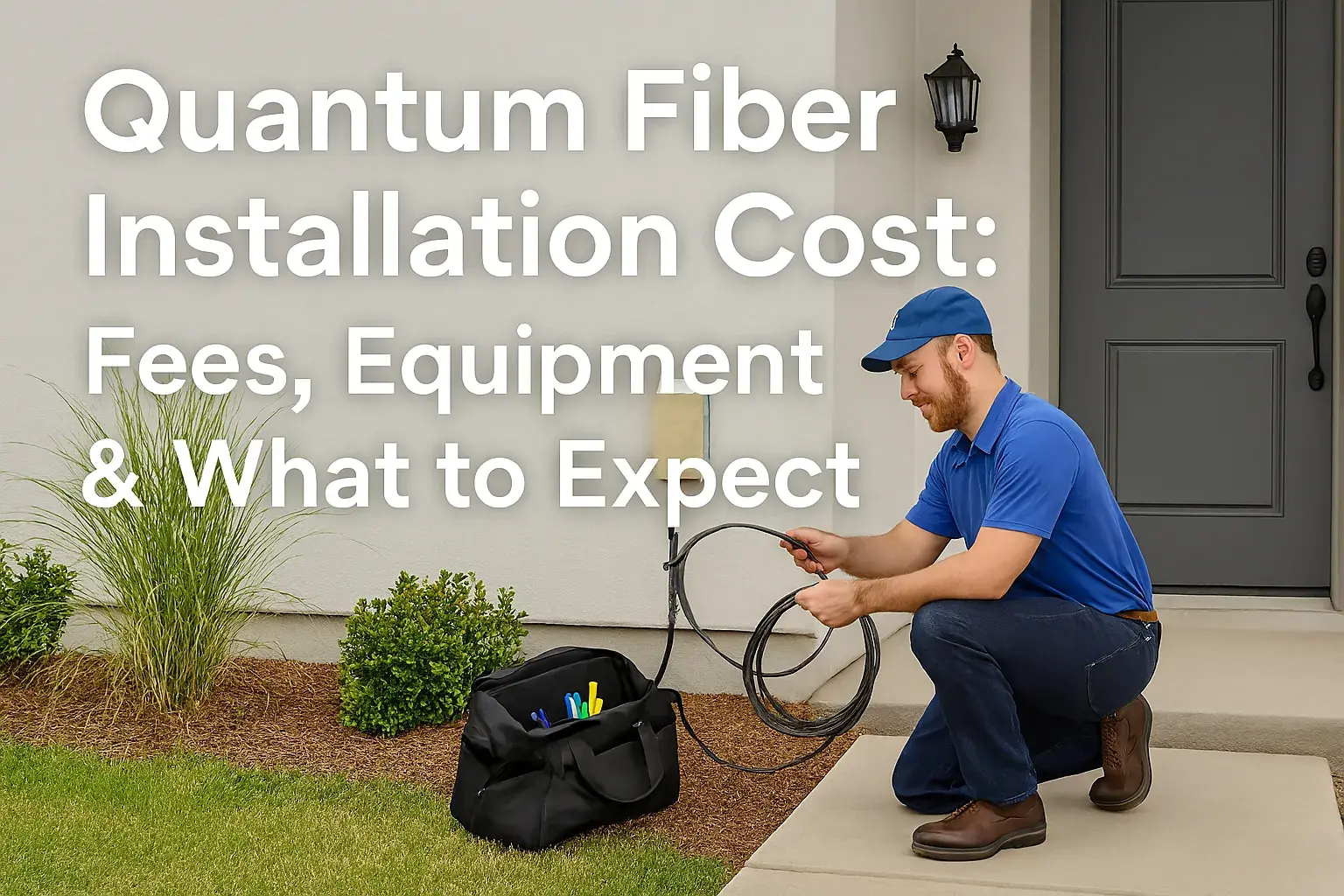
Installation Fees: Some providers charge an installation fee, which can range from $50 to $150 or more. Quantum Fiber may offer free installation as a promotional incentive, or it might be a standard charge. Self-installation options might also be available for some plans, potentially reducing costs.
Equipment Rental: While Quantum Fiber often includes a high-quality Wi-Fi 6 or Wi-Fi 6E router with its plans, there might be an option to use your own compatible equipment. If you rent their equipment, ensure you understand the monthly rental fee, if any. Many plans bundle this cost.
Service Changes/Moves: Fees may apply if you need to change your service plan or move your service to a new address.
Promotional Offers and Discounts
Quantum Fiber, like most ISPs, frequently runs promotions to attract new customers. These can include:
Discounted introductory pricing for the first 6-12 months.
Free installation or waived equipment fees.
Bundles with other services if available in your area.
Discounts for specific groups (e.g., military, students, though less common for Quantum Fiber).
It's always recommended to check for current deals on their website or by speaking with a sales representative. Be sure to read the fine print regarding the duration of any promotional pricing and what the standard rate will be afterward.
Value Proposition: Speed vs. Price
When evaluating Quantum Fiber's pricing, it's essential to consider the value it provides. For the price, you are getting cutting-edge fiber-optic technology with exceptionally high speeds, particularly symmetrical upload speeds, which are often lacking in cable or DSL plans. For users who require robust performance for remote work, online education, high-definition streaming, or demanding online activities, the cost of Quantum Fiber can be justified by the superior performance and reliability it offers. In 2026, as internet usage continues to grow, the investment in a high-speed fiber connection from providers like Quantum Fiber is increasingly becoming a necessity rather than a luxury.
The Good, The Bad, and The Future: Quantum Fiber Pros and Cons
No internet service provider is perfect. Quantum Fiber, despite its impressive technology, comes with its own set of advantages and disadvantages. Understanding these will help you make a well-rounded decision in 2026.
Pros of Quantum Fiber
Quantum Fiber's strengths lie in its core technology and its forward-thinking approach to internet service:
Exceptional Speeds: This is the most significant advantage. Offering symmetrical gigabit and multi-gigabit speeds means incredibly fast downloads and uploads. This is crucial for modern internet usage, from seamless 4K/8K streaming and cloud backups to lag-free online gaming and efficient remote work. The symmetrical nature of the upload speeds is a major plus for content creators and those who frequently participate in video conferences.
100% Fiber-Optic Network: Unlike providers that use a hybrid fiber-coaxial (HFC) approach, Quantum Fiber's commitment to pure fiber-to-the-home (FTTH) ensures maximum performance, reliability, and future-proofing. This technology is inherently more stable and less prone to degradation over distance or interference.
Reliability and Stability: Fiber optics are less susceptible to environmental factors and electromagnetic interference compared to copper. This translates to a more consistent and stable internet connection, with fewer outages or slowdowns, especially during peak usage times.
Low Latency: The speed of light is the fastest possible speed, and fiber optics harness this. This results in very low latency (ping times), which is critical for real-time applications like online gaming, video conferencing, and live streaming.
No Data Caps: Most Quantum Fiber plans come with unlimited data, meaning you don't have to worry about throttling or overage charges, no matter how much you stream, download, or upload. This is a significant benefit for heavy internet users.
Modern Equipment: Quantum Fiber typically provides or recommends modern Wi-Fi 6 or Wi-Fi 6E routers, ensuring that your home network can effectively utilize the high speeds of the fiber connection.
Customer-Centric Approach: As a newer provider, Quantum Fiber often emphasizes a streamlined customer experience, from installation to support, aiming to differentiate itself through service quality.
Cons of Quantum Fiber
Despite its strengths, Quantum Fiber has some limitations to consider:
Limited Availability: This is the most significant hurdle for many potential customers. Quantum Fiber is still in the process of expanding its network. As of 2026, its service is primarily available in select cities and neighborhoods, often as part of new developments or specific urban areas. You may not be able to get Quantum Fiber even if you live in a large metropolitan area.
Potentially Higher Cost: While offering great value for the speed, Quantum Fiber's plans can be more expensive than basic internet packages from established providers, especially for lower speed tiers that are not its focus. For users with minimal internet needs, the cost might be prohibitive.
Newer Company: Being a newer player in the market, Quantum Fiber may not have the same long-standing reputation or established customer service infrastructure as some of its larger, older competitors. While they aim for excellent service, the long-term track record is still being built.
Installation Complexity: While generally efficient, fiber installation can sometimes require more involved work at the premises, potentially including drilling or trenching, depending on the existing infrastructure. This can be a concern for some homeowners.
Dependence on Equipment: To fully leverage the speeds, you need compatible devices and a robust home Wi-Fi setup. If your existing router or devices are older, you might need to invest in upgrades to experience the full benefits, adding to the overall cost.
The Future Outlook for Quantum Fiber
Quantum Fiber is investing heavily in network expansion and technological advancements. By 2026, we can expect to see:
Increased Availability: The company is projected to significantly expand its service footprint, making its high-speed fiber available to more households and businesses.
Further Speed Enhancements: As technology progresses, Quantum Fiber is well-positioned to offer even faster speeds beyond the current multi-gigabit tiers, potentially reaching 25 Gbps or higher in the coming years.
Service Innovations: Expect potential new service offerings, enhanced security features, and improved smart home integration as the company matures.
The company's focus on fiber optics positions it favorably for the future demands of the internet, including the metaverse, advanced AI applications, and the ever-growing number of connected devices.
Quantum Fiber Availability and Installation Process
One of the most critical factors in determining if Quantum Fiber is a viable option for you is its availability in your specific area. As a newer provider focused on deploying cutting-edge fiber infrastructure, its service footprint is still growing. Understanding the installation process is also key to setting expectations.
Checking Quantum Fiber Availability
Quantum Fiber's network expansion is ongoing. As of 2026, its service is typically found in:
New Residential Developments: Quantum Fiber often partners with builders to bring fiber directly to new communities, ensuring state-of-the-art connectivity from the ground up.
Select Urban and Suburban Areas: The company is actively deploying its network in specific cities and neighborhoods, often targeting areas with a high demand for premium internet services.
Areas Undergoing Infrastructure Upgrades: Sometimes, Quantum Fiber will focus on areas where significant investment in broadband infrastructure is being made.
How to Check: The most reliable way to determine availability is to visit the official Quantum Fiber website and enter your exact address. The site will quickly tell you if service is available, what plans are offered in your location, and the associated pricing.
Geographic Limitations: It's essential to understand that even within a city, availability can be highly localized. You might live just a few blocks away from a Quantum Fiber-enabled area and still be unable to get service. This is a common challenge with new fiber deployments.
The Quantum Fiber Installation Process
Quantum Fiber generally aims for a smooth and efficient installation process. Here's what you can typically expect:
Scheduling: Once you sign up for service, you'll schedule an installation appointment. Quantum Fiber usually offers flexible appointment windows.
Site Survey (if necessary): In some cases, a technician may visit beforehand to assess the best way to run the fiber line to your home.
Fiber Entry: A technician will run a thin fiber optic cable from the nearest Quantum Fiber network point to your home. This may involve aerial installation (using existing poles) or underground installation (trenching or using existing conduits).
Interior Setup: Inside your home, the technician will install a small Optical Network Terminal (ONT) device, which converts the light signals into electrical signals your devices can use. This is usually mounted on a wall.
Router Connection: The ONT is then connected to the Quantum Fiber-provided router (or your own compatible router) via an Ethernet cable.
Network Activation and Testing: The technician will activate your service and perform speed tests to ensure everything is working correctly and meeting the subscribed speeds. They will also help you connect to your Wi-Fi network.
Installation Timeframe
A standard installation typically takes between 2 to 4 hours, depending on the complexity of the setup and whether any exterior work is required. The technician will discuss the process with you before beginning.
Self-Installation Option
In some select areas and for certain plans, Quantum Fiber may offer a self-installation option. This can be a faster and potentially more cost-effective way to get connected if you are comfortable with basic technical setup. The company provides detailed instructions and support for self-installation. However, for multi-gigabit speeds or more complex home setups, professional installation is often recommended.
What to Prepare for Installation
Clear Access: Ensure the technician has clear access to the exterior of your home where the fiber line will enter, and to the interior location where the ONT and router will be placed.
Power Outlets: Make sure there are accessible power outlets for the ONT and the router.
Wi-Fi Network Name (SSID) and Password: Have your desired Wi-Fi network name and password ready if you plan to set up your own network.
Questions: Prepare any questions you have about the service, equipment, or network setup.
Quantum Fiber's focus on a clean, efficient installation process is part of its commitment to providing a premium customer experience from the very beginning.
Quantum Fiber Customer Service and Support in 2026
The quality of customer service and technical support can significantly impact a user's overall satisfaction with an internet provider. As Quantum Fiber continues to grow its customer base in 2026, its approach to support is a key area of interest.
Channels of Support
Quantum Fiber typically offers multiple avenues for customers to seek assistance:
Online Support Center: A comprehensive knowledge base with FAQs, troubleshooting guides, and setup tutorials is usually available on their website. This is often the first point of contact for common issues.
Phone Support: Dedicated customer service and technical support lines are available, often with extended hours to accommodate various time zones and schedules.
Live Chat: Many users prefer the convenience of live chat for quick questions or basic troubleshooting without having to make a phone call.
Email Support: For less urgent inquiries, email support provides a written record of your communication.
Technical Support Capabilities
Given the advanced nature of fiber optics, Quantum Fiber's technical support team is expected to be well-versed in:
Fiber Network Diagnostics: Identifying and resolving issues related to the fiber optic line and the ONT.
Router and Wi-Fi Troubleshooting: Assisting with connectivity issues, Wi-Fi signal strength problems, and router configuration.
Speed Test Analysis: Helping customers understand their speed test results and troubleshoot any discrepancies.
Device Compatibility: Providing guidance on ensuring home devices are compatible with the high-speed network.
Customer Service Philosophy
As a newer provider, Quantum Fiber often emphasizes a customer-centric approach. This typically involves:
Personalized Service: Aiming to provide more attentive and less automated customer interactions compared to some larger, legacy providers.
Proactive Communication: Informing customers about planned maintenance or potential service disruptions.
Issue Resolution: Focusing on efficiently resolving customer issues on the first contact whenever possible.
Potential Challenges and Improvements
As Quantum Fiber scales, like any growing company, it may face challenges:
Wait Times: During periods of high demand or network expansion, wait times for phone or chat support could increase.
Escalation Processes: Ensuring that complex technical issues are efficiently escalated to specialized teams.
Consistency: Maintaining a consistently high level of service across all support channels as the customer base grows.
Quantum Fiber's commitment to investing in its support infrastructure and training its staff will be crucial for maintaining customer satisfaction in 2026 and beyond. Early customer feedback in 2025 and 2026 generally indicates a positive experience with their support, particularly regarding the technical expertise of their field technicians.
Quantum Fiber vs. The Competition: A 2026 Showdown
In 2026, the internet service provider market is fiercely competitive. Quantum Fiber stands out with its pure fiber-optic offering, but it faces strong competition from established players. Here's how it stacks up against common alternatives.
Quantum Fiber vs. Cable Internet Providers (e.g., Xfinity, Spectrum)
Cable providers have a wide reach and often offer competitive pricing, especially for introductory periods. However, their technology (Hybrid Fiber-Coaxial) has inherent limitations compared to pure fiber.
Speed: Quantum Fiber generally offers significantly higher and more consistent symmetrical speeds (especially upload) than cable. While cable can offer gigabit download speeds, upload speeds are typically much lower (e.g., 35-50 Mbps).
Reliability: Fiber is less prone to interference and network congestion than cable. Cable networks can experience slowdowns during peak hours as bandwidth is shared among many users in a neighborhood.
Latency: Quantum Fiber offers lower latency, which is better for gaming and real-time applications.
Pricing: Cable can sometimes be cheaper for lower speed tiers, but Quantum Fiber's pricing for its high-speed tiers can be competitive when considering the superior performance and symmetrical upload speeds. Cable providers also frequently increase prices after promotional periods.
Availability: Cable has broader availability than Quantum Fiber.
Quantum Fiber vs. DSL Internet Providers (e.g., CenturyLink/Lumen)
DSL uses existing telephone lines and is generally the slowest and least reliable option among the major technologies.
Speed: DSL speeds are significantly slower than Quantum Fiber, often ranging from 10 Mbps to 100 Mbps, with very limited upload speeds.
Reliability: DSL is more susceptible to distance from the central office and interference, leading to inconsistent performance.
Latency: DSL has higher latency than fiber.
Pricing: DSL is often the cheapest option, but the performance trade-off is substantial.
Availability: DSL is widely available due to existing phone infrastructure.
Quantum Fiber vs. Other Fiber Providers (e.g., Google Fiber, Verizon Fios)
These providers also offer 100% fiber-optic services and are Quantum Fiber's most direct competitors.
Speed: All offer comparable high-speed tiers, including gigabit and multi-gigabit options. The specific speeds and pricing can vary.
Reliability: All fiber providers offer excellent reliability and low latency.
Pricing: Pricing is often competitive among fiber providers, with each offering various promotions. Quantum Fiber's pricing needs to be compared directly with local offerings from Google Fiber or Verizon Fios in your specific area.
Availability: Availability is the key differentiator. Each fiber provider has its own expansion plans and existing footprint. Quantum Fiber's availability is currently more limited than established fiber networks like Verizon Fios in some regions, but it is rapidly expanding.
Customer Service: Customer service experiences can vary, and all providers aim to improve this aspect.
Quantum Fiber vs. Fixed Wireless or 5G Home Internet
These newer technologies offer wireless broadband solutions, often with competitive pricing and easier setup.
Speed: While 5G home internet can offer impressive speeds, they are generally not as consistently high or symmetrical as Quantum Fiber's fiber offerings. Fixed wireless speeds can be highly variable.
Reliability: Wireless services are more susceptible to environmental factors (weather, obstructions) and network congestion than fiber.
Latency: Fiber offers significantly lower and more stable latency.
Data Caps: Some wireless providers may have data caps or throttling policies, whereas Quantum Fiber typically offers unlimited data.
Availability: Wireless services have broader availability than fiber in many rural or hard-to-reach areas, but Quantum Fiber is focused on areas where it can deploy its high-performance fiber network.
Key Differentiators for Quantum Fiber in 2026
Focus on Multi-Gigabit Speeds: Quantum Fiber is aggressively pushing multi-gigabit tiers, positioning itself for the future demands of bandwidth-intensive applications.
Pure Fiber Commitment: Its dedication to 100% fiber-to-the-home eliminates the compromises inherent in hybrid networks.
Network Expansion Pace: While still limited, its rapid deployment strategy suggests a strong commitment to increasing its service footprint.
Ultimately, the "best" provider depends on your location, budget, and specific internet usage needs. However, for those in an area where Quantum Fiber is available and who prioritize speed, reliability, and symmetrical upload performance, it presents a compelling, future-ready option in 2026.
Is Quantum Fiber the Right Fit for You in 2026?
Deciding if Quantum Fiber is the ideal internet service provider for your household or business in 2026 involves weighing its strengths against your specific needs and circumstances. Given its focus on high-performance fiber optics, it's not a one-size-fits-all solution, but it excels for certain user profiles.
Ideal Candidates for Quantum Fiber
Quantum Fiber is an excellent choice for individuals and families who:
Require High-Speed Internet for Multiple Users/Devices: If your household has many people simultaneously streaming HD/4K content, gaming online, video conferencing, or using bandwidth-heavy applications, Quantum Fiber's gigabit and multi-gigabit plans will provide a seamless experience.
Are Heavy Streamers or Gamers: Low latency and high, stable speeds are crucial for online gaming and buffer-free streaming of high-resolution content. Quantum Fiber excels in both these areas.
Work from Home or Run a Home-Based Business: Reliable, high-speed internet with strong upload capabilities is essential for video calls, large file transfers, cloud collaboration, and maintaining productivity. Symmetrical speeds offered by Quantum Fiber are a significant advantage here.
Are Early Adopters of New Technology: If you want the latest and greatest in internet technology and are willing to pay a premium for it, Quantum Fiber delivers cutting-edge performance.
Are Content Creators or Upload Large Files Frequently: The symmetrical upload speeds of Quantum Fiber are a game-changer for uploading videos to YouTube, backing up large data sets to the cloud, or sharing extensive project files.
Live in Areas with Limited High-Speed Options: If your current internet options are slow DSL or congested cable, and Quantum Fiber is available, it represents a massive upgrade.
Value Future-Proofing: Investing in a fiber connection means your internet service will likely be able to handle increasing data demands for many years to come without needing infrastructure upgrades.
Who Might Consider Other Options?
Quantum Fiber might not be the best fit if:
Availability is Limited: The most significant barrier is that Quantum Fiber is not yet available everywhere. If it's not in your area, you'll need to explore other providers.
Budget is Extremely Tight: While offering good value for speed, Quantum Fiber's premium plans can be more expensive than basic internet packages from other providers. If your internet usage is minimal (e.g., occasional email, light browsing), a cheaper, lower-speed plan from a different provider might suffice.
You Have Very Basic Internet Needs: If you only use the internet for occasional email, social media, and very light web browsing, you may not need the ultra-high speeds offered by Quantum Fiber, and a more basic plan from another provider could be more cost-effective.
You Prioritize Bundled Services: Some customers prefer bundled packages (internet, TV, phone) from a single provider. Quantum Fiber primarily focuses on internet service, so you might need to source other services separately.
You Need Service in a Very Rural Area: While fiber is expanding, it's often focused on more densely populated areas. Fixed wireless or satellite internet might be the only options in some remote rural locations.
Making the Final Decision
To determine if Quantum Fiber is right for you in 2026, follow these steps:
Check Availability: Visit the Quantum Fiber website and enter your exact address.
Assess Your Needs: Honestly evaluate how you use the internet. List your primary activities (streaming, gaming, remote work, etc.) and the number of devices you typically use.
Compare Plans and Pricing: If Quantum Fiber is available, compare its speed tiers and pricing against other providers in your area. Factor in any installation fees or equipment costs.
Read Reviews: Look for local reviews or feedback from users in your region to get a sense of real-world performance and customer service experiences.
Consider Future Growth: Think about how your internet needs might change in the next few years. Investing in higher speeds now might save you from needing an upgrade later.
By carefully considering these factors, you can confidently decide whether Quantum Fiber's advanced fiber-optic service aligns with your connectivity requirements and budget in 2026.
The Future of Quantum Fiber and Beyond
Quantum Fiber represents a significant push towards a future defined by ubiquitous, high-speed connectivity. As we look beyond 2026, the company's trajectory and the broader implications of its technology are worth considering.
Continued Network Expansion
Quantum Fiber's primary focus in the coming years will undoubtedly be on expanding its network footprint. As fiber deployment becomes more streamlined and cost-effective, expect to see it reach more urban, suburban, and potentially even some rural communities. This expansion is driven by the increasing demand for bandwidth-intensive applications and the recognition that fiber is the most sustainable and capable infrastructure for the future.
Advancements in Speed and Technology
The pace of technological advancement in fiber optics is relentless. While multi-gigabit speeds are becoming the standard for Quantum Fiber, the underlying infrastructure is capable of much more. We can anticipate:
Higher Speed Tiers: As consumer and business needs evolve, Quantum Fiber will likely introduce even faster speed tiers, potentially reaching 25 Gbps, 50 Gbps, or even 100 Gbps in the longer term, especially for business clients.
Enhanced Network Efficiency: Ongoing research and development in optical networking will lead to more efficient data transmission, potentially increasing capacity and reducing latency further.
Integration with Emerging Technologies: Quantum Fiber's robust network will be crucial for supporting the growth of technologies like the metaverse, advanced AI, autonomous vehicles, and the Internet of Things (IoT), all of which rely on high-speed, low-latency connections.
Impact on the Broadband Market
Quantum Fiber's aggressive deployment of pure fiber optics puts pressure on incumbent providers, particularly cable companies, to invest in their own network upgrades. This competition ultimately benefits consumers by driving innovation, improving service quality, and potentially leading to more competitive pricing across the board. The increasing availability of fiber services like Quantum Fiber is accelerating the transition away from legacy copper-based technologies.
Customer Experience Evolution
As Quantum Fiber matures, its customer service and support systems will continue to evolve. Expect further integration of AI for customer support, more self-service options, and a continued focus on providing a seamless user experience from signup to ongoing service. The company's ability to maintain its customer-centric approach as it scales will be a key factor in its long-term success.
The Broader Vision
Quantum Fiber is not just about providing internet; it's about building the digital highways of tomorrow. A reliable, high-speed fiber network is fundamental to economic growth, educational advancement, and improved quality of life. By investing in this infrastructure, Quantum Fiber is contributing to a more connected and capable society. As more households and businesses come online with fiber, the potential for innovation and new digital services becomes virtually limitless.
In conclusion, Quantum Fiber is poised to remain a leading force in the high-speed internet market through 2026 and beyond. Its commitment to pure fiber technology, combined with a focus on high speeds and customer satisfaction, makes it a compelling choice for those seeking the best in internet connectivity. While availability remains a key factor, its ongoing expansion and technological advancements suggest a bright future for the company and its subscribers.