Is Quantum Fiber Available in My Area? Coverage Map, Cities & Availability Check
Wondering if Quantum Fiber's lightning-fast internet is available in your neighborhood? This guide provides an immediate answer and the tools to check, covering coverage maps, specific cities, and how to verify service for your address. Get the essential information you need to know about Quantum Fiber's reach in 2025-26.
Understanding Quantum Fiber
Quantum Fiber, a brand under Quantum Communications (formerly CenturyLink), represents a significant push towards delivering high-speed, reliable fiber-optic internet to homes and businesses. Unlike traditional cable or DSL, fiber optics utilize thin strands of glass or plastic to transmit data as pulses of light, offering superior speed, lower latency, and greater bandwidth. This technology is the backbone of modern digital life, enabling seamless streaming, lag-free gaming, efficient remote work, and the smooth operation of smart home devices. As the demand for faster and more stable internet connections continues to surge, understanding the availability of fiber-optic services like Quantum Fiber becomes paramount for consumers and businesses alike. The company's strategic rollout focuses on areas where it can deploy its advanced fiber network, aiming to bridge the digital divide and provide a future-proof internet solution. In 2025 and 2026, the expansion of fiber networks is a key focus for many telecommunications providers, and Quantum Fiber is actively participating in this growth, bringing its advanced infrastructure to new communities.
What is Fiber-Optic Internet?
Fiber-optic internet is a type of broadband connection that uses fiber optic cables to transmit data. These cables are made of extremely thin strands of glass or plastic, thinner than a human hair, that carry information in the form of light signals. This method of data transmission is fundamentally different from copper-based technologies like DSL or coaxial cable, which transmit data using electrical signals. The use of light offers several distinct advantages. Firstly, light signals can travel much greater distances without significant degradation compared to electrical signals, meaning less need for signal boosters and more consistent speeds over longer runs. Secondly, fiber optic cables are immune to electromagnetic interference, which can disrupt signals in copper cables, leading to more stable and reliable connections. Thirdly, the bandwidth capacity of fiber optic cables is vastly superior, allowing for much higher download and upload speeds. This is crucial for households with multiple users and devices, as well as for bandwidth-intensive applications such as 4K video streaming, virtual reality, cloud computing, and large file transfers. The speed and reliability of fiber make it the preferred choice for future-proofing internet connectivity.
Quantum Fiber's Network Infrastructure
Quantum Fiber is committed to building out its own fiber-to-the-premises (FTTP) network. This means that the fiber optic cables run directly from the provider's central office all the way to the customer's home or business. This "end-to-end" fiber deployment is often referred to as a "pure fiber" network. This direct connection is what allows Quantum Fiber to deliver its advertised gigabit speeds and symmetrical upload/download capabilities. In contrast, many other providers might use a hybrid fiber-coaxial (HFC) network, where fiber runs to a neighborhood node, and then traditional coaxial cable connects to individual homes. While HFC can offer high download speeds, upload speeds are typically much lower, and the shared nature of the coaxial cable can lead to slowdowns during peak usage times. Quantum Fiber's investment in a full FTTP infrastructure signifies a long-term commitment to providing the highest quality internet service. The company is actively upgrading and expanding this infrastructure in targeted areas, often in partnership with local municipalities and development projects, to ensure robust and scalable connectivity for the future. The physical infrastructure is designed to be resilient and capable of supporting speeds well beyond current consumer needs, anticipating the demands of emerging technologies.
The Quantum Fiber Brand and Its Evolution
Quantum Fiber is the modern iteration of Quantum Communications' (formerly CenturyLink) high-speed internet services. While the CenturyLink brand still exists for certain services, Quantum Fiber is specifically positioned as the company's flagship fiber-optic offering. This rebranding and dedicated focus on fiber reflect a strategic shift towards advanced telecommunications infrastructure. The transition aims to clearly differentiate its cutting-edge fiber services from its legacy copper-based offerings and to better communicate the superior performance and capabilities of its fiber network. By creating a distinct brand identity for its fiber services, Quantum aims to attract customers seeking the fastest and most reliable internet available, particularly in areas where fiber is being actively deployed. This strategic move is designed to compete more effectively in the rapidly evolving broadband market, where fiber optics are increasingly becoming the standard for high-performance internet. The evolution from CenturyLink to Quantum Fiber underscores a commitment to innovation and investment in next-generation connectivity solutions for consumers and businesses alike.
Checking Quantum Fiber Availability
The most crucial step in getting Quantum Fiber internet is confirming its availability at your specific address. This process is straightforward and can typically be done online through the Quantum Fiber website. Providers deploy their networks strategically, focusing on areas where infrastructure development is feasible and demand is high. Therefore, availability can vary significantly even within the same city or town. Understanding how to perform this check ensures you don't waste time exploring plans or features for a service you can't yet access. The online availability checker is designed to be user-friendly, requiring only your street address, city, and zip code. Upon entering this information, the system will query its network deployment database to determine if your location is served by Quantum Fiber's fiber optic network. If it is, you'll be presented with available plans and options. If not, the system may provide information on potential future expansion or alternative services.
The Online Availability Checker: Your First Stop
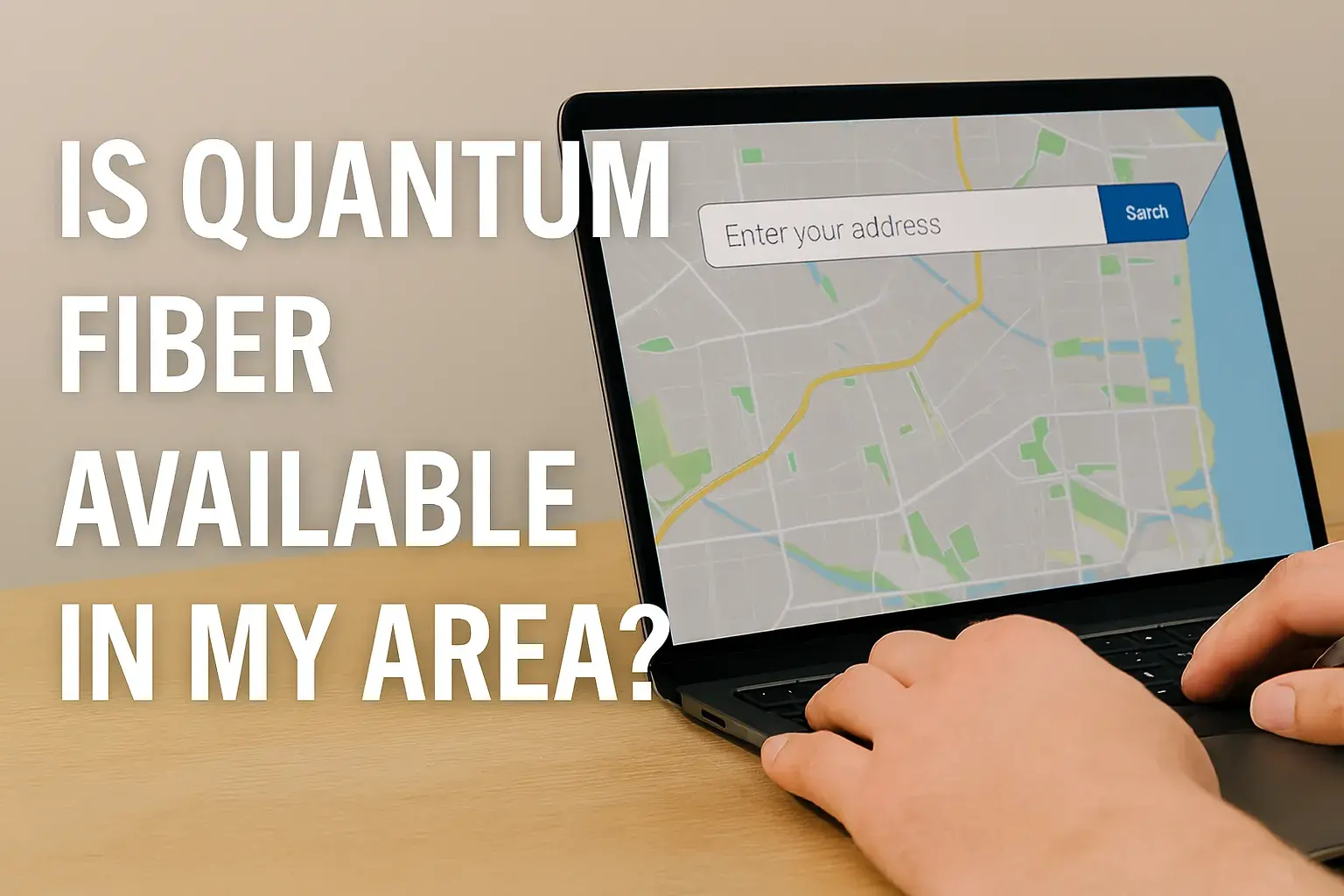
The primary and most efficient method for determining Quantum Fiber availability is by using their dedicated online tool. This tool is integrated directly into the Quantum Fiber website, making it easily accessible. To use it, navigate to the Quantum Fiber homepage and look for a prominent section or button labeled "Check Availability," "See if Quantum Fiber is in your area," or similar phrasing. Clicking this will typically open a form where you'll be prompted to enter your full street address, including apartment or unit numbers if applicable, your city, and your zip code. It's essential to enter this information accurately to ensure the most precise results. The system then cross-references your address against its real-time network deployment data. This data reflects where Quantum Fiber has completed its fiber optic infrastructure build-out and where service is actively being provisioned. The speed of this check is usually instantaneous, providing you with an immediate answer.
What to Expect After Entering Your Address
Once you submit your address into the Quantum Fiber availability checker, you will receive one of a few possible outcomes. The most desirable outcome is confirmation that Quantum Fiber is available at your location. In this scenario, you will typically be presented with a list of available internet plans, including their speeds, pricing, and any promotional offers. You may also see options for add-on services like voice or TV bundles if they are offered in conjunction with your fiber internet. The system will guide you through the next steps, which usually involve selecting a plan, choosing an installation date, and completing the sign-up process.
Alternatively, the checker might indicate that Quantum Fiber is not yet available at your address but is planned for future deployment. In such cases, you might be given an estimated timeframe for when service could become available or offered the option to sign up for notifications. This allows you to stay informed about the progress of network construction in your area.
In some instances, the checker may state that Quantum Fiber has no current plans to deploy service to your address. This can be due to various factors, including the existing infrastructure, the cost of deployment, or strategic business decisions. If this is the case, the system might suggest alternative Quantum Communications services, such as their DSL offerings if available, or recommend exploring other internet providers in your area. It's always a good idea to double-check the address details for accuracy if you believe the result might be incorrect.
Potential Pitfalls and How to Avoid Them
While the online availability checker is generally reliable, a few common pitfalls can lead to inaccurate results or frustration. One of the most frequent issues is incorrect address entry. Missing street suffixes (like "St." vs. "Street"), incorrect zip codes, or typos in the street name can all cause the system to fail to find your address, even if service is available. Always double-check your spelling and ensure you're using the standardized address format recognized by postal services.
Another pitfall can arise in areas with new construction or complex multi-unit dwellings. Sometimes, new addresses may not yet be fully registered in the databases used by service providers. Similarly, large apartment complexes or business parks might have unique addressing schemes that the checker struggles with. If you suspect your address is correct but the checker isn't finding it, try variations of your address (e.g., using "Apt" instead of "Apartment") or contact Quantum Fiber customer support directly. They have access to more detailed mapping tools and can often manually verify availability.
Finally, be aware that availability can sometimes be determined by the specific utility pole or connection point serving your property. Even if fiber is present on your street, it might not yet be connected to your specific building. The online tool is usually quite good at this, but customer service can provide the most definitive answer in ambiguous situations. Always have your account number or a previous bill from another provider handy if you need to discuss your service address with a representative.
Quantum Fiber Coverage Map Explained
A Quantum Fiber coverage map is a visual representation of the areas where the company has deployed its fiber optic network and offers its high-speed internet services. These maps are invaluable tools for potential customers to quickly ascertain the general availability of Quantum Fiber in their region. While the online address checker provides definitive confirmation for a specific location, a coverage map offers a broader perspective, showing which cities, towns, and neighborhoods are currently served or are slated for future service. Understanding how to interpret these maps can help you gauge the likelihood of Quantum Fiber being available in your area and track the company's expansion efforts.
Interpreting the Visual Data
Quantum Fiber coverage maps typically use color-coding or shaded regions to denote areas with active service. For instance, a specific color might represent areas where Quantum Fiber is currently available for new installations, while another color or pattern could indicate regions where construction is underway or planned for the near future. Often, these maps are interactive, allowing users to zoom in on specific neighborhoods or enter their zip code to see a more localized view.
When viewing a map, pay attention to the legend, which will explain what each color or symbol signifies. It's important to note that coverage maps often represent general service areas. Even within a "covered" zone, actual availability to your specific address can still depend on factors like the proximity of fiber lines to your home and the capacity of the local network infrastructure. Therefore, while a map can give you a strong indication, it should always be followed up with a precise address check. Look for areas that are densely populated with the "available" indicator, as these are the most likely places to find service. Also, observe the progression of new service areas being added, which can indicate the company's growth trajectory.
Where to Find the Official Coverage Map
The most reliable source for Quantum Fiber's official coverage map is the company's own website. Typically, you can find a link to the coverage map within the "Internet," "Availability," or "About Us" sections of their site. Some providers might also integrate a map directly into their availability checker tool, allowing you to see a broader view after you've entered your address.
It's advisable to always use the map provided directly by Quantum Fiber. Third-party websites or outdated articles might not reflect the most current network deployment status. The official map will be updated regularly to show the latest expansion areas and service availability. If you are having trouble locating the map on their website, using a search engine with terms like "Quantum Fiber coverage map" and adding "official" can help direct you to the correct page. Remember that these maps are dynamic and are continuously updated as the company expands its fiber optic footprint across the country.
Limitations of Coverage Maps
While coverage maps are incredibly useful, they have inherent limitations. They often represent a high-level overview and may not account for the granular details of network deployment. For example, a map might show an entire neighborhood as covered, but individual homes on a particular street might not have fiber service if the lines haven't been extended to that specific block yet. This is particularly true in areas where fiber is still being actively built out.
Furthermore, coverage maps might not always differentiate between different types of service tiers or technologies. While Quantum Fiber focuses on fiber, some areas might still have legacy copper infrastructure that is being used. The map might indicate service availability without specifying if it's the full fiber-optic experience or a hybrid solution. Another limitation is the potential for outdated information. Network expansion is a continuous process, and a map can quickly become outdated as new areas are brought online or as construction plans change. This is why the address availability checker is the definitive tool; it accesses the most up-to-date, real-time data for your specific location. Always use the map as a preliminary guide and the address checker for confirmation.
Cities and States with Quantum Fiber
Quantum Fiber is actively expanding its fiber optic network across various states and cities in the United States. The company's strategy involves targeted rollouts, often focusing on metropolitan areas, suburban communities, and sometimes rural regions where significant infrastructure investment is planned or underway. As of 2025-26, Quantum Fiber's presence is growing, but it's not yet a ubiquitous national service like some older technologies. Identifying specific cities and states where Quantum Fiber is available is key to understanding its current reach and potential for future expansion. The company is building out its network in phases, prioritizing locations where it can leverage existing infrastructure or where there is a strong demand for high-speed internet.
Current Key Markets and Expansion Areas
Quantum Fiber has made significant inroads in several key markets. While the exact list of cities and states is constantly evolving due to ongoing network construction, some of the prominent areas where Quantum Fiber has established or is establishing a strong presence include:
Texas: Cities like Austin, San Antonio, and Dallas have seen substantial fiber deployment.
North Carolina: Areas around Charlotte and Raleigh-Durham are key expansion zones.
California: While extensive, Quantum Fiber is focusing on specific communities within the state.
Washington: The Seattle metropolitan area and surrounding regions are targeted.
Oregon: Portland and its suburbs are part of the fiber rollout.
Nevada: Las Vegas and surrounding areas are experiencing network expansion.
Arizona: Phoenix and its surrounding communities are seeing investment.
This list is not exhaustive, and Quantum Fiber is continuously announcing new markets and expansion projects. The company often partners with municipalities to accelerate fiber deployment, which can lead to rapid availability in newly announced cities. It's crucial to check the official Quantum Fiber website for the most up-to-date information on specific cities and states. New deployments are announced regularly, and the company's commitment to expanding its fiber footprint means this list will continue to grow throughout 2025 and 2026. Keep an eye on their press releases and news sections for the latest updates on new market entries and service availability.
How to Find a Comprehensive List
The most accurate and up-to-date method for finding a comprehensive list of cities and states where Quantum Fiber is available is to visit the official Quantum Fiber website. Navigate to their "Availability" or "Coverage" section. Here, you will typically find:
An interactive coverage map: As discussed earlier, this map visually displays service areas.
A list of states and major cities: Some providers offer a direct list of serviced regions.
The address availability checker: This remains the definitive tool for individual verification.
If the website doesn't provide a readily accessible list, the address checker is your best bet. By entering your zip code, you can often see if Quantum Fiber is available in your general vicinity, even if it doesn't list every single town. Another strategy is to search for news releases or press announcements from Quantum Fiber regarding network expansion. These often highlight new cities and states where the company is launching services. Remember that availability can be very localized, so even if your state is listed, you must confirm your specific address. The company's commitment to fiber expansion means that new locations are being added frequently, so checking back periodically might reveal new possibilities.
Factors Influencing Deployment Decisions
Several factors influence where Quantum Fiber chooses to deploy its network. These decisions are strategic and based on a combination of technical, economic, and market considerations.
Existing Infrastructure: Quantum Communications may leverage existing conduit or rights-of-way from its legacy network, making deployment in certain areas more cost-effective.
Population Density: Higher population density generally means more potential customers within a given area, making the significant investment in fiber infrastructure more financially viable.
Competition: The presence of strong competition from other fiber providers or robust cable networks can influence deployment decisions, either as a driver to compete or a reason to focus on underserved areas.
Municipal Partnerships: Collaborations with local governments can streamline the permitting process, provide access to public infrastructure, and offer incentives, accelerating deployment.
Economic Development Initiatives: Areas undergoing significant economic development or seeking to attract new businesses often prioritize high-speed internet, making them attractive targets for fiber providers.
Customer Demand: Market research and expressed customer interest can play a role, with providers prioritizing areas where demand for high-speed fiber is demonstrably high.
Geographic Feasibility: The physical terrain and existing underground utilities can impact the cost and complexity of laying fiber optic cable.
These factors collectively shape Quantum Fiber's expansion strategy, leading to its presence in specific cities and states while other areas await future development.
How to Verify Quantum Fiber Service
Once you've identified that Quantum Fiber *might* be available in your area, the next critical step is to perform a precise verification for your specific address. This process ensures that you are indeed eligible for their fiber optic service and can proceed with ordering. It's a vital step that prevents misunderstandings and ensures you can access the high-speed internet you're looking for. This verification typically involves a few key actions, primarily centered around using the provider's online tools and, if necessary, contacting their customer service.
Step-by-Step Verification Process
Here’s a breakdown of how to verify Quantum Fiber service for your address:
Visit the Official Quantum Fiber Website: Start by going to the official Quantum Fiber website. Avoid third-party sites, as they may have outdated or inaccurate information.
Locate the Availability Checker: On the homepage or in the main navigation menu, find the tool designed to check service availability. It's usually labeled "Check Availability," "See if Fiber is Here," or something similar.
Enter Your Full Address: Accurately input your complete street address, including street number, street name, city, state, and zip code. If you are in a multi-unit dwelling, ensure you include your apartment or unit number.
Submit and Review Results: Click the button to submit your address. The system will then process your request.
Interpreting the Results:
Available: If Quantum Fiber is available, you'll see a confirmation message and be presented with available plans, speeds, and pricing. You can then proceed to select a plan and schedule installation.
Not Available: If it's not available, the system will state this. It might offer information about future expansion or suggest alternative Quantum Communications services.
Address Not Found: If your address isn't recognized, double-check for typos or variations in address formatting. If it still doesn't work, proceed to the next step.
Contact Customer Support (If Necessary): If the online checker doesn't yield a clear answer, or if you believe there's an error, contact Quantum Fiber customer support directly. They can perform a more in-depth check using their internal systems and provide definitive information. Have your address details ready when you call.
Following these steps will give you the most accurate confirmation of Quantum Fiber service availability at your specific location.
What Information You'll Need
To ensure a smooth verification process, have the following information ready:
Full Street Address: This includes the street number, street name, city, state, and zip code. Make sure it matches what's used by postal services.
Apartment or Unit Number: If you live in a building with multiple residences, this is crucial for accurate verification.
Contact Information: A valid email address and phone number will be needed if you decide to sign up or if the provider needs to contact you for further details.
Previous Provider Information (Optional): While not strictly necessary for availability checks, knowing your current internet provider and the type of service you have can be helpful if you need to discuss alternatives or compare offerings.
Having this information readily available will expedite the process, whether you are using the online checker or speaking with a customer service representative.
Troubleshooting Address Not Found Errors
If the Quantum Fiber availability checker states that your address cannot be found, don't despair. This is a common issue, especially in areas with new developments or unique addressing systems. Here are some troubleshooting steps:
Double-Check for Typos: The most common reason for an address not being found is a simple typo. Carefully review every character in your street name, city, and zip code.
Verify Address Format: Ensure you are using the standard format. For example, use "St." instead of "Street," "Ave." instead of "Avenue," or vice versa, depending on what the system expects. Some systems are case-sensitive.
Try Variations: If your address includes directional prefixes (e.g., "North Main Street"), try entering it with and without the prefix if the system allows. For apartment buildings, try using "Apt," "Unit," or "#" followed by the number.
Check with Neighbors: If your neighbors have Quantum Fiber or have successfully checked for it, inquire about the exact address format they used.
Consult Postal Service Data: Your address should be recognized by the USPS. You can verify your official address on the USPS website.
Contact Quantum Fiber Support: If all else fails, reach out to Quantum Fiber's customer service. They have more advanced tools to pinpoint addresses and can often manually verify serviceability. Explain that the online tool is not recognizing your address.
By systematically working through these troubleshooting steps, you can often resolve "address not found" errors and get a definitive answer on Quantum Fiber availability.
Quantum Fiber Coverage Map vs. Competitors
When evaluating internet providers, understanding how Quantum Fiber's coverage map and availability compare to competitors is essential. The broadband landscape is dynamic, with various companies deploying different technologies and expanding their networks at different paces. Quantum Fiber's focus on pure fiber-to-the-premises (FTTP) technology sets it apart, but its availability is still more limited than established providers with older infrastructure.
Comparing Network Deployment Strategies
Quantum Fiber's strategy is primarily focused on building out new, dedicated fiber optic networks. This involves significant upfront investment in laying new cables, often underground, to reach homes and businesses directly. This approach ensures the highest possible speeds and reliability but means that deployment is slower and more geographically concentrated compared to providers who utilize existing infrastructure.
Competitors like Xfinity (Comcast) and Spectrum (Charter Communications) often rely on hybrid fiber-coaxial (HFC) networks. These networks use fiber optic cables to connect to neighborhood nodes, and then traditional coaxial cable connects to individual homes. While this allows for faster deployment and wider initial coverage, especially in older neighborhoods, it can result in lower upload speeds and potential performance degradation during peak usage times due to shared bandwidth on the coaxial segments.
AT&T, another major player, also offers both fiber (AT&T Fiber) and DSL services. AT&T Fiber employs a similar FTTP strategy to Quantum Fiber, meaning its availability is also geographically limited to areas where fiber has been deployed. Their DSL service, however, uses existing copper phone lines and is available in a much wider area, though speeds are significantly lower than fiber.
Therefore, Quantum Fiber's coverage map, while growing, will likely show fewer "covered" areas compared to providers with extensive legacy networks like DSL or HFC. However, where Quantum Fiber *is* available, it typically offers a superior internet experience in terms of speed, latency, and reliability, especially for symmetrical upload and download performance.
Speed and Performance Comparisons (2025-26 Data)
As of 2025-26, Quantum Fiber is known for offering gigabit (1000 Mbps) and multi-gigabit (2000 Mbps or higher) internet speeds. A key differentiator is that these speeds are often symmetrical, meaning the upload speed is the same as the download speed. This is crucial for activities like video conferencing, uploading large files, live streaming, and online gaming.
Here's a general comparison:
Provider | Primary Technology | Typical Download Speeds (Max) | Typical Upload Speeds (Max) | Availability Focus |
|---|---|---|---|---|
Quantum Fiber | Fiber-to-the-Premises (FTTP) | 1 Gbps - 2 Gbps+ | 1 Gbps - 2 Gbps+ (Symmetrical) | Targeted Fiber Buildouts |
Xfinity (Comcast) | Hybrid Fiber-Coaxial (HFC) | 1 Gbps - 2 Gbps+ | 35 Mbps - 100 Mbps+ (Asymmetrical) | Widespread Cable Network |
Spectrum (Charter) | Hybrid Fiber-Coaxial (HFC) | 1 Gbps - 1.5 Gbps+ | 20 Mbps - 50 Mbps+ (Asymmetrical) | Widespread Cable Network |
AT&T Fiber | Fiber-to-the-Premises (FTTP) | 1 Gbps - 5 Gbps+ | 1 Gbps - 5 Gbps+ (Symmetrical) | Targeted Fiber Buildouts |
Verizon Fios | Fiber-to-the-Premises (FTTP) | 1 Gbps - 2 Gbps+ | 1 Gbps - 2 Gbps+ (Symmetrical) | Northeastern US Focus |
CenturyLink (DSL) | Digital Subscriber Line (DSL) | Up to 100 Mbps (Varies Greatly) | Up to 10 Mbps (Varies Greatly) | Widespread Copper Network |
Note: Speeds and availability vary significantly by location for all providers. This table provides general maximums for top-tier plans where available.
As you can see, Quantum Fiber competes directly with other pure fiber providers like AT&T Fiber and Verizon Fios in terms of speed and symmetry. While cable providers like Xfinity and Spectrum offer high download speeds, their upload speeds are considerably lower, making Quantum Fiber a better choice for users who heavily rely on uploading content or engaging in real-time, bandwidth-intensive activities.
Availability Reach: Fiber vs. Legacy Networks
The primary difference in availability lies in the underlying technology. Fiber optic networks, like those deployed by Quantum Fiber, AT&T Fiber, and Verizon Fios, require extensive new infrastructure. This means their coverage maps, while growing, are still more limited than providers who can leverage existing copper telephone lines (DSL) or coaxial cable networks.
For example, a provider like CenturyLink (which still offers DSL under the same parent company) or Spectrum can offer internet service to a much larger percentage of households because their infrastructure is already in place. However, the performance of these legacy networks is often a compromise. Quantum Fiber's availability is concentrated in areas where the company has made strategic investments to build its fiber optic lines. This means that even within a state where Quantum Fiber operates, many towns or even neighborhoods might not have access to their service.
When checking availability, it's important to understand that Quantum Fiber represents the cutting edge of internet technology, but its reach is still expanding. If Quantum Fiber is not available, you may need to consider other providers, weighing the trade-offs between speed, reliability, and availability based on their respective network technologies.
Benefits of Quantum Fiber
Choosing Quantum Fiber, where available, comes with a host of advantages that go beyond just fast internet speeds. The underlying fiber optic technology provides a foundation for a superior online experience, impacting everything from daily tasks to future technological adoption. Understanding these benefits can help you appreciate why fiber is considered the gold standard in broadband connectivity and why it's worth checking for availability.
Unmatched Speed and Performance
The most significant benefit of Quantum Fiber is its exceptional speed. With plans offering symmetrical gigabit (1000 Mbps) and multi-gigabit (2000 Mbps+) download and upload speeds, users can experience near-instantaneous downloads, seamless 4K/8K video streaming without buffering, and lag-free online gaming. The symmetrical nature of the speeds is particularly valuable. Unlike traditional cable internet where upload speeds are often a fraction of download speeds, fiber offers equal performance in both directions. This is crucial for professionals working from home who need to upload large files, participate in high-quality video conferences, or utilize cloud-based applications. Gamers benefit from lower latency, which translates to quicker response times in online multiplayer games.
Reliability and Stability
Fiber optic cables are inherently more reliable than copper wires. They are not susceptible to electromagnetic interference from sources like appliances, power lines, or even weather events that can disrupt electrical signals. This immunity leads to a more stable and consistent connection, with fewer dropped connections or fluctuations in speed. Quantum Fiber's end-to-end fiber network minimizes potential points of failure, ensuring that your internet service remains robust. This reliability is critical for businesses that depend on constant connectivity, households with multiple users simultaneously accessing the internet, and for critical applications like telemedicine or remote learning.
Future-Proofing Your Home
The demand for bandwidth is only increasing with the advent of new technologies like virtual reality (VR), augmented reality (AR), smart home ecosystems with numerous connected devices, and increasingly immersive online experiences. Quantum Fiber's infrastructure is built to handle these future demands. Its high capacity and scalability mean that as internet usage evolves, your Quantum Fiber connection will likely remain capable of supporting new applications and services without requiring immediate upgrades. Investing in fiber now means you are preparing your home or business for the next decade of digital innovation. This forward-thinking approach ensures that your internet service won't become a bottleneck as technology advances.
Lower Latency
Latency, often referred to as ping, is the time it takes for data to travel from your device to a server and back. Lower latency means a more responsive internet experience. Quantum Fiber's fiber optic technology significantly reduces latency compared to DSL or cable internet. This is particularly beneficial for:
Online Gaming: Lower ping reduces lag, giving gamers a competitive edge.
Video Conferencing: Smoother, more natural conversations with less delay.
Real-time Applications: Financial trading, remote control of machinery, and other time-sensitive applications perform better.
Interactive Content: VR and AR experiences become more immersive and less prone to motion sickness.
The reduced latency provided by Quantum Fiber contributes to a more seamless and immediate online interaction.
Bandwidth for Multiple Devices and Users
In today's connected households, it's common for multiple devices to be online simultaneously – smartphones, tablets, laptops, smart TVs, gaming consoles, smart home devices, and more. Quantum Fiber's high bandwidth capacity ensures that all these devices can operate without slowing each other down. Whether multiple family members are streaming different shows, one is gaming online, another is on a video call, and smart home devices are communicating in the background, Quantum Fiber can handle the load efficiently. This eliminates the frustration of shared bandwidth issues common with older technologies, providing a consistently good experience for everyone in the household.
Potential Future Expansion
Quantum Fiber, as a brand representing Quantum Communications' commitment to advanced fiber optic infrastructure, is actively engaged in expanding its network reach. The telecommunications industry is in a constant state of evolution, with fiber optics being the clear direction for future-proof high-speed internet. Understanding the company's approach to expansion can provide insights into where service might become available in the future. While specific timelines and locations are often subject to change based on market conditions, regulatory environments, and infrastructure development progress, the general trajectory points towards continued growth.
Quantum Fiber's Expansion Strategy
Quantum Fiber's expansion strategy is multifaceted. It often involves a combination of organic growth, where the company invests in building out its own fiber lines in targeted areas, and strategic partnerships. These partnerships can be with municipalities, utility companies, or even real estate developers. Collaborations with local governments are particularly common, as they can help streamline the permitting process, gain access to public rights-of-way, and sometimes offer incentives for deploying fiber in underserved or unserved areas.
The company prioritizes areas where it sees a strong demand for high-speed internet and where the investment in new fiber infrastructure can be economically viable. This often includes densely populated suburban areas and growing metropolitan regions. However, there's also a growing emphasis on bringing fiber to more rural and semi-rural communities, aiming to bridge the digital divide. The rollout is typically phased, meaning that even within a city where Quantum Fiber is expanding, service might become available street by street or neighborhood by neighborhood over time.
Tracking New Market Announcements
To stay informed about Quantum Fiber's future expansion plans, the best approach is to monitor official announcements from Quantum Communications. Key places to look include:
Quantum Fiber Official Website: Regularly check the "News," "Press Releases," or "About Us" sections. They often announce new cities and states where they are launching or expanding services.
Quantum Communications Corporate Newsroom: As Quantum Fiber is a brand of Quantum Communications, their corporate newsroom is another excellent source for official announcements.
Local News Outlets: When Quantum Fiber announces a new market entry, it's often covered by local newspapers, television stations, and online news sites in that specific region.
Industry Publications: Telecommunications industry news sites and publications frequently report on major network expansion projects by providers like Quantum Fiber.
Signing up for email newsletters from these sources or setting up news alerts can help you stay on top of the latest developments. Being proactive in tracking these announcements is crucial for anyone hoping to get Quantum Fiber service in an area that isn't yet covered.
What to Do If Your Area Isn't Covered Yet
If your current address is not yet served by Quantum Fiber, there are several proactive steps you can take:
Register for Updates: Many providers, including Quantum Fiber, offer a way to sign up for notifications when service becomes available in your area. Look for an option on their website to "Express Interest" or "Get Notified."
Contact Your Local Representatives: Advocate for better broadband infrastructure by contacting your city council members, mayor's office, or state representatives. Expressing demand can encourage local governments to work with providers like Quantum Fiber to facilitate network deployment.
Support Municipal Broadband Initiatives: Some communities are exploring or implementing their own municipal broadband networks. Supporting these efforts can be a way to bring fiber to your area if private providers are slow to act.
Explore Alternative Providers: While waiting for Quantum Fiber, research other available internet options in your area. Compare speeds, pricing, and reliability of other providers, including other fiber options if available, or high-speed cable.
Check Back Periodically: Network expansion is ongoing. Make it a habit to check the Quantum Fiber availability checker every few months. You might be surprised to find that service has become available sooner than expected.
Your proactive engagement can not only help you secure future access to Quantum Fiber but also contribute to the broader goal of expanding high-speed internet access.
Troubleshooting Availability Issues
Encountering issues when trying to determine Quantum Fiber availability can be frustrating, especially when you're eager to upgrade your internet service. Whether it's an address not being found, conflicting information, or uncertainty about the results, there are systematic ways to troubleshoot these problems. The goal is to get a definitive answer and, if service isn't available, to understand why and what options exist.
Common Availability Problems and Solutions
Here are some common issues and how to resolve them:
Problem: Address Not Found in Checker
Solution: Verify address accuracy (spelling, abbreviations, zip code). Try variations of your address. Check official postal service records. Contact Quantum Fiber customer support for manual verification. This is especially common in new construction or areas with recently updated addresses.
Problem: Service Shown on Map, but Not Available at Address
Solution: Coverage maps are often general. The fiber line might be on your street but not yet connected to your specific home or building. Confirm with customer support that your exact address is serviceable. There might be a waiting list or a need for physical line extension.
Problem: Conflicting Information Online
Solution: Always prioritize the official Quantum Fiber website and its direct availability checker. Third-party sites or older articles can be outdated. If you see conflicting information, use the official checker and contact customer support for clarification.
Problem: Availability Checker Shows DSL but Not Fiber
Solution: This indicates that Quantum Communications has a presence in your area with its legacy network (DSL), but its dedicated fiber optic network (Quantum Fiber) has not yet been deployed to your specific location. You may need to wait for fiber expansion or consider the available DSL plans, understanding their speed limitations.
Problem: No Options Presented After Address Entry
Solution: This usually means no service is available. However, double-check that you completed all fields correctly. If the issue persists, contact customer support to confirm that no service, including potential legacy options, is available.
When to Contact Quantum Fiber Customer Support
Contacting Quantum Fiber customer support is the most effective way to resolve complex or persistent availability issues. You should reach out if:
The online availability checker consistently fails to recognize your address, and you've exhausted troubleshooting steps.
The coverage map indicates service in your general area, but the address checker says it's unavailable, and you need a definitive explanation.
You receive conflicting information from different sources and need official confirmation.
You are interested in being placed on a notification list for future service availability.
You want to understand the specific reasons why fiber is not available at your location (e.g., infrastructure limitations, cost of deployment).
When you call, be prepared to provide your full address and any details about the issues you've encountered. Customer service representatives have access to more detailed network maps and databases that can offer a precise assessment of your serviceability.
Understanding Serviceability Factors
Serviceability isn't just about whether a fiber line exists on your street; several factors determine if Quantum Fiber can connect to your home:
Proximity of Fiber Line: The fiber optic cable needs to be close enough to your property to make a connection feasible and cost-effective.
Right-of-Way Access: There must be legal access (right-of-way) to run the fiber line from the main network to your building. This can be complicated in some established neighborhoods or multi-unit dwellings.
Building Infrastructure: For apartments and condos, the building's internal wiring and the landlord's or property manager's agreement are crucial.
Network Capacity: Even if a fiber line is present, there needs to be sufficient capacity on the local network node to support new customers.
Cost of Deployment: In some cases, the cost to extend the fiber network to a specific property might be prohibitively high, leading to it being deemed unserviceable.
Understanding these factors can help you appreciate the complexities involved in broadband deployment and why availability can vary so much, even within short distances.
In conclusion, determining if Quantum Fiber is available in your area is a critical first step for anyone seeking cutting-edge internet service. By utilizing the online availability checker, understanding coverage maps, and knowing how to troubleshoot potential issues, you can efficiently ascertain your eligibility. Quantum Fiber offers a premium internet experience characterized by exceptional speeds, reliability, and low latency, making it a highly desirable option for homes and businesses in 2025-26. While its network is still expanding, its commitment to fiber-to-the-premises technology positions it as a leader in future-proofing connectivity. If Quantum Fiber isn't available at your address today, keep checking back and explore options for future expansion, as the digital landscape continues to evolve rapidly.