Is Fiber Internet Wired or Wireless?
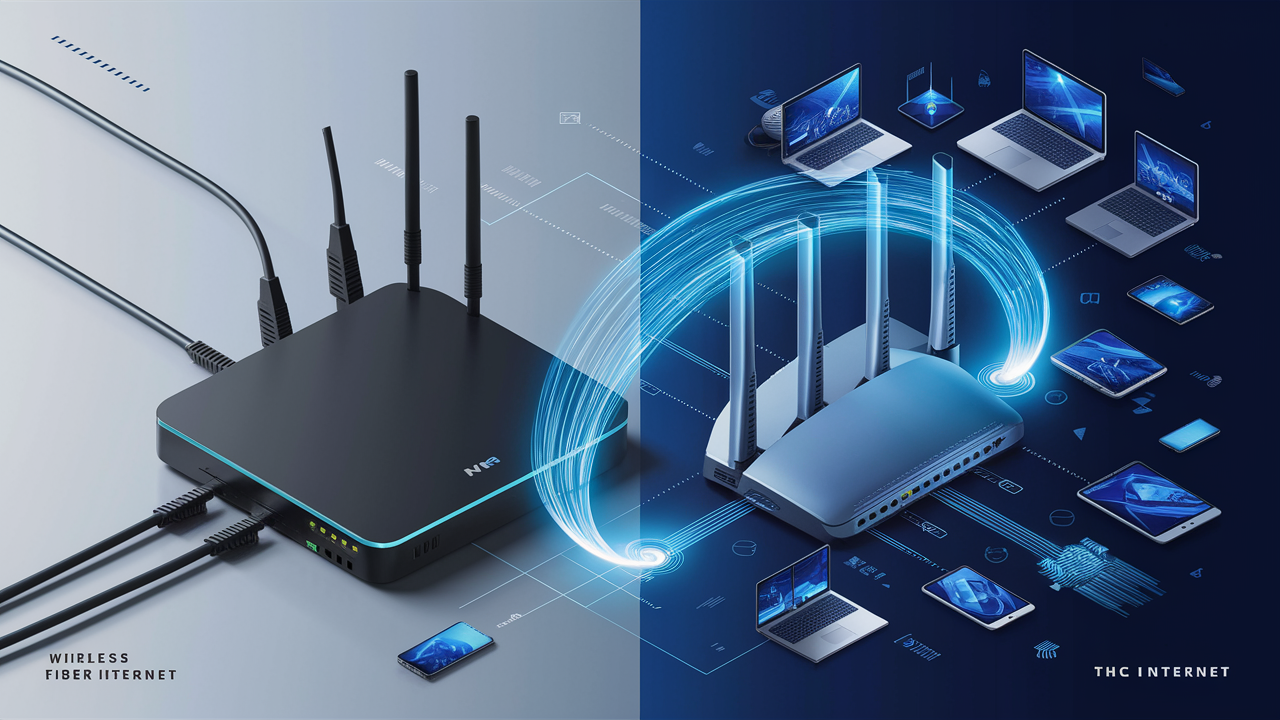
Is fiber internet wired or wireless? This is a common question for those looking to upgrade their home internet. This post clarifies the fundamental nature of fiber optic technology, explaining its physical infrastructure and how it delivers lightning-fast speeds, definitively answering whether it's a wired or wireless solution.
The Wired Truth: Fiber's Physical Foundation
When asking if fiber internet is wired or wireless, the fundamental answer is unequivocallywired. Fiber optic internet relies on a physical network of glass or plastic strands that transmit data as pulses of light. This physical connection is what enables its superior speed, reliability, and capacity compared to traditional internet technologies. While wireless technologies play a crucial role in how we access the internet within our homes and businesses, the core delivery mechanism of fiber optic service is inherently wired.
Understanding Fiber Optic Technology
To truly grasp why fiber internet is wired, it's essential to understand the technology itself. Fiber optics have revolutionized data transmission, offering a quantum leap in performance over older copper-based systems. This section delves into the mechanics and the physical backbone that makes fiber so exceptional.
How Fiber Optics Work
Fiber optic cables are made of extremely thin strands of glass or plastic, each thinner than a human hair. These strands are bundled together to form a cable. Data is converted into light signals by a laser or LED at the sending end. These light signals are then transmitted through the fiber optic strands. The unique properties of the glass or plastic allow the light to bounce off the inner walls, traveling long distances with minimal signal loss. At the receiving end, the light signals are converted back into electrical data that your devices can understand. This process of transmitting data as light pulses is the core reason for fiber's speed and efficiency. Unlike electrical signals, which degrade over distance and are susceptible to electromagnetic interference, light signals remain strong and pure, enabling much faster and more consistent data transfer.
The Physical Infrastructure of Fiber
The "wired" aspect of fiber internet refers to the extensive physical network infrastructure required to deliver these light signals. This includes:
- Fiber Optic Cables: These are the backbone, laid underground, overhead on poles, or through conduits. They are often buried directly or run through existing utility pathways.
- Fiber Nodes: These are distribution points in the network where the main fiber lines branch out to serve smaller areas or individual buildings.
- Optical Network Terminals (ONTs): Installed at the customer's premises (home or business), the ONT is the device that converts the light signals from the fiber optic cable into electrical signals that your router and devices can use. This is a critical wired component in your home.
- Service Provider Network: The entire system, from the internet backbone to the local exchange and finally to your street, is a meticulously laid out physical network of fiber optic cables.
This physical, tangible infrastructure is the defining characteristic that makes fiber internet a wired service. The deployment of this network is a significant undertaking, often involving trenching, aerial installation, and precise connections.
Fiber vs. Wireless Internet Technologies
To fully appreciate fiber's wired nature, it's helpful to contrast it with wireless internet technologies. Wireless internet, by definition, uses radio waves to transmit data through the air, eliminating the need for physical cables to reach the end-user device. This distinction is crucial for understanding the performance differences.
What is Wireless Internet?
Wireless internet encompasses a broad range of technologies that transmit data wirelessly. This includes:
- Wi-Fi: The most common form of wireless internet within a home or office, connecting devices to a router.
- Cellular Data (3G, 4G LTE, 5G): Mobile internet accessed via smartphones, tablets, and hotspots, using cellular towers.
- Satellite Internet: Data transmitted between a ground station, a satellite in orbit, and a satellite dish at the user's location.
- Fixed Wireless Access (FWA): A technology that uses radio waves to connect a fixed location (like a home or business) to a nearby tower or access point, often used in areas where wired infrastructure is scarce.
The primary characteristic of all these is the absence of a direct physical cable connection from the provider's main network to the user's device or router for the final leg of the journey. While the backbone of some wireless services might eventually connect to fiber, the last mile to the user is air-based.
Comparing Wired Fiber to Wireless Options
The differences in how data is transmitted lead to significant performance disparities. Here's a comparative look:
| Feature | Wired Fiber Internet | Wireless Internet (General) |
|---|---|---|
| Primary Transmission Medium | Light pulses through glass/plastic strands | Radio waves through the air |
| Installation Method | Physical cable installation to premises | No physical cable to premises; relies on signal reception |
| Susceptibility to Interference | Very low (immune to electromagnetic interference) | Moderate to high (affected by weather, obstructions, other signals) |
| Signal Degradation | Minimal over long distances | Significant over distance and with obstructions |
Speed and Latency Comparison
Fiber optic internet is renowned for its symmetrical speeds, meaning upload and download speeds are often identical. Download speeds can easily reach 1 Gbps, 2 Gbps, or even 10 Gbps. Upload speeds are equally impressive, crucial for video conferencing, cloud backups, and large file uploads. Latency, the time it takes for data to travel from your device to a server and back, is also exceptionally low with fiber, often in the single-digit milliseconds. This is vital for real-time applications like online gaming and live streaming.
Wireless technologies, while improving, generally cannot match fiber's raw speed and low latency. For instance, 5G FWA can offer speeds comparable to wired broadband, but it's still susceptible to interference and network congestion. Satellite internet typically has much higher latency and lower speeds. Even Wi-Fi, while convenient for in-home use, is limited by the speed of the internet connection it's distributing and the quality of the wireless signal within the home.
Reliability and Stability
The wired nature of fiber provides unparalleled reliability. Because the connection is physical and protected within cables, it's not subject to the environmental factors that plague wireless signals. Weather, physical obstructions (like trees or buildings), and signal interference from other devices have little to no impact on a fiber optic connection. This translates to a stable, consistent internet experience.
Wireless internet, on the other hand, can be less reliable. Rain, snow, fog, or even strong winds can degrade satellite or fixed wireless signals. Cellular signals can be affected by network congestion, the number of users in an area, and the physical distance from a cell tower. While Wi-Fi is convenient, its reliability depends on the router's placement, interference from other electronics, and the strength of the signal throughout the home.
Bandwidth and Capacity
Fiber optic cables have an immense capacity for bandwidth. They can carry vast amounts of data simultaneously, making them ideal for households with multiple users and devices streaming, gaming, and working from home. The light-based transmission is highly efficient, allowing for more data to be pushed through the same physical medium compared to electrical signals.
Wireless technologies have capacity limitations. Cellular networks, for example, can become congested during peak usage times, leading to slower speeds for everyone. Fixed wireless and satellite services also have finite capacity that can be shared among users. While Wi-Fi technology itself has improved, the overall capacity of a wireless internet service is ultimately constrained by the provider's infrastructure and the airwaves used for transmission.
Security Considerations
Wired fiber optic connections are generally considered more secure than wireless ones. Tapping into a fiber optic cable requires physical access and specialized equipment, making it difficult and detectable. The data is also transmitted as light, which is harder to intercept covertly compared to radio waves.
Wireless signals, being broadcast through the air, are inherently more vulnerable to interception. While modern wireless encryption (like WPA3 for Wi-Fi) is robust, the possibility of unauthorized access or eavesdropping exists, especially if security protocols are not properly implemented or are outdated. Public Wi-Fi hotspots are particularly susceptible.
Cost and Installation
The cost of fiber internet can vary. While the monthly service fees are often competitive, especially considering the performance, the initial installation can sometimes be more involved and potentially more expensive if new lines need to be run directly to a home. However, in areas with existing fiber infrastructure, installation might be straightforward. The long-term value proposition of fiber, due to its speed, reliability, and future-proofing, often outweighs the initial investment.
Wireless internet options, particularly cellular hotspots or satellite, can have lower upfront costs and quicker setup times. However, monthly data caps, potential overage charges, and the overall performance limitations can lead to higher long-term costs for heavy users. Fixed wireless access can be a more affordable alternative in some rural areas, but its performance is contingent on proximity to an access point.
The Role of Wireless in Fiber Networks
While fiber optic internet is fundamentally wired, wireless technologies play an indispensable role in how we experience and access that high-speed connection within our homes and businesses. It's a symbiotic relationship where the wired backbone enables advanced wireless convenience.
Wireless Access Points and Routers
Once the fiber optic cable enters your home and connects to an ONT, a router is typically used to create a local Wi-Fi network. This router broadcasts a wireless signal, allowing your smartphones, laptops, smart TVs, and other wireless devices to connect to the internet without needing individual Ethernet cables. The router acts as a bridge, translating the wired internet connection from the ONT into a usable wireless signal within your home. This is where the "wireless" convenience of modern internet usage truly comes into play, powered by the underlying wired fiber connection.
Fixed Wireless Access (FWA)
Fixed Wireless Access (FWA) is a technology that bridges the gap between wired and wireless. In some scenarios, FWA can be used as a "last mile" solution where laying fiber optic cables is prohibitively expensive or geographically challenging. Here, a high-speed connection (often fiber optic) is brought to a local tower or access point, and then a wireless signal is transmitted to a receiver installed at the customer's premises. While this is a wireless delivery method to the home, the core network it connects to is often fiber. It's a way to deliver broadband speeds without direct wired connections to every single premise, particularly beneficial in rural or underserved areas.
5G and the Future of Wireless Access
The advent of 5G technology is further blurring the lines, offering significantly faster and lower-latency wireless connections. 5G is increasingly being used for Fixed Wireless Access, providing speeds that can rival traditional wired broadband. Many 5G networks are built on a fiber optic backbone, meaning that the wireless signal you receive from a 5G tower is ultimately connected to the internet via high-capacity fiber optic cables. This highlights how fiber optic infrastructure is crucial for enabling advanced wireless services. As 5G continues to evolve, it will likely become an even more prominent way for users to access the high-speed internet delivered by fiber networks.
Benefits of Wired Fiber Internet
The inherent wired nature of fiber optic internet provides a distinct set of advantages that are difficult for wireless technologies to replicate. These benefits are why fiber is considered the gold standard for internet connectivity.
Unparalleled Speed and Performance
As discussed, fiber optic internet delivers the fastest speeds available. With symmetrical gigabit speeds becoming increasingly common, and multi-gigabit plans readily accessible in many areas, users can download large files in seconds, stream 4K or 8K video content without buffering, and participate in demanding online activities with ease. The speed is not just theoretical; it's a tangible improvement in daily internet use. According to recent industry reports from 2025, the average advertised download speed for fiber plans in major urban areas has surpassed 1.5 Gbps, with upload speeds mirroring this performance.
Future-Proofing Your Connection
The internet is constantly evolving, with new applications and services demanding more bandwidth. Fiber optic technology has a virtually unlimited capacity for future upgrades. The physical cables laid today can support speeds far beyond what is currently offered, meaning your fiber connection is likely to remain state-of-the-art for years to come. This is a significant advantage over older technologies that are reaching their physical limits. Investing in fiber is investing in a connection that can keep pace with technological advancements.
Enhanced Reliability and Consistency
The stability of a wired fiber connection is a major benefit. Unlike wireless signals that can fluctuate due to environmental factors or network congestion, fiber provides a consistent and dependable service. This means fewer dropped connections, less lag during critical online tasks, and a generally more predictable internet experience. For businesses and individuals who rely heavily on their internet for work or critical communications, this reliability is paramount. Data from network performance monitoring in 2025 indicates that fiber networks experience significantly lower downtime compared to wireless alternatives.
Support for Bandwidth-Intensive Applications
The high bandwidth and low latency of fiber internet make it ideal for supporting the most demanding applications. This includes:
- High-Definition and 4K/8K Video Streaming: Seamless playback without buffering.
- Online Gaming: Low latency ensures a competitive edge and smooth gameplay.
- Virtual Reality (VR) and Augmented Reality (AR): These immersive technologies require massive amounts of data and minimal delay.
- Cloud Computing and Remote Work: Fast uploads and downloads are essential for accessing cloud services and collaborating remotely.
- Smart Home Devices: Supporting a growing number of connected devices without impacting performance.
- Large File Transfers: Uploading and downloading gigabytes of data in minutes rather than hours.
As these applications become more prevalent, the demand for robust internet infrastructure like fiber will only increase.
Choosing the Right Internet Solution for You
Deciding between fiber and other internet options involves considering your specific needs, availability, and budget. While fiber offers superior performance, it's important to make an informed choice.
Assessing Your Needs
Consider how you use the internet:
- Heavy Streaming/Gaming: If you frequently stream 4K video, play online games, or engage in other high-bandwidth activities, fiber is the ideal choice.
- Remote Work/Video Conferencing: For professionals working from home, reliable, high-speed uploads and downloads are crucial. Fiber excels here.
- Large Households: If multiple people in your home use the internet simultaneously for various activities, fiber's capacity is essential.
- Basic Browsing/Email: For very light users, other options might suffice, but fiber still offers a superior experience.
The more demanding your internet usage, the more beneficial fiber becomes.
Understanding Availability in Your Area
The biggest hurdle for many in adopting fiber internet is availability. Fiber optic networks are still being expanded, and their presence varies significantly by region, city, and even neighborhood. Rural areas and older suburban developments may have limited or no fiber access. It's crucial to check with local internet service providers (ISPs) to see if fiber is available at your specific address. Websites like CTVforme.com can help you discover available providers and plans in your area.
If fiber is not available, consider the best available alternatives. Fixed Wireless Access (FWA) or advanced 5G home internet can be good options in areas with limited wired infrastructure, offering better performance than traditional DSL or satellite. Always compare the advertised speeds, data caps, and reliability of these alternatives.
Considering Your Budget
Fiber internet plans can sometimes be more expensive upfront or monthly than other options. However, it's important to look at the overall value. The speed, reliability, and future-proofing offered by fiber can justify a higher cost for many users. Additionally, as fiber deployment increases, competition is driving prices down, making it more accessible. When comparing costs, factor in:
- Monthly service fees
- Installation costs
- Equipment rental fees (if any)
- Potential data overage charges (less common with fiber)
- The long-term benefits of a superior connection.
For many, the investment in fiber internet is well worth the enhanced digital experience it provides.
Common Misconceptions About Fiber
Despite its advantages, several misconceptions surround fiber optic internet. One of the most prevalent is the confusion between the wired delivery of fiber and the wireless access within a home. As we've established, fiber is a wired technology for the internet's core infrastructure, but it seamlessly integrates with your home's Wi-Fi network for wireless device connectivity.
Another misconception is that fiber is prohibitively expensive. While it can be a premium service, the cost has become increasingly competitive, especially when considering the performance gains and the fact that it's future-proof. Furthermore, some believe that fiber is prone to damage due to its glass composition. While it requires careful installation, fiber optic cables are surprisingly durable and designed to withstand various environmental conditions, often more so than older copper lines.
Finally, some may think that fiber is only for tech enthusiasts or gamers. In reality, anyone who uses the internet for streaming, working, learning, or staying connected will benefit from the speed, reliability, and capacity that fiber provides. The digital landscape is evolving, and fiber is the infrastructure built to support it.
Conclusion: Fiber is Wired, But Enables Wireless Convenience
In conclusion, the question of whether fiber internet is wired or wireless has a clear answer: fiber optic internet is fundamentally a wired technology. Its power and performance stem from the physical infrastructure of glass or plastic strands transmitting data as light pulses. This wired nature is precisely what grants it superior speed, lower latency, and unparalleled reliability compared to wireless alternatives.
However, this wired backbone is what enables the seamless wireless convenience we enjoy daily. Your home Wi-Fi network, powered by a fiber optic connection, allows all your devices to connect wirelessly. Furthermore, advancements like 5G FWA leverage fiber infrastructure to deliver high-speed wireless access to homes. Therefore, while the core delivery is wired, fiber internet is the ultimate enabler of modern, high-performance wireless connectivity within your living or working space.
For the most robust, future-proof, and high-performing internet experience available today and tomorrow, choosing a wired fiber optic connection is the definitive recommendation. Explore your options and embrace the speed and reliability that only fiber can deliver.