Is ATT fiber faster than 5G?
Deciding between AT&T Fiber and 5G internet can be confusing. This guide dives deep into their speeds, reliability, and use cases, providing a clear, data-driven comparison to help you choose the best connection for your needs in 2025-26.
Understanding the Technologies: Fiber vs. 5G
In the quest for faster, more reliable internet, two technologies frequently dominate the conversation: fiber optic and 5G wireless. While both promise significant improvements over older technologies, they operate on fundamentally different principles, leading to distinct advantages and disadvantages. Understanding these core differences is crucial for making an informed decision, especially when comparing a specific provider like AT&T Fiber against the broader 5G landscape. This section will break down the underlying technology of each, setting the stage for a detailed comparison.
What is AT&T Fiber?
AT&T Fiber, as the name suggests, utilizes fiber optic cables to deliver internet service. This technology transmits data as pulses of light through thin strands of glass or plastic. Unlike traditional copper-based cable or DSL, fiber optic cables are immune to electromagnetic interference, which can degrade signal quality and speed. This inherent resistance to interference means that data travels faster and more reliably over longer distances. AT&T has been a significant investor in expanding its fiber network, aiming to provide symmetrical upload and download speeds, a key differentiator for many users.
The infrastructure for fiber involves laying physical cables directly to homes or businesses. This can be a complex and costly process, which is why fiber availability is often concentrated in more densely populated urban and suburban areas. However, once installed, the performance benefits are substantial. Speeds can range from hundreds of megabits per second (Mbps) to multiple gigabits per second (Gbps), offering a truly next-generation internet experience.
What is 5G Internet?
5G, the fifth generation of cellular network technology, represents a leap forward in wireless communication. It operates on a spectrum of radio frequencies, including low-band, mid-band, and high-band (millimeter wave or mmWave). Each band offers different characteristics:
- Low-band 5G: Offers wide coverage similar to 4G LTE but with modest speed improvements. It's good for general browsing and basic tasks.
- Mid-band 5G: Strikes a balance between speed and coverage, offering significantly faster speeds than low-band and 4G LTE, making it suitable for streaming and gaming.
- High-band (mmWave) 5G: Delivers incredibly high speeds, comparable to or even exceeding fiber in some very specific, short-range scenarios. However, its range is extremely limited, and it's easily blocked by obstacles like walls, trees, and even rain.
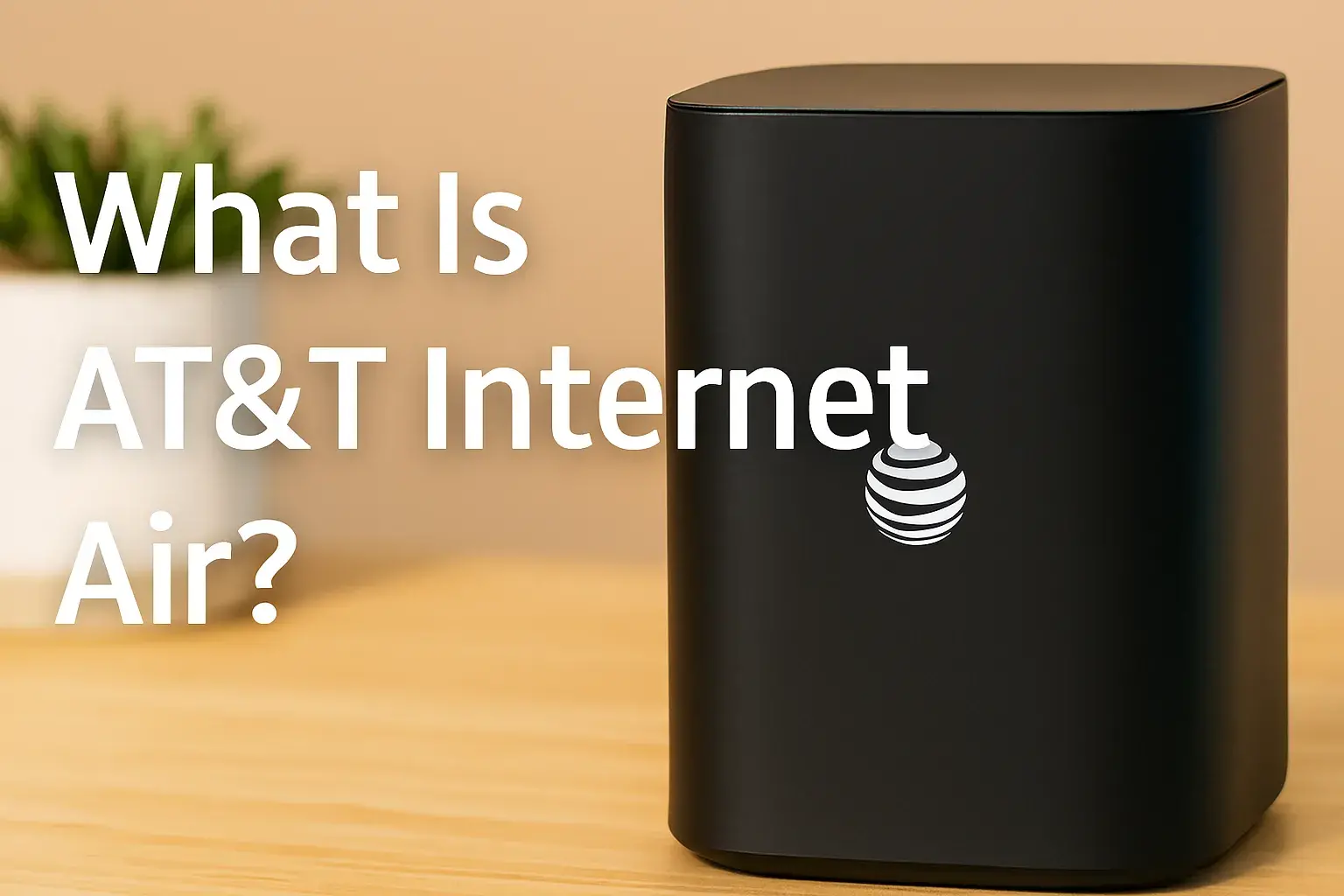
5G internet, when offered as a home broadband solution (often referred to as Fixed Wireless Access or FWA), typically uses dedicated 5G signals to connect a router in your home to a nearby cell tower. This eliminates the need for physical cables to your residence, offering a more flexible and potentially quicker installation process. However, its performance is heavily dependent on signal strength, network congestion, and the specific type of 5G spectrum being used.
The key advantage of 5G is its wireless nature, offering mobility and ease of deployment. However, it is inherently susceptible to environmental factors and network congestion, which can lead to more variability in performance compared to a dedicated fiber line.
Speed Showdown: Latency, Download, and Upload
When comparing internet services, speed is often the primary metric. However, speed isn't just about raw download numbers. Latency (the time it takes for data to travel from your device to a server and back) and upload speeds are equally critical for a smooth online experience, especially for activities like online gaming, video conferencing, and uploading large files. This section will dissect the speed capabilities of AT&T Fiber and 5G internet, providing current 2025-26 statistics and insights.
Download Speeds: Who Reigns Supreme?
AT&T Fiber: Fiber optic technology is renowned for its potential for extremely high download speeds. AT&T offers various fiber plans, with speeds commonly reaching 300 Mbps, 500 Mbps, and even 1 Gbps (1000 Mbps). In some areas, AT&T is rolling out multi-gigabit plans (e.g., 2 Gbps or 5 Gbps), pushing the boundaries of residential internet speeds. A significant advantage of fiber is that these speeds are typically advertised as "up to" but are consistently delivered without significant degradation, as the connection is dedicated and less prone to external factors. For 2025-26, expect AT&T Fiber to maintain its position as a leader in consistent, high-speed downloads, with gigabit and multi-gigabit tiers becoming more prevalent.
5G Internet: 5G download speeds can vary dramatically depending on the spectrum used and network conditions. High-band (mmWave) 5G can theoretically achieve download speeds exceeding 1 Gbps, sometimes reaching 2-3 Gbps in ideal, short-range conditions. However, this is rare for home broadband deployments and is often limited by the capacity of the fixed wireless connection. Mid-band 5G typically offers download speeds ranging from 150 Mbps to 500 Mbps, which is competitive with many cable and even some fiber plans. Low-band 5G speeds are more comparable to advanced 4G LTE, often in the 50-150 Mbps range. For 2025-26, 5G home internet download speeds are expected to improve, particularly with wider deployment of mid-band spectrum, but achieving consistent multi-gigabit speeds like fiber remains a challenge for widespread FWA solutions.
Comparison Table: Download Speeds (2025-26 Estimates)
| Technology | Typical Download Speeds (Mbps) | Peak Theoretical Download Speeds (Mbps) | Consistency |
|---|---|---|---|
| AT&T Fiber | 300 - 1000+ (up to 5000+) | 5000+ | Very High |
| 5G Internet (Mid-band) | 150 - 500 | 1000+ | Moderate to High |
| 5G Internet (High-band/mmWave) | 500 - 2000+ (highly variable) | 3000+ | Low to Moderate (due to range/obstructions) |
Upload Speeds: The Unsung Hero
AT&T Fiber: One of the most significant advantages of fiber optic internet is its ability to offer symmetrical upload and download speeds. This means if you have a 1 Gbps download plan, you likely also have a 1 Gbps upload speed. This is crucial for users who frequently upload large files, stream live content, participate in high-definition video conferences, or engage in cloud backups. For 2025-26, AT&T Fiber continues to champion symmetrical speeds across its plans, providing a clear edge for content creators and remote professionals.
5G Internet: Upload speeds on 5G home internet are typically asymmetrical, meaning they are significantly lower than download speeds. While download speeds can be impressive, upload speeds often range from 10 Mbps to 50 Mbps, occasionally reaching up to 100 Mbps on the most robust mid-band connections. High-band 5G might offer better upload performance, but its limited range makes it less practical for consistent home use. This asymmetry can be a bottleneck for activities that require substantial upstream bandwidth.
Comparison Table: Upload Speeds (2025-26 Estimates)
| Technology | Typical Upload Speeds (Mbps) | Symmetry |
|---|---|---|
| AT&T Fiber | 300 - 1000+ (up to 5000+) | Symmetrical |
| 5G Internet (Mid-band) | 10 - 100 | Asymmetrical |
| 5G Internet (High-band/mmWave) | 50 - 200+ (highly variable) | Asymmetrical (generally) |
Latency: The Key to Responsiveness
AT&T Fiber: Fiber optic connections are known for their exceptionally low latency. Because data travels as light pulses through a dedicated physical medium, the time it takes for a signal to travel is minimized. AT&T Fiber typically offers latency figures as low as 1-5 milliseconds (ms). This ultra-low latency is critical for real-time applications like online gaming, where split-second reactions can determine victory or defeat, and for seamless video conferencing.
5G Internet: 5G technology is designed to significantly reduce latency compared to 4G LTE. Theoretical latency for 5G can be as low as 1 ms, but in real-world applications, especially for home broadband, latency is often higher, typically ranging from 10-30 ms for mid-band and potentially higher for low-band or congested networks. While this is a substantial improvement over 4G, it is generally still higher than what fiber can consistently deliver. High-band 5G can achieve lower latency, but its limited range makes it less reliable for consistent home use.
Comparison Table: Latency (2025-26 Estimates)
| Technology | Typical Latency (ms) | Impact |
|---|---|---|
| AT&T Fiber | 1 - 5 | Excellent for gaming, VR, real-time applications |
| 5G Internet (Mid-band) | 10 - 30 | Good for most applications, acceptable for casual gaming |
| 5G Internet (High-band/mmWave) | 5 - 20 (highly variable) | Potentially excellent, but inconsistent |
Reliability and Consistency: A Deeper Look
Beyond raw speed, the reliability and consistency of an internet connection are paramount for a frustration-free online experience. An internet service that frequently experiences slowdowns, outages, or performance fluctuations can be more problematic than one that offers slightly lower but stable speeds. This section examines how AT&T Fiber and 5G internet stack up in terms of dependability.
Factors Affecting AT&T Fiber Reliability
Physical Infrastructure: Fiber optic cables are made of glass, which is inherently resistant to many forms of interference that plague traditional copper wiring. This includes electromagnetic interference (EMI) from appliances, power lines, and even weather phenomena like lightning. The dedicated nature of fiber lines, running directly from the provider's hub to the user's premises, means that performance is less affected by the number of users in a neighborhood compared to shared cable networks.
Durability: While physical damage to underground cables can occur (e.g., during construction), fiber optic cables are generally robust. The primary causes of fiber outages are often external, such as accidental cuts or equipment failures at the provider's end. However, once established, a fiber connection tends to be very stable.
Consistency: AT&T Fiber is known for delivering speeds very close to the advertised rates consistently. Because the connection is not subject to wireless signal degradation or network congestion in the same way as 5G, users can expect predictable performance day in and day out. This consistency is a major selling point for users who rely on their internet for critical tasks.
Factors Affecting 5G Internet Reliability
Wireless Signal Dependency: 5G internet's biggest strength – its wireless nature – is also its primary source of potential unreliability. The signal strength can fluctuate based on numerous factors:
- Distance from the Tower: The further you are from a 5G cell tower, the weaker the signal, leading to slower speeds and increased latency.
- Obstructions: Physical barriers like buildings, walls, trees, and even heavy rain can significantly degrade or block 5G signals, especially higher frequency bands (mmWave).
- Network Congestion: Like any cellular network, 5G can experience congestion when too many users are trying to access the network simultaneously. This can lead to slowdowns, particularly during peak hours.
- Spectrum Type: As discussed earlier, the type of 5G spectrum used has a direct impact on reliability. mmWave offers high speeds but has very limited range and is easily blocked, making it less reliable for consistent home use. Mid-band offers a better balance, while low-band is more reliable for coverage but slower.
Equipment Limitations: The indoor 5G modem/router can also be a point of failure or performance limitation. Its ability to receive a strong signal is crucial.
Consistency: Due to these variables, 5G internet performance can be more inconsistent than fiber. Speeds and latency might vary throughout the day or even from hour to hour, depending on network load and environmental conditions. While 5G technology is constantly improving, achieving the same level of day-to-day predictability as fiber is challenging.
Comparing Uptime and Outage Frequency
While specific uptime statistics can vary by region and provider, general trends suggest that fiber optic networks tend to have higher uptime and fewer localized outages compared to wireless technologies like 5G. Fiber's immunity to environmental interference and its dedicated physical path contribute to its robustness.
5G networks, being wireless, are more susceptible to external factors. While carriers are working to densify their networks and improve signal penetration, users in areas with poor signal reception or significant obstructions might experience more frequent connectivity issues. For critical applications where downtime is unacceptable, fiber often presents a more dependable choice.
Summary of Reliability Factors:
- AT&T Fiber: High reliability due to physical, interference-resistant infrastructure; consistent performance; less susceptible to network congestion.
- 5G Internet: Reliability is highly dependent on signal strength, obstructions, network congestion, and spectrum type; can experience more variability.
For users prioritizing uninterrupted service, especially for business-critical tasks or sensitive real-time applications, AT&T Fiber generally offers a more reliable and consistent experience in 2025-26.
Real-World Performance: Which is Better for What?
The choice between AT&T Fiber and 5G internet often boils down to how you intend to use your internet connection. While both technologies offer significant speed improvements, their specific strengths and weaknesses make them better suited for different applications and user profiles. This section explores common use cases and provides recommendations based on the technological capabilities of fiber and 5G.
For Gamers: The Need for Speed and Low Latency
AT&T Fiber: For serious online gamers, AT&T Fiber is often the superior choice. Its ultra-low latency (1-5 ms) is critical for competitive gaming, ensuring that your actions register instantly in the game world. The high, symmetrical upload speeds are also beneficial for uploading game clips or streaming your gameplay. Consistent gigabit or multi-gigabit download speeds ensure that game downloads and updates are completed rapidly. The stability of fiber means you won't experience frustrating lag spikes during crucial moments.
5G Internet: 5G internet can be a viable option for casual gamers, especially if they are using mid-band 5G with decent signal strength. Latency in the 10-30 ms range is generally acceptable for many online games. However, for highly competitive players or those who demand the absolute best performance, the higher and more consistent low latency of fiber will be noticeable. High-band 5G might offer low latency, but its range and reliability issues make it less ideal for a consistent gaming experience.
For Remote Workers and Students: Bandwidth and Stability
AT&T Fiber: AT&T Fiber excels for remote work and online learning. High, symmetrical upload speeds are essential for seamless video conferencing, uploading large project files, and participating in virtual classrooms without interruption. The consistent bandwidth ensures that your connection remains stable even during peak usage hours, preventing dropped calls or slow file transfers. Multi-gigabit speeds can handle multiple users in a household simultaneously working and studying without performance degradation.
5G Internet: 5G internet can be a good option for remote workers and students, particularly if fiber is not available. Mid-band 5G can provide sufficient download speeds for browsing, streaming lectures, and basic video calls. However, upload speeds can be a bottleneck for heavy users. If your work involves frequent large file uploads or high-definition video conferencing with multiple participants, the asymmetrical nature of 5G uploads might lead to a less optimal experience compared to fiber. Network congestion can also be a concern during busy workdays.
For Streaming and Entertainment: Bandwidth Demands
AT&T Fiber: Fiber is the ultimate choice for streaming enthusiasts. With gigabit or multi-gigabit speeds, you can effortlessly stream 4K and even 8K content on multiple devices simultaneously without buffering. The high bandwidth ensures that even the most demanding HDR content plays smoothly. The low latency also contributes to a better experience with interactive streaming services or cloud gaming platforms.
5G Internet: 5G internet, especially mid-band, is generally capable of handling most streaming needs, including 4K content. You can stream movies, TV shows, and live events without significant issues, provided you have a strong signal and the network isn't heavily congested. However, if you have many devices streaming simultaneously or are downloading large media files, you might notice the difference compared to the unlimited capacity of fiber.
For Smart Homes and IoT Devices: Consistent Connectivity
AT&T Fiber: A robust fiber connection provides the stable backbone needed for a growing smart home ecosystem. With numerous IoT devices (smart speakers, cameras, thermostats, lights, etc.) constantly communicating, a reliable connection with ample bandwidth is crucial. Fiber ensures that these devices can communicate efficiently and without impacting the performance of other internet activities.
5G Internet: 5G can support smart home devices, but the potential for signal fluctuations and network congestion could lead to occasional unresponsiveness from certain devices. If your smart home relies heavily on real-time control or continuous data streams from many devices, the consistency of fiber might be preferable.
For Basic Internet Use: Browsing, Email, Social Media
AT&T Fiber: For basic tasks, AT&T Fiber is overkill in terms of speed, but it provides an incredibly smooth and responsive experience. You'll never have to worry about slow page loads or buffering.
5G Internet: 5G internet, particularly mid-band or even low-band in some cases, is more than sufficient for basic internet usage. Browsing websites, checking email, and using social media will feel fast and responsive. If fiber is unavailable or too expensive, 5G offers a significant upgrade over older technologies for these common tasks.
Summary of Use Cases
- Best for Gamers: AT&T Fiber (low latency, symmetrical uploads, consistency)
- Best for Remote Workers/Students: AT&T Fiber (symmetrical uploads, consistency, high bandwidth)
- Best for Streamers: AT&T Fiber (unlimited bandwidth, 4K/8K support, consistency)
- Best for Smart Homes: AT&T Fiber (consistent, reliable connectivity for many devices)
- Best for Basic Use: Both are excellent, 5G offers a good balance of speed and flexibility.
Ultimately, the "better" technology depends on your specific needs and priorities. If you require the absolute best performance for demanding applications, AT&T Fiber is likely the winner. If you need a fast, flexible, and potentially more accessible option for general use, 5G internet can be a strong contender.
Availability and Cost in 2025-26
The decision between AT&T Fiber and 5G internet is heavily influenced by where you live and your budget. Availability and pricing are dynamic, with ongoing network expansion and evolving market competition. This section provides insights into what you can expect regarding availability and cost for both technologies in 2025-26.
AT&T Fiber Availability
Geographic Limitations: AT&T Fiber's availability is primarily dictated by the physical presence of its fiber optic network. Historically, fiber deployment is concentrated in urban and suburban areas where the cost of laying new cables is more economically viable. While AT&T is actively expanding its fiber footprint across the United States, it is still not universally available in all regions, particularly in many rural areas.
Expansion Efforts: AT&T has committed significant resources to expanding its fiber network. By 2025-26, expect to see fiber access in more communities, including some previously underserved areas. However, the pace of expansion can be slow, and it often depends on local government permits and partnerships. To check for specific availability at your address, you will need to use AT&T's online tools.
Check Your Address: The most accurate way to determine if AT&T Fiber is available to you is to visit the AT&T Fiber website and enter your service address. This will provide real-time information on available plans and speeds.
5G Internet Availability
Widespread but Variable: 5G technology, being wireless, has a much broader potential availability than fiber. AT&T (and other carriers) are leveraging their existing cellular towers to offer 5G home internet services. This means that if you have AT&T mobile service, there's a higher chance you might be eligible for their 5G Home Internet. Availability is expanding rapidly.
Spectrum Dependent: The type of 5G available at your location significantly impacts the service. High-band (mmWave) 5G is typically deployed in dense urban areas and has very limited range, often requiring line-of-sight to the tower. Mid-band 5G offers a better balance of coverage and speed and is becoming more common. Low-band 5G provides the widest coverage but with the slowest speeds.
Fixed Wireless Access (FWA): AT&T 5G Home Internet is a form of Fixed Wireless Access (FWA). This means it's designed to be a broadband replacement, using the 5G cellular network to connect a modem/router in your home. Unlike mobile 5G, which is designed for devices on the go, FWA is stationary.
Check Your Address: Similar to fiber, you'll need to check AT&T's website for 5G Home Internet availability at your specific address. The service is often limited to areas where AT&T has strong 5G coverage.
Cost Comparison (2025-26 Estimates)
Pricing for both AT&T Fiber and 5G internet can vary based on speed tiers, promotional offers, and contract terms. However, some general trends are observable:
AT&T Fiber Pricing:
Value Proposition: AT&T Fiber plans are often priced competitively, especially when considering the symmetrical speeds and reliability they offer. While the highest speed tiers (multi-gigabit) can be more expensive, the entry-level gigabit plans often provide excellent value.
Typical Price Range (2025-26):
- 300 Mbps Plan: $55 - $70 per month
- 500 Mbps Plan: $65 - $80 per month
- 1 Gig (1000 Mbps) Plan: $75 - $90 per month
- Multi-Gig Plans (2-5 Gbps): $100 - $150+ per month
Additional Costs: AT&T Fiber typically includes the modem/router with their service, and installation fees can sometimes be waived with promotions. Be mindful of potential data caps, though AT&T Fiber generally offers unlimited data.
5G Internet Pricing:
Competitive and Often Simpler: 5G Home Internet is often positioned as a more affordable and flexible alternative, especially in areas where fiber is not available. AT&T's 5G Home Internet often features a flat monthly rate with no data caps and includes the necessary equipment.
Typical Price Range (2025-26):
- AT&T 5G Home Internet: $55 - $70 per month (often with introductory offers)
Key Advantages: The simplicity of a single price point, no data caps, and often no annual contracts make 5G Home Internet attractive. Installation is typically straightforward, involving plugging in a gateway device.
Cost Considerations:
Fiber vs. 5G: In areas where both are available, AT&T Fiber plans offering comparable download speeds (e.g., 300-500 Mbps) might be priced similarly to 5G Home Internet. However, fiber's symmetrical upload speeds and superior consistency often justify a slightly higher cost for those who need it. For multi-gigabit speeds, fiber will be more expensive but also offer significantly higher performance.
Value for Money: The "better" value depends on your needs. If you need the absolute best performance and reliability, fiber is worth the potential extra cost. If your needs are more basic, 5G Home Internet can offer excellent value and flexibility.
Promotions: Always look for current promotions from AT&T, as these can significantly impact the monthly cost for both fiber and 5G services.
Making Your Decision: Key Factors to Consider
Choosing between AT&T Fiber and 5G internet involves weighing several critical factors to ensure you select the service that best aligns with your lifestyle, budget, and technical requirements. This final section consolidates the information presented, offering actionable advice to guide your decision-making process in 2025-26.
1. Availability is Paramount
Action: The absolute first step is to check availability at your specific address. Visit the AT&T Fiber website and the AT&T 5G Home Internet page. If fiber isn't available, your choice is simplified. If both are available, proceed to the next steps.
2. Assess Your Internet Usage Needs
Consider how you and your household use the internet daily:
- Heavy Gamers/Content Creators/Professionals: If you require ultra-low latency, high upload speeds for streaming or uploading large files, and the most consistent connection possible, AT&T Fiber is the clear winner. Its symmetrical speeds and minimal latency are crucial for these demanding tasks.
- Moderate Users (Streaming, Browsing, Video Calls): If your primary activities include streaming HD/4K content, regular web browsing, social media, and standard video calls, both AT&T Fiber and 5G Home Internet (especially mid-band) can likely meet your needs.
- Light Users (Email, Basic Browsing): For very basic internet use, either service will be more than adequate. The decision might then lean more towards cost and availability.
3. Evaluate Speed Requirements
Download Speeds: While 5G can offer high download speeds, fiber generally provides higher and more consistent speeds, especially at the gigabit and multi-gigabit tiers. If you frequently download large files or have many users simultaneously streaming, higher fiber speeds are beneficial.
Upload Speeds: This is a critical differentiator. If you upload videos, participate in frequent high-definition video conferences, or use cloud backup services regularly, the symmetrical upload speeds of AT&T Fiber are a significant advantage. 5G's asymmetrical uploads can be a bottleneck.
Latency: For real-time applications like online gaming, virtual reality, or sensitive video conferencing, the ultra-low latency of AT&T Fiber is a major benefit. 5G latency is good but typically higher than fiber.
4. Consider Reliability and Consistency
AT&T Fiber: Offers superior reliability due to its physical infrastructure, immunity to interference, and dedicated connection. Performance is generally consistent, regardless of network congestion or weather.
5G Internet: Reliability can vary based on signal strength, obstructions, and network load. While improving, it may experience more fluctuations than fiber, especially in areas with weaker 5G coverage or during peak usage times.
Question to Ask Yourself: How critical is uninterrupted, consistent internet for your daily activities? If downtime or slowdowns are highly problematic, fiber is the safer bet.
5. Budget and Value
Cost: Compare the monthly costs of available plans. While 5G Home Internet often presents a simple, competitive flat rate, AT&T Fiber plans can vary. Consider introductory offers and any potential installation fees or equipment rental costs.
Value: Determine what you're getting for your money. AT&T Fiber's symmetrical speeds, ultra-low latency, and consistent reliability often provide excellent value for users who need top-tier performance. 5G Home Internet offers a good balance of speed and flexibility, often at a more accessible price point, especially if fiber is not an option.
6. Installation and Equipment
AT&T Fiber: Typically requires a professional installation to lay the fiber line to your home. This can take some time but ensures optimal setup.
5G Internet: Usually involves a self-installation process with a gateway device that you plug in. This is generally quicker and more convenient.
Final Recommendation
In 2025-26, the landscape of internet connectivity continues to evolve. However, for users prioritizing the absolute best in speed, reliability, and responsiveness, **AT&T Fiber remains the superior choice**. Its symmetrical upload speeds, ultra-low latency, and consistent performance make it ideal for demanding applications like competitive gaming, professional remote work, and high-quality streaming. It offers a future-proof connection that is less susceptible to external factors.
However, **AT&T 5G Home Internet is an excellent and increasingly viable alternative**, particularly in areas where fiber is unavailable or for users with less demanding internet needs. It provides a significant upgrade over older technologies, offering competitive download speeds and a flexible, often contract-free, solution. If your primary concern is fast downloads for general use and you can achieve a strong 5G signal, it can be a very cost-effective option.
Ultimately, the best way to decide is to understand your personal internet usage patterns, check availability at your address, and compare the specific plans and pricing offered by AT&T for both fiber and 5G services. Prioritize your needs for speed, upload capacity, latency, and reliability to make the most informed choice for your home.