How To Program Xfinity Xr11 Remote To Tv?
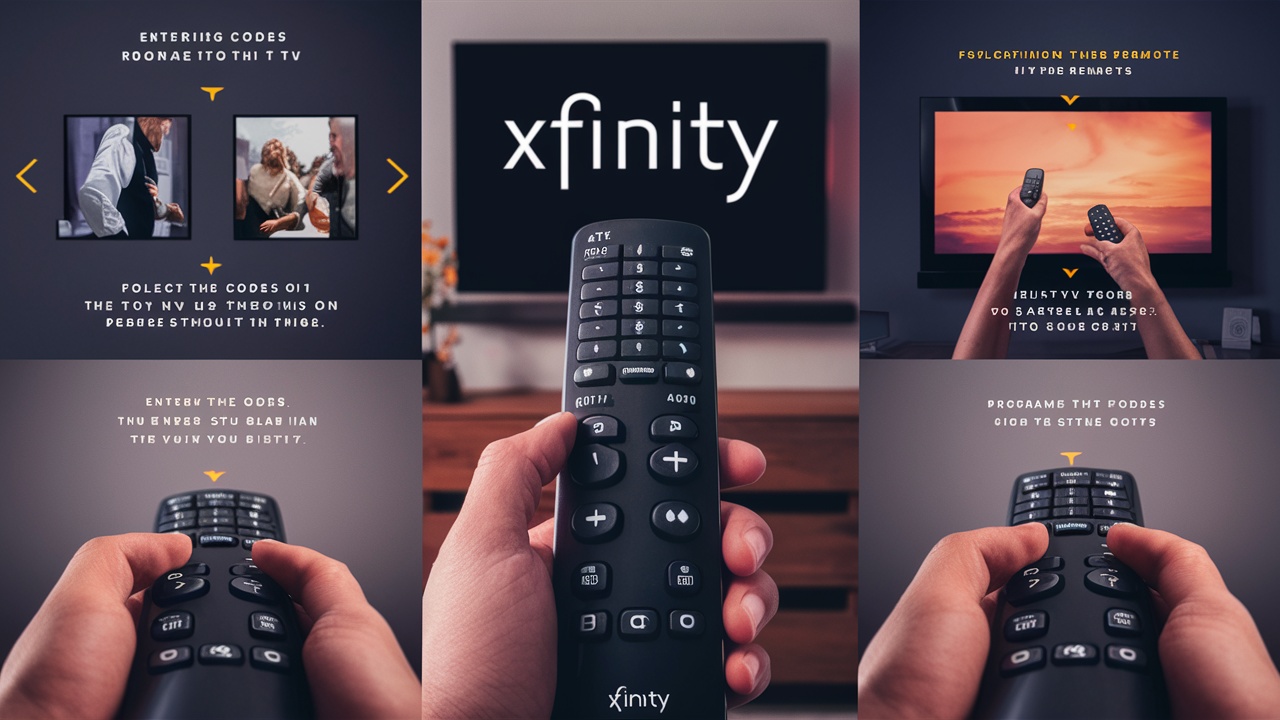
Unlock the full potential of your Xfinity entertainment with our comprehensive guide to programming the XR11 remote to your TV. This step-by-step tutorial will ensure seamless integration, allowing you to control your viewing experience with ease and efficiency. Discover how to pair your remote for optimal performance.
Introduction: Mastering Your XR11 Remote
In the ever-evolving landscape of home entertainment, the Xfinity XR11 remote stands out as a cornerstone for controlling your television and Xfinity services. This guide is meticulously crafted to ensure you can program your XR11 remote to your TV with absolute confidence, transforming a potentially frustrating task into a simple, empowering process. We’ll delve into every aspect, from understanding your remote’s capabilities to troubleshooting common hiccups, ensuring you achieve a seamless viewing experience. By the end, you'll be a pro at maximizing your XR11's potential.
Understanding the Xfinity XR11 Remote
The Xfinity XR11, often referred to as the XR11 Voice Remote, is more than just a channel changer. It's a sophisticated device designed to simplify your interaction with your Xfinity entertainment system. Its primary function is to control your TV’s power, volume, and input selection, in addition to navigating your Xfinity cable box. The XR11 is particularly lauded for its voice control capabilities, allowing users to search for content, change channels, and even control playback using natural language commands. This advanced functionality requires a proper initial setup and programming to your specific television model.
Key features of the XR11 remote include:
- Voice Control: The microphone button enables hands-free operation.
- Backlit Buttons: Enhances usability in low-light conditions.
- Programmable Buttons: Certain buttons can be customized for quick access to favorite channels or apps.
- IR and RF Capabilities: It can control your TV via infrared (IR) signals and your Xfinity box via radio frequency (RF), meaning you don't always need a direct line of sight.
- Universal Remote Functionality: Designed to control not only your Xfinity equipment but also your television, soundbar, and A/V receiver.
Understanding these features is the first step towards effective programming. The XR11 aims to consolidate multiple remotes into one, streamlining your entertainment setup. The success of its universal remote functionality hinges on accurate programming to your specific TV and audio devices.
Pre-Programming Checks: Setting the Stage for Success
Before diving into the programming process, a few crucial checks can prevent common frustrations and ensure a smooth setup. Think of these as essential groundwork for a successful connection.
1. Identify Your TV Brand and Model:
This is paramount. You'll need to know the exact brand of your television (e.g., Samsung, LG, Sony, Vizio). The model number is also helpful, though often the brand is sufficient for basic programming. You can usually find this information on a sticker on the back of your TV or in your TV's user manual.
2. Ensure Your TV is Powered On:
Your TV needs to be on and displaying a picture for the remote to communicate with it during the programming process. Make sure it's not in standby mode.
3. Verify Remote Batteries:
Weak or dead batteries are a frequent culprit for programming failures. Ensure your XR11 remote has fresh, high-quality batteries installed correctly. Most XR11 remotes use AA batteries.
4. Check Line of Sight (for IR Control):
While the XR11 can control your Xfinity box via RF, it controls your TV via IR. This means there should be an unobstructed path between the remote and the TV's IR sensor. Ensure no objects are blocking the signal. If your TV is inside a cabinet, make sure the cabinet doors are open or that the cabinet is designed to allow IR signals to pass through.
5. Understand Remote Modes:
The XR11 remote has different modes for controlling different devices. The most common modes are TV, CBL/SAT (for your Xfinity box), and AUX (for devices like soundbars or A/V receivers). You'll typically be programming the remote in TV mode to control your television.
6. Have Your Xfinity Equipment Ready:
While you're programming the remote to the TV, ensure your Xfinity cable box is also powered on and functioning correctly. This helps confirm the remote is communicating with your Xfinity system as well.
By performing these simple checks, you significantly increase your chances of a successful and hassle-free XR11 remote programming experience. It’s about setting the right conditions before you start the actual steps.
Programming Methods: A Step-by-Step Breakdown
The Xfinity XR11 remote offers several methods for programming it to your television. The best method for you will depend on your comfort level and the specific brand of your TV. We'll cover the most common and effective techniques.
Method 1: Automatic Code Search (The Easiest Way)
This is often the quickest and most straightforward method, as the remote cycles through a vast database of codes to find the one that matches your TV. It requires minimal input from you.
Steps:
- Power on your TV. Ensure it’s displaying a picture.
- Press and hold the "Setup" button on your XR11 remote until the LED indicator light at the top of the remote turns solid. This usually takes about 5-10 seconds.
- Press and hold the "TV" button on the remote. The LED light will blink and then turn solid again.
- Press and hold the "Power" button on the remote. Keep holding it.
- Watch your TV. As the remote cycles through codes, your TV will eventually turn off. The moment your TV turns off, release the "Power" button immediately.
- Confirm the code. Press the "Volume Up" button. If your TV's volume control now works with the remote, you've likely found the correct code.
- Save the code. Press the "Xfinity" button. The LED indicator light should blink twice, confirming the code has been saved.
If the "Volume Up" button doesn't work, or if your TV doesn't turn off, repeat the process from step 2. You may need to try this a few times. If the remote doesn't seem to be finding a code after several attempts, you might need to try the manual entry method.
Method 2: Manual Code Entry (For Specific Brands)
This method is useful if you know your TV brand and can find a specific code for it. It's more precise than the automatic search and can be faster if you have the correct code.
Steps:
- Find a list of Xfinity XR11 remote codes for your TV brand. These lists are readily available on the Xfinity website, in your Xfinity user manual, or through a quick online search. For example, a search for "Samsung TV codes for Xfinity XR11 remote" should yield results.
- Power on your TV.
- Press and hold the "Setup" button on your XR11 remote until the LED indicator light turns solid.
- Press and hold the "TV" button on the remote. The LED light will blink and then turn solid again.
- Enter the first 4-digit code from the list for your TV brand using the number keypad on the remote. After entering the code, the LED indicator light should blink twice.
- Test the remote. Try pressing the "Power" button to turn your TV off and on. Then, try changing the volume.
- If it works, press the "Xfinity" button to save the code. The LED light should blink twice.
- If it doesn't work, repeat steps 3-6 with the next code on the list for your TV brand. Continue this process until you find a code that successfully controls your TV's power and volume.
This method requires patience but is highly effective if you can locate a valid code. The accuracy of the code is crucial for this method to succeed.
Method 3: Voice Command Pairing (If Supported)
Some newer versions of the XR11 remote and Xfinity X1 boxes support a voice-guided pairing process. This method leverages the remote's voice capabilities to simplify setup.
Steps:
- Ensure your Xfinity X1 box is powered on and connected to your TV.
- Press and hold the "Voice" button (microphone icon) on your XR11 remote.
- Speak clearly into the remote when prompted. You might say something like, "Program my remote to my TV."
- Follow the on-screen prompts that appear on your TV. The X1 system will guide you through the process, often asking you to confirm if certain functions (like power or volume) are working.
- The system may ask you to press buttons on the remote and confirm if the TV responds. For example, it might ask you to press the "Volume Up" button and then ask, "Did the volume go up?"
- Once the system identifies the correct code or successfully configures the remote, it will confirm that the programming is complete.
This method is ideal for users who prefer an interactive, guided experience. It’s designed to be intuitive and requires less manual input compared to other methods. Ensure your Xfinity box is updated to the latest software for this feature to be available.
Troubleshooting Common XR11 Remote Programming Issues
Even with the best guides, programming can sometimes hit a snag. Here are common issues and their solutions:
Issue: Remote is not responding at all (no lights, no TV reaction).
- Solution: Check and replace batteries. Ensure they are inserted correctly. Try a different set of batteries. Clean the battery contacts.
Issue: Remote lights up, but no commands work.
- Solution:
- Line of Sight: Ensure there's a clear path between the remote and the TV's IR sensor. Remove any obstructions.
- Remote Mode: Make sure the remote is in the correct mode (TV). Press and hold the "TV" button until the light turns solid before attempting commands.
- TV Power: Confirm the TV is actually on, not just in standby.
Issue: Automatic code search doesn't turn off the TV.
- Solution:
- Persistence: Keep holding the "Power" button during the automatic search. Sometimes it takes a while to cycle through all codes.
- Try Manual Entry: If automatic search fails repeatedly, find a code list and try Method 2.
- Different Code Lists: Sometimes, different sources provide slightly different code lists. Try searching for codes from multiple reputable sites.
Issue: Some functions work (e.g., power), but others don't (e.g., volume, input).
- Solution:
- Try a Different Code: The code that works for power might not work for volume. Continue cycling through codes using Method 1 or Method 2 until you find one that controls all desired functions.
- Check TV Settings: Ensure your TV is not set to a mode that prevents external volume control (e.g., some TVs have internal speakers disabled when an external sound system is connected).
- AUX Device: If you're trying to control a soundbar or A/V receiver, ensure you are in the correct AUX mode and have programmed that device separately.
Issue: Remote is programmed but stops working after a while.
- Solution:
- Battery Drain: This can indicate batteries are failing. Replace them.
- Interference: Other electronic devices can sometimes interfere with RF signals. Try moving other devices away from your Xfinity box or remote.
- Re-program: The simplest solution is often to re-program the remote.
Issue: Voice commands are not working.
- Solution:
- Check Microphone: Ensure the microphone button isn't obstructed.
- Voice Pairing: Make sure the remote is properly paired for voice commands. This might require a specific setup process through your Xfinity X1 box settings.
- Internet Connection: Voice commands rely on an internet connection for processing. Ensure your Xfinity service is active and your X1 box is online.
- Software Updates: Ensure your Xfinity X1 box has the latest software updates.
Issue: Remote is programmed to the wrong device (e.g., a different TV).
- Solution:
- Clear Codes: You can clear all programmed codes by pressing and holding "Setup" + "Xfinity" until the light blinks twice. Then, re-program from scratch.
- Factory Reset: For a complete reset, press and hold "Setup" + "Mute" + "Exit" for about 10 seconds until the light blinks twice. Then, re-program.
If you continue to experience issues, consulting the official Xfinity support website or contacting Xfinity customer service is the next best step. They can provide model-specific troubleshooting and may be able to assist with advanced diagnostics.
Exploring Advanced XR11 Remote Features
Once your XR11 remote is successfully programmed, you can unlock its full potential by exploring its advanced features. These capabilities go beyond basic TV control and are designed to enhance your viewing experience significantly.
1. Voice Control Mastery:
This is the XR11's flagship feature. To use it, press and hold the microphone button and speak your command. Examples include:
- "Show me action movies."
- "Tune to ESPN."
- "What's the weather like?"
- "Play the latest episode of [Show Name]."
- "Fast forward 30 seconds."
- "Go to channel 5."
The accuracy and range of voice commands continue to improve with software updates. For 2025-26, expect even more nuanced control over streaming apps and personalized content recommendations based on your voice queries.
2. Finding Your Remote:
Misplaced your remote? The Xfinity X1 platform has a built-in feature to help you find it. Log into your Xfinity account online or through the Xfinity app, navigate to your X1 box settings, and select "Find My Remote." Your XR11 remote will emit a loud beep to help you locate it. This feature is invaluable for busy households.
3. Customizing Buttons:
While not all buttons are customizable, some remotes allow for basic customization. Check your Xfinity manual or online resources for specific instructions on remapping buttons to launch apps or access specific features. This can save you valuable time navigating menus.
4. Controlling Other Devices (AUX Mode):
If you have a soundbar, A/V receiver, or Blu-ray player, the XR11 can often control these as well. You'll need to program the remote in AUX mode using a similar process to TV programming, but with codes specific to your audio or video accessory. This consolidates your entertainment setup even further.
5. Accessibility Features:
The XR11 remote includes features designed for accessibility, such as backlit buttons for low-light visibility and robust voice control that can be a boon for individuals with mobility impairments. Exploring these features ensures the remote is usable for everyone in the household.
6. Parental Controls Integration:
Your XR11 remote can be used to access and manage parental control settings on your Xfinity X1 box. This allows you to set restrictions on channels, programs, and purchases directly through the remote interface or via voice commands.
Understanding and utilizing these advanced features can transform your XR11 remote from a simple controller into a powerful hub for your entire home entertainment experience.
XR11 Remote vs. Other Xfinity Remotes: Key Differences
Xfinity has offered various remote models over the years, each with its own set of features and capabilities. Understanding how the XR11 stacks up against other popular models can help you appreciate its advantages.
XR11 (Voice Remote):
- Key Feature: Integrated voice control.
- Control Type: IR and RF.
- Design: Typically ergonomic with backlit buttons.
- Programming: Automatic code search, manual entry, and voice-guided setup.
- Strengths: Superior user experience due to voice commands, ability to control multiple devices, finding remote feature.
- Considered: A significant upgrade over non-voice remotes.
XR5 (Older Voice Remote):
- Key Feature: Early voice control capabilities.
- Control Type: IR and RF.
- Design: Similar to XR11 but may lack some ergonomic refinements or backlighting.
- Programming: Similar methods to XR11.
- Strengths: Introduced voice control to Xfinity users.
- Weaknesses: Voice recognition may be less advanced than XR11, fewer programmable options.
XR2 (Non-Voice Remote):
- Key Feature: Basic TV and Xfinity box control.
- Control Type: Primarily IR, some RF capabilities for Xfinity box.
- Design: Simpler button layout, often without backlighting.
- Programming: Primarily manual code entry for TV control.
- Strengths: Simple and reliable for basic functions.
- Weaknesses: Lacks voice control, limited universal remote capabilities, less intuitive for complex navigation.
XR15/XR16 (Newer Voice Remotes):
- Key Feature: Advanced voice control, often with dedicated app buttons (Netflix, Hulu, etc.).
- Control Type: IR and RF, sometimes with Bluetooth for enhanced connectivity.
- Design: Sleek, modern design, often with improved ergonomics and backlighting.
- Programming: Similar methods to XR11, potentially with more streamlined setup.
- Strengths: Latest voice technology, direct app access, improved battery efficiency.
- Considered: The most advanced remotes in the Xfinity lineup, building upon the foundation laid by the XR11.
In essence, the XR11 represents a crucial evolutionary step, bridging the gap between basic remotes and the most advanced models. Its reliable voice control and universal programming capabilities make it a highly capable and user-friendly device. As of 2025-26, while newer models like the XR15 and XR16 offer further refinements, the XR11 remains a powerful and relevant remote for many Xfinity subscribers.
Integrating Your XR11 Remote with Your Smart Home Ecosystem
The Xfinity XR11 remote, while primarily designed for controlling your TV and Xfinity services, can also play a role in your broader smart home ecosystem, especially with the advent of voice assistants and connected devices. While direct integration like Alexa or Google Assistant might not be native to the XR11 itself, its voice capabilities can interact with other systems.
1. Voice Assistant Integration (Indirect):
If you have a separate smart speaker (like Amazon Echo or Google Home) that is linked to your Xfinity account, you can use these assistants to control your Xfinity box. For instance, you could say, "Alexa, tell Xfinity to change the channel to CNN." While this bypasses the XR11's microphone, it achieves a similar outcome of voice-controlled TV operation. In 2025-26, we anticipate more seamless integrations where voice commands can flow more freely between different platforms.
2. Smart Home Hubs and Routines:
Some smart home hubs allow you to create routines that trigger actions across different devices. For example, a "Movie Night" routine could dim your smart lights, turn on your TV, and set your soundbar volume. While the XR11 won't directly participate in creating these routines, it's the device that ultimately executes the TV-related actions within that routine. The goal is to have your smart home orchestrate the experience, with the XR11 being a key component.
3. Controlling Connected Devices via Xfinity X1:
Xfinity has been expanding its smart home capabilities through the X1 platform. In some cases, you can use your XR11 remote to control compatible smart home devices directly through the X1 interface. For example, you might be able to use voice commands to adjust smart thermostats or control smart plugs. This integration is growing, and by 2025-26, expect to see a wider array of supported devices and more intuitive control options directly accessible via your XR11.
4. Energy Management and Automation:
By programming your TV and other entertainment devices with the XR11, you can incorporate them into energy-saving routines. For instance, you could set your TV to automatically turn off at a certain time using Xfinity's scheduling features or integrate it into a broader "away" mode that powers down non-essential electronics.
The key to smart home integration with your XR11 remote lies in understanding how your Xfinity X1 box and the remote itself can act as conduits for commands and actions within a larger connected environment. As smart home technology advances, the XR11's role is likely to become even more integrated, moving beyond just entertainment control to become a true smart home command center.
The Future of Xfinity Remotes: What to Expect in 2025-2026
The evolution of remote control technology is rapid, and Xfinity is at the forefront of these advancements. Looking ahead to 2025-2026, we can anticipate several key developments for Xfinity remotes, building upon the foundation laid by models like the XR11.
1. Enhanced AI and Natural Language Processing:
Voice control will become even more sophisticated. Expect remotes to understand more complex, conversational commands and context. AI will likely enable more personalized content discovery and proactive suggestions based on viewing habits and user preferences. The ability to ask nuanced questions like "Find me a comedy from the 90s that stars Tom Hanks and is currently streaming on Netflix" will become commonplace.
2. Deeper Smart Home Integration:
The lines between entertainment control and smart home management will continue to blur. Future Xfinity remotes will likely offer more direct control over a wider range of smart home devices (lighting, thermostats, security systems, smart appliances) through voice commands and on-screen interfaces. This could involve dedicated smart home buttons or more intuitive menu navigation.
3. Advanced Connectivity (Bluetooth, Wi-Fi Direct):
While RF and IR are standard, future remotes may leverage Bluetooth and Wi-Fi Direct for more robust and responsive control, especially for smart home devices. This could also improve the reliability of the "Find My Remote" feature and enable remote updates over Wi-Fi.
4. Biometric Authentication:
For enhanced security and personalized user profiles, some future remotes might incorporate fingerprint or voice recognition for quick profile switching or authorizing purchases. This would allow multiple users in a household to have their preferences and settings instantly applied.
5. Sustainable Design and Materials:
With growing environmental awareness, expect a focus on sustainable materials and energy efficiency. This could include rechargeable batteries, solar charging capabilities, and the use of recycled plastics in remote construction.
6. Seamless Cross-Platform Experiences:
As streaming services and content delivery methods diversify, Xfinity remotes will aim to provide a unified experience across all platforms. This means effortless switching between live TV, on-demand content, and various streaming apps, with consistent search and control functionalities.
The XR11 has paved the way for these innovations, proving the value of voice control and universal programming. The future promises even more intuitive, integrated, and intelligent remote control experiences for Xfinity subscribers.
Conclusion: Your Seamless Entertainment Awaits
Mastering the programming of your Xfinity XR11 remote is a critical step towards unlocking a truly seamless and enjoyable home entertainment experience. We've navigated the intricacies of identifying your TV, performing essential pre-checks, and executing the primary programming methods: automatic code search, manual code entry, and voice command pairing. Furthermore, we've equipped you with the knowledge to troubleshoot common issues, explore advanced features like voice control and remote finding, and understand how the XR11 compares to other Xfinity remotes. As we look towards 2025-26, the trajectory of Xfinity remotes points towards even greater integration with smart home ecosystems and more intuitive AI-driven control. By following the steps outlined in this comprehensive guide, you can confidently program your XR11 remote, ensuring effortless control over your television and Xfinity services, and paving the way for a more streamlined and enjoyable viewing future.