How To Change Wifi Channel Xfinity?
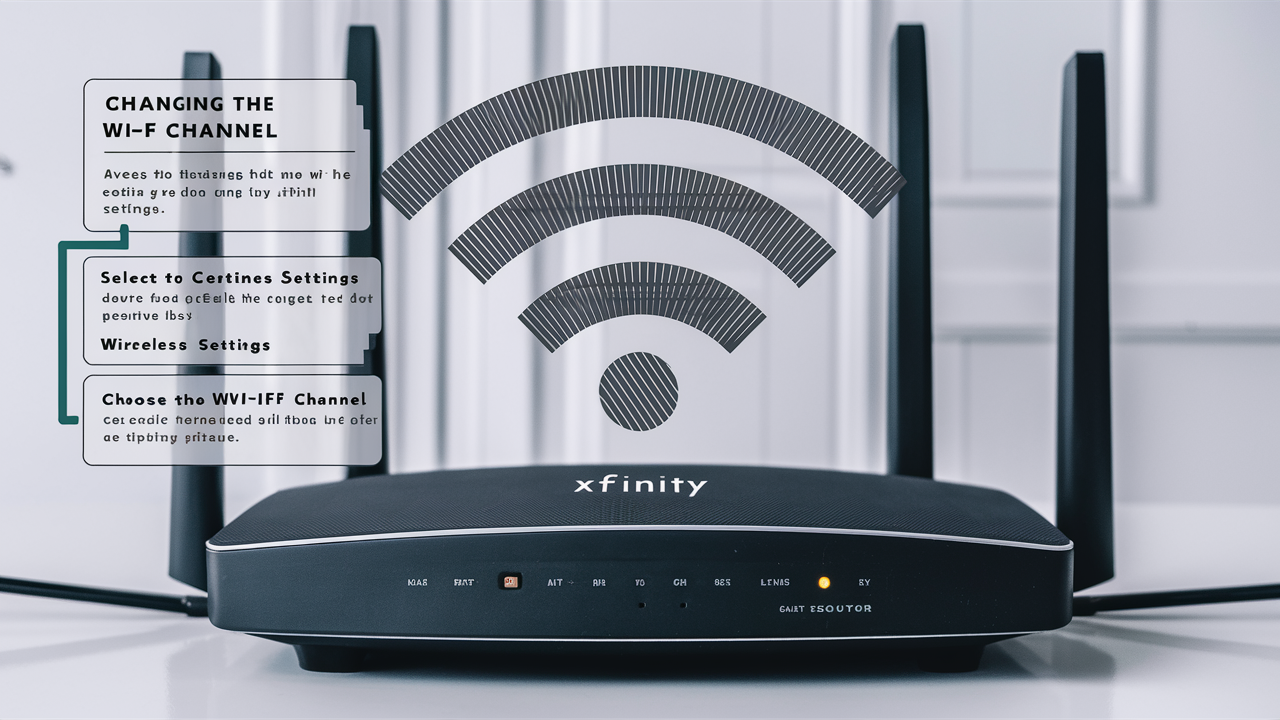
Struggling with slow Xfinity Wi-Fi speeds or intermittent connections? This comprehensive guide reveals how to change your Wi-Fi channel on Xfinity routers, a crucial step for optimizing performance and resolving common wireless issues. Learn the exact steps to improve your home network's reliability and speed.
Understanding Wi-Fi Channels
In the realm of wireless networking, Wi-Fi channels are akin to lanes on a highway. Your Wi-Fi router broadcasts its network signal (SSID) on a specific frequency band, and within these bands, there are designated channels. Think of these channels as discrete pathways that devices use to communicate with the router. The most common Wi-Fi bands are 2.4 GHz and 5 GHz. Each band has a different number of available channels, and the way these channels are structured can significantly impact your network's performance.
The 2.4 GHz band is older and more widely used. It offers a longer range and better penetration through walls and obstacles. However, it's also more susceptible to interference because it's used by many other devices, including microwaves, Bluetooth devices, cordless phones, and even some baby monitors. This band typically has 11 or 13 channels, depending on your region, but only three of these (channels 1, 6, and 11) are non-overlapping. This means that if multiple routers in your vicinity are using overlapping channels, they can interfere with each other, leading to slower speeds and dropped connections.
The 5 GHz band, on the other hand, is newer and offers significantly more channels, typically 24 or more. These channels are also wider, allowing for higher data transmission rates, which translates to faster Wi-Fi speeds. Crucially, the 5 GHz band is less congested because fewer older devices use it, and its channels are less prone to overlap. The downside is that 5 GHz signals have a shorter range and are less effective at penetrating solid objects like walls. For optimal performance, many modern routers, including those from Xfinity, are dual-band, meaning they broadcast on both 2.4 GHz and 5 GHz simultaneously, allowing devices to connect to the band that best suits their needs and location.
Understanding these fundamental concepts of Wi-Fi channels is the first step towards troubleshooting and optimizing your home network. When your Wi-Fi isn't performing as expected, the culprit is often channel congestion or interference. By strategically selecting a less crowded channel, you can significantly improve your Xfinity Wi-Fi experience.
Why Change Your Xfinity Wi-Fi Channel?
The default settings on your Xfinity router are often chosen for convenience, but they might not be the optimal settings for your specific environment. Over time, the wireless landscape around your home can change, leading to performance degradation. Here are the primary reasons why you might need to change your Xfinity Wi-Fi channel:
- Reduced Wi-Fi Speed: This is perhaps the most common symptom. If your internet speeds are consistently slower than what you're paying for, especially when connected wirelessly, channel congestion is a prime suspect. When multiple Wi-Fi networks in your neighborhood are using the same or overlapping channels, they compete for airtime, slowing down data transmission for everyone.
- Intermittent Connection Drops: If your devices frequently lose their Wi-Fi connection, it can be incredibly frustrating. This instability can be caused by interference from neighboring networks or other electronic devices operating on the same channel. A stable, less congested channel provides a more reliable connection.
- Poor Signal Strength in Certain Areas: While changing channels doesn't directly increase signal strength, a less congested channel can make the existing signal more robust and less susceptible to disruption, effectively improving perceived signal quality in areas that were previously problematic.
- Neighboring Wi-Fi Networks: In densely populated areas like apartment buildings or close-knit neighborhoods, the number of Wi-Fi networks can be overwhelming. Each network is broadcasting on a channel, and if many are using the same few channels, interference is inevitable.
- Interference from Other Electronic Devices: As mentioned earlier, devices like microwaves, Bluetooth speakers, cordless phones, and even some smart home devices can emit radio frequencies that operate in the 2.4 GHz band, causing interference. If these devices are close to your router or your devices, they can disrupt your Wi-Fi signal.
- New Devices Added to Your Network: As you add more wireless devices to your home, the demand on your Wi-Fi network increases. This can exacerbate existing channel congestion issues.
- Optimizing for Specific Bands: You might want to fine-tune which devices connect to the 2.4 GHz band versus the 5 GHz band. Sometimes, manually assigning devices or optimizing channels can lead to better load balancing.
By proactively addressing these issues, you can ensure a smoother, faster, and more reliable internet experience for all your connected devices. For instance, a study by improving Xfinity Wi-Fi speed often involves channel optimization as a key strategy.
Identifying Wi-Fi Channel Interference
Before you dive into changing your Xfinity Wi-Fi channel, it's crucial to confirm that channel interference is indeed the problem. Guessing can lead to suboptimal results. Fortunately, there are several ways to identify channel congestion and interference:
1. Observe Your Wi-Fi Performance:
- Speed Tests: Regularly perform speed tests using services like Ookla Speedtest or Fast.com. Compare wired connection speeds to wireless speeds. If wireless speeds are significantly lower and fluctuate wildly, interference is likely. Note that Wi-Fi speeds are generally lower than wired speeds due to overhead and the nature of wireless transmission. However, a drastic difference points to an issue. For 2025-26, average home internet speeds are significantly higher, making a noticeable drop in wireless performance more apparent. For example, if you pay for 1 Gbps, a wired connection might yield 900+ Mbps, while Wi-Fi might struggle to reach 300-500 Mbps consistently.
- Connection Stability: Keep track of how often your devices disconnect. If it happens multiple times a day, especially during peak usage hours, interference is a strong possibility.
- Signal Strength Fluctuations: Notice if your Wi-Fi signal strength bars drop dramatically or if you experience dead zones that weren't there before.
2. Use Wi-Fi Analyzer Tools:
These tools are invaluable for visualizing the wireless environment around you. They scan for nearby Wi-Fi networks and display the channels they are using, their signal strength, and security type. This allows you to identify which channels are most crowded.
- For Windows: Tools like Acrylic Wi-Fi Home or NirSoft's WifiInfoView can provide detailed information.
- For macOS: macOS has a built-in Wi-Fi Diagnostics tool. You can access it by holding down the Option key and clicking the Wi-Fi icon in the menu bar, then selecting "Open Wireless Diagnostics." The "Window" menu in the diagnostics app offers a "Scan" option.
- For Mobile Devices (Android/iOS): There are numerous free apps available in app stores, such as WiFi Analyzer (Android) or WiFi Analyzer - Network Scanner (iOS). These apps are incredibly user-friendly and provide a visual representation of channel usage.
When using these tools, pay close attention to the 2.4 GHz band. Look for channels with the most overlapping networks. In most regions, channels 1, 6, and 11 are the only non-overlapping channels. If you see many networks on channel 1, try switching to 6 or 11, or vice-versa. The 5 GHz band generally has more non-overlapping channels, making it less prone to congestion, but it's still good practice to check.
3. Identify Non-Wi-Fi Interference Sources:
If you're using the 2.4 GHz band, consider other devices in your home that might cause interference. Try temporarily turning off suspect devices (microwaves, cordless phones, Bluetooth devices) one by one and see if your Wi-Fi performance improves. If it does, you've found a source of interference. While you can't always eliminate these devices, knowing they are a factor helps explain performance issues and reinforces the benefit of moving to a less congested channel or the 5 GHz band.
By combining these observation and analysis techniques, you can accurately diagnose whether channel interference is impacting your Xfinity Wi-Fi and gather the information needed to make an informed decision about changing your channel.
Accessing Your Xfinity Router Settings
To change your Wi-Fi channel, you need to access your Xfinity router's administrative interface. This is typically done through a web browser. The exact steps can vary slightly depending on your Xfinity router model and firmware version, but the general process is consistent.
1. Connect to Your Xfinity Network:
Ensure you are connected to your Xfinity Wi-Fi network, either wirelessly or via an Ethernet cable. A wired connection is often more stable for making router configuration changes.
2. Find Your Router's IP Address:
The IP address of your router is its gateway to your home network. For most Xfinity routers, this is one of the following:
10.0.0.1192.168.1.1
If neither of these works, you can usually find the default gateway IP address in your computer's network settings:
- On Windows: Open the Command Prompt (search for
cmd), typeipconfig, and press Enter. Look for the "Default Gateway" under your active network adapter (Wi-Fi or Ethernet). - On macOS: Go to System Settings > Network > Select your active connection (Wi-Fi or Ethernet) > Details > TCP/IP. The router's IP address will be listed as "Router."
- On Mobile Devices: Check your Wi-Fi settings for the connected network. The router's IP address is often listed as "Router" or "Gateway."
3. Log In to the Router Interface:
Open a web browser (like Chrome, Firefox, Safari, or Edge) and type the router's IP address into the address bar. Press Enter.
You will be prompted to enter a username and password. The default credentials for Xfinity routers are often:
- Username:
admin - Password:
passwordoradmin
However, Xfinity often uses unique credentials for security. If the default username and password don't work, you'll need to find the specific login information for your router. This information is usually printed on a sticker on the router itself, often on the bottom or back. It might also be in the documentation that came with your router or modem. If you've changed these credentials before and forgotten them, you might need to perform a factory reset on your router, which will revert all settings to their defaults (including Wi-Fi name and password).
4. Navigate to Wireless Settings:
Once logged in, you'll see your router's administrative dashboard. The interface will vary, but you're looking for sections related to "Wireless," "Wi-Fi," "Network Settings," or "Advanced Settings."
Xfinity routers, especially those provided by Comcast, often have a user-friendly interface. You might see options to manage both the 2.4 GHz and 5 GHz bands separately. Look for settings like "Wireless Network (2.4GHz)," "Wireless Network (5GHz)," or similar. Within these sections, you should find an option to change the "Channel."
If you are using an Xfinity Gateway (a modem/router combo), the interface might be branded as "Xfinity Gateway" or similar. The exact path to wireless settings can differ, but it's usually under a section dedicated to Wi-Fi or wireless configuration.
Note on Xfinity xFi: If you use Xfinity's xFi service, you might manage your Wi-Fi settings through the Xfinity app or the xFi website. In this case, the process of accessing and changing settings might be simplified and guided through their platform. Look for options related to "Wi-Fi," "Network Settings," or "Advanced Settings" within the app or website. The xFi interface often presents a more streamlined experience, abstracting some of the technical details.
Remember to save any changes you make. After changing the channel, your router will likely reboot, and your devices will need to reconnect to the Wi-Fi network. It's a good practice to note down your current settings before making changes, just in case you need to revert them.
Step-by-Step Guide to Changing Your Xfinity Wi-Fi Channel
This guide provides a detailed walkthrough for changing the Wi-Fi channel on your Xfinity router. While interfaces can vary, the core steps remain consistent. We'll cover both the traditional router login method and the Xfinity xFi app/website approach.
Method 1: Using the Xfinity Router's Web Interface
This is the most common method and gives you direct control over your router's settings.
- Access Router Settings: Follow the steps outlined in the "Accessing Your Xfinity Router Settings" section to find your router's IP address and log in to its web interface.
- Locate Wireless Settings: Once logged in, navigate to the wireless or Wi-Fi settings section. This is often found under menus like "Wireless," "Wi-Fi," "Advanced Settings," or "Network." You will likely see separate sections for the 2.4 GHz and 5 GHz bands.
- Select the Band to Configure: Decide which band you want to adjust.
- 2.4 GHz Band: This band is more prone to interference. If you're experiencing issues, start here.
- 5 GHz Band: This band offers more channels and higher speeds but has a shorter range.
- Find the Channel Setting: Within the settings for the selected band, look for an option labeled "Channel," "Wireless Channel," or "Channel Selection."
- Choose a New Channel: You will typically see a dropdown menu or a list of available channels.
- For the 2.4 GHz band: As discussed, the non-overlapping channels are 1, 6, and 11. Use a Wi-Fi analyzer tool to see which of these is least congested in your area. If you can't use an analyzer, try switching to one of these three channels. Avoid channels in between, as they overlap and cause more interference.
- For the 5 GHz band: There are many more channels available. While less prone to interference, you can still experiment. Look for channels that are not heavily used by neighboring networks. The exact channel numbers can vary, but the principle is the same: pick a less crowded one.
Example: If your Wi-Fi analyzer shows that most of your neighbors are on channel 6 for the 2.4 GHz band, and you are currently on channel 3, switching to channel 1 or 11 would likely improve performance.
- Apply/Save Changes: After selecting your new channel, click the "Apply," "Save," or "Submit" button. Your router will likely restart to implement the changes.
- Reconnect Devices: Once the router has rebooted, your Wi-Fi network will temporarily go offline. All your connected devices will need to reconnect. You may need to re-enter your Wi-Fi password if you have separate SSIDs for 2.4 GHz and 5 GHz bands and have made changes to both.
- Test Performance: After reconnecting, perform speed tests and check for connection stability to see if the change has improved your Wi-Fi performance.
Method 2: Using the Xfinity xFi App or Website
Xfinity's xFi platform simplifies network management for many users. If you use xFi, this is often the easiest way to manage your Wi-Fi settings.
- Open the Xfinity App or Log in to xFi Website: Launch the Xfinity app on your smartphone or tablet, or go to xfinity.com/myaccount/internet/wifi and log in with your Xfinity credentials.
- Navigate to Wi-Fi Settings: Look for a section labeled "Wi-Fi," "Network," or "Internet."
- Access Advanced Settings: Within the Wi-Fi settings, you should find an option for "Advanced Settings" or similar. This is where you'll typically find channel selection.
- Select the Band: You'll usually see options to manage your 2.4 GHz and 5 GHz networks. Choose the band you wish to adjust.
- Change the Channel: Similar to the web interface method, you'll find a "Channel" setting. Select a new channel from the dropdown list.
- Save Changes: Confirm your selection. The xFi platform will apply the changes, and your router may restart.
- Reconnect Devices: Your devices will need to reconnect to the Wi-Fi network.
- Test Performance: Verify if the channel change has positively impacted your network speed and stability.
Important Considerations:
- Router Model Variations: The exact wording and location of settings may differ slightly based on your specific Xfinity modem/router model (e.g., Arris, Technicolor, etc.) or if you are using a separate router connected to an Xfinity modem.
- Dual-Band vs. Single-Band: Most modern Xfinity routers are dual-band (2.4 GHz and 5 GHz). You can often set them to use the same SSID (network name) and password, and your devices will automatically connect to the best band. Alternatively, you can give them different names (e.g., "MyHomeWiFi_2.4" and "MyHomeWiFi_5") to manually choose which band to connect to.
- Channel Width: While changing the channel is the primary focus, some advanced settings might allow you to adjust channel width (e.g., 20 MHz, 40 MHz, 80 MHz, 160 MHz). For the 2.4 GHz band, using 20 MHz is generally recommended to minimize interference. For the 5 GHz band, wider channels (80 MHz or 160 MHz) offer higher speeds but can be more susceptible to interference if the spectrum is crowded.
- Automatic Channel Selection: Some routers have an "Auto" channel setting. While convenient, it doesn't always pick the best channel, especially in a crowded environment. Manually selecting a channel is often more effective for optimization.
By following these steps, you can effectively change your Xfinity Wi-Fi channel and take control of your home network's performance.
Choosing the Best Wi-Fi Channel for Your Xfinity Router
Selecting the optimal Wi-Fi channel is a critical step in maximizing your Xfinity network's performance. It's not just about picking any channel; it's about picking the *least congested* one. This involves a combination of understanding channel mechanics and using the right tools.
Understanding Channel Overlap
The key to choosing the best channel lies in understanding channel overlap, especially on the 2.4 GHz band. This band is divided into channels, but they are not all independent. When channels overlap, devices on those channels can interfere with each other, even if they are on different networks.
- 2.4 GHz Band: This band typically has 11 channels in North America and 13 in Europe. However, only three of these channels are truly non-overlapping:
- Channel 1
- Channel 6
- Channel 11
- 5 GHz Band: This band is much more forgiving. It has significantly more channels, and many of them do not overlap. This is why the 5 GHz band is generally less prone to interference. You still want to pick a less crowded channel, but the strict adherence to specific non-overlapping channels like in the 2.4 GHz band is less critical.
Using Wi-Fi Analyzer Tools
As mentioned earlier, Wi-Fi analyzer apps are your best friend for identifying channel congestion. Here’s how to use them effectively:
- Scan Your Environment: Open your chosen Wi-Fi analyzer app on your smartphone or computer. Let it scan all available Wi-Fi networks in your vicinity.
- Focus on the 2.4 GHz Band: First, examine the 2.4 GHz band. The analyzer will typically display channels 1 through 11 (or 13). You'll see bars or lines representing the signal strength of each network on each channel.
- Identify the Least Crowded Channels: Look for channels where there are the fewest networks, or where the networks present have the weakest signal strength. Prioritize channels 1, 6, and 11. If, for example, channels 1 and 6 are heavily populated with strong signals, channel 11 is likely your best bet.
- Examine the 5 GHz Band: Switch your analyzer to the 5 GHz band. You'll see a wider range of channels. While less likely to be congested, it's still good practice to identify channels with fewer competing networks.
- Consider Your Router's Location: The strength of interference depends on proximity. A neighbor's router on the same channel might be a problem if they are very close, but less so if they are further away. Analyzer tools usually show signal strength (often in dBm), which helps gauge this. A signal strength of -70 dBm or lower is generally considered weak, while -30 dBm is very strong.
Strategies for Channel Selection
Once you have the information from your Wi-Fi analyzer, you can implement a strategy:
- Prioritize 5 GHz: If your devices support 5 GHz and are not too far from the router, use the 5 GHz band whenever possible. It offers better speeds and less interference. You can even assign a different SSID (network name) to your 5 GHz band to ensure devices connect to it.
- For 2.4 GHz:
- Stick to 1, 6, or 11: Always choose one of these three non-overlapping channels.
- Choose the quietest: Based on your analyzer, pick the channel with the least activity.
- Consider your neighbors: If you see a neighbor's network on channel 1 with a very strong signal, and you're currently on channel 1, switch to 6 or 11.
- Channel Width:
- 2.4 GHz: Use 20 MHz channel width. Wider channels (40 MHz) on 2.4 GHz are not supported in all regions and can significantly increase interference.
- 5 GHz: You can experiment with wider channels (40 MHz, 80 MHz, or even 160 MHz if supported) for higher speeds. However, if you experience instability on wider channels, revert to 80 MHz or 40 MHz.
- Test and Re-evaluate: After changing your channel, monitor your Wi-Fi performance for a few days. If you don't see an improvement or if issues arise, don't hesitate to try a different channel. Wireless environments are dynamic, and what works today might need adjustment tomorrow.
By employing these methods, you can make an informed decision about the best Wi-Fi channel for your Xfinity router, leading to a more stable and faster wireless experience. For 2025-26, with the increasing density of wireless devices, this optimization is more important than ever.
Troubleshooting Common Issues After Changing Channel
While changing your Wi-Fi channel is often a solution, it can sometimes introduce new, albeit usually minor, issues. Here’s how to troubleshoot common problems you might encounter after making the switch:
1. Devices Not Connecting
Symptom: One or more of your devices can no longer connect to the Wi-Fi network.
Possible Causes:
- Incorrect Password: You might have accidentally mistyped the password when reconnecting.
- Outdated Device Drivers/Firmware: Older devices might have trouble adapting to new channel settings, especially if you've changed channel width or mode.
- SSID/Security Mismatch: If you have separate SSIDs for 2.4 GHz and 5 GHz, ensure the device is trying to connect to the correct one with the correct password.
- Router Reboot Issue: Sometimes, a router reboot doesn't fully apply settings.
Solutions:
- Forget and Reconnect: On the problematic device, go to Wi-Fi settings, "forget" your network, and then try reconnecting by searching for it and entering the password again.
- Restart the Device: A simple restart of the device can often resolve connectivity glitches.
- Check Router Settings: Log back into your router and verify the Wi-Fi name (SSID) and password are correct. Also, check that the channel settings are applied as you intended.
- Check Device Compatibility: Ensure your device supports the Wi-Fi standards and channel widths your router is configured for. For example, very old devices might only support 2.4 GHz or older Wi-Fi standards.
2. Slow Speeds Persist or Worsen
Symptom: You changed the channel, but your Wi-Fi speeds are still slow, or they've become even slower.
Possible Causes:
- Incorrect Channel Choice: The new channel you selected might still be congested, or you might have picked a channel that causes more interference than your previous one.
- Interference from Non-Wi-Fi Devices: The primary cause of interference might not be other Wi-Fi networks but other electronics (microwaves, Bluetooth, etc.).
- Router Limitations: Your router might be old or underpowered, unable to handle the demands of your network.
- Internet Service Plan: Your internet speed is capped by your Xfinity plan. If you're getting speeds close to your plan's limit, Wi-Fi might not be the bottleneck.
- Device Limitations: The Wi-Fi adapter in your device might be outdated or slow.
- Bandwidth Saturation: Too many devices are actively using the internet simultaneously, consuming all available bandwidth.
Solutions:
- Try a Different Channel: Use your Wi-Fi analyzer again and test another less congested channel, especially on the 2.4 GHz band (sticking to 1, 6, or 11).
- Prioritize the 5 GHz Band: Ensure your devices are connecting to the 5 GHz band if possible. You might need to assign a different SSID to the 5 GHz band to force devices to connect to it.
- Reduce Interference: Move suspect non-Wi-Fi devices (microwaves, cordless phones) away from your router and devices.
- Test Wired Connection: Connect a computer directly to the router via Ethernet cable and run a speed test. If wired speeds are significantly faster than wireless, Wi-Fi is the issue. If wired speeds are also slow, the problem might be with your Xfinity service or modem.
- Upgrade Your Router: If your router is several years old, it might not support the latest Wi-Fi standards (like Wi-Fi 6/6E) and could be a bottleneck.
- Check Your Xfinity Plan: Ensure your internet plan provides adequate speeds for your household's needs.
3. Intermittent Connectivity
Symptom: Your Wi-Fi connection drops out periodically.
Possible Causes:
- Channel Congestion: Even on a chosen channel, if there's a sudden surge of activity from neighboring networks, it can cause drops.
- Router Overheating: Routers can overheat, especially in enclosed spaces, leading to instability.
- Firmware Bugs: Router firmware can sometimes have bugs that cause connectivity issues.
- Power Fluctuations: Unstable power supply to the router can cause it to reset or behave erratically.
Solutions:
- Try a Different Channel: Experiment with other channels on both 2.4 GHz and 5 GHz bands.
- Ensure Proper Ventilation: Make sure your router is in a well-ventilated area and not covered by anything.
- Update Router Firmware: Check your router's settings for firmware updates. Xfinity often pushes updates automatically, but manual checks can sometimes be beneficial.
- Check Power Connection: Ensure the power adapter is securely plugged into both the router and the wall outlet. Consider using a surge protector.
- Factory Reset: As a last resort, you can perform a factory reset on your router. This will revert all settings to default, so you'll need to reconfigure your network name, password, and any other custom settings.
By systematically addressing these potential issues, you can ensure that changing your Xfinity Wi-Fi channel leads to a positive and lasting improvement in your home network's performance.
Advanced Tips for Optimizing Your Xfinity Wi-Fi
Once you've mastered the basics of changing Wi-Fi channels, several advanced techniques can further enhance your Xfinity Wi-Fi performance, speed, and reliability. These tips go beyond basic channel selection and delve into network configuration and hardware considerations.
1. Separate SSIDs for 2.4 GHz and 5 GHz Bands
Most modern Xfinity routers broadcast both 2.4 GHz and 5 GHz bands, often under a single SSID (network name) using a feature called "band steering." While convenient, band steering doesn't always make the optimal choice for every device. By creating separate SSIDs (e.g., "MyHomeWiFi_2.4GHz" and "MyHomeWiFi_5GHz"), you gain manual control:
- Assign Devices Strategically: Connect devices that require higher speeds and are closer to the router (laptops, smart TVs, gaming consoles) to the 5 GHz band. Connect devices that are further away or don't need high speeds (smart plugs, older phones) to the 2.4 GHz band.
- Avoid Band Steering Conflicts: This prevents devices from being "forced" onto a band that isn't ideal for their location or performance needs.
- How to Set Up: Access your router's wireless settings. Look for an option to enable "Advanced Wireless Settings" or "Separate SSIDs." You can then assign unique names and passwords to each band.
2. Adjust Channel Width
Channel width determines how much spectrum your Wi-Fi signal uses. Wider channels can carry more data, leading to higher speeds, but they are also more susceptible to interference.
- 2.4 GHz: Stick to 20 MHz. While 40 MHz is technically possible, it's often not supported or causes significant interference in most environments.
- 5 GHz: You can experiment with 40 MHz, 80 MHz, or even 160 MHz (if your router and devices support it). Start with 80 MHz, as it offers a good balance of speed and stability. If you experience performance issues, reduce the width to 40 MHz.
- How to Adjust: This setting is usually found within the wireless settings for each band, often near the channel selection.
3. Optimize Router Placement
The physical location of your Xfinity router significantly impacts Wi-Fi signal strength and coverage. Even with the best channel selection, a poor location can cripple performance.
- Central Location: Place the router in a central, open area of your home, away from corners and obstructions.
- Elevated Position: Mount the router on a shelf or wall, rather than on the floor.
- Avoid Obstacles: Keep the router away from thick walls, large metal objects (like refrigerators or filing cabinets), mirrors, and aquariums, which can degrade Wi-Fi signals.
- Minimize Interference Sources: Place the router away from other electronic devices that emit radio frequencies, such as microwaves, cordless phone bases, and Bluetooth speakers.
4. Consider a Wi-Fi Extender or Mesh System
If you have a large home or multiple floors and struggle with dead zones, a single router might not be enough. For 2025-26, mesh Wi-Fi systems are becoming increasingly popular and effective.
- Wi-Fi Extenders (Repeaters): These devices rebroadcast your existing Wi-Fi signal to extend its range. They are generally less expensive but can sometimes halve your Wi-Fi speed.
- Mesh Wi-Fi Systems: These consist of a main router and one or more satellite nodes that work together to create a single, seamless Wi-Fi network throughout your home. They offer better performance and coverage than extenders and are often managed through a user-friendly app. Examples include systems from Eero, Google Nest Wifi, and TP-Link Deco.
- Xfinity xFi Pods: Xfinity offers its own Wi-Fi extenders called xFi Pods, designed to work with their gateways to improve coverage in dead spots.
5. Quality of Service (QoS) Settings
Quality of Service (QoS) settings allow you to prioritize certain types of traffic or devices on your network. This is particularly useful if you have multiple users with different needs (e.g., one person gaming, another streaming video, and someone else on a video call).
- Prioritize Devices: You can often set QoS rules to give bandwidth priority to specific devices (e.g., your gaming console or work laptop).
- Prioritize Traffic Types: Some routers allow you to prioritize specific applications or protocols, such as VoIP (for video calls) or streaming services.
- How to Set Up: QoS settings are usually found in the "Advanced Settings" or "Traffic Management" section of your router's interface. Be cautious when configuring QoS, as incorrect settings can sometimes negatively impact performance.
6. Keep Router Firmware Updated
Router manufacturers regularly release firmware updates to improve performance, fix bugs, and patch security vulnerabilities. Ensure your Xfinity router's firmware is up to date. Xfinity gateways are typically updated automatically, but it's worth checking periodically through your router's interface or the xFi app.
By implementing these advanced tips, you can fine-tune your Xfinity Wi-Fi network for optimal performance, ensuring a robust and reliable connection for all your devices in the modern connected home of 2025-26.
The Future of Wi-Fi Channels and Xfinity
The landscape of wireless technology is constantly evolving, and this includes how Wi-Fi channels are managed and utilized. For Xfinity customers, understanding these trends can help anticipate future network improvements and potential challenges.
Wi-Fi 6E and Wi-Fi 7
The latest Wi-Fi standards, Wi-Fi 6E and the emerging Wi-Fi 7, are set to revolutionize wireless networking. A significant aspect of these standards is the introduction of new frequency bands and a much larger number of available channels.
- Wi-Fi 6E: This standard operates in the 6 GHz band, in addition to the existing 2.4 GHz and 5 GHz bands. The 6 GHz band offers a vast amount of new, uncongested spectrum, providing up to 1200 MHz of additional bandwidth. This translates to significantly more channels, wider channels, and reduced interference. For Xfinity users with Wi-Fi 6E-compatible equipment, this means potentially much higher speeds and lower latency.
- Wi-Fi 7: Building upon Wi-Fi 6E, Wi-Fi 7 (802.11be) aims to deliver even higher throughput, lower latency, and greater reliability. It leverages technologies like multi-link operation (MLO), which allows devices to connect to multiple bands simultaneously, and even wider channels (up to 320 MHz). This will further enhance performance for demanding applications like high-resolution streaming, VR/AR, and real-time gaming.
As Xfinity continues to upgrade its network infrastructure and offer newer gateway devices, users will benefit from these advancements. The availability of more channels, especially in the 6 GHz band, will alleviate congestion issues that plague the 2.4 GHz and even the 5 GHz bands today. This means less need for manual channel tuning for many users.
Spectrum Availability and Management
The radio spectrum is a finite resource. As more devices and wireless technologies compete for it, efficient management becomes crucial. Regulatory bodies worldwide are working to allocate and manage spectrum effectively.
- Dynamic Frequency Selection (DFS): In the 5 GHz band, DFS is used to allow Wi-Fi devices to share spectrum with radar systems (like those used in weather forecasting and aviation). This can sometimes lead to Wi-Fi devices temporarily vacating certain channels if they detect radar activity.
- Future Spectrum Allocation: As new technologies emerge, there's ongoing discussion about making more spectrum available for Wi-Fi. The expansion into the 6 GHz band is a prime example of this.
Xfinity, as a major internet service provider, plays a role in advocating for and implementing policies that ensure sufficient spectrum for broadband services. This includes working with regulatory bodies and investing in technology that can utilize available spectrum efficiently.
Xfinity's Role in Network Evolution
Xfinity is continually investing in its network to keep pace with increasing demand for bandwidth and speed. This includes:
- Gateway Upgrades: Xfinity regularly updates its modem/router gateways to support the latest Wi-Fi standards (e.g., Wi-Fi 6, and eventually Wi-Fi 6E and Wi-Fi 7). These newer gateways offer improved performance, more robust Wi-Fi capabilities, and access to new frequency bands.
- Network Enhancements: Beyond the home gateway, Xfinity is also upgrading its core network infrastructure, including fiber optic deployment and DOCSIS technology advancements, to deliver higher speeds to homes.
- xFi Platform: The Xfinity xFi platform is designed to adapt to these changes, offering users a streamlined way to manage their networks, even as technology evolves. Future iterations of xFi will likely incorporate features that leverage the benefits of Wi-Fi 6E and Wi-Fi 7.
For the average Xfinity user in 2025-26, the trend is towards more automated and less manual network management. As Wi-Fi technology advances and more spectrum becomes available, the need for users to manually change Wi-Fi channels may decrease. However, understanding the fundamentals, as outlined in this guide, remains valuable for troubleshooting and optimizing your network in any scenario. It empowers you to take control of your internet experience and ensure you're getting the best possible performance from your Xfinity service.
Conclusion
Optimizing your Xfinity Wi-Fi network by strategically changing your Wi-Fi channel is a powerful yet often overlooked step in achieving faster speeds and a more stable connection. We've explored the fundamentals of Wi-Fi channels, identified the common culprits of interference, and provided a detailed, step-by-step guide to navigating your Xfinity router settings. By understanding the nuances of the 2.4 GHz and 5 GHz bands, utilizing Wi-Fi analyzer tools, and implementing advanced tips like separate SSIDs and optimal router placement, you can significantly enhance your home network's performance. As Wi-Fi technology continues to evolve with standards like Wi-Fi 6E and Wi-Fi 7, the availability of more channels will further alleviate congestion, but the core principles of smart channel selection and network management will remain essential for a superior online experience. Take control of your Wi-Fi today by following these actionable insights.