How To Cast Xfinity Stream Tv To Chromecast?
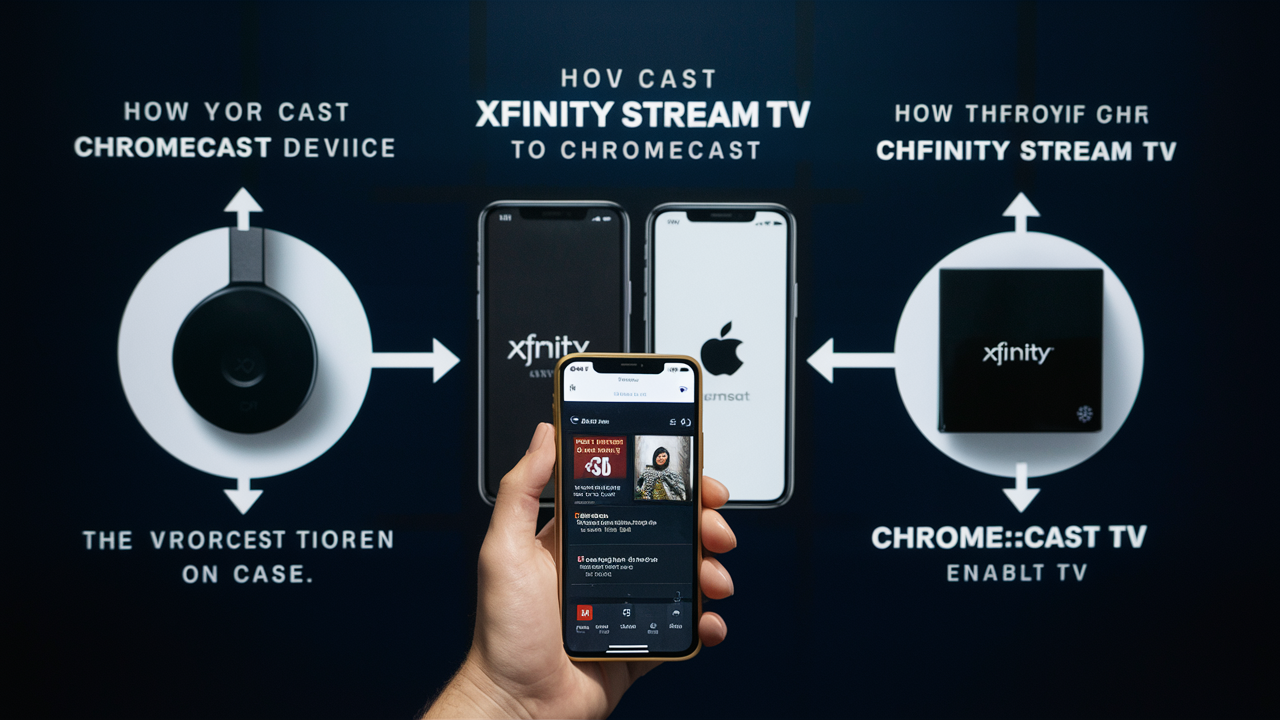
Unlock seamless entertainment by learning how to cast Xfinity Stream TV to your Chromecast. This guide provides a comprehensive, step-by-step walkthrough, ensuring you can enjoy your favorite shows and live TV on any screen with ease. Discover the simplest methods and troubleshoot common issues.
Introduction to Casting Xfinity Stream
In today's connected world, the ability to stream content across multiple devices is paramount. Xfinity Stream offers a robust platform for accessing live TV, On Demand content, and DVR recordings. However, many users wish to extend this viewing experience beyond their mobile devices or computers, directly onto their larger television screens. This is where Google Chromecast becomes an invaluable tool. This comprehensive guide will walk you through the entire process of casting Xfinity Stream to your Chromecast, ensuring you can enjoy your favorite programs on the biggest screen in your home. We'll cover everything from the initial setup to advanced troubleshooting, providing clear, actionable steps for a seamless streaming experience.
What You'll Need to Cast Xfinity Stream
Before diving into the casting process, it's essential to ensure you have the necessary equipment and software in place. A smooth casting experience relies on a few key components working in harmony. Having these ready will prevent frustration and allow you to start enjoying your content quickly.
Essential Hardware
- Xfinity Internet Service: While not strictly for casting itself, Xfinity Stream requires an active Xfinity internet subscription to access most content, especially live TV and DVR recordings.
- Chromecast Device: This can be a Chromecast (1st, 2nd, or 3rd generation), a Chromecast Ultra, or a TV with Chromecast built-in (often branded as Android TV or Google TV). Ensure it's plugged in, powered on, and connected to your TV's HDMI port.
- Television: Any television with an available HDMI port can be used with a Chromecast device.
- Wi-Fi Network: Both your Chromecast device and the device you are casting from (smartphone, tablet, or computer) must be connected to the *same* Wi-Fi network. This is a critical requirement for casting to function.
Essential Software and Accounts
- Xfinity Stream App: For mobile casting (Android and iOS), you'll need the official Xfinity Stream app installed on your smartphone or tablet. This app is available for free on the Google Play Store and Apple App Store.
- Google Home App: While not always strictly necessary for basic casting from the Xfinity Stream app, the Google Home app is crucial for setting up your Chromecast, managing devices, and sometimes for troubleshooting. It's available on both Android and iOS.
- Compatible Web Browser: If you plan to cast from a computer, you'll need a compatible web browser like Google Chrome, which has built-in casting capabilities.
- Xfinity Account Credentials: You'll need your Xfinity username and password to log into the Xfinity Stream app or website.
By confirming you have all these items, you're well on your way to successfully casting Xfinity Stream to your Chromecast. The next sections will detail the specific steps for different devices.
Understanding Casting Methods for Xfinity Stream
When it comes to casting Xfinity Stream, there isn't a single, universal "cast" button that works for every scenario. The method you use primarily depends on the device you're casting *from*. Xfinity Stream is designed to be accessible, and its integration with Chromecast is primarily facilitated through its mobile applications and its web interface. Understanding these nuances is key to a frustration-free experience. For 2025-26, the primary methods remain consistent with previous years, focusing on app-based casting and browser casting.
App-Based Casting (Mobile Devices)
This is the most common and often the most straightforward method. The Xfinity Stream app on Android and iOS devices is built with Chromecast support. When you open the app and are on the same Wi-Fi network as your Chromecast, a cast icon will appear. Tapping this icon allows you to select your Chromecast device and send the video stream directly to your TV. This method typically offers the best performance and stability because the app is specifically designed to communicate with Chromecast.
Browser-Based Casting (Computers)
For users who prefer watching Xfinity Stream on a larger monitor or want to cast from their desktop or laptop, the Google Chrome browser offers a built-in casting feature. You can access Xfinity Stream through its web portal ( xfinity.com/stream/tv ). Within Chrome, you can then cast the entire browser tab, or specifically the video player, to your Chromecast. This method can be slightly less optimized than app-based casting, as it essentially mirrors your screen, but it's a viable option when a mobile device isn't available or preferred.
Direct Integration (Limited)
It's important to note that Xfinity Stream does not offer direct integration with smart TV platforms like Roku, Fire TV, or Apple TV in the same way that some other streaming services do. While Xfinity offers its own Xfinity Flex box and X1 set-top boxes, casting to a Chromecast is the primary method for users who want to use their existing Chromecast hardware with Xfinity Stream content on a non-Xfinity-branded TV.
In 2025-26, these methods continue to be the standard. Xfinity's focus remains on its proprietary hardware and its mobile/web applications. Therefore, mastering app-based and browser-based casting is your key to unlocking the full potential of Xfinity Stream on your Chromecast-enabled TV.
Casting Xfinity Stream from Android Devices
Casting Xfinity Stream from an Android device is a popular and generally reliable method. The Xfinity Stream app for Android is designed to work seamlessly with Chromecast. Follow these steps to get started:
Step-by-Step Guide for Android
-
Ensure Network Connectivity:
- Verify that your Android device is connected to the *same* Wi-Fi network as your Chromecast.
- Make sure your Chromecast is powered on and connected to your TV.
-
Open the Xfinity Stream App:
- Launch the Xfinity Stream app on your Android smartphone or tablet.
- Log in with your Xfinity username and password if prompted.
-
Find the Cast Icon:
- As you navigate through the app and select content to watch (e.g., a live TV channel, an On Demand movie, or a DVR recording), look for the cast icon.
- This icon typically resembles a rectangle with Wi-Fi waves emanating from its bottom left corner. It's usually located in the top right corner of the app's interface or within the video player controls.
-
Select Your Chromecast Device:
- Tap the cast icon. A list of available casting devices on your network will appear.
- Select your Chromecast device from the list.
-
Start Casting:
- Once your device is connected, the video playback will transfer from your Android device to your Chromecast and appear on your TV screen.
- You can now use your Android device as a remote control to play, pause, rewind, fast-forward, and adjust volume.
Tips for Android Casting
- Keep the App Open: For uninterrupted playback, it's best to keep the Xfinity Stream app running in the foreground on your Android device while casting.
- Device Compatibility: Ensure your Android device is running a recent version of the operating system. Older versions might have compatibility issues. As of 2025-26, Android 8.0 (Oreo) or later is generally recommended.
- App Updates: Regularly update the Xfinity Stream app and the Google Home app from the Google Play Store to ensure you have the latest features and bug fixes.
- Restart Devices: If you encounter issues, try restarting your Android device, your Chromecast, and your Wi-Fi router. This simple step often resolves connectivity problems.
By following these steps, Android users can efficiently cast their favorite Xfinity Stream content to their Chromecast-enabled televisions, enhancing their viewing experience.
Casting Xfinity Stream from iOS Devices
Similar to Android, the Xfinity Stream app for iOS devices (iPhone and iPad) also supports casting to Chromecast. The process is intuitive and designed for ease of use. Here’s how to cast Xfinity Stream from your Apple device:
Step-by-Step Guide for iOS
-
Verify Network Connection:
- Confirm that your iPhone or iPad is connected to the *same* Wi-Fi network as your Chromecast.
- Ensure your Chromecast is powered on and properly connected to your television.
-
Launch the Xfinity Stream App:
- Open the Xfinity Stream app from your iOS device's home screen.
- Sign in using your Xfinity credentials if you haven't already.
-
Locate the Cast Icon:
- Browse the app to find the content you wish to cast.
- Look for the familiar cast icon (a rectangle with Wi-Fi waves) typically situated in the upper right corner of the screen or within the video player controls.
-
Choose Your Chromecast:
- Tap the cast icon. A pop-up menu will display a list of available casting devices.
- Select your specific Chromecast device from this list.
-
Begin Streaming:
- Once the connection is established, the video will start playing on your TV.
- Your iOS device will function as a remote control, allowing you to manage playback (play, pause, etc.) and adjust the volume.
Tips for iOS Casting
- App in Background: While casting, it's advisable to keep the Xfinity Stream app active in the background to ensure a stable connection.
- iOS Version: Ensure your iPhone or iPad is running a supported version of iOS. As of 2025-26, iOS 13 or later is generally recommended for optimal app performance.
- App Updates: Keep the Xfinity Stream app and the Google Home app updated through the Apple App Store. Updates often include performance improvements and bug fixes related to casting.
- Network Stability: A strong and stable Wi-Fi signal is crucial. If you experience buffering or disconnections, try moving closer to your Wi-Fi router or restarting your router and casting devices.
- Device Restart: If casting fails, a simple restart of your iPhone/iPad, Chromecast, and Wi-Fi router can often resolve the issue.
By following these straightforward steps, iOS users can easily cast their Xfinity Stream content to their Chromecast, enjoying a more immersive viewing experience on their television.
Casting Xfinity Stream from a Web Browser
For users who prefer using a computer or don't have the Xfinity Stream app installed on a mobile device, casting from a web browser is a viable alternative. Google Chrome offers built-in casting capabilities that can be used to stream content from the Xfinity Stream website to your Chromecast. This method essentially mirrors your browser tab to your TV.
Step-by-Step Guide for Browser Casting
-
Prepare Your Setup:
- Ensure your computer is connected to the *same* Wi-Fi network as your Chromecast.
- Confirm your Chromecast is powered on and connected to your TV.
-
Open Xfinity Stream in Chrome:
- Launch the Google Chrome browser on your computer.
- Navigate to the Xfinity Stream website: xfinity.com/stream/tv
- Log in with your Xfinity credentials.
-
Access the Casting Feature in Chrome:
- Once you're on the Xfinity Stream website and ready to play content, click the three vertical dots (?) in the top-right corner of the Chrome browser window to open the Chrome menu.
- Select "Cast..." from the dropdown menu.
-
Select Your Chromecast Device:
- A "Cast tab" window will appear, showing available casting devices.
- Click on your Chromecast device from the list.
-
Choose What to Cast (Optional but Recommended):
- By default, Chrome will cast the entire tab. However, for better performance and to avoid casting unnecessary elements, you can click the dropdown arrow next to "Sources" in the Cast tab window.
- Select "Cast tab" to cast only the content within the current browser tab, or "Cast desktop" to cast your entire computer screen (not recommended for Xfinity Stream unless necessary). For Xfinity Stream, casting the tab is usually sufficient.
-
Start Playback:
- Now, navigate back to the Xfinity Stream website and play the video you want to watch. The video should appear on your TV through the Chromecast.
- You can control playback using the video player on the Xfinity Stream website.
Important Considerations for Browser Casting
- Browser Compatibility: This method requires Google Chrome. Other browsers may not have native casting capabilities. Ensure Chrome is updated to the latest version for optimal performance.
- Performance: Browser casting can sometimes be more resource-intensive than app-based casting. If you experience lag or stuttering, try closing other tabs and applications on your computer.
- Audio: Ensure your computer's audio output is not muted, as the audio will be cast along with the video.
- Resolution: The quality of the casted stream can depend on your computer's performance and your Wi-Fi network strength.
- Alternative: If you are casting a specific video player within a webpage, sometimes right-clicking on the video player itself might reveal a "Cast..." option, though this is less common with Xfinity Stream's web interface compared to dedicated video sites. The Chrome browser cast feature is the most reliable for this scenario.
Casting from a browser provides flexibility, allowing you to enjoy Xfinity Stream on a larger screen using your computer. By following these steps, you can effectively stream your favorite content.
Troubleshooting Common Casting Issues
While casting Xfinity Stream to Chromecast is generally straightforward, occasional issues can arise. Fortunately, most problems are resolvable with a few common troubleshooting steps. Understanding these potential hiccups and their solutions can save you time and frustration. For 2025-26, these common issues and fixes remain largely consistent.
Issue 1: Chromecast Not Appearing in the List
- Check Wi-Fi Network: This is the most common culprit. Ensure your mobile device or computer is connected to the *exact same* Wi-Fi network as your Chromecast. Even different bands (2.4GHz vs. 5GHz) on the same router can sometimes cause issues if not configured correctly.
- Restart Devices: Power cycle your Chromecast (unplug it from the power source for 30 seconds, then plug it back in), your mobile device/computer, and your Wi-Fi router.
- Check Google Home App: Open the Google Home app. Does it detect your Chromecast? If not, there might be a deeper network or device setup issue.
- Router Settings: Ensure that "AP Isolation" or "Client Isolation" is disabled on your router. This feature prevents devices on the same network from communicating with each other.
Issue 2: Casting Starts but Buffers or Stops Frequently
- Wi-Fi Signal Strength: A weak Wi-Fi signal is a primary cause of buffering. Move your Chromecast, your casting device, or your Wi-Fi router closer together. Consider a Wi-Fi extender or mesh system if your home has dead zones.
- Network Congestion: If many devices are using your Wi-Fi network simultaneously (streaming, gaming, downloading), it can slow down your connection. Try reducing the number of active devices or casting during off-peak hours.
- Device Performance: If casting from a computer, close unnecessary browser tabs and applications. If casting from a mobile device, ensure it has sufficient battery and processing power.
- Chromecast Performance: Older Chromecast models might struggle with high-definition streams. If you have a Chromecast Ultra or a newer model, ensure it's being used.
- Xfinity Stream Service: Occasionally, the issue might be with Xfinity's servers. Check if other Xfinity Stream content is working or if there are any reported outages.
Issue 3: Audio or Video Quality is Poor
- Resolution Settings: If casting from a browser, ensure you're not accidentally casting at a lower resolution. If casting from the app, the app usually handles this automatically.
- Wi-Fi Band: If your router supports both 2.4GHz and 5GHz bands, try connecting both your casting device and Chromecast to the 5GHz band for potentially faster speeds and less interference, provided they are within range.
- App vs. Browser: App-based casting (from Android/iOS) often provides better quality than browser casting. If quality is poor via browser, try the app.
Issue 4: Xfinity Stream App Crashes or Freezes During Casting
- Update Apps: Ensure both the Xfinity Stream app and the Google Home app are updated to their latest versions from your device's app store.
- Clear App Cache: On Android, you can try clearing the cache for the Xfinity Stream app (Settings > Apps > Xfinity Stream > Storage > Clear Cache).
- Reinstall App: Uninstall and then reinstall the Xfinity Stream app.
- Device Restart: As mentioned, restarting your phone/tablet can often resolve app-related glitches.
Issue 5: Content Not Available for Casting
- DRM Restrictions: Some content, particularly certain premium channels or On Demand titles, may have Digital Rights Management (DRM) restrictions that prevent casting. This is a limitation imposed by content providers, not typically by Xfinity or Chromecast.
- App Version: Ensure you are using the official Xfinity Stream app. Third-party apps or unofficial methods are not supported and may not work or could violate terms of service.
By systematically working through these troubleshooting steps, you can resolve most common issues and enjoy a smooth Xfinity Stream to Chromecast viewing experience.
Alternatives to Casting Xfinity Stream
While casting Xfinity Stream to Chromecast is a popular and effective method, it's not the only way to enjoy your Xfinity content on a TV. Depending on your setup and preferences, other alternatives might be more suitable or offer additional features. For 2025-26, these options remain relevant for Xfinity subscribers.
Xfinity Flex Box
Description: Xfinity Flex is a free streaming TV box provided by Comcast to its internet-only customers. It plugs into your TV via HDMI and connects to your home Wi-Fi network. It's designed to aggregate streaming apps and provide access to Xfinity Stream content.
Pros:
- Included free with Xfinity internet service.
- Provides a dedicated interface for Xfinity Stream and other popular apps (like Netflix, Hulu, Peacock).
- Voice remote for easy navigation.
- No need for separate casting devices.
Cons:
- Requires an active Xfinity internet subscription.
- Interface is specific to Comcast's ecosystem.
Xfinity X1 TV Box
Description: This is Xfinity's primary cable TV set-top box. It offers comprehensive access to live TV, DVR, On Demand, and integrated streaming apps.
Pros:
- Full-featured cable TV experience.
- Seamless integration of Xfinity Stream content.
- Advanced DVR capabilities and voice control.
Cons:
- Requires a traditional Xfinity TV subscription, which is typically more expensive than internet-only plans.
- Monthly equipment rental fees apply.
Smart TV Apps
Description: Many modern smart TVs have built-in apps for streaming services. While Xfinity does not offer a dedicated Xfinity Stream app for most smart TV platforms (like Samsung Tizen, LG webOS, or Android TV/Google TV directly), you can access content through other means.
Pros:
- Direct access without extra devices.
- Often optimized for the TV's interface.
Cons:
- Crucially, there is NO official Xfinity Stream app for most Smart TV platforms. This means you cannot directly download and log in to Xfinity Stream on your Samsung, LG, Vizio, or other non-Android TV smart TV.
- If your Smart TV runs Android TV or Google TV, you *might* be able to install the Xfinity Stream app from the Google Play Store, but compatibility and performance can vary.
Using a Streaming Stick/Box with Screen Mirroring
Description: Devices like Amazon Fire TV Stick or Roku allow screen mirroring from certain devices. If your mobile device or computer supports mirroring to these platforms, you could potentially mirror your screen showing Xfinity Stream.
Pros:
- Can be a workaround if direct casting isn't an option.
Cons:
- Screen mirroring quality can be inconsistent.
- May not be supported by all devices or Xfinity Stream app versions.
- Often less reliable and more prone to lag than direct casting.
Comparison Table: Casting vs. Alternatives
| Feature | Casting to Chromecast | Xfinity Flex Box | Xfinity X1 Box | Smart TV App (Native) |
|---|---|---|---|---|
| Cost | Requires Chromecast purchase (one-time) | Free with Xfinity Internet | Monthly rental fee + TV subscription | Included with TV |
| Xfinity Stream Access | Yes (via mobile app/browser) | Yes (dedicated interface) | Yes (fully integrated) | No (except potentially on Android TV/Google TV) |
| Setup Complexity | Moderate (app/browser setup) | Simple | Moderate (professional install often needed) | Very Simple (if app exists) |
| Flexibility | High (works with many devices) | Moderate (tied to Xfinity ecosystem) | Low (primarily cable TV) | High (for other streaming apps) |
Choosing the right method depends on your existing Xfinity services, your budget, and your technical comfort level. For many, casting remains the most accessible way to bring Xfinity Stream to a non-smart TV or a TV without a dedicated Xfinity box.
The Future of Xfinity Stream and Chromecast Integration
The landscape of home entertainment is constantly evolving, and how we access and consume content changes rapidly. For Xfinity Stream and its integration with devices like Chromecast, the future likely holds continued refinement and potentially broader compatibility, though Xfinity's strategic focus often remains on its own hardware. As of 2025-26, we can anticipate several trends:
Enhanced App Performance
Expect ongoing updates to the Xfinity Stream mobile apps (Android and iOS) that improve casting stability, reduce buffering, and enhance video quality. As Chromecast technology itself advances, app developers will leverage these improvements to deliver a smoother experience. This includes better handling of high-dynamic-range (HDR) content if supported by both the app and the Chromecast device.
Increased Focus on Xfinity's Own Ecosystem
Comcast's primary strategy involves pushing its own hardware, such as the Xfinity Flex box and the more advanced X1 platform. While Chromecast support is a valuable feature for users who already own Chromecasts, Xfinity's R&D investment is likely to be heavily weighted towards optimizing the experience on their proprietary devices. This means that while casting will likely remain supported, major new features or integrations might debut on Flex or X1 first.
Potential for Broader Smart TV Integration (with caveats)
While Xfinity has historically lagged in offering native apps on major smart TV platforms (Samsung, LG, etc.), the trend across the industry is towards consolidating streaming services within a single interface. It's possible that in the future, Xfinity might explore more direct integrations, perhaps through partnerships or by developing dedicated apps for platforms beyond Android TV/Google TV. However, this is often complicated by licensing and technical challenges.
Improvements in Wi-Fi and Network Technology
The underlying technology enabling casting is Wi-Fi. Advancements in Wi-Fi standards (like Wi-Fi 6E and upcoming Wi-Fi 7) will offer faster speeds, lower latency, and better capacity. This will naturally benefit all wireless streaming, including casting Xfinity Stream. As more homes adopt these newer Wi-Fi technologies, the reliability and quality of casting experiences will improve.
AI and Machine Learning in Streaming
We are seeing AI being integrated into streaming services for personalized recommendations, content discovery, and even optimizing stream delivery. It's conceivable that future versions of Xfinity Stream or Chromecast firmware could use AI to predict network conditions and proactively adjust stream quality for a more seamless viewing experience, potentially benefiting casting sessions.
User Demand and Competition
Ultimately, the direction of development is influenced by user demand and competitive pressures. As long as users continue to find value in casting and Chromecast remains a popular device, Xfinity will likely maintain support. However, if alternative methods of accessing Xfinity content on TVs become significantly more prevalent or convenient, the emphasis on Chromecast integration might shift.
In summary, while direct integration with Xfinity's own hardware like Flex and X1 will likely remain their priority, Chromecast casting is expected to continue being a reliable method for users. Expect incremental improvements in app performance and stability, driven by both Xfinity's app development and advancements in underlying network technologies. The key for users is to stay updated with the latest app versions and ensure their home network is robust.
Conclusion
Mastering how to cast Xfinity Stream to Chromecast unlocks a world of viewing flexibility, allowing you to enjoy your favorite live TV, On Demand content, and DVR recordings on the biggest screen in your home. Whether you're using an Android device, an iPhone or iPad, or even a computer with Google Chrome, the process is designed to be accessible and straightforward. By ensuring you have the correct hardware and software, following the step-by-step guides, and understanding common troubleshooting techniques, you can overcome any hurdles and achieve a seamless streaming experience.
Remember the critical requirement: all devices must be on the same Wi-Fi network. Regularly updating your Xfinity Stream app and the Google Home app will also ensure you benefit from the latest performance enhancements and bug fixes. While alternatives like the Xfinity Flex box exist, casting remains a powerful and cost-effective solution for many users who already own a Chromecast. Embrace the convenience and expand your viewing horizons by casting Xfinity Stream today!