How does AT&T internet connect to my house?
Discover the intricate journey of AT&T internet signals from their network infrastructure right to your doorstep. This guide demystifies the technology behind your home's connectivity, explaining the physical and digital pathways that bring the internet to you, ensuring you understand your AT&T service's backbone.
Understanding AT&T's Infrastructure Backbone
AT&T, a telecommunications giant, has built an extensive and complex network infrastructure that serves as the foundation for its internet services. Understanding this backbone is crucial to grasping how your home internet connection is established and maintained. This infrastructure isn't a single entity but a layered system comprising various technologies and physical components, all working in concert to deliver data to millions of households. In 2025-26, AT&T continues to invest heavily in upgrading and expanding this network, particularly in fiber optics, to meet the ever-increasing demand for bandwidth and speed.
The Role of Fiber Optics
Fiber optic technology is at the forefront of AT&T's modern internet delivery. Unlike traditional copper wires, fiber optic cables transmit data using pulses of light through thin strands of glass or plastic. This method offers significantly higher speeds, greater bandwidth, and is less susceptible to electromagnetic interference. AT&T's Fiber network, often marketed as AT&T Fiber, is a key component of its strategy to provide high-speed internet across its service areas. The expansion of this fiber network is ongoing, with significant projects in 2025-26 focusing on both urban and underserved rural areas.
The Traditional Infrastructure: Copper and Coaxial Cables
While fiber optics are the future, AT&T still relies on its legacy infrastructure, primarily copper telephone lines and coaxial cables, for many of its internet services, especially DSL (Digital Subscriber Line) and some forms of cable internet. DSL utilizes the existing copper phone network to transmit data, offering speeds that vary based on the distance from the local telephone exchange. Coaxial cables, originally designed for cable television, are also leveraged for internet delivery, providing a robust and widely available option. AT&T's commitment to upgrading these lines to support higher speeds is a continuous effort, though the limitations of copper are becoming more apparent with the rise of bandwidth-intensive applications.
Network Hubs and Data Centers
The internet doesn't magically appear in your home; it originates from vast data centers and is routed through numerous network hubs. AT&T operates a sophisticated network of these facilities, which house servers, routers, and other critical equipment that manage and direct internet traffic. These hubs are interconnected by high-capacity fiber optic lines, forming the backbone of the internet. When you request information from a website or send an email, your data travels through this intricate web of connections, passing through multiple hubs before reaching its destination and returning to you. The redundancy and capacity of these hubs are vital for ensuring reliable service, especially during peak usage times in 2025-26.
The Last Mile Challenge
One of the most significant challenges in internet delivery is the "last mile"—the final segment of the connection from the local network hub or street cabinet to your individual home. This is where the type of technology (fiber, copper, coaxial) becomes most critical and often dictates the maximum speeds you can achieve. AT&T's efforts in expanding fiber optics are largely aimed at overcoming the limitations of the last mile, providing a direct fiber-to-the-home (FTTH) connection where possible. This direct connection bypasses older, slower technologies and offers a more consistent and faster internet experience.
Types of AT&T Internet Connections to Your House
AT&T offers a variety of internet technologies, each with its own characteristics, strengths, and limitations. The type of connection available at your specific address depends on the existing infrastructure in your area and the services AT&T has deployed. Understanding these different types is key to choosing the right plan and managing your expectations for speed and reliability in 2025-26.
AT&T Fiber (Fiber-to-the-Home - FTTH)
This is AT&T's premier internet service, utilizing fiber optic cables that run directly from the AT&T network to your home.
- How it works: Light signals are transmitted through thin glass fibers.
- Speeds: Offers symmetrical upload and download speeds, often ranging from 300 Mbps to 5 Gbps or even higher in select areas. This is ideal for demanding applications like 4K streaming, online gaming, and large file transfers.
- Reliability: Highly reliable and less prone to slowdowns due to network congestion or weather.
- Availability: Expanding rapidly, but still not available in all areas. Check your specific address for availability.
AT&T Internet (DSL)
This service uses the traditional copper telephone lines to deliver internet.
- How it works: Digital data is transmitted over existing phone lines.
- Speeds: Speeds vary significantly based on your distance from the AT&T central office. Download speeds typically range from 1 Mbps to 100 Mbps, with upload speeds being much lower.
- Reliability: Can be affected by distance, line quality, and interference.
- Availability: Widely available in most areas where AT&T provides phone service.
AT&T Fixed Wireless Internet
This option is designed for rural or underserved areas where traditional wired connections are not feasible.
- How it works: A wireless signal is broadcast from a local tower to an antenna installed at your home.
- Speeds: Speeds can vary but generally offer better performance than satellite internet, often in the range of 25 Mbps to 100 Mbps download. Upload speeds are typically lower.
- Reliability: Performance can be affected by line-of-sight to the tower, weather conditions, and distance.
- Availability: Primarily in rural and suburban areas.
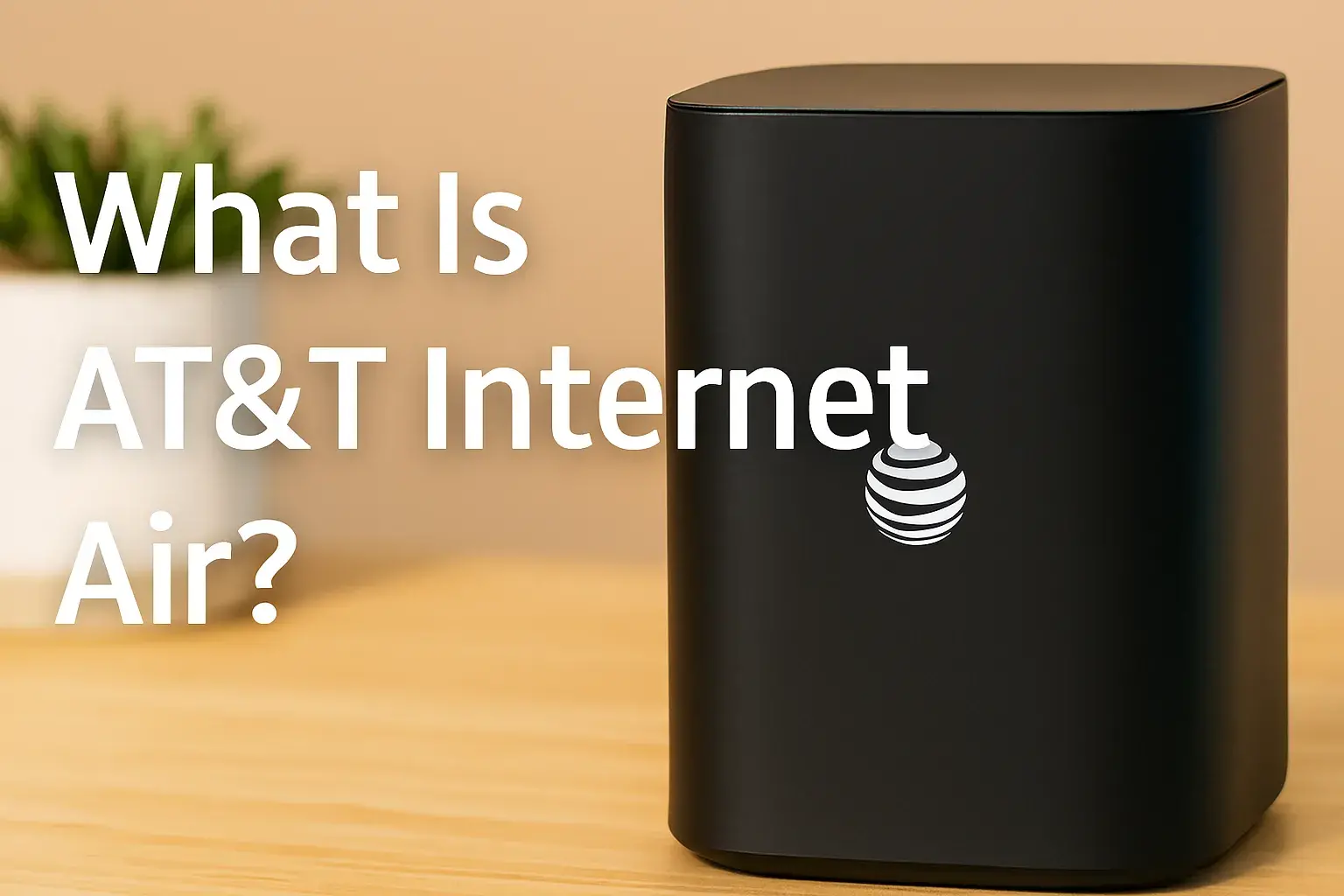
AT&T Internet Air
A newer offering that leverages 5G and LTE technology for home internet.
- How it works: Uses AT&T's cellular network to provide home internet, similar to a mobile hotspot but designed for a home environment.
- Speeds: Can offer competitive speeds, often ranging from 50 Mbps to 140 Mbps download, with potential for higher speeds as 5G expands.
- Reliability: Dependent on cellular signal strength and network congestion.
- Availability: Growing availability in areas with strong AT&T cellular coverage.
Comparison of AT&T Internet Technologies (2025-26 Estimates)
| Technology | Typical Download Speeds | Typical Upload Speeds | Best For |
|---|---|---|---|
| AT&T Fiber (FTTH) | 300 Mbps - 5 Gbps+ | 300 Mbps - 5 Gbps+ | Heavy users, streaming, gaming, multiple devices, future-proofing |
| AT&T Internet (DSL) | 1 Mbps - 100 Mbps | 0.5 Mbps - 10 Mbps | Light browsing, email, basic streaming, areas without fiber |
| AT&T Fixed Wireless | 25 Mbps - 100 Mbps | 5 Mbps - 15 Mbps | Rural areas, alternative to satellite, moderate usage |
| AT&T Internet Air (5G/LTE) | 50 Mbps - 140 Mbps+ | 10 Mbps - 25 Mbps+ | Areas with strong cellular coverage, alternative to DSL/cable, moderate to heavy usage |
The Physical Connection Process: From Pole to Port
The physical connection is the tangible pathway that brings AT&T internet service from the broader network into your home. This process can vary significantly depending on the technology being used, but it generally involves several key stages. Understanding these steps helps demystify the installation and the physical infrastructure involved.
Initial Network Infrastructure
Everything begins at AT&T's local central office (CO) or a neighborhood distribution point. For fiber, this is where the high-capacity fiber optic lines begin their journey. For DSL, it's where the copper phone lines terminate and are equipped with digital subscriber line access multiplexers (DSLAMs). For fixed wireless, it's the tower transmitting the signal. These points are the origin of the internet service for a specific geographic area.
The Feeder Line
From the central office or distribution point, a larger "feeder line" extends outwards to serve a neighborhood or a cluster of homes.
- Fiber: This feeder line is a thick bundle of fiber optic cables, capable of carrying massive amounts of data at the speed of light.
- Copper (DSL): This would be a bundle of copper telephone wires. The quality and gauge of these wires are critical for DSL performance.
- Fixed Wireless: The feeder line here is the infrastructure connecting the tower to the core network.
The Distribution Line
The feeder line then branches out into smaller "distribution lines" that run closer to individual homes.
- Fiber-to-the-Curb/Building: In many deployments, fiber optic cables are run to a utility pole or a pedestal near your home (fiber-to-the-curb or FTTC). From this point, a thinner fiber drop cable connects to your house. In a true fiber-to-the-home (FTTH) setup, the fiber runs all the way to your dwelling.
- Copper (DSL): Distribution lines are typically copper wires that run from the local telephone pole or underground vault to each house. The length of this drop is a major factor in DSL speeds.
- Fixed Wireless: The distribution is the wireless path from the tower to your home's antenna.
The Drop Cable
This is the final cable segment that connects the distribution line to your house.
- Fiber: A thin, durable fiber optic cable is run from the nearest access point (pole, pedestal, or street) into your home. This often requires drilling a small hole through an exterior wall.
- Copper (DSL): A standard telephone drop wire is connected to your home's phone jack.
- Fixed Wireless: An outdoor antenna is mounted on your house, and a cable runs from the antenna inside to the modem/router.
Installation and Entry Point
During installation, an AT&T technician will determine the best entry point into your home. This is typically where the drop cable can be routed with minimal disruption.
- Fiber: A small hole is drilled, and the fiber optic cable is fed through. It's then connected to an Optical Network Terminal (ONT) device inside your home.
- Copper (DSL): The cable is connected to your existing phone line or a new jack is installed.
- Fixed Wireless: The antenna is mounted, and the cable is routed to the indoor equipment.
The Connection Point Inside Your Home
Once the physical line is in place, it connects to specific equipment inside your home.
- Fiber: The fiber optic cable terminates at an ONT (Optical Network Terminal). The ONT converts the light signals into electrical signals that your router can understand. It typically has an Ethernet port for connecting to your router.
- Copper (DSL): The phone line connects to a DSL modem. The modem modulates and demodulates the digital signal over the analog phone line.
- Fixed Wireless: The cable from the outdoor antenna connects to a wireless gateway or modem/router combo.
The technician will then connect your router to the ONT, modem, or gateway, completing the physical connection and enabling your home's internet access. For AT&T Fiber, this typically involves an Ethernet cable from the ONT to your router. For DSL, it's a phone cable from the wall jack to the DSL modem, and then an Ethernet cable from the modem to your router.
How Data Travels to Your Home: The Digital Journey
Once the physical connection is established, data embarks on a complex digital journey to reach your devices. This journey involves multiple layers of technology and protocols, ensuring that information is routed efficiently and reliably from its source to your home network.
From the Internet to the Local Exchange
Data originates from servers located in data centers across the globe. When you request information (e.g., loading a webpage), your request is broken down into small packets. These packets travel through the internet's backbone, a high-speed network of fiber optic cables managed by major telecommunications companies like AT&T. The packets are routed through various routers and switches, each directing them closer to your local AT&T network.
Reaching the AT&T Network Hub
Your request ultimately arrives at an AT&T network hub or Point of Presence (POP) that serves your geographic area. This hub is the gateway to your neighborhood's infrastructure. Here, the data is processed and prepared for delivery over the last mile.
The Last Mile Delivery (Technology Dependent)
This is where the type of AT&T internet service you have significantly impacts the data's journey.
- Fiber Optic: Data arrives at the local fiber distribution point. If you have FTTH, the data, now in the form of light pulses, travels directly through the fiber optic cable to your home's ONT. The ONT converts these light pulses back into digital data packets.
- DSL: Data from the internet reaches the DSLAM at the AT&T central office. The DSLAM then converts the data into a signal that can travel over the copper telephone lines to your home. The DSL modem in your home receives this signal and converts it back into digital data.
- Fixed Wireless: Data is transmitted wirelessly from the AT&T tower to your home's antenna. The antenna receives the signal and passes it through a cable to your modem/router.
- Internet Air (5G/LTE): Data travels over AT&T's cellular network to a nearby tower and is then transmitted to your AT&T Internet Air gateway.
Entering Your Home Network
Once the data has been converted into a usable digital format by your ONT or modem, it's passed to your router.
- Router's Role: Your router acts as the traffic manager for your home network. It receives the internet connection from the modem/ONT and then broadcasts it wirelessly via Wi-Fi or distributes it via Ethernet cables to your connected devices (computers, smartphones, smart TVs, etc.).
- Network Address Translation (NAT): The router uses NAT to assign private IP addresses to each device on your home network. This allows multiple devices to share a single public IP address assigned by AT&T, making the internet connection more efficient.
- Wi-Fi Transmission: For wireless devices, the router converts the digital data into radio waves and transmits them. Your device's Wi-Fi adapter receives these radio waves and converts them back into data.
Packet Switching and Routing
Throughout this entire journey, data travels in small packets. Each packet contains information about its source, destination, and order. Routers and switches examine the destination IP address on each packet and determine the most efficient path to forward it. This "packet switching" allows for efficient use of network resources and enables multiple data streams to travel simultaneously.
Protocols in Action
Several protocols govern this data transfer:
- TCP/IP (Transmission Control Protocol/Internet Protocol): The fundamental suite of protocols that governs how data is transmitted and routed across the internet. IP handles addressing and routing, while TCP ensures reliable delivery, reassembling packets in the correct order and requesting retransmissions if any are lost.
- HTTP/HTTPS (Hypertext Transfer Protocol/Secure): Used for transferring web pages.
- DNS (Domain Name System): Translates human-readable domain names (like www.ctvforme.com) into IP addresses that computers understand.
This intricate digital journey, from the distant server to your device, happens in milliseconds, a testament to the advanced engineering of modern telecommunications networks.
Essential Equipment for Your AT&T Connection
To get your AT&T internet up and running, you'll need specific equipment. The exact devices required depend on the type of AT&T internet service you choose. AT&T often provides or recommends specific models to ensure compatibility and optimal performance.
The Modem/Gateway
This is the primary device that connects your home to the AT&T network.
- For Fiber (ONT): If you have AT&T Fiber, you will have an Optical Network Terminal (ONT). This device is installed by AT&T and converts the light signals from the fiber optic cable into electrical signals. It typically has an Ethernet port. Sometimes, AT&T might integrate the ONT and router into a single gateway device for fiber.
- For DSL: You'll need a DSL modem. This device connects to the phone line and translates the DSL signal. Many DSL modems also include built-in Wi-Fi routers, acting as a combined modem/router gateway.
- For Fixed Wireless/Internet Air: These services usually come with a dedicated wireless gateway or modem/router combo unit that receives the wireless signal and distributes it within your home.
Note: In 2025-26, AT&T often encourages or requires the use of their own provided gateways for optimal performance and support. While some users may opt for third-party modems for DSL, compatibility can be an issue, and AT&T support may be limited.
The Router
The router is the heart of your home network. It manages traffic between your devices and the internet, and it's responsible for your Wi-Fi signal.
- Integrated Gateway: As mentioned, many AT&T devices (especially for DSL, Fixed Wireless, and Internet Air) are all-in-one gateway units that include both modem and router functionalities.
- Separate Router: For AT&T Fiber, you'll typically connect the ONT to your own router, or AT&T may provide a specific AT&T Wi-Fi Gateway. If you have a separate modem and router, the modem connects to the AT&T line, and an Ethernet cable connects the modem to the router's WAN (Wide Area Network) port.
Key Router Features to Consider in 2025-26:
- Wi-Fi Standard: Look for Wi-Fi 6 (802.11ax) or Wi-Fi 6E for the best performance, especially if you have many devices or high-bandwidth needs. Wi-Fi 7 is also emerging.
- Mesh Capability: If you have a large home, consider a router that supports mesh networking or invest in a mesh Wi-Fi system to ensure strong, consistent coverage throughout your house.
- Ports: Ensure it has enough Ethernet ports if you plan to connect devices via cable.
- Security Features: Built-in firewalls and WPA3 encryption are standard.
Ethernet Cables
These cables are used to create wired connections between your modem/gateway, router, and devices like computers, gaming consoles, and smart TVs.
- Category 5e (Cat 5e): Sufficient for speeds up to 1 Gbps.
- Category 6 (Cat 6) or Cat 6a: Recommended for higher speeds (1 Gbps and above) and better performance, especially for future-proofing.
Wi-Fi Adapters
Most modern devices have built-in Wi-Fi adapters. However, if you have an older computer or device, you might need a USB Wi-Fi adapter to connect to your wireless network. Ensure the adapter supports the Wi-Fi standard your router uses (e.g., Wi-Fi 6).
Installation Considerations
When AT&T installs your service, they will typically provide and configure the necessary modem/gateway. If you choose to use your own router with AT&T Fiber, you'll need to ensure it's compatible and configure it correctly. For DSL, using AT&T's modem/gateway often simplifies troubleshooting and ensures compatibility.
Having the right equipment is fundamental to experiencing the full potential of your AT&T internet service. Always check AT&T's recommendations for your specific plan to ensure optimal performance and support.
Troubleshooting Common AT&T Connection Issues
Even with robust infrastructure, internet connections can sometimes experience issues. Knowing how to troubleshoot common problems can save you time and frustration. Here's a guide to resolving typical AT&T internet connectivity problems in 2025-26.
No Internet Connection
This is the most common and frustrating issue.
- Step 1: Check Your Equipment Lights. Look at your AT&T modem/gateway. Are the power, internet, and Wi-Fi lights on and stable? Consult your device's manual to understand what each light indicates. A blinking or off "internet" light often signals a problem with the AT&T network connection.
- Step 2: Reboot Your Equipment. This is the classic "turn it off and on again" solution, and it often works. Unplug the power from your modem/gateway for at least 30 seconds, then plug it back in. Wait a few minutes for it to fully boot up. If you have a separate router, reboot that as well.
- Step 3: Check Physical Connections. Ensure all cables (power, coaxial, Ethernet, phone line) are securely plugged into both the AT&T device and the wall outlet. For DSL, check that the phone line is not damaged.
- Step 4: Test with a Wired Connection. If you're using Wi-Fi, try connecting a computer directly to the modem/gateway using an Ethernet cable. If the wired connection works, the issue is likely with your Wi-Fi.
- Step 5: Check for Outages. Visit the AT&T website or use their app to check if there are any known service outages in your area. You can often find this information in the "Support" or "Outage" section.
- Step 6: Contact AT&T Support. If none of the above steps resolve the issue, it's time to contact AT&T customer support. They can remotely diagnose your connection and schedule a technician if necessary.
Slow Internet Speeds
You're connected, but everything is sluggish.
- Step 1: Run a Speed Test. Use a reliable speed test tool (like Ookla Speedtest or AT&T's own speed test) on a device connected via Ethernet cable. Compare the results to the speeds advertised in your plan.
- Step 2: Reboot Your Modem/Router. As with no connection, a reboot can often clear temporary issues causing slowdowns.
- Step 3: Check Wi-Fi Signal Strength. If you're on Wi-Fi, move closer to the router. Walls, distance, and interference from other electronics can degrade Wi-Fi speed.
- Step 4: Reduce Network Congestion. Too many devices or bandwidth-heavy activities (multiple HD streams, large downloads) simultaneously can slow down your connection for everyone. Try pausing some activities or devices.
- Step 5: Check for Malware. Malware on your devices can consume bandwidth in the background. Run a virus scan.
- Step 6: Consider Your Plan and Technology. If you consistently get speeds much lower than your plan allows, and you're using DSL, distance from the CO might be the limiting factor. If you're on a lower-tier plan and your needs have increased, you may need an upgrade.
- Step 7: Contact AT&T. If your wired speeds are significantly below what you're paying for, contact AT&T. They may need to check line quality or other network factors.
Intermittent Connection Drops
Your internet connection works, but it keeps cutting out.
- Step 1: Check Cables. Loose or damaged cables are a common cause of intermittent drops. Ensure all connections are secure.
- Step 2: Monitor Wi-Fi Interference. Other devices (microwaves, cordless phones, neighboring Wi-Fi networks) can interfere with your Wi-Fi signal, causing drops. Try changing your Wi-Fi channel in your router settings.
- Step 3: Overheating Equipment. Ensure your modem/gateway and router have adequate ventilation. Overheating can cause them to malfunction intermittently.
- Step 4: Check for Software Updates. Ensure your router's firmware is up to date.
- Step 5: Test with a Wired Connection. If the drops only happen on Wi-Fi, the problem is likely wireless. If they happen on wired connections too, it points to a more fundamental issue with the AT&T service or your modem.
- Step 6: Contact AT&T. If the problem persists, AT&T support can help diagnose potential issues with the line or equipment.
Wi-Fi Issues (Weak Signal, Slow Wi-Fi)
This is related to slow speeds but specifically affects wireless connectivity.
- Step 1: Router Placement. Position your router in a central, open location, away from obstructions like thick walls, metal objects, and other electronics.
- Step 2: Reboot Router. A simple reboot can often resolve Wi-Fi glitches.
- Step 3: Change Wi-Fi Channel. Use a Wi-Fi analyzer app to find the least congested channel in your area and set your router to use it.
- Step 4: Update Router Firmware. Ensure your router's firmware is current.
- Step 5: Consider a Mesh System or Extender. For larger homes or areas with dead spots, a mesh Wi-Fi system or a Wi-Fi extender can significantly improve coverage.
- Step 6: Check Device Wi-Fi Adapters. Ensure your devices' Wi-Fi adapters are up to date and functioning correctly.
When troubleshooting, it's always best to start with the simplest solutions and work your way up. Documenting the steps you've taken and the results can be very helpful when you need to contact AT&T support.
The Future of AT&T Connectivity: What's Next?
The landscape of internet connectivity is constantly evolving, and AT&T is at the forefront of these advancements. As we look towards 2025-26 and beyond, several key trends and technologies are shaping the future of how AT&T connects homes. The company's strategic focus is on delivering faster, more reliable, and more ubiquitous internet access.
Continued Expansion of Fiber Optics
Fiber-to-the-Home (FTTH) remains AT&T's primary strategy for delivering high-speed internet. The company has been aggressively expanding its fiber footprint, and this trend is set to continue.
- Increased Availability: Expect AT&T to bring fiber to more urban, suburban, and even rural communities. Investments in 2025-26 are heavily geared towards this expansion, aiming to reach millions of new households.
- Higher Speeds: As fiber infrastructure matures, AT&T is likely to offer even higher speed tiers, potentially pushing beyond 5 Gbps for residential customers. This will be driven by the increasing demand for bandwidth from emerging applications and services.
- Network Modernization: The fiber rollout is not just about reaching new homes but also about upgrading the core network to support these higher speeds and greater capacity.
The Role of 5G and Fixed Wireless Access (FWA)
While fiber is the ultimate goal for many, AT&T's 5G and Fixed Wireless Access (FWA) technologies will play a crucial role, especially in bridging the digital divide and serving areas where fiber deployment is challenging or uneconomical.
- Enhanced 5G Speeds: As AT&T's 5G network matures, particularly with the widespread deployment of mid-band and high-band spectrum, FWA services like AT&T Internet Air will offer increasingly competitive speeds, rivaling traditional broadband in some areas.
- Complementary Service: FWA will likely serve as a vital complementary service, providing a viable alternative or interim solution for customers awaiting fiber deployment.
- Edge Computing Integration: 5G's low latency capabilities are paving the way for edge computing, which could enable new applications and services delivered directly from local network nodes, potentially impacting home connectivity in the future.
Artificial Intelligence (AI) and Network Optimization
AI is increasingly being integrated into network management to improve efficiency, predict issues, and enhance customer experience.
- Proactive Maintenance: AI algorithms can analyze network performance data to identify potential problems before they impact customers, allowing for proactive maintenance.
- Dynamic Bandwidth Allocation: AI can help manage network traffic more intelligently, allocating bandwidth dynamically to ensure smoother performance during peak usage times.
- Personalized Services: In the future, AI might enable more personalized internet service offerings based on individual usage patterns and needs.
Increased Focus on Reliability and Resilience
With the growing reliance on internet services for work, education, and entertainment, reliability is paramount. AT&T is investing in making its network more resilient.
- Network Redundancy: Building more redundant pathways and backup systems to minimize downtime during outages.
- Advanced Monitoring: Utilizing sophisticated tools to monitor network health in real-time.
- Cybersecurity Enhancements: Continuously strengthening security measures to protect the network and customer data from threats.
The Evolution of Home Networking Equipment
The equipment in your home will also evolve.
- Wi-Fi 7 and Beyond: Expect AT&T gateways to support newer Wi-Fi standards like Wi-Fi 7, offering even faster speeds and lower latency for wireless devices.
- Integrated Smart Home Capabilities: Future gateways might incorporate more advanced smart home hub functionalities, further integrating your home's digital ecosystem.
AT&T's commitment to innovation means that the way your home connects to the internet will continue to improve. The focus on fiber, the strategic use of 5G, and the integration of advanced technologies like AI are all aimed at delivering a superior internet experience for customers in the years to come.
In conclusion, understanding how AT&T internet connects to your house involves appreciating a complex interplay of physical infrastructure, advanced technologies, and sophisticated data routing. From the fiber optic cables or copper lines that physically enter your home to the digital signals that carry information at the speed of light, each component plays a vital role. AT&T's ongoing investments in fiber optics and 5G technology are set to enhance speeds, reliability, and accessibility, ensuring that your home remains connected to the digital world more effectively than ever before. By choosing the right service for your needs and understanding the equipment involved, you can maximize your AT&T internet experience.