How do you check if I can get Fibre at my house?
Discovering if fibre optic internet is available at your home is the crucial first step towards unlocking lightning-fast speeds. This guide provides a comprehensive, step-by-step approach to checking fibre availability, empowering you to make informed decisions about your home's connectivity in 2025 and beyond.
Understanding Fibre Optic Internet
Fibre optic internet, often referred to as "fibre to the home" (FTTH) or "fibre to the premises" (FTTP), represents the pinnacle of modern internet technology. Unlike traditional copper-based connections (like DSL or cable), fibre optics utilize thin strands of glass or plastic to transmit data as pulses of light. This fundamental difference allows for significantly higher bandwidth, lower latency, and greater reliability. In 2025, the demand for robust and fast internet is not just a convenience but a necessity for work, education, entertainment, and smart home technologies. Understanding how to check for its availability is the first step towards experiencing these benefits.
Why Fibre Optic Internet Matters in 2025-26
The digital landscape of 2025-26 is characterized by an ever-increasing reliance on high-speed, stable internet connections. Several key trends underscore the importance of fibre:
- Remote Work and Hybrid Models: With a significant portion of the workforce continuing to operate remotely or in hybrid models, reliable video conferencing, cloud access, and large file transfers are paramount. Fibre offers the bandwidth and stability required for seamless productivity.
- Online Education and E-Learning: Educational institutions increasingly leverage online platforms for lectures, assignments, and interactive learning. Fibre ensures students can participate fully without buffering or disconnections, even with multiple devices connected.
- High-Definition Streaming and Gaming: The consumption of 4K/8K video content and the popularity of online multiplayer gaming demand low latency and high bandwidth. Fibre delivers an unparalleled experience for these bandwidth-intensive activities.
- Smart Home Integration: The proliferation of smart home devices – from security cameras and thermostats to voice assistants and entertainment systems – requires a robust network capable of handling numerous simultaneous connections. Fibre provides the necessary capacity.
- Future-Proofing: As technology evolves, so will the demands on internet connectivity. Investing in fibre now ensures your home is equipped for future advancements, such as virtual and augmented reality applications, and increasingly sophisticated IoT devices.
Methods to Check Fibre Availability
Determining if fibre optic internet is available at your specific address can be achieved through several reliable methods. Each approach offers a different perspective and can be useful depending on your circumstances and the information you have readily available.
1. Online Availability Checkers
The most common and often the quickest way to check for fibre availability is through online tools provided by Internet Service Providers (ISPs) and third-party comparison websites. These tools are designed for user-friendliness and provide instant results.
How to Use Online Checkers:
- Identify Major ISPs: Make a list of the primary internet providers operating in your region. This might include national providers as well as smaller, local fibre companies.
- Visit ISP Websites: Navigate to the official website of each identified ISP. Look for sections like "Check Availability," "Is Fibre Here?," "Broadband Checker," or similar.
- Enter Your Address: You will typically be prompted to enter your full postal code, street address, and sometimes your house number. Ensure accuracy for the most precise results.
- Review Results: The tool will then process your information and display whether fibre optic services are available at your location. It may also show available speeds, plans, and pricing.
- Use Comparison Sites: Several reputable comparison websites aggregate availability information from multiple providers. Entering your address on these sites can save you time by checking several ISPs at once. Examples include CTVforme.com (as a hypothetical example for this context), Uswitch, Broadband Genie, or others specific to your country.
Tips for Online Checks:
- Be Precise: Small variations in address details can lead to incorrect results.
- Check Multiple Providers: Don't rely on just one ISP's checker. Availability can vary significantly between providers.
- Look for "Fibre to the Home" or "FTTH": Ensure the results specifically mention fibre optic technology, not just "superfast broadband" which might still be a fibre-to-the-cabinet (FTTC) service.
2. Contacting Internet Service Providers (ISPs) Directly
If online checkers are inconclusive, or if you prefer direct interaction, contacting ISPs by phone or visiting their physical stores (if applicable) is a viable option. Customer service representatives have access to more detailed network maps and can often provide personalized assistance.
Steps for Direct Contact:
- Find Contact Information: Locate the customer service phone number or email address on the ISP's website.
- Prepare Your Details: Have your full address, including any unit or apartment number, ready.
- Ask Specific Questions: Clearly state that you are inquiring about the availability of *fibre optic* internet services (FTTH/FTTP) at your address. Ask about current availability and any planned future rollouts.
- Note Down Information: Record the name of the representative you spoke with, the date and time of the call, and the information they provided, including any reference numbers.
Benefits of Direct Contact:
- Personalized Service: You can discuss your specific needs and ask follow-up questions.
- Access to More Data: Representatives may have access to internal network deployment plans not publicly available online.
- Clarification: They can clarify any ambiguities in their service offerings or availability information.
3. Checking with Local Authorities
Local government bodies, such as city councils or municipalities, often play a role in the deployment of broadband infrastructure. They may have information on current fibre network projects, planned expansions, or partnerships with providers.
How to Approach Local Authorities:
- Identify the Relevant Department: Look for departments related to technology, digital infrastructure, economic development, or planning within your local government's website.
- Search for Broadband Initiatives: Check for any public documents, press releases, or project pages detailing broadband infrastructure development in your area.
- Contact Them Directly: If information isn't readily available online, contact the relevant department via phone or email to inquire about fibre optic network plans in your specific neighbourhood.
Why This Method is Useful:
- Official Information: Provides insights into government-backed projects or regulations affecting fibre rollout.
- Future Planning: May reveal upcoming infrastructure upgrades that aren't yet offered by private ISPs.
4. Neighbourhood Enquiries
Sometimes, the most practical way to gauge fibre availability is to ask your neighbours. If one household has fibre, it's highly likely that others in close proximity also have access or will soon.
Tips for Neighbourhood Checks:
- Talk to Neighbours: Casually inquire about their current internet service and whether they have fibre optic.
- Observe: Look for signs of recent infrastructure work in your street, such as new underground cables or overhead fibre lines being installed.
- Community Forums: Check local online community groups or forums where residents often discuss utility services and availability.
Limitations:
While helpful, this method is anecdotal and not definitive. Availability can sometimes vary even within a single street due to the precise location of connection points.
Information You'll Need for the Check
To ensure the most accurate and efficient fibre availability check, having the following information readily available is crucial:
- Full Postal Address: This is the most critical piece of information. Ensure it's complete and accurate, including street name, number, and any unit or apartment designation.
- Postcode/ZIP Code: This is often the first data point used by online checkers.
- Landline Phone Number (Optional): Some older DSL availability checks might use this, but for fibre, the address is paramount. However, some providers may use it for account verification if you are an existing customer.
- Current Internet Provider (Optional): Knowing your current provider can help when comparing plans or if you're looking to switch.
- House Type and Number: For multi-dwelling units (apartments, flats), the specific building and unit number are essential. For houses, the street number is vital.
Having this information organized will streamline the process, whether you're using an online tool, calling an ISP, or speaking with local authorities.
Interpreting Your Fibre Availability Results
Once you've performed your checks, you'll likely encounter one of several outcomes. Understanding what each means is key to your next steps.
Fibre is Available
This is the best-case scenario. It means that fibre optic infrastructure has been deployed to your street or building, and you can subscribe to fibre internet services from one or more providers. You can now proceed to compare plans based on speed, data caps, pricing, and contract terms. Look for providers offering FTTH (Fibre to the Home) for the best performance.
Fibre is Not Yet Available
If your checks indicate that fibre is not available at your address, don't despair. This often means that the fibre rollout has not yet reached your specific location. Your options here are to:
- Explore Alternatives: Consider other high-speed internet technologies like 5G home internet, cable, or advanced DSL.
- Monitor Future Rollouts: ISPs frequently update their availability maps. Sign up for notifications from providers if they offer them.
- Advocate: In some communities, collective interest can influence provider decisions.
Partial Availability or Future Rollout
Sometimes, you might find that fibre is available in your neighbourhood but not precisely at your address, or that a future rollout is planned. This could be due to:
- Infrastructure Gaps: The fibre optic cable might run down your street but not have a connection point leading directly to your property.
- Planned Deployments: ISPs may have announced plans to expand fibre to your area in the coming months or years.
- Building-Specific Issues: In apartment buildings, fibre might be available to the building but not yet wired internally to all units.
In such cases, contact the ISP directly to understand the specific reasons and timelines. They might offer a way to expedite the connection or provide an estimated date for when service will be available.
Factors Influencing Fibre Availability
The presence or absence of fibre optic internet at a particular address is influenced by a complex interplay of factors. Understanding these can provide context and help predict future availability.
Infrastructure Development and Investment
Deploying fibre optic networks is a capital-intensive undertaking. It requires significant investment in laying new cables, often underground, which can be disruptive and costly. Providers prioritize areas where they anticipate a strong return on investment, typically higher-density urban and suburban areas, or regions with government subsidies for infrastructure development. The pace of investment directly correlates with the speed of fibre rollout.
Geographic Location and Density
Urban and densely populated suburban areas are generally prioritized for fibre deployment. The cost per household for connecting to fibre is lower in these areas because a single run of cable can serve many homes. Conversely, rural or sparsely populated areas present a higher cost per household, making them less attractive for private investment without additional incentives. However, government initiatives and community broadband projects are increasingly working to bridge this digital divide.
Provider Competition and Market Strategy
The competitive landscape in a given region significantly impacts fibre availability. In areas with multiple providers vying for customers, there's often a greater incentive to upgrade infrastructure to offer faster speeds and attract new subscribers. Providers also employ strategic rollout plans, targeting specific neighbourhoods or demographics based on their market research and business objectives. Sometimes, a lack of competition can mean slower infrastructure upgrades.
Regulatory Environment and Government Initiatives
Government policies and regulations can either accelerate or hinder fibre deployment. Streamlined permitting processes, grants for broadband expansion in underserved areas, and policies that encourage competition can all foster faster rollout. Conversely, complex regulations or a lack of public investment can slow down progress. Many governments worldwide are actively promoting fibre deployment as a key component of their digital strategies for the 2025-26 period and beyond.
Preparing for Fibre Installation
Once you've confirmed fibre availability and ordered a service, there are steps you can take to ensure a smooth installation process.
- Clear Access: Ensure the installation team has clear access to the exterior of your home where the fibre line will enter, and to the interior location where the optical network terminal (ONT) or modem will be placed.
- Choose an Interior Location: Decide where you want the main fibre modem (ONT) installed. It's typically best placed in a central location, near where your main router will be, and close to a power outlet.
- Power Source: Ensure there is a working electrical outlet near the intended ONT location.
- Existing Wiring: If you have existing phone or cable outlets, the technician may be able to utilize some of the existing conduits to run the new fibre cable, but this is not always possible.
- Pet Safety: If you have pets, ensure they are secured during the installation to prevent them from interfering with the technicians or the equipment.
- Availability on Installation Day: Ensure an adult (18+) is present at the property for the entire duration of the installation, as required by most providers.
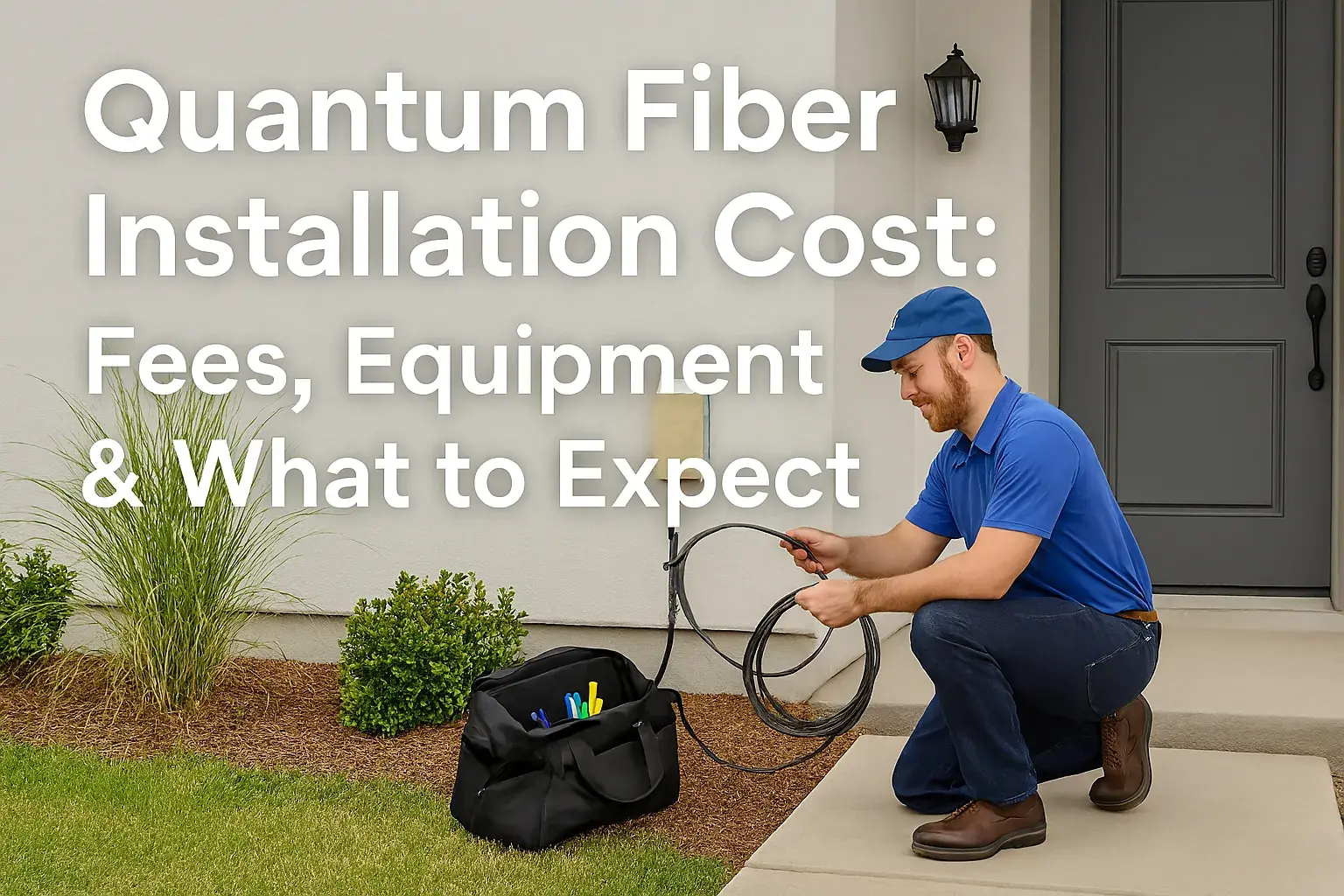
The installation process typically involves an external technician bringing the fibre line from the street to your house, drilling a small hole to enter, installing the ONT, and then an internal technician (or the same one) setting up the router and testing the connection. The entire process can take anywhere from 2 to 4 hours, depending on the complexity.
Alternatives to Fibre Optic Internet
If fibre optic internet isn't yet available at your home, several other technologies can provide reliable internet access, though often with different performance characteristics. As of 2025-26, these are the most common alternatives:
5G Home Internet
Leveraging the latest generation of mobile network technology, 5G home internet offers wireless broadband directly to your home. It can provide speeds comparable to or exceeding older fibre technologies, with speeds often ranging from 50 Mbps to over 1 Gbps, depending on signal strength and network congestion. Installation is usually simple, often involving just plugging in a receiver device.
- Pros: Fast speeds, easy setup, no physical cables to your home, often competitive pricing.
- Cons: Availability is still expanding, speeds can fluctuate based on signal and network load, may have data caps or speed throttling after certain usage.
Cable Internet
Cable internet uses the same coaxial cable network that delivers cable television. It's a widely available technology that offers significantly faster speeds than DSL, with plans commonly reaching up to 1 Gbps in many areas. It's a popular choice for households that don't have fibre but need more than basic internet.
- Pros: Widely available, offers high speeds, generally reliable.
- Cons: Speeds can be affected by neighbourhood usage (shared bandwidth), latency can be higher than fibre.
DSL Internet
Digital Subscriber Line (DSL) internet uses existing copper telephone lines to transmit data. While it's been around for a long time, advancements have improved its speeds, with some VDSL (Very-high-bit-rate DSL) plans offering speeds up to 100 Mbps or more. However, speeds decrease significantly the farther you are from the local telephone exchange.
- Pros: Widely available due to existing phone lines, often the most affordable option.
- Cons: Significantly slower than fibre, cable, or 5G; performance degrades with distance from the exchange; can be affected by phone line quality.
Satellite Internet
Satellite internet is an option for very remote or rural areas where terrestrial broadband is unavailable. A satellite dish at your home communicates with a satellite in orbit, which then connects to an internet gateway. Newer satellite services, like Starlink, have significantly reduced latency and increased speeds compared to older satellite technologies.
- Pros: Available almost anywhere with a clear view of the sky.
- Cons: Historically high latency, speeds can be inconsistent, susceptible to weather interference, often has data caps and can be expensive. Newer services are improving these aspects.
When considering alternatives, always check the specific plans and availability for your address, as performance and pricing can vary greatly.
The Future of Connectivity: Beyond Fibre
While fibre optic internet is the current gold standard, the pursuit of even faster and more ubiquitous connectivity continues. Research and development are pushing boundaries with technologies like:
- Next-Generation Fibre (e.g., 100 Gbps and beyond): While 1 Gbps is common for consumers, research into terabit-per-second speeds is ongoing for backbone networks and specialized enterprise applications.
- Advanced Wireless Technologies: Beyond 5G, the development of 6G is already underway, promising even higher speeds, lower latency, and the ability to connect a massive number of devices, potentially blurring the lines between wired and wireless performance.
- Li-Fi (Light Fidelity): This emerging technology uses visible light to transmit data, offering potential for extremely high speeds and enhanced security in specific environments.
- Quantum Internet: While still in its nascent stages, a quantum internet aims to leverage quantum entanglement for ultra-secure communication and unprecedented computing power, though its widespread consumer application is decades away.
These advancements highlight a continuous drive towards seamless, high-capacity connectivity, making the initial step of securing fibre at home a vital foundation for future digital experiences.
Conclusion: Securing Your High-Speed Future
In the rapidly evolving digital landscape of 2025-26, confirming fibre optic internet availability at your house is more than just a technical check; it's an investment in your home's future connectivity. By utilizing online checkers, contacting ISPs directly, and understanding the factors influencing availability, you can accurately determine your access to this transformative technology. Fibre optic internet offers unparalleled speeds, reliability, and low latency, essential for remote work, immersive entertainment, advanced education, and the growing ecosystem of smart home devices. If fibre isn't yet available, exploring high-quality alternatives like 5G home internet or robust cable connections can still provide excellent performance. Don't wait to upgrade your connection; take the proactive steps outlined in this guide to ensure your home is equipped for the demands of today and the innovations of tomorrow. Check your fibre availability now and unlock a world of faster, more reliable internet.