How deep is AT&T fiber?
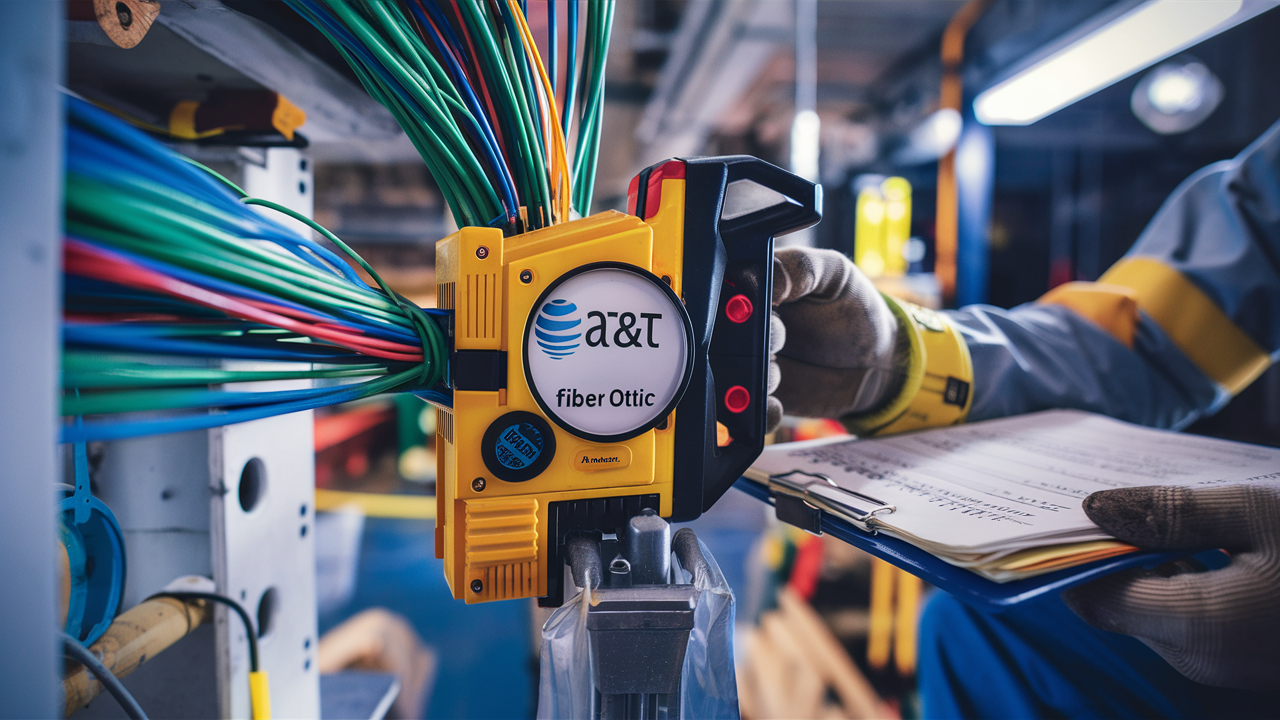
Discover the true depth of AT&T Fiber's network and understand precisely how far its lightning-fast internet reaches. This comprehensive guide clarifies the physical infrastructure, technological underpinnings, and service availability, empowering you to make informed decisions about your home internet connection in 2025-26.
Understanding AT&T Fiber Infrastructure
AT&T Fiber represents a significant investment in the future of internet connectivity, leveraging the power of fiber optic technology to deliver unparalleled speeds and reliability. Unlike traditional copper-based networks, fiber optics utilize thin strands of glass or plastic to transmit data as pulses of light. This fundamental difference is key to understanding the "depth" and capabilities of AT&T's fiber network.
The Core Technology: Fiber Optics
At its heart, AT&T Fiber relies on Fiber-to-the-Premises (FTTP) architecture. This means that fiber optic cables are run directly from AT&T's central offices or local distribution points all the way to individual homes or businesses. This direct connection is crucial. It eliminates the need for older, slower technologies like DSL (Digital Subscriber Line), which often uses existing copper telephone lines that degrade signal quality over distance.
How Light Travels: The Physics of Fiber
Fiber optic cables are constructed with a core, a cladding, and a protective outer jacket. The core is the central pathway for light. The cladding surrounds the core and has a lower refractive index, causing light signals to reflect internally within the core through a process called total internal reflection. This phenomenon allows light signals to travel vast distances with minimal signal loss, or attenuation. This is a stark contrast to electrical signals in copper wires, which are susceptible to electromagnetic interference and resistance, leading to signal degradation over shorter distances.
The AT&T Network Architecture
AT&T's fiber network is a complex, multi-layered system designed for scalability and efficiency. It begins with high-capacity fiber backbone networks that connect major cities and regions. From these backbones, fiber optic lines are extended to local neighborhoods and then, in an FTTP model, directly to individual customer premises.
Key Components of the AT&T Fiber Network:
- Backbone Fiber: These are the primary arteries of the internet, carrying massive amounts of data across long distances. AT&T has a substantial fiber backbone network, underpinning its entire service offering.
- Distribution Fiber: From the backbone, fiber lines are routed to local points of presence (PoPs) or neighborhood cabinets.
- Feeder Fiber: This segment connects the PoPs to smaller distribution points closer to residential areas.
- Drop Fiber: This is the final leg of the journey, the fiber optic cable that runs from the street or a nearby utility pole directly into your home or apartment building. This is the "last mile" connection that directly impacts your service speed and reliability.
Understanding "Depth" in Fiber Networks
When we talk about the "depth" of AT&T Fiber, we're not referring to how far underground the cables are buried, although that is a practical consideration for installation. Instead, "depth" in this context refers to how close the fiber optic infrastructure gets to the end-user. A "deep" fiber deployment means the fiber optic cable reaches the customer's premises directly (FTTP). A shallower deployment might use fiber to a neighborhood node, and then copper for the final connection (Fiber-to-the-Curb or Fiber-to-the-Building), which limits speeds.
FTTP: The Deepest Reach
AT&T's commitment to FTTP is what allows it to offer the highest speeds and most consistent performance. By bringing fiber all the way to the home, it minimizes signal degradation and maximizes bandwidth potential. This direct connection is the defining characteristic of AT&T's advanced fiber offering.
How Deep Does AT&T Fiber Actually Reach?
The question of "how deep" AT&T Fiber reaches is best answered by understanding its deployment strategy, which prioritizes bringing fiber optic cables directly to the customer's premises whenever feasible. This means that in areas where AT&T Fiber is available, the fiber optic cable typically extends all the way to your home or apartment building.
Direct-to-Home (FTTP) Deployment
AT&T's primary strategy for its highest-tier internet services is Fiber-to-the-Premises (FTTP). In an FTTP deployment, the fiber optic cable is run from AT&T's local network infrastructure (such as a neighborhood node or distribution point) directly to the individual residential unit. This "deep" penetration ensures that the fiber optic signal experiences minimal attenuation and interference before reaching your modem or router.
Installation Process: Bringing Fiber to Your Door
During installation, AT&T technicians will run a fiber optic cable from the nearest available fiber connection point (which could be a utility pole, an underground conduit, or a nearby junction box) to your home. This cable is then brought inside, typically through a small drilled hole, and connected to an Optical Network Terminal (ONT). The ONT is the device that converts the optical signal into an electrical signal that your router and devices can use. The "depth" here is literally the physical length of this final fiber drop, which is designed to be as direct and short as possible to maintain signal integrity.
Variations in "Depth" and Availability
While AT&T aims for FTTP, the actual "depth" of their fiber deployment can vary based on several factors, including:
- Geographic Location: Urban and suburban areas with higher population densities are often prioritized for FTTP deployment due to the economic efficiency of running fiber to multiple homes in close proximity.
- Existing Infrastructure: The availability of existing conduit, utility poles, or easements can influence how easily and deeply fiber can be extended.
- Rollout Phases: AT&T's fiber expansion is an ongoing process. Not all areas have been upgraded to FTTP simultaneously. Some areas might still be served by older technologies or a hybrid approach.
Understanding Service Availability Maps
The most accurate way to determine how deep AT&T Fiber reaches *your specific location* is to check AT&T's official service availability maps on their website. These tools use your address to confirm whether FTTP service is currently offered or planned for your area. If FTTP is available, it means the fiber optic cable is indeed reaching your premises directly.
The "Last Mile" is Key
The "last mile" is the critical segment of the network that connects the broader network infrastructure to individual end-users. For AT&T Fiber, a true FTTP deployment means the last mile is comprised entirely of fiber optic cable. This is the deepest possible reach for fiber optic technology to a residential customer, enabling the highest potential speeds.
What if Fiber isn't FTTP at Your Address?
In some cases, AT&T might offer fiber-based services that are not full FTTP. This could include Fiber-to-the-Curb (FTTC) or Fiber-to-the-Building (FTTB). In these scenarios, fiber optic cables run to a neighborhood node or the base of an apartment building, but the final connection to individual homes might still use older copper wiring. While these solutions are generally faster than pure DSL, they do not offer the same peak performance as FTTP because the copper segment introduces limitations.
Factors Influencing AT&T Fiber Availability
The availability of AT&T Fiber at a specific address is not arbitrary. It's the result of a complex interplay of technological, economic, regulatory, and logistical factors. Understanding these elements helps to explain why some neighborhoods have access to cutting-edge fiber while others may not, and it sheds light on the practical "depth" of AT&T's network deployment.
Infrastructure Investment and Cost
Deploying fiber optic networks, especially FTTP, is a capital-intensive undertaking. AT&T must weigh the significant costs of trenching, laying cable, securing permits, and connecting individual premises against the potential revenue from subscribers in a given area. Areas with higher population density and higher average household incomes are often prioritized because they offer a more predictable return on investment.
Geographic Density and ROI
Running fiber to every single home in a sprawling rural area is significantly more expensive per household than in a dense urban neighborhood. AT&T, like other providers, tends to focus its deepest fiber deployments in areas where it can connect the most customers efficiently. This is why you often see more widespread fiber availability in cities and their immediate suburbs.
Regulatory Environment and Permitting
The process of obtaining permits to dig trenches, attach cables to utility poles, or access existing underground infrastructure can be a significant bottleneck. Regulations vary widely by municipality and state. Some areas have streamlined permitting processes that encourage broadband expansion, while others have complex, time-consuming, and costly requirements that can slow down or even halt deployment.
Local Ordinances and Pole Attachments
Agreements with local governments and utility companies are essential. Negotiating rights-of-way and pole attachment fees can be complex and time-consuming. The ease or difficulty of these negotiations directly impacts how quickly and deeply AT&T can extend its fiber network.
Competition and Market Dynamics
The competitive landscape plays a crucial role. In areas where AT&T faces strong competition from other providers offering high-speed internet (whether fiber, cable, or fixed wireless), it may accelerate its fiber deployment to maintain market share. Conversely, in areas with limited competition, the urgency to deploy deep fiber might be less pronounced.
Strategic Network Upgrades
AT&T often strategically upgrades its network in areas where it sees future growth potential or where its existing infrastructure is aging. This can involve replacing older copper lines with fiber or extending existing fiber routes to new developments.
Technological Limitations and Site Surveys
While fiber optic technology itself can transmit data over very long distances with minimal loss, the practical "depth" of deployment is limited by the physical installation process and the availability of connection points. Site surveys are conducted to assess the feasibility of running fiber to a particular property, considering factors like terrain, existing utilities, and property boundaries.
Underground vs. Aerial Deployment
The method of deployment—underground trenching or aerial installation on utility poles—also affects availability and cost. Underground deployment is often more aesthetically pleasing and less susceptible to weather damage but is typically more expensive and time-consuming. Aerial deployment is faster and cheaper but can be impacted by weather and visual clutter.
The Role of Government Initiatives
Federal, state, and local government initiatives aimed at expanding broadband access, particularly in underserved rural areas, can also influence AT&T's deployment decisions. Grants and subsidies can help offset the high costs associated with extending fiber to less populated regions, effectively increasing the "depth" of service in those areas.
Broadband Infrastructure Funding
Programs like the BEAD (Broadband Equity, Access, and Deployment) program in the United States provide significant funding to close the digital divide. AT&T may leverage these funds to extend its fiber network into areas that would otherwise be economically unviable for private investment alone.
AT&T Fiber vs. Competitors: Reach and Depth
When evaluating internet service providers, understanding the physical reach and technological depth of their networks is paramount. AT&T Fiber, with its strong emphasis on Fiber-to-the-Premises (FTTP), often distinguishes itself from competitors whose networks might rely on older technologies or hybrid approaches for the final connection to the home.
AT&T Fiber's FTTP Advantage
AT&T's commitment to FTTP means that in areas where its fiber service is available, the fiber optic cable typically extends directly to your home. This is the deepest possible reach for fiber optic technology to a residential customer, offering the highest potential for symmetrical upload and download speeds, ultra-low latency, and superior reliability. This direct connection is AT&T's primary differentiator in terms of network depth.
Speed and Performance Comparison
This direct fiber connection allows AT&T to offer speeds that are often unmatched by competitors relying on older infrastructure. For instance, plans offering 1 Gig (1000 Mbps) symmetrical speeds are a common offering with AT&T Fiber, meaning both your download and upload speeds are equally fast. This is crucial for activities like video conferencing, online gaming, and uploading large files.
Competitor Network Architectures
Competitors employ a variety of network architectures, each with its own implications for reach and depth:
Cable Internet Providers (e.g., Xfinity, Spectrum)
Cable providers use coaxial cable networks originally designed for cable television. While they have upgraded these networks to deliver high-speed internet, the technology is inherently different from fiber. In most cable networks, fiber optic cables run to a neighborhood node, and then coaxial cable is used for the final connection to individual homes (often referred to as HFC - Hybrid Fiber-Coaxial). This means the "depth" of fiber is limited to the neighborhood node, and the coaxial cable segment can be a bottleneck for achieving the highest symmetrical speeds and can be more susceptible to congestion during peak usage times.
DSL Providers (e.g., CenturyLink/Quantum Fiber, Verizon DSL)
Digital Subscriber Line (DSL) technology utilizes existing copper telephone lines. While some providers have upgraded their DSL networks to offer faster speeds (like VDSL - Very High-speed DSL), the fundamental limitation remains the copper infrastructure. The further a home is from the provider's central office or local equipment, the weaker the signal becomes, leading to significantly slower speeds and higher latency. DSL's "depth" is limited by the physical distance over copper, making it the least capable technology for delivering gigabit-level speeds.
Fixed Wireless and 5G Home Internet
Providers offering Fixed Wireless or 5G Home Internet use radio waves to transmit data wirelessly from a tower to a receiver at the customer's home. The "depth" of these services is determined by the range and capacity of the wireless signal. While these can be good options in areas where wired infrastructure is lacking, they are generally more susceptible to environmental factors (weather, obstructions) and can have higher latency and more variable speeds compared to wired fiber connections.
Comparing Network Depth: A Table
The following table illustrates the typical network depth and its implications for speed and reliability:
| Provider Type | Typical "Depth" of Fiber | Final Connection Technology | Typical Max Download Speed (2025-26) | Typical Max Upload Speed (2025-26) | Latency |
|---|---|---|---|---|---|
| AT&T Fiber (FTTP) | To the Home/Premises | Fiber Optic | 1,000 Mbps - 5,000 Mbps+ | 1,000 Mbps - 5,000 Mbps+ | Very Low (5-15 ms) |
| Cable (HFC) | To the Neighborhood Node | Coaxial Cable | Up to 1,000 Mbps - 2,000 Mbps | Up to 50 Mbps - 100 Mbps | Low (15-30 ms) |
| DSL (VDSL) | To the Central Office/Local Cabinet | Copper Telephone Line | Up to 100 Mbps - 300 Mbps (distance dependent) | Up to 10 Mbps - 20 Mbps (distance dependent) | Moderate (30-70 ms) |
| Fixed Wireless/5G Home | N/A (Wireless Link) | Radio Waves | Up to 300 Mbps - 1,000 Mbps (variable) | Up to 50 Mbps - 100 Mbps (variable) | Moderate to High (20-80 ms) |
Implications for Users
AT&T Fiber's deep FTTP deployment generally translates to a superior internet experience for demanding users. The symmetrical speeds are invaluable for content creators, remote workers, and households with multiple users simultaneously consuming bandwidth. The lower latency is critical for real-time applications like online gaming and video conferencing, providing a smoother, more responsive experience. While cable providers are improving their networks, the inherent limitations of coaxial cable for the final connection mean they often cannot match the peak performance of true fiber-to-the-home services.
Technological Considerations for Fiber Depth
The "depth" of AT&T Fiber's network, meaning how close fiber optic cables come to your premises, is not just a matter of deployment strategy but also heavily influenced by the underlying technological capabilities and limitations of fiber optics and the associated network equipment.
Signal Integrity and Attenuation
Fiber optic cables are remarkably efficient at transmitting light signals over long distances with minimal loss. This phenomenon is known as low attenuation. Unlike electrical signals in copper wires, which degrade due to resistance and electromagnetic interference, light signals in fiber are contained within the core through total internal reflection. This allows AT&T to extend fiber much further and with greater signal strength than is possible with copper.
The Role of Optical Network Terminals (ONTs)
At the customer's premises, an Optical Network Terminal (ONT) is the device that terminates the fiber optic cable and converts the light signals into electrical signals that your router and devices can understand. The quality and capabilities of the ONT are crucial for maintaining the integrity of the signal delivered to your home. AT&T's FTTP deployment ensures that the fiber connection reaches this ONT, maximizing the benefit of the fiber optic medium.
Bandwidth Capacity of Fiber
Fiber optic cables have an almost limitless bandwidth capacity. This means that as technology advances, the same physical fiber optic cables can be used to deliver ever-increasing speeds simply by upgrading the equipment at either end of the connection. This inherent scalability is a key reason why AT&T invests so heavily in fiber. The "depth" of the fiber network is less about the physical limitations of the cable itself and more about the cost and logistics of extending it to each location.
Future-Proofing the Network
By deploying fiber to the home, AT&T is essentially future-proofing its network. Even if current speeds are "only" 1 Gbps, the infrastructure is in place to support 10 Gbps, 100 Gbps, and beyond as the technology evolves and demand increases. This contrasts sharply with copper-based networks, which have inherent physical limitations that are much harder and more expensive to overcome.
The Impact of Splice Points and Connectors
While fiber is robust, every splice point (where two fiber cables are joined) and connector can introduce a small amount of signal loss. Network engineers meticulously plan fiber routes to minimize the number of these points. In an FTTP deployment, the number of splices and connectors between the main distribution point and your home is carefully managed to ensure optimal signal strength. The "depth" of the fiber installation is therefore optimized to balance cost and performance, ensuring the signal remains strong upon arrival.
Types of Fiber Optic Connectors
Common connectors like SC, LC, and MPO are used in fiber optic networks. The quality of these connectors and the precision of their installation are critical. AT&T technicians are trained to ensure these connections are made with minimal signal loss, contributing to the overall reliability and performance of the deep fiber connection.
Active vs. Passive Optical Networks (PON)
AT&T Fiber typically utilizes Passive Optical Network (PON) technology. In a PON system, a single fiber optic cable from the provider's central office is split to serve multiple customers. The "passive" aspect means that no active electronic components (like amplifiers or repeaters) are needed between the central office and the customer's home. This significantly reduces the cost, complexity, and maintenance requirements of the network, allowing for deeper and more widespread fiber penetration. The splitting ratio and the distance from the optical line terminal (OLT) at the provider's end to the ONTs at the customer's end define the reach and "depth" of the PON segment.
GPON and XG-PON Standards
AT&T primarily uses standards like Gigabit Passive Optical Network (GPON) and increasingly XG-PON (10 Gigabit PON) and XGS-PON (10 Gigabit Symmetric PON). These standards define the data rates and efficiency of the PON system. The choice of PON technology impacts the maximum speeds achievable and the number of users that can be served by a single fiber line, influencing the overall "depth" and capacity of the network.
Equipment and Installation Considerations
The actual physical installation of fiber optic cable, whether aerial or underground, presents its own set of technological challenges and considerations. The type of cable used, its protection, and the methods of deployment all influence how "deeply" the fiber can be laid and maintained.
Buried vs. Aerial Cable
Underground fiber is generally more protected from physical damage and environmental factors, but installation is more costly and time-consuming. Aerial fiber, strung on utility poles, is faster and cheaper to deploy but is more vulnerable. AT&T utilizes both methods depending on the local infrastructure and terrain. The "depth" of underground fiber is determined by trenching depth (typically 18-36 inches), while aerial fiber's "depth" is its physical proximity to the ground.
Planning and Deployment of AT&T Fiber
The process by which AT&T plans and deploys its fiber optic network is a sophisticated operation designed to maximize reach and efficiency while delivering high-speed internet to as many customers as possible. Understanding this process provides insight into the practical "depth" of their network and the strategic decisions behind its expansion.
Strategic Network Design and Engineering
Before any digging begins, AT&T engages in extensive network design and engineering. This involves analyzing demographic data, existing infrastructure, competitive landscapes, and projected demand to identify areas ripe for fiber deployment. Engineers determine the optimal placement of central offices, neighborhood nodes, and the routes for fiber optic cables.
GIS Mapping and Data Analysis
Geographic Information System (GIS) mapping plays a crucial role. AT&T uses sophisticated GIS tools to visualize existing infrastructure (roads, utility poles, underground conduits), property boundaries, and customer locations. This data allows them to meticulously plan the most efficient routes for laying new fiber, minimizing disruption and cost while maximizing the number of potential connections. This planning dictates the ultimate "depth" of fiber penetration into neighborhoods.
Permitting and Rights-of-Way
A significant hurdle in any network deployment is securing the necessary permits and rights-of-way. AT&T must negotiate with local municipalities, state transportation departments, and private property owners to gain permission to install its fiber optic cables. This can involve:
- Public Rights-of-Way: Using easements along public roads and sidewalks.
- Private Rights-of-Way: Obtaining permission to cross private property, which can be more complex.
- Utility Pole Attachments: Negotiating agreements with electric and telecom companies to attach fiber cables to existing poles.
The complexity and duration of these permitting processes can significantly influence the pace and "depth" of AT&T's fiber expansion.
Construction and Installation Methods
Once permits are secured, the physical construction phase begins. AT&T employs various methods to install fiber optic cables, depending on the environment:
Trenching and Directional Boring
For underground deployments, AT&T uses trenching machines to dig open trenches where cables are laid, or directional boring equipment to create underground pathways without disturbing the surface significantly. Directional boring is often preferred in urban areas or environmentally sensitive locations. The depth of trenching is typically between 18 and 36 inches, ensuring protection for the fiber optic cables.
Aerial Deployment
In many areas, particularly in suburban and rural settings, AT&T utilizes existing utility poles to deploy fiber cables aerially. This method is generally faster and less expensive than underground installation. Technicians carefully string the fiber optic cables, ensuring they are properly tensioned and secured.
Micro-trenching
A newer technique, micro-trenching, involves cutting a very narrow, shallow slit in the pavement (typically 1-2 inches wide and 12-18 inches deep) and blowing or pushing the fiber optic cable into it. This is a faster and less disruptive method than traditional trenching, allowing for quicker expansion of fiber depth in certain paved areas.
Connecting to the Premises (The "Last Mile")
The final stage of deployment involves bringing the fiber optic cable from the nearest distribution point to the individual customer's home or business. This is the critical "last mile" connection that determines the ultimate "depth" of fiber service for that specific location.
Fiber Drop Installation
Technicians install a "drop" cable, which is a smaller, more flexible fiber optic cable, from a nearby aerial strand or underground splice point directly to the customer's building. This cable is then brought inside the premises and connected to an Optical Network Terminal (ONT). The length and routing of this drop cable are carefully managed to ensure signal integrity.
Testing and Activation
After installation, rigorous testing is performed to ensure the fiber optic cable is functioning correctly and that the signal strength is within optimal parameters. This includes testing for light levels, continuity, and potential breaks or faults. Once testing is complete, the service is activated for the customer.
Quality Assurance
AT&T implements quality assurance measures throughout the deployment process to ensure that the network is built to high standards. This includes regular inspections of construction work and verification of connection quality. This commitment to quality ensures that the "depth" of their fiber deployment translates into a reliable and high-performing service for customers.
Real-World Impact of Fiber Depth on Your Internet
The "depth" of AT&T Fiber's network—how close the fiber optic cable comes to your home—has a profound and tangible impact on your daily internet experience. It's not just about theoretical speeds; it's about the practical performance you'll notice when streaming, gaming, working from home, or managing a connected household.
Speed and Bandwidth Consistency
The most immediate impact of deep fiber deployment (FTTP) is consistent, high-speed internet. Because the fiber optic cable runs directly to your premises, the signal experiences minimal degradation. This means you are far more likely to achieve the advertised speeds, both for downloads and uploads, even during peak usage hours when many people in your neighborhood are online.
Symmetrical Speeds for Productivity
A key benefit of AT&T's FTTP is the availability of symmetrical upload and download speeds. For example, a 1 Gbps fiber plan typically offers 1 Gbps download *and* 1 Gbps upload. This is crucial for:
- Video Conferencing: Clearer, more stable video calls with less lag.
- Cloud Backups: Rapidly uploading large files or entire backups to cloud storage.
- Content Creation: Uploading videos, podcasts, or large project files to platforms.
- Online Gaming: Faster reaction times and smoother gameplay.
Competitors using hybrid networks (fiber to the node, then copper) often have significantly lower upload speeds, limiting these activities.
Latency and Responsiveness
Latency, often referred to as ping, is the time it takes for data to travel from your device to a server and back. Fiber optic networks inherently offer very low latency due to the speed of light and the efficiency of the medium. The "depth" of the fiber connection directly contributes to this:
- Online Gaming: Lower latency means quicker responses to your actions in games, giving you a competitive edge. High latency can result in "lag," making games unplayable.
- Video Calls: Reduced delay between speaking and being heard, leading to more natural conversations.
- Real-time Applications: Smoother performance for stock trading platforms, remote desktop access, and other time-sensitive applications.
Even a few milliseconds of difference can be noticeable in demanding online activities.
Reliability and Uptime
Fiber optic cables are more durable and less susceptible to interference than copper wires. They are not affected by electromagnetic interference from appliances, power lines, or even lightning strikes in the same way copper is. This leads to a more stable and reliable internet connection.
Weather Resilience
While extreme weather can impact aerial fiber installations (e.g., high winds), underground fiber is largely protected. The direct fiber connection to your home means fewer points of failure compared to networks that rely on multiple segments of different technologies. This translates to fewer service outages and more consistent uptime.
Capacity for Future Demands
The inherent bandwidth capacity of fiber means that as new internet-dependent technologies emerge and your household's needs grow, your AT&T Fiber connection is likely to keep up. The "depth" of the fiber network ensures that the infrastructure is in place to support higher speeds and more data-intensive applications as they become mainstream in the coming years.
Supporting Smart Homes and IoT
Modern smart homes rely on numerous connected devices (IoT - Internet of Things). Deep fiber deployment provides the necessary bandwidth and low latency to reliably connect and manage multiple devices simultaneously, from smart thermostats and security cameras to voice assistants and streaming devices, without performance degradation.
Troubleshooting and Maintenance
When issues do arise, the direct fiber connection can sometimes simplify troubleshooting. Technicians can more easily isolate problems to the customer premises equipment or the final fiber drop. The overall robustness of the fiber infrastructure means fewer service calls related to signal degradation or intermittent connectivity.
Example Scenario:
Imagine two households in the same neighborhood in 2025. Household A has AT&T Fiber (FTTP), offering 1 Gbps symmetrical speeds. Household B has a cable internet plan advertised at 1 Gbps download but only 50 Mbps upload, with fiber running only to the curb. When both households decide to upload a 10 GB video file to a cloud service:
- Household A (AT&T Fiber): With 1000 Mbps upload, the file could upload in approximately 1.5 to 2 minutes.
- Household B (Cable): With 50 Mbps upload, the same file could take 25 to 30 minutes or longer, assuming no network congestion.
This difference highlights the practical, real-world impact of the "depth" of fiber deployment on everyday tasks.
Future Trends in Fiber Network Expansion
The telecommunications industry, and AT&T in particular, is continually evolving its approach to fiber network expansion. As technology advances and demand for faster, more reliable internet grows, we can anticipate several key trends that will shape the future "depth" and reach of AT&T Fiber and similar networks in the coming years (2025-2027 and beyond).
Accelerated FTTH Deployment
The trend towards Fiber-to-the-Home (FTTH) is undeniable and will likely accelerate. Providers recognize that FTTH offers the most robust and future-proof solution. Expect AT&T to continue prioritizing the extension of fiber optic cables directly to residential premises, pushing the "depth" of their fiber network into more suburban and even some rural areas. This is driven by increasing consumer demand for higher speeds and the competitive necessity to offer the best possible service.
Increased Investment in Underserved Areas
With government initiatives like the BEAD program and growing awareness of the digital divide, there's a strong push to bring high-speed broadband to underserved and unserved rural communities. AT&T, along with other providers, is likely to leverage these funding opportunities to extend its fiber network into areas that were previously considered economically unviable. This will significantly increase the geographic "depth" of fiber availability.
Advancements in PON Technology
Passive Optical Network (PON) technology, which AT&T heavily relies on, will continue to evolve. We'll see a wider adoption of faster PON standards:
- XGS-PON (10 Gigabit Symmetric PON): This technology allows for symmetrical 10 Gbps download and upload speeds over a single fiber. AT&T is already deploying and upgrading to XGS-PON in many areas, offering unprecedented speeds.
- NG-PON2 (Next-Generation PON): This even more advanced standard offers multiple wavelengths on a single fiber, enabling even higher capacities and more flexible service offerings.
These advancements mean that the same physical fiber infrastructure can support significantly higher speeds, further enhancing the value of deep fiber deployments.
Increased Use of Micro-trenching and Innovative Installation Techniques
To reduce the cost and disruption associated with fiber deployment, providers are increasingly adopting innovative installation methods. Micro-trenching, for example, allows for faster deployment in paved areas with minimal surface impact. Other techniques like "blowing" fiber through existing conduits or using robotic cable layers will become more common. These methods enable quicker and more cost-effective expansion of fiber's "depth" into new areas.
Focus on Aerial Fiber Deployment Efficiency
In areas where aerial deployment is feasible, expect continued efforts to streamline the process. This includes better coordination with utility companies and the use of advanced equipment to speed up the stringing of fiber optic cables along existing poles. This approach helps maintain a competitive pace of expansion.
The Role of 5G and Fiber Convergence
While 5G home internet offers a wireless alternative, it often relies on a robust fiber backhaul network. As 5G networks become more dense, the demand for fiber optic connectivity to cell towers will increase. This synergy means that AT&T's continued investment in fiber infrastructure not only supports its wired broadband services but also underpins its wireless network expansion, potentially leading to more integrated and efficient network planning.
Fiber as the Backbone for Wireless
The high capacity and low latency of fiber are essential for supporting the advanced capabilities of 5G, especially for applications like network slicing and ultra-reliable low-latency communication (URLLC). This interdependence will likely drive further fiber deployment, even in areas where the primary focus might appear to be wireless.
Smart City Initiatives and Enterprise Demand
The growth of smart city initiatives, the Internet of Things (IoT), and the increasing bandwidth demands from businesses will also fuel fiber expansion. These applications require the high capacity, low latency, and reliability that only deep fiber networks can provide. AT&T will continue to invest in fiber to meet the growing demands of enterprise clients and municipalities looking to build advanced infrastructure.
Increased Demand for Business Services
Businesses require robust connectivity for cloud computing, data analytics, and remote collaboration. The demand for dedicated fiber connections with guaranteed performance levels will continue to grow, pushing AT&T to expand its fiber footprint to commercial areas and industrial parks.
Consolidation and Partnerships
The competitive landscape may see further consolidation and strategic partnerships. Providers might collaborate on infrastructure build-outs to share costs and accelerate deployment, particularly in challenging or less profitable areas. This could lead to more widespread availability of fiber, effectively increasing its "depth" across broader regions.
In summary, the future of AT&T Fiber expansion points towards deeper penetration into more communities, leveraging advanced technologies like XGS-PON and innovative deployment methods to deliver unprecedented speeds and reliability. The focus remains on bringing the full power of fiber optics directly to the end-user.
Conclusion
In conclusion, the "depth" of AT&T Fiber refers to its commitment to Fiber-to-the-Premises (FTTP) deployment, meaning fiber optic cables are run directly to your home or business. This deep infrastructure is the cornerstone of its ability to deliver lightning-fast, symmetrical speeds, ultra-low latency, and unparalleled reliability. Factors like infrastructure investment, regulatory environments, and strategic planning dictate where this deep fiber network extends. While competitors may offer high speeds, AT&T's FTTP approach often provides a superior and more future-proof internet experience, especially for demanding users. As technology advances and deployment methods improve, AT&T is poised to continue expanding the reach and depth of its fiber network, ensuring that more households can benefit from the transformative power of true fiber optic connectivity in the years to come. To determine availability at your specific address, always consult AT&T's official service maps.