How can I get internet without fiber?
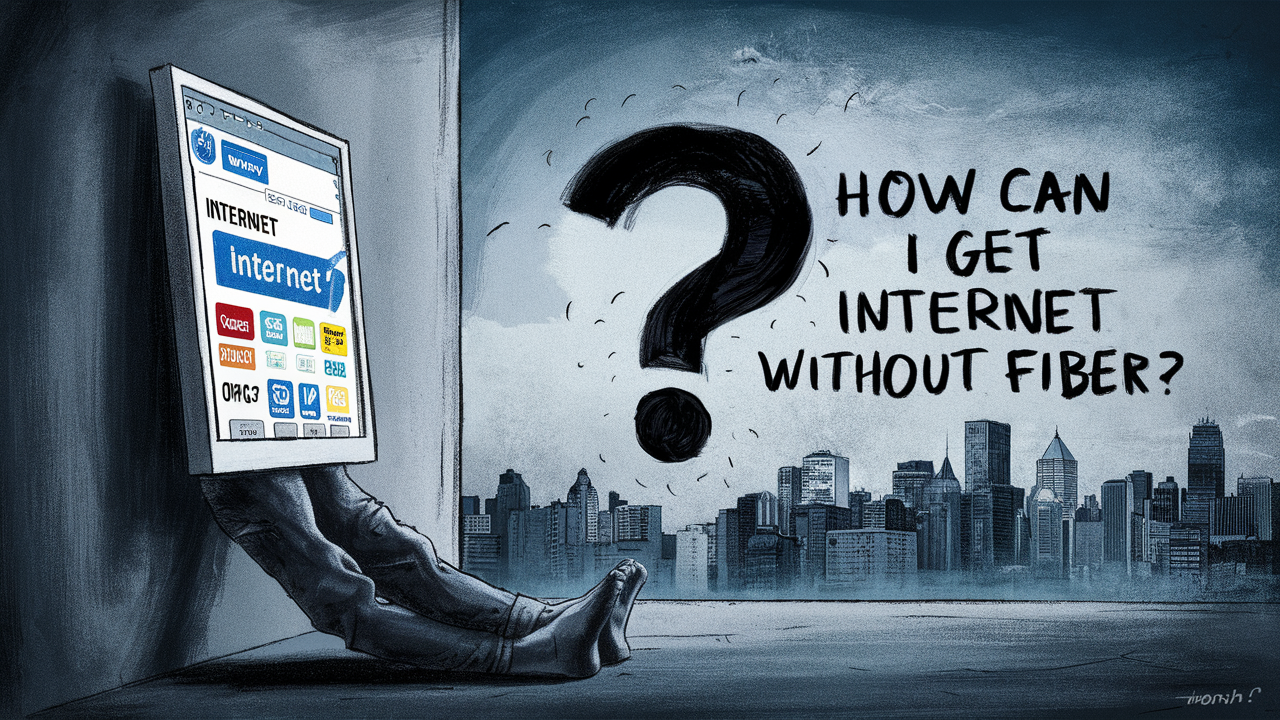
Struggling to get reliable internet without fiber optic access? This guide offers a comprehensive look at alternative solutions, from satellite and fixed wireless to 5G home internet, detailing their pros, cons, and suitability for your needs. Discover the best options available in 2025-26.
Understanding Your Internet Options Beyond Fiber
Fiber optic internet is often lauded as the gold standard for speed and reliability, but its widespread availability remains a significant challenge, particularly in rural or underserved areas. For many households, the question isn't "how fast can I get fiber?" but rather, "how can I get internet without fiber?" This is a common predicament, and thankfully, a variety of robust alternatives exist. In 2025-26, the landscape of non-fiber internet solutions is more diverse and capable than ever before. This guide delves into these options, equipping you with the knowledge to make an informed decision based on your location, budget, and usage needs. We'll explore satellite, fixed wireless, 5G home internet, and even the enduring relevance of DSL and cable, analyzing their strengths, weaknesses, and how they stack up against each other.
The core challenge in many regions is the sheer cost and complexity of deploying fiber optic cables. Laying fiber requires extensive trenching, permits, and specialized labor, making it economically unfeasible for providers to extend networks to every single home. This infrastructure gap leaves millions reliant on older or less advanced technologies. However, advancements in wireless technologies and satellite constellations have dramatically improved the performance and accessibility of non-fiber internet. Understanding these alternatives is crucial for ensuring you have the connectivity you need for work, education, entertainment, and staying connected with loved ones. Let's break down each of these viable solutions.
Satellite Internet: A Broad Reach Solution
Satellite internet has historically been the go-to solution for individuals in extremely remote locations where terrestrial infrastructure is virtually non-existent. It works by transmitting data signals between a satellite dish installed at your home and a satellite orbiting Earth, which then communicates with a ground station connected to the internet backbone. This technology offers unparalleled reach, making it accessible almost anywhere with a clear view of the sky.
How Satellite Internet Works
The process involves a few key components: your satellite dish, a modem, and the satellite itself. When you request data (e.g., load a webpage), your modem sends a signal to your dish. The dish then beams this signal up to a geostationary satellite (GEO) or, increasingly, a low Earth orbit (LEO) satellite. This satellite relays the request to a ground station, which fetches the data from the internet and sends it back via the satellite to your dish and modem. The latency, or delay, is a critical factor here. Traditional GEO satellites are about 22,000 miles away, leading to noticeable delays in real-time applications like online gaming or video conferencing. Newer LEO satellite constellations, like Starlink, orbit much closer to Earth (a few hundred miles), significantly reducing latency and improving performance.
Pros of Satellite Internet
- Ubiquitous Availability: The primary advantage is its availability in virtually any location, regardless of how remote. If you can see the sky, you can likely get satellite internet.
- No Ground Infrastructure Needed: It bypasses the need for cables or towers running to your home, making it ideal for isolated properties.
- Improving Speeds (LEO): With the advent of LEO constellations, download and upload speeds have seen dramatic improvements, often rivaling some terrestrial options.
Cons of Satellite Internet
- Latency: Traditional GEO satellite internet suffers from high latency due to the vast distance the signal must travel, impacting real-time activities. LEO significantly mitigates this, but it's still a factor.
- Weather Sensitivity: Heavy rain, snow, or even dense cloud cover can interfere with the signal, causing temporary slowdowns or disconnections.
- Data Caps and Throttling: Many satellite plans come with strict data caps, and exceeding them can result in significantly reduced speeds or extra charges.
- Cost: Equipment can be expensive, and monthly service fees are often higher than comparable terrestrial plans.
- Installation Complexity: While not requiring cable burial, proper alignment of the dish is crucial and may require professional installation.
2025-26 Statistics and Trends
By 2025-26, LEO satellite internet providers like Starlink are expected to capture a significant portion of the market in underserved areas. Average download speeds for LEO services are projected to range from 50 Mbps to 200 Mbps, with some plans offering higher tiers. Latency is expected to be in the 20-50ms range, making it viable for most online activities. GEO satellite providers will likely continue to serve the most remote areas, offering speeds typically between 12 Mbps and 100 Mbps, but with higher latency (often 600ms+). Data caps remain a concern, with many plans offering 100GB to 500GB of high-speed data per month before throttling. The cost of equipment can range from $400 to $600, with monthly plans averaging $90-$120.
Example Scenario
A family living on a remote ranch in Montana, miles from the nearest town and without any cable or DSL service, finds satellite internet to be their only viable option. They opt for a LEO satellite service, which allows their children to attend online classes without interruption and enables them to stream movies in the evenings, despite occasional brief slowdowns during heavy storms. They closely monitor their data usage to avoid exceeding the monthly cap.
Fixed Wireless Internet: Bridging the Gap
Fixed wireless internet is a technology that delivers internet access wirelessly over radio waves from a fixed point (like a tower) to a receiver installed at your home or business. It's often seen as a middle ground between satellite and wired connections, providing a more robust solution than satellite for many users who aren't in direct fiber reach but are within range of a fixed wireless tower.
How Fixed Wireless Internet Works
Fixed wireless operates similarly to Wi-Fi but over much longer distances. A provider installs antennas on a tower or tall structure within a few miles of your location. A small antenna or dish is then installed on your roof or side of your house, pointed directly at the provider's tower. This antenna receives the internet signal and connects to your home network via an Ethernet cable. The key is line-of-sight: there needs to be a clear, unobstructed path between your receiver and the provider's tower for optimal performance. Obstacles like dense trees or hills can degrade or block the signal.
Pros of Fixed Wireless Internet
- Faster Speeds Than Satellite (Often): Typically offers higher download and upload speeds than traditional GEO satellite and can be competitive with LEO satellite, especially in areas with less congestion.
- Lower Latency Than Satellite: The shorter distance the signal travels results in significantly lower latency compared to satellite, making it better for real-time applications.
- More Affordable: Installation costs and monthly fees are often lower than satellite internet.
- No Data Caps (Often): Many fixed wireless providers offer unlimited data plans, which is a significant advantage for heavy internet users.
Cons of Fixed Wireless Internet
- Requires Line-of-Sight: Performance is heavily dependent on an unobstructed path between your home and the provider's tower.
- Limited Availability: While expanding, it's not as universally available as satellite. You need to be within a certain radius of a provider's tower.
- Susceptible to Interference: While less so than satellite to weather, heavy foliage or other obstructions can still impact signal quality.
- Speed Degradation with Distance: Speeds can decrease as you get further from the provider's tower.
2025-26 Statistics and Trends
The fixed wireless market is projected for significant growth in 2025-26, particularly in suburban and semi-rural areas. Providers are investing in upgrading their tower infrastructure to support higher frequencies and broader bandwidth. Average download speeds are expected to range from 25 Mbps to 150 Mbps, with upload speeds typically between 5 Mbps and 20 Mbps. Latency should generally be between 20ms and 70ms. Many providers are offering unlimited data plans, with monthly costs ranging from $60 to $100. Installation fees can vary from $50 to $200, depending on the complexity.
Example Scenario
A small business owner in a town with no fiber coverage, but with a fixed wireless provider tower nearby, opts for a fixed wireless connection. This allows their employees to reliably use cloud-based software, conduct video conferences without lag, and quickly upload large project files. The unlimited data plan is a crucial benefit for their business operations.
5G Home Internet: The Wireless Revolution
5G home internet leverages the latest generation of cellular technology to deliver broadband speeds directly to your home wirelessly. It's a relatively new but rapidly expanding option, offering a compelling alternative to traditional wired services, especially in areas where fiber is not yet deployed but cellular coverage is strong.
How 5G Home Internet Works
5G home internet uses the same 5G cellular network that powers smartphones. Providers install a small receiver/router device in your home that connects to the nearest 5G cell tower. This device then broadcasts a Wi-Fi signal throughout your home. The performance of 5G home internet can vary significantly depending on the type of 5G spectrum being used (low-band, mid-band, or high-band/mmWave) and the proximity to the tower. mmWave offers the fastest speeds but has a very limited range and is easily blocked. Mid-band offers a good balance of speed and coverage, while low-band provides wider coverage but with speeds closer to 4G LTE.
Pros of 5G Home Internet
- Potentially High Speeds: Capable of delivering very high download speeds, especially with mid-band and mmWave deployments, rivaling or exceeding many wired connections.
- Easy Setup: Typically involves plugging in a device; no professional installation or external dish is usually required.
- Competitive Pricing: Often offered at attractive monthly rates, sometimes with unlimited data.
- Growing Availability: Providers are aggressively expanding their 5G home internet offerings.
Cons of 5G Home Internet
- Availability Varies Greatly: Coverage is still expanding and can be inconsistent, even within the same city.
- Performance Depends on Spectrum: Speeds and reliability can vary significantly based on the type of 5G signal available in your area.
- Potential for Congestion: Like any cellular network, performance can degrade during peak usage times if the tower is overloaded.
- Limited Range of Indoor Routers: The built-in Wi-Fi might not cover very large homes without additional extenders.
2025-26 Statistics and Trends
5G home internet is expected to be a major growth area in 2025-26. Major carriers are expanding their mid-band 5G networks, which offer a good blend of speed and coverage. Average download speeds for 5G home internet are projected to be between 75 Mbps and 300 Mbps, with some premium plans pushing higher. Latency is expected to be low, typically in the 15-40ms range. Many plans offer unlimited data, with monthly costs ranging from $50 to $80. The cost of the 5G gateway device is often subsidized or included with a service contract.
Example Scenario
A young professional living in a suburban area that lacks fiber infrastructure subscribes to 5G home internet. They are impressed by the speeds, which allow them to download large files for work quickly and enjoy buffer-free streaming. The simple plug-and-play setup was a significant bonus, and they appreciate the competitive monthly price.
DSL and Cable: Traditional, But Still Relevant?
While the focus is often on newer technologies, it's important not to overlook the enduring presence of Digital Subscriber Line (DSL) and cable internet. These technologies have been around for decades but continue to provide service to millions, especially in areas where fiber deployment is slow or nonexistent. Their relevance in 2025-26 depends heavily on the specific implementation and the user's needs.
DSL (Digital Subscriber Line)
DSL internet uses existing copper telephone lines to transmit data. It splits the phone line into different frequencies, allowing for simultaneous phone calls and internet access. The closer you are to the telephone company's central office (CO), the faster your DSL speeds will be. VDSL (Very-high-bit-rate DSL) is a newer iteration that offers improved speeds over shorter distances.
Pros of DSL
- Wide Availability: Because it uses existing phone lines, DSL is available in many areas where other broadband options are not.
- Stable Connection: Generally less susceptible to interference than older dial-up technologies.
- Bundling Options: Often bundled with home phone services.
Cons of DSL
- Speed Limitations: Speeds are significantly lower than fiber, cable, or even modern fixed wireless and 5G.
- Distance Dependency: Performance degrades rapidly with distance from the CO.
- Upload Speeds: Typically much slower than download speeds.
2025-26 Statistics for DSL
DSL speeds in 2025-26 are expected to range from 5 Mbps to 100 Mbps for download, with upload speeds often being 1 Mbps to 10 Mbps. VDSL can push higher, but still lags behind newer technologies. Monthly costs are typically between $40 and $70. DSL is increasingly being phased out in favor of fiber or fixed wireless in many areas, but it remains a crucial option for some.
Cable Internet
Cable internet utilizes the same coaxial cable network that delivers cable television. It offers a shared bandwidth model, meaning your speed can be affected by the number of users in your neighborhood online at the same time. However, cable infrastructure has been significantly upgraded over the years.
Pros of Cable Internet
- Good Speeds: Offers significantly faster speeds than DSL, often competitive with entry-level fiber plans.
- Widespread Availability: Available in most urban and suburban areas.
- Reliability: Generally a stable and reliable connection, less prone to weather disruptions than satellite.
- Unlimited Data (Often): Many cable providers offer unlimited data plans.
Cons of Cable Internet
- Shared Bandwidth: Speeds can fluctuate during peak hours due to neighborhood usage.
- Latency: While better than satellite, latency can be higher than fiber or 5G.
- Installation: May require a technician visit to install or activate service.
2025-26 Statistics for Cable
In 2025-26, cable internet download speeds are expected to range from 50 Mbps to over 1 Gbps, with upload speeds typically ranging from 5 Mbps to 50 Mbps. Latency is generally between 15ms and 50ms. Monthly costs can vary widely, from $50 for basic plans to $100+ for gigabit speeds. Cable remains a strong contender for many households seeking a balance of speed, reliability, and cost.
Comparison Table: Non-Fiber Internet Options (2025-26 Estimates)
| Feature | Satellite (LEO) | Fixed Wireless | 5G Home Internet | Cable | DSL |
|---|---|---|---|---|---|
| Availability | Global (with clear sky) | Urban/Suburban, near towers | Urban/Suburban, strong 5G signal | Urban/Suburban | Widespread (near phone lines) |
| Download Speeds | 50-200 Mbps | 25-150 Mbps | 75-300 Mbps | 50 Mbps - 1 Gbps+ | 5-100 Mbps |
| Upload Speeds | 10-20 Mbps | 5-20 Mbps | 10-50 Mbps | 5-50 Mbps | 1-10 Mbps |
| Latency | 20-50 ms (LEO) | 20-70 ms | 15-40 ms | 15-50 ms | 30-100 ms |
| Data Caps | Common (100-500GB) | Rarely | Rarely | Rarely | Rarely |
| Weather Sensitivity | High | Moderate | Low | Low | Low |
| Typical Monthly Cost | $90-$120 | $60-$100 | $50-$80 | $50-$100+ | $40-$70 |
Choosing the Right Plan and Provider
Selecting the best internet service when fiber isn't an option involves a careful assessment of your specific circumstances. It's not just about the technology but also the provider, the plan details, and how well it aligns with your household's needs.
Assessing Your Needs
Before diving into provider comparisons, understand your internet usage patterns. Consider:
- Number of Users: How many people will be using the internet simultaneously?
- Primary Activities: Are you primarily streaming video, gaming, working from home, video conferencing, or just browsing and checking email?
- Device Count: How many devices (computers, smartphones, smart TVs, smart home devices) will be connected?
- Data Consumption: Do you have a rough idea of how much data you use monthly? (Many providers offer tools to estimate this.)
- Budget: What is your realistic monthly budget for internet service?
- Critical Applications: Are there any activities that absolutely cannot tolerate lag or dropped connections (e.g., remote surgery, critical business operations)?
Comparing Providers and Plans
Once you've assessed your needs, start researching providers available in your area. Look beyond just advertised speeds:
- Advertised vs. Actual Speeds: Speeds can vary. Look for reviews or ask neighbors about their real-world experience.
- Data Caps: Understand the limits and the consequences of exceeding them. Unlimited plans are generally preferable if available.
- Contract Length and Early Termination Fees (ETFs): Many plans require a contract. Be aware of the terms.
- Equipment Costs: Is there a rental fee for modems/routers, or do you need to purchase them?
- Installation Fees: Factor in any one-time setup costs.
- Customer Service and Reliability: Research provider reputation for customer support and network uptime. Websites like ctvforme.com often have reviews and comparisons.
Understanding Service Level Agreements (SLAs)
For businesses, or users with critical needs, understanding the Service Level Agreement (SLA) is paramount. An SLA outlines the guaranteed performance levels, uptime, and remedies for service failures. Non-fiber options may have less robust SLAs compared to fiber, which is something to consider for mission-critical applications.
Installation and Setup: What to Expect
The installation process varies significantly depending on the type of internet service you choose. Understanding what to expect can help streamline the setup and avoid surprises.
Satellite Internet Installation
Satellite installation typically requires a clear view of the southern sky (in the Northern Hemisphere). A technician will usually mount a dish on your roof or a pole in your yard. They will then run a cable from the dish into your home to connect to a modem. Proper alignment of the dish is critical for optimal signal strength. Installation can take a few hours.
Fixed Wireless Installation
Similar to satellite, fixed wireless often requires professional installation. A small antenna or dish is mounted on your roof or exterior wall, directed towards the provider's tower. A cable is then run inside to connect to a modem or router. Line-of-sight is key, so the installer will assess the best placement. Installation time is usually around 1-3 hours.
5G Home Internet Setup
This is often the easiest to set up. You typically receive a 5G gateway device that you plug into a power outlet. You then place the device near a window for the best signal reception and follow on-screen instructions to connect your devices via Wi-Fi. Some providers might offer optional professional installation, but it's often not necessary.
DSL and Cable Installation
For DSL, if you have existing phone jacks, you might be able to self-install by connecting a DSL modem to the jack and your computer. However, a technician visit may be required to activate the line or if new wiring is needed. Cable internet usually requires a technician to install a new outlet or ensure the existing one is compatible and connected to the provider's network. This can take 1-2 hours.
Self-Installation vs. Professional Installation
Self-installation is convenient and can save money, but it requires some technical aptitude and may not be possible for all technologies or situations. Professional installation ensures the equipment is set up correctly for optimal performance and can be a good option if you're unsure or have complex wiring needs. Always inquire about the installation process and associated costs when signing up.
Future Trends in Non-Fiber Internet
The evolution of internet technology is relentless, and even non-fiber options are seeing significant advancements. The push for faster, more reliable, and more accessible internet continues, driven by increasing demand for bandwidth-intensive applications and the desire to bridge the digital divide.
Advancements in Satellite Technology
The LEO satellite constellations are still in their growth phases. We can expect to see more satellites launched, increasing network capacity and potentially further reducing latency. Providers are also working on improving terminal technology for better signal reception and lower power consumption. The goal is to make satellite internet more competitive with terrestrial options in terms of both performance and cost.
Expansion of 5G and Beyond
5G deployment will continue to mature, with mid-band and high-band spectrum becoming more prevalent. This will translate to faster and more consistent speeds for 5G home internet users. Beyond 5G, research into 6G is already underway, promising even greater speeds, lower latency, and enhanced capabilities for wireless communication. This suggests that wireless home internet solutions will only become more powerful.
Fixed Wireless Innovations
Fixed wireless providers are leveraging new spectrum bands and advanced antenna technologies (like Massive MIMO) to increase capacity and reach. Technologies like Wi-Fi 6E and Wi-Fi 7 within the home will also improve how devices connect to the fixed wireless gateway, ensuring users get the most out of their connection. The focus will remain on extending service to areas underserved by wired infrastructure.
Hybrid Solutions
We may also see more hybrid solutions emerge, combining different technologies to optimize performance. For example, a home might use fixed wireless for primary internet but have a satellite backup for redundancy. Or, a community might utilize a mix of technologies to serve different needs within the same area.
These advancements suggest that while fiber remains the ultimate goal for many, the non-fiber internet landscape is far from stagnant. For those who cannot access fiber today, the future holds increasingly capable and accessible alternatives, ensuring that more people can enjoy reliable, high-speed internet connectivity.
In conclusion, obtaining reliable internet without fiber optic access is entirely achievable in 2025-26. Satellite internet, particularly LEO constellations, offers unparalleled reach for the most remote locations, with improving speeds and latency. Fixed wireless provides a strong middle-ground, balancing speed, latency, and cost for many suburban and semi-rural users. 5G home internet is rapidly expanding, offering a convenient and high-performance wireless solution where cellular coverage is robust. Traditional cable and DSL, while older, still serve essential roles, with cable offering competitive speeds and DSL providing a fallback in many areas. By carefully assessing your household's needs, researching local provider offerings, and understanding the nuances of each technology, you can secure a dependable internet connection that meets your demands. Don't let the absence of fiber limit your connectivity – explore these viable alternatives today.