Does AT&T provide free WiFi extenders?
Discover whether AT&T offers free Wi-Fi extenders to enhance your home network coverage. This comprehensive guide explores AT&T's policies, alternatives, and the best strategies for achieving a robust Wi-Fi signal throughout your home in 2025-26.
Understanding AT&T Wi-Fi Services
AT&T, a telecommunications giant, offers a range of internet services designed to connect households across the United States. Their primary offerings include fiber optic internet (AT&T Fiber), DSL (AT&T Internet), and fixed wireless internet. Each service tier comes with specific equipment, typically a modem or a gateway device that combines modem and router functionalities. The quality and reach of the Wi-Fi signal emanating from these devices are crucial for a seamless online experience, impacting everything from streaming high-definition video to participating in video conferences and playing online games.
In the evolving landscape of home networking, Wi-Fi coverage is paramount. Dead zones and weak signals can lead to frustration and reduced productivity. Understanding how AT&T provides its Wi-Fi service and what their policies are regarding network enhancement tools is the first step in addressing any coverage issues you might be experiencing. This section delves into the core of AT&T's internet offerings and the standard equipment provided to customers.
The Role of the AT&T Gateway
When you sign up for AT&T internet service, you are typically provided with an AT&T Gateway. This device serves as the central hub for your home network. It connects to AT&T's network via its internet service type (fiber, DSL, etc.) and then broadcasts a Wi-Fi signal throughout your home. Modern AT&T Gateways are designed to support the latest Wi-Fi standards, such as Wi-Fi 6 (802.11ax), which offers improved speed, capacity, and performance, especially in environments with many connected devices.
The capabilities of these Gateways vary depending on the specific model and the internet plan subscribed to. Higher-tier plans often come with more advanced Gateways that can handle faster speeds and offer better Wi-Fi performance. However, even the most advanced Gateway has limitations in terms of signal range, especially in larger homes or those with complex layouts (e.g., thick walls, multiple floors). This is where the question of Wi-Fi extenders, or similar solutions, often arises.
AT&T's Commitment to Connectivity
AT&T's primary goal is to provide reliable internet access. While they equip customers with capable Gateways, their approach to extending Wi-Fi coverage beyond the router's immediate vicinity is a key area of interest for many users. Understanding their stance on providing supplementary hardware is essential for customers seeking to optimize their home network.
Does AT&T Provide Free Wi-Fi Extenders?
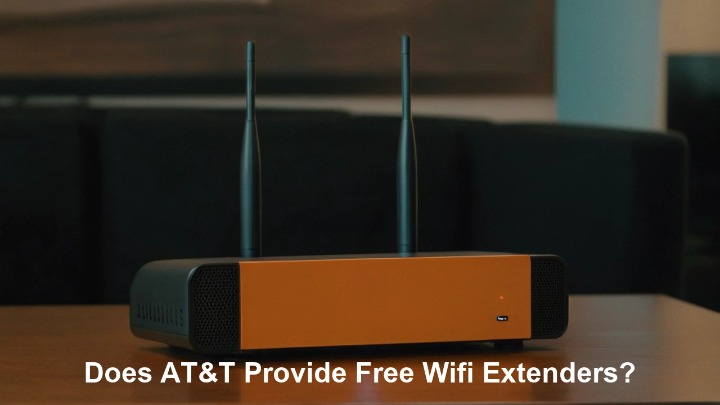
This is the central question many AT&T customers ask when experiencing Wi-Fi coverage issues. The straightforward answer, based on current AT&T policies as of 2025-26, is **no, AT&T does not typically provide free Wi-Fi extenders (also known as Wi-Fi boosters or repeaters) as a standard part of their internet service packages.**
AT&T's policy is to provide a single, integrated Gateway device that is intended to serve as the primary source of Wi-Fi for the customer's home. Their responsibility generally ends with ensuring this device is functioning correctly and delivering the subscribed internet speed to that point. They do not routinely offer additional hardware like extenders, mesh Wi-Fi systems, or access points free of charge to overcome coverage limitations within a customer's residence.
Why the Policy?
Several factors likely contribute to this policy:
- Standardization: Providing a single, standardized Gateway simplifies technical support and network management for AT&T. Offering various extender models would complicate inventory, deployment, and troubleshooting.
- Cost: Distributing free Wi-Fi extenders to potentially millions of customers would represent a significant financial outlay for the company.
- Customer Responsibility: In many ISP models, the responsibility for in-home network setup and optimization, including ensuring adequate Wi-Fi coverage, falls on the customer.
- Evolving Technology: The market for Wi-Fi enhancement solutions is dynamic. AT&T may prefer to let customers choose from the latest consumer-grade technologies that best suit their specific needs and budgets rather than providing a one-size-fits-all solution.
Exceptions and Nuances
While AT&T does not offer free extenders, there might be very specific, limited circumstances or promotions where they could provide a solution. For instance, in some business-class installations or with certain high-end enterprise solutions, network extension hardware might be part of the package. However, for typical residential customers, this is not the case.
It's also important to distinguish between a "Wi-Fi extender" and other network equipment. AT&T does provide modems and routers (often integrated into a single Gateway). If your provided Gateway is faulty, they will replace it. However, this replacement is to restore the primary Wi-Fi source, not to extend its range.
Customers experiencing significant Wi-Fi dead zones should be prepared to purchase their own Wi-Fi enhancement devices. This guide will explore the best options available in the 2025-26 market.
AT&T Router and Modem Capabilities
Understanding the capabilities of the AT&T Gateway you receive is crucial. It dictates the baseline performance of your Wi-Fi network and helps determine if an extender is truly necessary. AT&T deploys various Gateway models depending on the internet service type and plan speed.
AT&T Fiber Gateways
For AT&T Fiber customers, the Gateways are generally more advanced, designed to support the high speeds offered by fiber optic technology. These devices often feature:
- Dual-band or Tri-band Wi-Fi: Supporting both 2.4 GHz and 5 GHz frequencies, and sometimes a 6 GHz band with Wi-Fi 6E.
- Latest Wi-Fi Standards: Many newer models support Wi-Fi 6 (802.11ax) or even Wi-Fi 6E, offering significantly better performance than older standards like Wi-Fi 5 (802.11ac).
- Gigabit Ethernet Ports: Allowing for fast wired connections to devices.
- Beamforming Technology: Directing Wi-Fi signals more efficiently towards connected devices.
- MU-MIMO (Multi-User, Multiple Input, Multiple Output): Enabling the router to communicate with multiple devices simultaneously, improving network efficiency.
Even with these advanced features, the physical limitations of radio waves mean that signal strength diminishes with distance and obstructions. A large home, multiple floors, or dense building materials can still create coverage gaps.
AT&T Internet (DSL) Gateways
For customers using AT&T Internet (DSL), the Gateways are typically less powerful than those for fiber. While they still provide Wi-Fi, they may:
- Support Older Wi-Fi Standards: Some DSL Gateways might still use Wi-Fi 5 (802.11ac) or even older standards.
- Have Lower Wi-Fi Transmit Power: Leading to a smaller effective range.
- Be Less Capable of Handling Many Devices: Performance can degrade significantly when multiple devices are actively using the network.
If you have DSL service and are experiencing Wi-Fi issues, the Gateway itself might be a limiting factor, making an extender or a more robust solution even more necessary.
Fixed Wireless Gateways
AT&T's Fixed Wireless Internet uses a modem/router unit that receives a signal wirelessly from a nearby tower. The Wi-Fi capabilities of these units can vary. While they aim to provide adequate coverage, the primary focus is on establishing a stable connection to the AT&T network. Coverage within the home can be similar to DSL, depending on the model.
Checking Your Gateway Model
To understand your Gateway's capabilities, you can often find the model number on the device itself. You can then search online for its specifications or consult AT&T's support website. Knowing your Gateway's limitations will help you make informed decisions about purchasing additional equipment.
Key takeaway: While AT&T provides capable Gateways, they are designed for standard coverage. If your home is large, has multiple floors, or features materials that block Wi-Fi signals, you will likely need to supplement your existing setup.
Alternatives to Free AT&T Extenders
Since AT&T does not offer free Wi-Fi extenders, customers seeking to improve their home Wi-Fi coverage have several excellent alternatives. These options range from simple, affordable devices to sophisticated whole-home networking solutions. The best choice depends on your home's size, layout, budget, and your specific connectivity needs.
1. Wi-Fi Extenders (Repeaters)
What they are: Wi-Fi extenders are small devices that plug into a power outlet. They pick up your existing Wi-Fi signal from your AT&T Gateway and rebroadcast it, effectively extending the range of your Wi-Fi network.
Pros:
- Affordable: Generally the most budget-friendly option.
- Easy to Set Up: Most models are plug-and-play with simple configuration.
- Targeted Coverage: Can be placed strategically to boost signal in specific dead zones.
Cons:
- Reduced Speed: Extenders often halve the available bandwidth because they have to receive and then retransmit the signal.
- Single Network Name (SSID): Can sometimes create a separate network name, requiring manual switching, though many modern ones can use the same SSID.
- Less Effective in Large Homes: Multiple extenders might be needed, leading to a fragmented network.
Best for: Smaller homes or apartments with one or two specific dead spots.
2. Mesh Wi-Fi Systems
What they are: A mesh Wi-Fi system consists of a main router that connects to your AT&T Gateway (often in "bridge mode") and one or more satellite "nodes" placed around your home. These nodes communicate with each other and the main router to create a single, seamless Wi-Fi network with a unified network name (SSID).
Pros:
- Seamless Roaming: Devices automatically connect to the strongest signal as you move around your home without interruption.
- Superior Performance: Designed for whole-home coverage, often providing faster speeds and better stability than extenders.
- Easy Management: Typically managed via a user-friendly mobile app.
- Scalable: You can often add more nodes to expand coverage further.
Cons:
- More Expensive: Generally more costly than individual Wi-Fi extenders.
- Requires Configuration: While easy, it involves setting up a new network and potentially disabling the Wi-Fi on your AT&T Gateway.
Best for: Medium to large homes, multi-story homes, or homes with many connected devices where consistent, high-speed Wi-Fi is critical.
3. Powerline Adapters with Wi-Fi
What they are: Powerline adapters use your home's electrical wiring to transmit network data. You plug one adapter into an outlet near your AT&T Gateway and connect it via Ethernet. You then plug another adapter (which has Wi-Fi capabilities) into an outlet in a room where you need better Wi-Fi.
Pros:
- Bypasses Walls: Can be effective in homes where Wi-Fi signals struggle to penetrate walls.
- Relatively Stable Connection: Uses wired infrastructure for data transmission.
- Can Offer Wi-Fi: Many models include a built-in Wi-Fi access point.
Cons:
- Performance Varies: Dependent on the quality and complexity of your home's electrical wiring. Older or complex wiring can lead to reduced speeds.
- Limited Range: Performance degrades over long distances within the electrical system.
- Can be Affected by Electrical Noise: Appliances on the same circuit can sometimes interfere.
Best for: Situations where thick walls are a major impediment to Wi-Fi signals, and electrical wiring is relatively modern and direct.
4. MoCA Adapters (Multimedia over Coax Alliance)
What they are: Similar to powerline adapters, MoCA adapters use your home's existing coaxial cable (TV cable) wiring to create a high-speed wired network. You can then connect a MoCA adapter with Wi-Fi capabilities to act as an access point.
Pros:
- Very Fast and Reliable: MoCA typically offers higher speeds and more consistent performance than powerline adapters.
- Utilizes Existing Infrastructure: Most homes already have coaxial outlets.
Cons:
- Requires Coaxial Outlets: You need a coax outlet in the desired location.
- Can be More Expensive: MoCA adapters can be pricier than powerline adapters.
- Setup: Requires connecting adapters to coax outlets and potentially your AT&T Gateway.
Best for: Homes with readily available coaxial outlets where high-speed, stable connectivity is needed, and Wi-Fi alone is insufficient.
5. Upgrading Your AT&T Gateway (If Possible)
While AT&T doesn't offer free upgrades for coverage, it's worth inquiring if a newer Gateway model is available for your plan, especially if you have an older DSL service. Sometimes, a more modern Gateway might offer slightly improved Wi-Fi range and performance. However, this is unlikely to solve significant coverage issues in larger homes.
Recommendation: For most users experiencing coverage problems with AT&T, a mesh Wi-Fi system is the most effective and user-friendly solution for achieving seamless, whole-home Wi-Fi coverage. If budget is a primary concern, a good quality Wi-Fi extender can offer a noticeable improvement for smaller areas.
Choosing the Right Wi-Fi Extender in 2025-26
If you've decided that a Wi-Fi extender is the most suitable solution for your AT&T network's coverage gaps, selecting the right one is key to maximizing its effectiveness. The market in 2025-26 offers a wide array of options, from basic repeaters to more advanced dual-band and tri-band models. Here’s a guide to help you make an informed purchase.
Key Features to Consider
1. Wi-Fi Standard Compatibility
Ensure the extender supports the same or a higher Wi-Fi standard than your AT&T Gateway.
- Wi-Fi 6 (802.11ax): If your AT&T Gateway supports Wi-Fi 6, look for a Wi-Fi 6 extender for the best performance. This standard offers better speed, capacity, and efficiency, especially with multiple devices.
- Wi-Fi 5 (802.11ac): If your Gateway is older (Wi-Fi 5), a Wi-Fi 5 extender will be sufficient.
- Avoid Older Standards: Extenders supporting Wi-Fi 4 (802.11n) or earlier will bottleneck your network if you have a modern Gateway.
2. Band Support (Dual-Band vs. Tri-Band)
Your AT&T Gateway likely operates on dual bands (2.4 GHz and 5 GHz).
- Dual-Band Extenders: These extend both the 2.4 GHz and 5 GHz bands. The 2.4 GHz band offers longer range but slower speeds, while the 5 GHz band offers faster speeds but shorter range. A dual-band extender will typically use one band to connect to the router and the other to broadcast to devices.
- Tri-Band Extenders: These are more advanced and often found in mesh systems. They typically have one dedicated band for backhaul (connecting to the router) and two bands for device connections, offering better performance and less speed degradation than dual-band extenders. For a standalone extender, a good dual-band model is usually sufficient.
3. Speed Rating (Mbps)
Extenders are rated in Megabits per second (Mbps). This indicates the maximum theoretical speed they can handle. While you won't achieve these speeds in practice due to signal loss, a higher rating generally means better performance. For most home users, an extender rated for at least AC1200 (Wi-Fi 5) or AX1800 (Wi-Fi 6) is a good starting point.
4. Ease of Setup and Management
Look for extenders that offer simple setup processes, often through a mobile app or a WPS (Wi-Fi Protected Setup) button. Features like smart roaming (where your device seamlessly switches between the Gateway and extender) are also beneficial.
5. Ethernet Ports
Some extenders include one or more Ethernet ports. This allows you to connect wired devices (like a smart TV, gaming console, or desktop computer) to the extender, providing them with a stable internet connection. This is a great feature if the dead zone is in a room where you have stationary devices that could benefit from a wired link.
6. Physical Design and Placement
Most Wi-Fi extenders are designed to plug directly into a wall outlet. Consider the size and shape of the extender to ensure it doesn't block adjacent outlets or interfere with furniture placement. The ideal placement for an extender is about halfway between your AT&T Gateway and the dead zone, in an area where you still get a decent signal from the Gateway.
Top Extender Brands and Models (2025-26 Trends)
Several reputable brands consistently offer high-quality Wi-Fi extenders and mesh systems. As of 2025-26, popular choices include:
- TP-Link: Known for offering excellent value and performance across their RE (Range Extender) series and Deco mesh systems. Look for models like the RE600X (Wi-Fi 6) or Deco X20/X50 (Mesh).
- Netgear: Offers a wide range of extenders (like the EX series) and the Orbi mesh system, which is a premium option known for its performance and features.
- Eero (Amazon): A very popular and user-friendly mesh Wi-Fi system known for its simplicity and reliability.
- Linksys: Offers Velop mesh systems and RE series extenders, providing robust coverage options.
Example Scenario:
Imagine your AT&T Gateway is in the living room, but the Wi-Fi signal is weak in the upstairs bedroom. You could purchase a TP-Link RE505X Wi-Fi 6 extender. You'd plug it into a hallway outlet halfway between the living room and the bedroom, where the signal from the living room is still strong. You would then configure it via the Tether app to extend your existing AT&T Wi-Fi network. This would provide a stronger signal in the bedroom for streaming or browsing.
Cost Consideration: Standalone Wi-Fi extenders typically range from $30 to $100. Mesh Wi-Fi systems (which are more comprehensive solutions) usually start at around $150-$200 for a 2-pack and can go up to $500+ for larger or more powerful systems.
Optimizing Your AT&T Wi-Fi Network
Even without purchasing new hardware, there are several steps you can take to optimize your existing AT&T Wi-Fi network for better performance and coverage. These adjustments can often mitigate minor coverage issues or improve the speed and stability of your current signal.
1. Router Placement is Key
The location of your AT&T Gateway has a significant impact on Wi-Fi coverage.
- Central Location: Place your Gateway as close to the center of your home as possible.
- Open Area: Avoid placing it in enclosed cabinets, behind furniture, or near large metal objects, which can obstruct signals.
- Elevated Position: Placing the Gateway on a shelf or table, rather than on the floor, can help the signal propagate more effectively.
- Away from Interference: Keep the Gateway away from other electronic devices that can cause interference, such as microwaves, cordless phones, and Bluetooth devices.
2. Update Gateway Firmware
AT&T regularly releases firmware updates for their Gateways to improve performance, security, and stability.
- Automatic Updates: Most AT&T Gateways are set to update automatically.
- Manual Check: You can usually check for updates through your AT&T online account portal or by logging into the Gateway's admin interface (often accessible via an IP address like 192.168.1.254).
3. Restart Your Gateway
A simple reboot can often resolve temporary glitches and improve network performance.
- How to: Unplug the power cord from your AT&T Gateway, wait about 30 seconds, and then plug it back in. Allow a few minutes for it to fully boot up and reconnect.
4. Adjust Wi-Fi Channel Settings
Your Gateway broadcasts Wi-Fi on specific channels. If many nearby networks are using the same channel, it can cause congestion and slow speeds.
- 2.4 GHz Band: This band is more prone to interference. Channels 1, 6, and 11 are generally recommended as they don't overlap.
- 5 GHz Band: This band has more channels and less interference, offering faster speeds.
- Automatic Channel Selection: Many modern Gateways have an "auto" setting that selects the least congested channel.
- Manual Selection: If you experience persistent issues, you can manually select a less crowded channel using a Wi-Fi analyzer app on your smartphone or by logging into your Gateway's settings.
5. Manage Connected Devices
The number of devices connected to your Wi-Fi network impacts overall performance.
- Limit Unused Devices: Disconnect devices that are not actively using the internet.
- Prioritize Devices: Some Gateways and routers offer Quality of Service (QoS) settings that allow you to prioritize bandwidth for certain devices or applications (e.g., a work computer for video calls).
6. Secure Your Network
An unsecured Wi-Fi network can be accessed by unauthorized users, consuming bandwidth and slowing down your connection.
- Strong Password: Ensure your Wi-Fi network has a strong, unique password using WPA2 or WPA3 encryption.
- Change Default Credentials: Always change the default administrator username and password for your AT&T Gateway.
7. Consider Wired Connections
For devices that require the most stable and fastest connection (e.g., smart TVs, gaming consoles, desktop computers), a wired Ethernet connection is always superior to Wi-Fi. If your AT&T Gateway has available Ethernet ports, use them. If the device is far from the Gateway, consider using Powerline adapters or MoCA adapters to create a wired connection over your home's existing wiring.
8. Disable Gateway Wi-Fi if Using a Mesh System
If you opt for a mesh Wi-Fi system, it's generally recommended to disable the Wi-Fi broadcast on your AT&T Gateway. This prevents interference between the two networks and ensures your mesh system is managing all your wireless traffic efficiently. You can usually do this through the Gateway's admin interface.
9. Utilize Wi-Fi Analyzer Apps
Apps like "Wi-Fi Analyzer" (Android) or "Network Analyzer Lite" (iOS) can help you visualize Wi-Fi signal strength, identify the best channels, and understand potential interference sources in your home. This data can be invaluable for optimizing placement and channel selection.
By implementing these optimization strategies, you can often significantly improve the performance and reach of your AT&T Wi-Fi network without necessarily needing to purchase additional hardware.
Conclusion
In summary, AT&T does not provide free Wi-Fi extenders to its residential customers. Their standard offering includes a Gateway device designed to deliver internet service and Wi-Fi within a typical coverage area. For those experiencing Wi-Fi dead zones or weak signals in larger homes, multiple floors, or areas with signal-blocking materials, purchasing a third-party Wi-Fi solution is necessary.
The most effective alternatives include Wi-Fi extenders, which are budget-friendly for targeting specific dead spots, and mesh Wi-Fi systems, which offer seamless, whole-home coverage and superior performance for medium to large residences. Powerline and MoCA adapters also present viable options depending on your home's infrastructure.
Before investing in new hardware, remember to optimize your current AT&T Wi-Fi network by strategically placing your Gateway, updating firmware, and managing connected devices. If coverage issues persist, a mesh Wi-Fi system represents the most robust and user-friendly solution for a consistently strong and reliable internet experience throughout your entire home in 2025-26 and beyond.