What's the difference between AT&T internet and AT&T fiber?
Choosing between AT&T Internet and AT&T Fiber is a crucial decision for many households seeking reliable, high-speed internet. This comprehensive guide dives deep into the differences, benefits, and drawbacks of each service, empowering you to make the best choice for your specific needs in 2025-26.
AT&T Internet: The Traditional Choice
AT&T Internet, often referred to as AT&T DSL (Digital Subscriber Line), represents the more established internet technology offered by AT&T. This service leverages existing telephone lines to transmit data, making it widely available in many areas where fiber optic cables haven't yet been laid. While it has served millions of households for decades, its performance is inherently limited by the physical infrastructure of copper telephone wires. The speed and reliability can vary significantly based on the distance from the local telephone exchange and the condition of the copper lines. For many, AT&T Internet remains a viable option, especially in rural or less developed urban areas, providing a baseline level of connectivity for everyday online activities.
How AT&T Internet Works
AT&T Internet operates on the principle of DSL technology. It uses a modem to convert digital data from your computer into analog signals that can travel over telephone lines, and vice-versa. The closer you are to the telephone company's central office (CO) or a remote terminal (RT), the stronger and faster the signal will be. This distance dependency is a fundamental characteristic of DSL and a primary reason for its performance variability. Unlike fiber optics, which transmit data as light pulses through glass or plastic strands, DSL relies on electrical signals over copper, which are susceptible to interference and signal degradation over longer distances.
Typical Speeds and Performance
The speeds offered by AT&T Internet can range from as low as 1 Mbps to upwards of 100 Mbps in some of the most optimized DSL areas. However, the advertised speeds are often "up to" figures, and actual performance can be considerably lower. For basic internet usage like checking email, browsing websites, and light social media, lower speeds might suffice. But for more demanding activities such as streaming high-definition video, online gaming, or large file downloads, these speeds can lead to buffering, lag, and frustration. In 2025-26, with the increasing prevalence of 4K streaming and cloud-based applications, the limitations of DSL become more pronounced for many users.
Target Audience for AT&T Internet
AT&T Internet is primarily targeted at individuals and households who:
- Live in areas where AT&T Fiber is not yet available.
- Have basic internet needs, such as email, web browsing, and occasional social media use.
- Are on a tighter budget and find the lower-tier plans more affordable.
- Do not require extremely high speeds for activities like extensive online gaming or simultaneous high-definition streaming on multiple devices.
It serves as a foundational internet service, ensuring connectivity where more advanced options are absent or unaffordable.
AT&T Fiber: The Future of Connectivity
AT&T Fiber represents the company's commitment to next-generation internet technology. Utilizing a network of fiber optic cables that run directly to the customer's premises (often referred to as Fiber-to-the-Home or FTTH), this service offers significantly higher speeds, lower latency, and greater reliability compared to traditional DSL. Fiber optic cables transmit data as pulses of light, which are far less susceptible to interference and degradation than electrical signals over copper. This fundamental difference allows for speeds that are orders of magnitude faster than what DSL can achieve. As the digital landscape evolves with increasing demands for bandwidth, AT&T Fiber is positioned as the premium internet solution for modern households and businesses.
How AT&T Fiber Works
AT&T Fiber employs a network of thin strands of glass or plastic that carry data in the form of light signals. These fiber optic cables are installed from AT&T's network infrastructure all the way to the customer's home or business. At the customer's location, a Residential Gateway (RG) or modem converts the light signals back into electrical signals that your devices can understand. The pure light transmission eliminates many of the issues associated with copper-based technologies, such as electromagnetic interference, signal attenuation over distance, and crosstalk between lines. This results in a more stable, consistent, and faster internet connection.
Speeds and Performance Expectations
AT&T Fiber plans typically start at speeds of 300 Mbps and can go up to 5 Gigabits per second (Gbps) in select areas. These speeds are symmetrical, meaning upload and download speeds are the same, which is crucial for activities like video conferencing, uploading large files, and online gaming. In 2025-26, with the proliferation of 8K streaming, virtual reality experiences, and the growing number of connected smart home devices, the demand for high-speed, low-latency internet is higher than ever. AT&T Fiber is designed to meet these demands, providing a seamless experience for even the most bandwidth-intensive applications.
Target Audience for AT&T Fiber
AT&T Fiber is the ideal choice for users who:
- Require the fastest possible internet speeds for demanding online activities.
- Are heavy streamers of high-definition (4K/8K) or multiple simultaneous video streams.
- Are online gamers who need low latency and fast download/upload speeds.
- Work from home and frequently engage in video conferencing, large file transfers, or cloud-based applications.
- Have multiple users and devices in their household simultaneously accessing the internet.
- Are early adopters of new technologies and want a future-proof internet connection.
- Value consistent and reliable performance, regardless of network congestion or distance from the exchange.
It is the premium offering for those who want the best possible internet experience.
Key Differences: AT&T Internet vs. AT&T Fiber
The fundamental distinctions between AT&T Internet (DSL) and AT&T Fiber lie in their underlying technology, performance capabilities, and availability. Understanding these core differences is paramount to making an informed decision. While both services are provided by AT&T, they cater to vastly different user needs and technological expectations. The most significant divergence is in the physical medium used for data transmission and the resulting impact on speed, latency, and reliability.
Technology Backbone
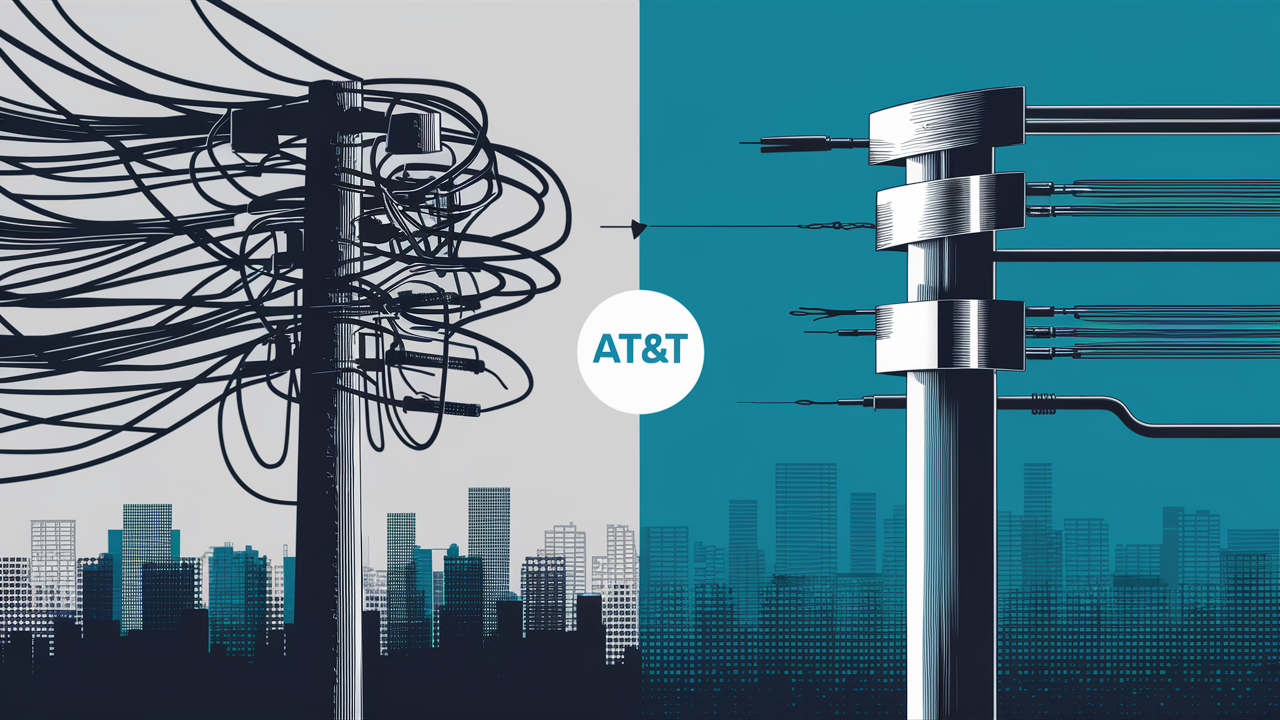
AT&T Internet (DSL): Relies on existing copper telephone lines. Data is transmitted as electrical signals. This technology is older and inherently limited by the physical properties of copper, including signal degradation over distance and susceptibility to interference.
AT&T Fiber: Utilizes fiber optic cables made of glass or plastic. Data is transmitted as pulses of light. This technology is significantly more advanced, offering higher bandwidth, lower latency, and superior reliability.
Speed Capabilities
AT&T Internet (DSL): Speeds typically range from 1 Mbps to around 100 Mbps, with actual speeds often being much lower due to distance from the exchange and line quality. Upload speeds are significantly slower than download speeds.
AT&T Fiber: Offers speeds starting from 300 Mbps and going up to 5 Gbps. These speeds are usually symmetrical, meaning upload and download speeds are the same, providing a balanced experience for all online activities.
Latency
AT&T Internet (DSL): Latency (the delay in data transfer) can be higher and more variable, which is particularly noticeable in real-time applications like online gaming and video conferencing.
AT&T Fiber: Offers significantly lower and more consistent latency, crucial for responsive online gaming, lag-free video calls, and smooth interactive experiences.
Reliability and Consistency
AT&T Internet (DSL): Performance can be affected by factors like weather, distance from the central office, and the condition of copper lines. Signal interference is also a concern.
AT&T Fiber: Much more reliable and consistent. Fiber optic cables are less susceptible to external interference and environmental factors, leading to fewer outages and more stable speeds.
Availability
AT&T Internet (DSL): Widely available in most AT&T service areas, especially in rural and suburban locations where fiber infrastructure is not yet present.
AT&T Fiber: Availability is growing but is still limited to specific urban and suburban areas where AT&T has invested in deploying fiber optic networks.
Comparative Overview
To provide a clearer picture, here's a summary table:
| Feature | AT&T Internet (DSL) | AT&T Fiber |
|---|---|---|
| Technology | DSL over copper phone lines | Fiber optic cables |
| Max Download Speeds (Typical) | Up to 100 Mbps (often much lower) | Up to 5 Gbps |
| Symmetrical Speeds | No (Upload much slower than download) | Yes (Upload = Download) |
| Latency | Higher, more variable | Lower, more consistent |
| Reliability | Variable, susceptible to interference/distance | High, consistent performance |
| Availability | Widespread | Limited to specific areas |
| Cost (General) | Generally lower | Generally higher, especially for top tiers |
Performance and Speed: A Deep Dive
The most significant differentiator between AT&T Internet and AT&T Fiber lies in their performance metrics, primarily speed and latency. For users who rely heavily on their internet connection for work, entertainment, or communication, these differences can be profound. In 2025-26, with the increasing demands of modern digital life, understanding these nuances is critical.
Download Speeds: The Everyday Experience
AT&T Internet (DSL): Download speeds on DSL plans typically range from 1 Mbps to a maximum of around 100 Mbps in the best-case scenarios. However, it's common for users to experience speeds significantly lower than advertised, often between 10 Mbps and 50 Mbps, especially if they are located far from the local telephone exchange. This is because the electrical signal degrades over the copper lines. For tasks like browsing the web, checking emails, and using social media, these speeds might be adequate. However, streaming HD video can lead to frequent buffering, and downloading large files can take an unacceptably long time. For a household with multiple users, these speeds can quickly become a bottleneck.
AT&T Fiber: Fiber optic technology offers a dramatic leap in download speeds. AT&T's fiber plans typically start at 300 Mbps and can reach up to 5 Gbps (5000 Mbps). These speeds are not theoretical maximums; they are often delivered consistently to the user's home. With 300 Mbps, a household can comfortably stream multiple 4K videos simultaneously, download large files in minutes, and support numerous connected devices without performance degradation. At 1 Gbps or 5 Gbps, the internet experience becomes virtually instantaneous for most tasks. Downloading a full-length HD movie might take less than a minute, and even massive game downloads can be completed in a fraction of the time compared to DSL.
Upload Speeds: The Unsung Hero
AT&T Internet (DSL): DSL is notoriously asymmetrical, meaning upload speeds are drastically slower than download speeds. Typical upload speeds might range from 1 Mbps to 10 Mbps. This limitation is a major issue for anyone who needs to upload content, participate in high-quality video conferences, or use cloud backup services. Sending large files or participating in live streaming from home becomes a frustrating experience with constant interruptions or poor quality.
AT&T Fiber: A key advantage of AT&T Fiber is its symmetrical speed offering. This means your upload speeds are just as fast as your download speeds. For example, a 1 Gbps fiber plan offers 1 Gbps for both downloading and uploading. This is revolutionary for remote workers, content creators, and anyone who frequently uploads videos, photos, or large documents. High-quality video conferencing becomes seamless, and cloud backups are completed much faster. For businesses operating from home, this symmetry is invaluable for productivity.
Latency: The Key to Responsiveness
Latency, often referred to as "ping," is the time it takes for a data packet to travel from your device to a server and back. Lower latency means a more responsive internet connection. This is particularly critical for real-time applications.
AT&T Internet (DSL): DSL generally has higher latency compared to fiber. Latency can also be more variable, fluctuating based on network congestion and distance. For online gaming, this can translate to lag, where your actions on screen are delayed, leading to a disadvantage. In video calls, high latency can cause choppy audio and video, making conversations difficult.
AT&T Fiber: Fiber optic technology offers exceptionally low latency. With speeds often measured in single-digit milliseconds, the internet feels incredibly responsive. This is a game-changer for online gamers, as it minimizes lag and provides a competitive edge. For video conferencing and other real-time communication, low latency ensures smooth, natural interactions. Even simple web browsing feels snappier because pages load more quickly.
Reliability and Consistency
AT&T Internet (DSL): The reliability of DSL can be compromised by several factors. Copper lines are susceptible to electromagnetic interference from nearby electrical devices or power lines. Signal strength degrades significantly with distance from the telephone exchange or remote terminal. Environmental factors like moisture can also affect performance. This can lead to inconsistent speeds and occasional connection drops.
AT&T Fiber: Fiber optic cables are made of glass or plastic and transmit data as light, making them immune to electromagnetic interference. They are also far more durable and less susceptible to environmental degradation than copper. This results in a highly reliable and consistent internet connection, with speeds that remain stable regardless of network congestion or distance. While fiber optic cables can be physically damaged, the infrastructure itself is inherently more robust and less prone to the common issues that plague DSL.
Availability and Installation: What to Expect
The decision between AT&T Internet and AT&T Fiber is often dictated by what is actually available at your address. While AT&T Fiber is the superior technology, its deployment is a significant undertaking, meaning it's not yet universally accessible. Understanding the availability and installation processes for each can help manage expectations.
Checking Availability
The first step for any potential AT&T customer is to check service availability at their specific address. This is typically done through the AT&T website or by contacting AT&T customer service.
AT&T Internet (DSL): Due to its reliance on existing telephone infrastructure, AT&T Internet is available in a vast majority of AT&T's service areas. This includes many rural, suburban, and even some urban locations where fiber has not been deployed. If you have a landline phone service from AT&T, it's highly probable that AT&T Internet is available.
AT&T Fiber: Fiber optic network expansion is an ongoing process. AT&T is actively investing in deploying fiber to more communities, but it's a gradual rollout. Availability is currently concentrated in more densely populated urban and suburban areas. You will need to enter your exact address on the AT&T website to see if AT&T Fiber is offered at your location. If it's not available, you may be able to sign up for notifications when it becomes available in your area.
Installation Process
The installation process differs significantly between DSL and fiber, reflecting the complexity of the underlying technology.
AT&T Internet (DSL): Installation for AT&T Internet is often simpler and less intrusive. In many cases, if your home already has active phone lines, a technician may not even need to visit. You might receive a self-installation kit with a modem and instructions. If a technician visit is required, it's usually a quick setup to connect the modem to your phone jack and ensure a signal is present. The process is generally straightforward and can often be completed within a few days of ordering.
AT&T Fiber: Fiber optic installation is typically more involved and requires a professional technician visit. The process involves running a new fiber optic cable from the street or a nearby utility pole to your home. This may require drilling small holes through exterior walls to bring the cable inside. Once inside, the fiber cable is connected to an Optical Network Terminal (ONT), which is then connected to your AT&T Wi-Fi Gateway. The installation can take anywhere from a couple of hours to half a day, depending on the complexity of the wiring and the technician's schedule. AT&T usually coordinates the appointment window and ensures all necessary equipment is installed and tested.
Equipment
Both services require a modem or gateway to connect your home network to AT&T's network. However, the type of equipment can differ.
AT&T Internet (DSL): Typically uses a DSL modem, which may be provided by AT&T or purchased separately. These modems are designed to work with telephone lines. Many AT&T Internet plans include a gateway that combines modem and router functionalities.
AT&T Fiber: Requires an AT&T Fiber Gateway, which is specifically designed to handle the high speeds and light signals of fiber optics. These gateways are more advanced and ensure optimal performance for the fiber connection.
Pricing and Plans: Understanding the Costs
When comparing AT&T Internet and AT&T Fiber, pricing is a significant factor. Generally, fiber optic services come at a premium due to the higher infrastructure costs and superior performance. However, AT&T offers various plans and promotional pricing that can influence the overall value proposition.
AT&T Internet (DSL) Pricing
AT&T Internet plans are typically priced more affordably, making them an attractive option for budget-conscious consumers. Pricing can vary based on the specific speed tier available in your area and whether you are a new or existing customer. In 2025-26, you might find DSL plans starting from around $55 per month for basic speeds, with higher speed tiers (up to 100 Mbps) costing closer to $70-$80 per month. It's important to note that these prices often apply for a promotional period (e.g., 12 months) and may increase after that. Data caps are generally not an issue with AT&T Internet plans, but it's always wise to confirm the terms of service.
AT&T Fiber Pricing
AT&T Fiber plans are positioned as a premium service, and their pricing reflects this. However, AT&T often runs competitive promotions to encourage adoption. As of 2025-26, you can expect the following pricing structures:
- 300 Mbps Plan: Often priced around $60-$70 per month. This is a great entry point for fiber and offers significant speed improvements over DSL.
- 1 Gig (1000 Mbps) Plan: Typically ranges from $80-$90 per month. This is a popular choice for many households due to its excellent balance of speed and cost.
- 2 Gig (2000 Mbps) and 5 Gig (5000 Mbps) Plans: These are the highest-tier offerings and can cost $110-$150+ per month. These plans are designed for power users, large households with many devices, or those who require the absolute fastest speeds available.
Similar to DSL plans, AT&T Fiber pricing often includes introductory offers that expire after a certain period. It's crucial to check the standard rate after the promotional period. AT&T Fiber plans typically come with unlimited data, meaning there are no data caps, which is a significant advantage for heavy internet users.
Installation Fees and Equipment Costs
AT&T Internet (DSL): Installation fees for DSL can vary. Sometimes, AT&T offers free installation for self-setup. If a technician is required, a fee might apply, typically in the range of $30-$99, though often waived with promotions. Modem rental fees might also be a factor, or you can purchase your own compatible modem.
AT&T Fiber: AT&T has been actively promoting fiber by offering free installation. However, it's essential to verify this at the time of signup, as policies can change. The AT&T Fiber Gateway is usually provided at no additional monthly cost, but it remains AT&T property. If you cancel service, the equipment must be returned to avoid charges.
Bundling Options
AT&T offers bundling options that can sometimes provide cost savings. You can often bundle internet service with AT&T wireless plans, DirecTV, or AT&T TV. Evaluating these bundles can be beneficial if you are a multi-service AT&T customer, but always compare the bundled price against individual service costs to ensure you are actually saving money.
Use Cases and Recommendations: Who is Each Service For?
The choice between AT&T Internet and AT&T Fiber ultimately depends on your individual or household's internet usage habits, budget, and geographic location. Here's a breakdown of who each service is best suited for, based on common use cases in 2025-26.
AT&T Internet (DSL) is Best For:
- Basic Internet Users: If your primary online activities involve checking email, browsing news websites, using social media occasionally, and performing simple online searches, AT&T Internet can be sufficient. For these tasks, speeds of 25-50 Mbps are often adequate.
- Budget-Conscious Households: When cost is the primary driver, AT&T Internet offers lower monthly rates compared to fiber. This makes it a more accessible option for individuals or families on a tight budget.
- Areas Without Fiber Availability: The most significant factor is availability. If AT&T Fiber is not offered at your address, AT&T Internet is likely your only AT&T option for wired broadband.
- Single-User Households with Low Demands: If only one person in the household uses the internet at a time for light activities, the limitations of DSL are less likely to be a problem.
Example Scenario: Sarah, a retiree living alone, primarily uses her internet to read news, email her grandchildren, and watch occasional YouTube videos. She lives in a rural area where fiber is not yet available. AT&T Internet at a moderate speed tier (e.g., 50 Mbps) provides her with reliable connectivity for her needs at an affordable price.
AT&T Fiber is Best For:
- Heavy Streamers: For households that frequently stream 4K or 8K content on multiple devices simultaneously, AT&T Fiber is essential. It eliminates buffering and ensures a smooth, high-quality viewing experience.
- Online Gamers: Low latency and high, symmetrical speeds are critical for competitive online gaming. AT&T Fiber provides the responsiveness needed to react quickly in fast-paced games without lag.
- Remote Workers and Professionals: For those who work from home, reliable high-speed internet is a necessity. AT&T Fiber supports seamless video conferencing, fast uploads and downloads of large files, and efficient use of cloud-based productivity tools. Symmetrical speeds are a major benefit here.
- Large Households with Many Devices: In a home with multiple people, each with their own smartphones, tablets, laptops, and smart home devices, the demand for bandwidth is immense. AT&T Fiber can handle this high volume of simultaneous connections without performance issues.
- Content Creators and Uploaders: Anyone who regularly uploads large video files, photos, or other content to the internet (e.g., YouTubers, photographers, designers) will benefit immensely from the symmetrical upload speeds offered by AT&T Fiber.
- Tech Enthusiasts and Future-Proofing: For those who want the latest and greatest technology and want to ensure their internet connection can handle future demands, AT&T Fiber is the clear choice.
Example Scenario: The Chen family consists of two working parents and two teenagers. Both parents work from home, often participating in video meetings. The teenagers are avid online gamers and streamers. They also have numerous smart home devices. AT&T Fiber, at a 1 Gbps or higher plan, is crucial for their household to ensure everyone can perform their online activities without interruption or slow speeds.
Making the Choice: A Step-by-Step Approach
- Check Availability: The absolute first step is to determine which service is available at your address. Visit the AT&T website and enter your location.
- Assess Your Usage: Honestly evaluate how you and your household use the internet. List your most common activities and the number of devices connected.
- Set Your Budget: Determine how much you are willing to spend on internet service monthly. Remember to consider promotional pricing versus standard rates.
- Prioritize Speed vs. Cost: If fiber is available, weigh the benefits of its superior performance against its higher cost. If DSL is the only option, determine if the available speeds meet your minimum requirements.
- Consider Future Needs: Think about how your internet usage might change in the next few years. Will you need faster speeds or more bandwidth?
Potential Drawbacks to Consider
While both AT&T Internet and AT&T Fiber offer distinct advantages, it's important to be aware of potential drawbacks that might influence your decision. No service is perfect, and understanding these limitations can help you make a more informed choice and manage expectations.
Drawbacks of AT&T Internet (DSL)
- Speed Limitations: The most significant drawback is the inherently lower and often inconsistent speeds. This can lead to a frustrating experience for users with moderate to high internet demands.
- Distance Dependency: Performance degrades significantly the farther you are from the telephone company's central office or remote terminal. This means even if a higher speed tier is advertised, you might not achieve it.
- Asymmetrical Speeds: The slow upload speeds are a major handicap for tasks like video conferencing, uploading large files, or live streaming.
- Susceptibility to Interference: Copper lines are prone to interference from electrical devices, weather, and other environmental factors, which can lead to unstable connections and reduced speeds.
- Outdated Technology: While still functional for basic needs, DSL is an older technology that is being phased out in favor of fiber in many areas.
Drawbacks of AT&T Fiber
- Limited Availability: The primary drawback is that AT&T Fiber is not available in all areas. Its deployment is ongoing but can be slow, leaving many potential customers without access.
- Higher Cost: Fiber optic plans, especially the higher-speed tiers, are generally more expensive than DSL plans. This can be a barrier for budget-conscious consumers.
- More Complex Installation: While usually free, the installation process for fiber is more involved and requires a professional technician, which might mean scheduling a specific appointment window.
- Potential for Physical Damage: Although robust, fiber optic cables can be damaged during construction or other physical disturbances, which could lead to service outages. However, this is generally less common than DSL performance issues.
- Overkill for Basic Users: For individuals with very minimal internet needs (e.g., just checking email), the extreme speeds of fiber might be unnecessary and represent an overspend.
Contractual Obligations and Price Increases
It's crucial to review the terms of service for any plan you choose. Many AT&T plans, both DSL and Fiber, come with introductory pricing that increases after a promotional period (typically 12 months). Some plans may also have contracts, though AT&T has been moving towards no-contract options for internet. Always clarify the contract length, early termination fees, and the price after the promotional period ends. This will help you avoid unexpected cost increases.
Making the Final Decision
Selecting the right internet service is a significant decision that impacts your daily digital life. When weighing AT&T Internet against AT&T Fiber, the choice boils down to a balance of technology, performance, availability, and cost. As we look towards 2025-26 and beyond, the trend is undeniably towards faster, more reliable fiber optic connections.
Recap of Key Considerations
Technology: AT&T Fiber uses light signals over glass strands, offering superior speed, lower latency, and higher reliability. AT&T Internet uses electrical signals over copper phone lines, which is more prone to degradation and interference.
Speed: Fiber offers speeds from 300 Mbps up to 5 Gbps, with symmetrical upload/download. DSL speeds are much lower (typically under 100 Mbps) and asymmetrical.
Availability: DSL is widely available. Fiber availability is growing but still limited to specific areas.
Cost: DSL is generally more affordable. Fiber plans are more expensive, especially for higher tiers, but often offer better value per Mbps.
Use Case: For basic browsing and email, DSL might suffice. For streaming, gaming, remote work, and multiple devices, Fiber is the clear winner.
Your Actionable Recommendation
If AT&T Fiber is available at your address, it is almost always the recommended choice for 2025-26 and beyond. The significant improvements in speed, reliability, and responsiveness will enhance your online experience across all activities. Even the entry-level 300 Mbps fiber plan provides a substantial upgrade over most DSL offerings and is competitively priced for the performance delivered.
However, if AT&T Fiber is not an option in your area, AT&T Internet remains a viable solution for basic internet needs. In such cases, ensure you select the highest speed tier available to you that fits your budget and usage requirements. Consider alternative providers if DSL speeds are insufficient and fiber is unavailable from AT&T.
Ultimately, the best internet service is the one that meets your specific needs and budget. By carefully evaluating your usage patterns and checking availability, you can make an informed decision between AT&T Internet and AT&T Fiber, ensuring you get the most value and performance from your connection.