Is there a big Difference Between 500Mbps and 1Gbps?
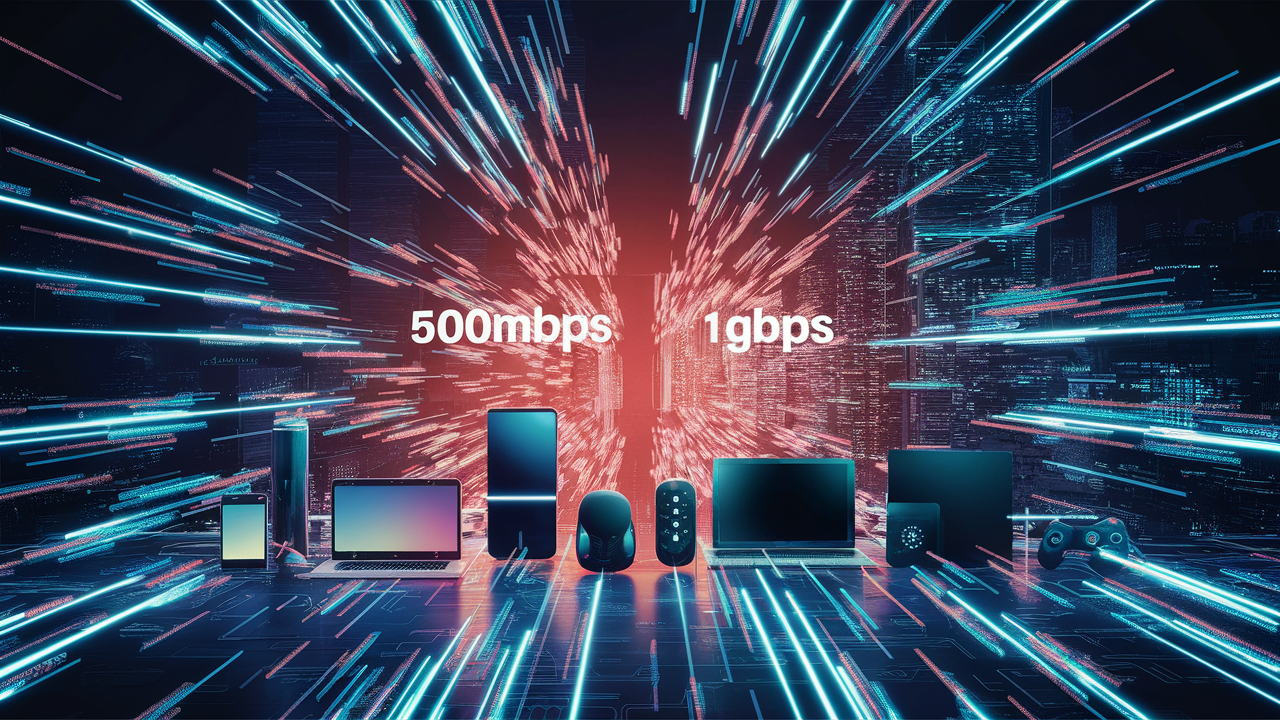
Choosing between 500 Mbps and 1 Gbps internet speeds can significantly impact your online experience. This guide breaks down the core differences, helps you understand real-world performance, and guides you toward the best choice for your household's needs in 2025-26.
Understanding Internet Speeds: Mbps vs. Gbps
The digital highway we navigate daily is measured in speeds, and the most common units you'll encounter are Megabits per second (Mbps) and Gigabits per second (Gbps). Understanding these fundamental metrics is crucial before diving into the specifics of 500 Mbps versus 1 Gbps. Think of internet speed like the width of a pipe carrying water. A wider pipe allows more water to flow through at once. Similarly, higher Mbps or Gbps means more data can be transferred to and from your home simultaneously.
Megabits per second (Mbps): This is the standard unit for measuring internet speed for many years. It signifies how many million bits of data can be transferred in one second. Most common internet plans, especially those catering to average households, are measured in Mbps. For instance, a 100 Mbps plan means 100 million bits can be downloaded or uploaded each second.
Gigabits per second (Gbps): A Gigabyte is 1,000 Megabytes, and a Gigabit is 1,000 Megabits. Therefore, 1 Gbps is equivalent to 1,000 Mbps. This represents a significantly higher capacity for data transfer. While Mbps was once the benchmark, Gbps speeds are becoming increasingly accessible and are considered the next frontier in home internet connectivity, especially as data demands continue to skyrocket.
The difference between 500 Mbps and 1 Gbps is substantial. 1 Gbps is literally twice as fast as 1000 Mbps, which is the equivalent of 1 Gbps. So, 1 Gbps is twice as fast as 500 Mbps. This means that with a 1 Gbps connection, you can theoretically download files, stream content, and perform other online tasks twice as quickly as with a 500 Mbps connection, assuming all other factors are equal.
It's also important to distinguish between download and upload speeds. Download speed is what you experience when accessing content from the internet (e.g., streaming a movie, loading a webpage). Upload speed is what you experience when sending data to the internet (e.g., uploading a video to social media, sending a large email attachment, participating in a video conference). Most advertised speeds refer to download speeds, but upload speeds are equally important for certain activities.
500 Mbps: The Solid Mid-Tier Performer
A 500 Mbps internet plan represents a significant upgrade from the more common 100-300 Mbps plans that have long served as the backbone of many households. In 2025-26, 500 Mbps is firmly positioned as a robust mid-tier offering, capable of handling a wide array of online activities with ease. It strikes a good balance between performance and cost for many consumers.
What does 500 Mbps mean in practice? This speed is more than enough for most everyday internet tasks. It allows for smooth streaming of high-definition (HD) and even 4K content on multiple devices simultaneously. Downloading large files, such as movies or game updates, becomes considerably faster compared to lower-tier plans. For a household with several users, each engaging in different online activities, 500 Mbps generally provides a comfortable and responsive experience.
Typical Use Cases for 500 Mbps:
- Streaming 4K video on 3-5 devices concurrently without buffering.
- Seamless online gaming for multiple players, even with background downloads.
- Quick downloads of large files (e.g., 50 GB game update in under 15 minutes).
- Efficient video conferencing and remote work for several individuals.
- Rapid browsing and social media usage across numerous devices.
- Supporting smart home devices that require consistent connectivity.
Limitations to Consider: While 500 Mbps is excellent, it might start to show its limits in scenarios involving extremely heavy simultaneous usage. For instance, if you have more than 5-7 devices actively streaming 4K content, downloading massive files (over 100 GB) concurrently with other demanding tasks, or if you have a large family where everyone is engaged in bandwidth-intensive activities at the exact same time, you might experience occasional slowdowns. However, for the vast majority of typical households in 2025-26, 500 Mbps is more than sufficient.
Upload Speeds for 500 Mbps Plans: It's crucial to note that upload speeds for 500 Mbps plans can vary significantly depending on the internet technology (e.g., cable, fiber) and the specific provider. Cable internet, for instance, often has asymmetrical speeds, meaning upload speeds are much lower than download speeds (e.g., 500 Mbps download / 20 Mbps upload). Fiber optic connections, on the other hand, are more likely to offer symmetrical speeds (e.g., 500 Mbps download / 500 Mbps upload). For users who frequently upload large files, stream live content, or engage in heavy video conferencing, the upload speed is a critical factor.
1 Gbps: The Next-Level Speed Demon
A 1 Gbps internet plan, also known as a Gigabit internet plan, represents the pinnacle of home internet speed for most consumers in 2025-26. It's a significant leap from 500 Mbps, offering a theoretical maximum speed of 1,000 Mbps. This level of speed is designed for power users, large households with extreme bandwidth demands, and those who want to future-proof their home network against ever-increasing data requirements.
What does 1 Gbps mean in practice? With 1 Gbps, you're essentially removing speed as a bottleneck for almost any online activity. Downloading a full-length HD movie (around 5 GB) can take as little as 4-5 seconds. A 100 GB game update could be downloaded in approximately 1.5 minutes. The experience of having multiple devices simultaneously streaming 4K content, engaged in intense online gaming, and participating in high-definition video calls is seamless and instantaneous.
Typical Use Cases for 1 Gbps:
- Simultaneous 4K/8K streaming on 7+ devices without any performance degradation.
- Ultra-low latency online gaming with the ability to download massive game libraries rapidly.
- Professional-grade video editing and uploading of large media files in minutes, not hours.
- Supporting a smart home with dozens of connected devices, all operating at peak performance.
- Running multiple virtual machines or servers from home.
- Enabling a household of remote workers and students with demanding online needs simultaneously.
- Future-proofing your home network for emerging technologies that will require higher bandwidth.
Is 1 Gbps Overkill? For many, 1 Gbps might seem like overkill. The average household's internet usage in 2025-26 typically peaks at around 100-200 Mbps. However, the value of 1 Gbps lies not just in meeting current needs but in providing headroom for future growth and ensuring an absolutely flawless experience for the most demanding users. If you have a large family with teenagers who game and stream heavily, or if you work from home and regularly transfer very large files, 1 Gbps can make a tangible difference in productivity and entertainment quality.
Upload Speeds for 1 Gbps Plans: Similar to 500 Mbps plans, upload speeds for 1 Gbps connections are highly dependent on the underlying technology. Fiber optic internet is the primary provider of true 1 Gbps symmetrical speeds (1 Gbps download / 1 Gbps upload). Cable internet providers are increasingly offering 1 Gbps download speeds, but their upload speeds often lag significantly behind (e.g., 1 Gbps download / 50 Mbps upload). For users who prioritize uploading content, the symmetrical speeds of fiber are a major advantage.
500 Mbps vs. 1 Gbps: A Direct Comparison
To truly grasp the difference, let's put the two speeds side-by-side with some practical examples. These figures are estimates and can vary based on server speeds, network congestion, and the efficiency of your own equipment (router, modem, Wi-Fi signal).
| Activity | Estimated Time with 500 Mbps | Estimated Time with 1 Gbps | Difference |
|---|---|---|---|
| Download a 5 GB HD Movie | ~ 1 minute 20 seconds | ~ 40 seconds | ~ 40 seconds faster |
| Download a 50 GB Game Update | ~ 13 minutes | ~ 6.5 minutes | ~ 6.5 minutes faster |
| Upload a 1 GB Video File (assuming 50 Mbps upload for 500 Mbps plan, 500 Mbps upload for 1 Gbps plan) | ~ 3 minutes 20 seconds | ~ 16 seconds | ~ 3 minutes 4 seconds faster |
| Simultaneous 4K Streams (4 devices) | Smooth, with potential for slight buffering under heavy load | Flawless, no buffering | Guaranteed smooth experience |
| Online Gaming Latency | Excellent for most gamers | Extremely low, ideal for competitive gaming | Potentially noticeable improvement for pros |
Note: These are theoretical estimates. Actual speeds can be affected by various factors.
The table clearly illustrates that 1 Gbps offers a substantial speed advantage, particularly for large file transfers and scenarios involving multiple high-bandwidth activities. For everyday browsing, email, and standard HD streaming, the difference might not be dramatically noticeable to the average user. However, when you push the limits of your connection, the benefits of 1 Gbps become undeniable.
Real-World Impact: What Can You Actually Do?
Understanding the theoretical speeds is one thing, but how do these speeds translate into tangible benefits for your daily life in 2025-26? The impact is most pronounced when you have multiple users and devices simultaneously demanding bandwidth.
Simultaneous Streaming
In a typical household, it's common for one person to be watching Netflix in 4K, another to be streaming music, a third to be on a video call for work, and a fourth to be playing an online game. With 500 Mbps, this scenario is generally manageable. You'll likely experience smooth playback for most services. However, if you add another 4K stream or a large game download, you might start to see buffering or reduced quality. A 1 Gbps connection, on the other hand, can handle these demands with ease, ensuring that every device and user enjoys a premium, uninterrupted experience. This is especially true for higher resolutions like 8K streaming, which is becoming more prevalent.
Downloading and Uploading Large Files
For content creators, gamers, or professionals who regularly work with large files, the difference between 500 Mbps and 1 Gbps is night and day. Downloading a massive AAA game title that can easily exceed 100 GB can take over an hour on a 500 Mbps connection. With 1 Gbps, this download could be completed in under 15 minutes. Similarly, uploading high-resolution video footage or large datasets for work can be a tedious process on slower connections. A 1 Gbps symmetrical fiber connection can reduce upload times from hours to minutes, significantly boosting productivity.
Online Gaming
While download speed is important for getting games onto your console or PC, it's the upload speed and latency (ping) that most directly impact the online gaming experience. A 1 Gbps connection, especially a fiber optic one with low latency, offers the most responsive gaming possible. This means faster reaction times in competitive games, smoother gameplay, and less chance of being disconnected due to network issues. For casual gamers, 500 Mbps is usually sufficient, but for serious gamers or those who stream their gameplay, 1 Gbps provides a noticeable advantage.
Smart Home and IoT Devices
The proliferation of smart home devices—from smart thermostats and lights to security cameras and voice assistants—means that your home network is handling more traffic than ever before. While individual devices might not consume much bandwidth, having dozens of them connected simultaneously can strain a less robust connection. A 1 Gbps connection provides ample bandwidth to support a fully integrated smart home ecosystem without compromising the performance of other internet activities.
Future-Proofing
Internet speeds and data consumption are only going to increase. As new technologies emerge, such as more immersive virtual and augmented reality experiences, higher-resolution streaming, and more data-intensive cloud services, the demand for bandwidth will continue to grow. Investing in a 1 Gbps connection now is a way to future-proof your home network, ensuring that you're well-equipped to handle the demands of tomorrow's internet without needing to upgrade again in the near future.
Who Needs 500 Mbps?
A 500 Mbps internet plan is an excellent choice for a broad spectrum of users in 2025-26. It strikes a sweet spot for many households, offering a significant performance boost over standard plans without the premium cost often associated with gigabit speeds. Consider 500 Mbps if:
- You have a medium-sized household (3-5 people): This speed can comfortably support multiple users streaming, gaming, and browsing simultaneously.
- You frequently stream in HD or 4K: 500 Mbps allows for smooth, buffer-free streaming on several devices at once.
- You engage in online gaming: While not the absolute fastest, 500 Mbps provides a good experience for most online gamers, especially if latency isn't your absolute top priority.
- You work from home and participate in video conferences: This speed is more than adequate for reliable video calls and accessing cloud-based work tools for one or two remote workers.
- You download moderately large files: Game updates, software installations, and movie downloads will be significantly faster than on lower-tier plans.
- You want a noticeable upgrade without breaking the bank: 500 Mbps plans are typically more affordable than 1 Gbps plans, offering a great performance-to-cost ratio.
- You have a growing number of smart home devices: It can handle a reasonable number of connected devices without impacting other internet activities.
Essentially, if your household's internet usage involves a healthy mix of streaming, general browsing, social media, and occasional large downloads, and you don't have an extreme number of simultaneous, bandwidth-hungry activities, 500 Mbps is likely to be an excellent and cost-effective solution for your needs in 2025-26.
Who Needs 1 Gbps?
A 1 Gbps internet plan is the ultimate choice for those who demand the absolute best performance from their internet connection. It's an investment in speed that pays dividends for the most intensive users and households. You should consider 1 Gbps if:
- You have a large household (6+ people) with diverse and heavy internet usage: This speed ensures that everyone can stream, game, download, and work without any performance bottlenecks, no matter how many devices are active.
- You are a serious online gamer or streamer: Low latency and high bandwidth are critical for competitive gaming and broadcasting your gameplay to an audience.
- You work from home and regularly transfer very large files: Video editors, graphic designers, software developers, and researchers who upload/download multi-gigabyte files will see significant time savings.
- You have a home with a vast number of smart home and IoT devices: A 1 Gbps connection can effortlessly support an extensive network of connected devices without impacting performance.
- You frequently download massive game installations or large media libraries: Reducing download times from hours to minutes is a significant convenience.
- You want to future-proof your home network for emerging technologies: VR, AR, cloud gaming, and higher-resolution streaming will all benefit from gigabit speeds.
- You are a cord-cutter who relies heavily on streaming services for all entertainment: Multiple 4K streams, including potentially 8K, will run flawlessly.
- You want the absolute best and fastest internet experience available: If budget is less of a concern and you simply want top-tier performance, 1 Gbps is the way to go.
For these users, the upgrade to 1 Gbps is not just about speed; it's about enabling a seamless, efficient, and future-ready digital lifestyle. It eliminates the frustration of slow downloads, buffering streams, and laggy online games.
Factors Beyond Speed: Latency, Data Caps, and Reliability
While speed (Mbps and Gbps) is often the headline feature, it's not the only factor that determines the quality of your internet connection. In 2025-26, understanding latency, data caps, and overall reliability is just as crucial for making an informed decision between 500 Mbps and 1 Gbps plans.
Latency (Ping)
Latency, often referred to as "ping," measures the time it takes for data to travel from your device to a server and back. It's measured in milliseconds (ms). Lower latency means a more responsive connection. For activities like online gaming, video conferencing, and even just browsing, high latency can lead to lag, delays, and a frustrating user experience, even if your speed is high.
- Fiber optic internet generally offers the lowest latency, often in the single digits or low double digits (e.g., 5-20 ms).
- Cable internet typically has higher latency than fiber, ranging from 20-50 ms, and can fluctuate more.
- DSL and satellite internet have significantly higher latency.
When comparing 500 Mbps and 1 Gbps, especially if they are offered over different technologies (e.g., 500 Mbps cable vs. 1 Gbps fiber), latency can be a more significant differentiator than raw speed for certain applications.
Data Caps
Some internet service providers (ISPs) impose data caps, which are limits on the amount of data you can download and upload each month. Exceeding these caps can result in extra charges or a significant reduction in speed for the remainder of the billing cycle. In 2025-26, many high-speed plans, especially gigabit offerings, come with unlimited data, but it's essential to verify this with your provider.
- Fiber optic plans are most likely to offer unlimited data.
- Cable internet plans may or may not have data caps, so always check the fine print.
- DSL and satellite often have stricter data caps.
If you have a 1 Gbps connection, you'll be consuming data at a much faster rate. Therefore, a plan with unlimited data is highly recommended, if not essential, to avoid unexpected costs or throttling.
Reliability and Uptime
Beyond speed and data limits, the reliability of your internet connection is paramount. This refers to how consistently your internet service is available and performs without interruptions. Factors affecting reliability include:
- Technology: Fiber optic networks are generally considered the most reliable due to their resilience against electromagnetic interference and physical damage.
- ISP Infrastructure: The quality of the ISP's network, maintenance practices, and customer support play a significant role.
- Local Conditions: Weather, local construction, and shared network congestion can impact reliability.
When choosing between 500 Mbps and 1 Gbps, consider the reputation of the ISP in your area for uptime and consistent performance. A slightly slower but more reliable connection might be preferable to a faster but frequently dropping one.
Type of Internet Connection
The underlying technology matters. As mentioned, fiber optic offers the best combination of speed, low latency, and reliability. Cable internet is widely available and offers high speeds, but often with asymmetrical upload speeds and higher latency. DSL uses telephone lines and is generally slower. Satellite is an option for rural areas but suffers from high latency and slower speeds. When comparing 500 Mbps and 1 Gbps, ensure you're comparing like-for-like technologies where possible, or understand the trade-offs.
Making the Decision: Your Guide for 2025-26
Choosing between a 500 Mbps and a 1 Gbps internet plan in 2025-26 boils down to a careful assessment of your household's unique needs, usage patterns, and budget. There's no single "right" answer, but by following a structured approach, you can make the optimal choice.
Step 1: Assess Your Current Usage
Before looking at speeds, understand how you currently use the internet. Keep a log for a week:
- How many people are using the internet simultaneously?
- What are the primary activities (streaming, gaming, working, browsing)?
- What resolutions are you typically streaming in (SD, HD, 4K)?
- Do you frequently download or upload large files?
- How many smart devices are connected to your network?
This self-assessment will provide a baseline for your needs.
Step 2: Evaluate Future Needs
Consider how your internet usage might change in the next 1-3 years. Are you expecting more people to join the household? Are you planning to upgrade your home entertainment system to 8K? Will your work-from-home demands increase? Thinking ahead can prevent the need for another upgrade sooner than expected.
Step 3: Understand the Real-World Difference
As we've explored, the difference between 500 Mbps and 1 Gbps is most noticeable in scenarios involving multiple high-bandwidth activities or very large file transfers. For basic browsing and single-device HD streaming, the difference might be imperceptible. If your household fits the profile of a "power user" or has very high concurrent demands, 1 Gbps offers a tangible benefit.
Step 4: Consider Your Budget
Gigabit plans (1 Gbps) are typically more expensive than 500 Mbps plans. While the price difference has narrowed, it's still a factor. Determine how much you are willing to spend monthly for internet service. Remember to factor in potential equipment rental fees or installation costs.
Step 5: Investigate Your ISP Options and Technology
Availability of these speeds varies by location and ISP. Inquire about:
- Available Plans: What are the exact speeds (download and upload) for 500 Mbps and 1 Gbps plans in your area?
- Technology: Is it fiber, cable, or another technology? Fiber will offer superior performance, especially for upload speeds and latency.
- Data Caps: Are there any data limits? For 1 Gbps, unlimited data is highly recommended.
- Reliability: Research the ISP's reputation for uptime and customer service in your region.
- Promotional Offers: Look for introductory discounts or bundled services that might make a higher speed tier more affordable.
A local internet provider comparison can be invaluable here.
Step 6: Make Your Decision
- Choose 500 Mbps if: You have a medium-sized household, primarily use the internet for streaming, browsing, and moderate gaming, and are looking for a great balance of performance and cost. It’s a solid, future-ready choice for most.
- Choose 1 Gbps if: You have a large household with very heavy and diverse internet usage, you're a serious gamer or content creator, you work from home with large file transfers, or you want the absolute best performance and to future-proof your home network extensively.
Ultimately, both 500 Mbps and 1 Gbps are excellent speeds for modern internet usage in 2025-26. By carefully considering your specific circumstances, you can confidently select the plan that will best serve your digital life for years to come.
In conclusion, the choice between 500 Mbps and 1 Gbps hinges on your specific internet consumption habits. For most households, 500 Mbps offers a robust and cost-effective solution, capable of handling simultaneous streaming, gaming, and remote work with ease. However, for power users, large families with high concurrent demands, or those who prioritize future-proofing and the absolute fastest speeds for large file transfers and competitive gaming, 1 Gbps is the superior, albeit more expensive, option. Always consider factors like upload speed, latency, and data caps, as they significantly influence your overall online experience.